Thirty-five libraries, 300,000 manuscripts: Timbuktu, 1591 to 2016
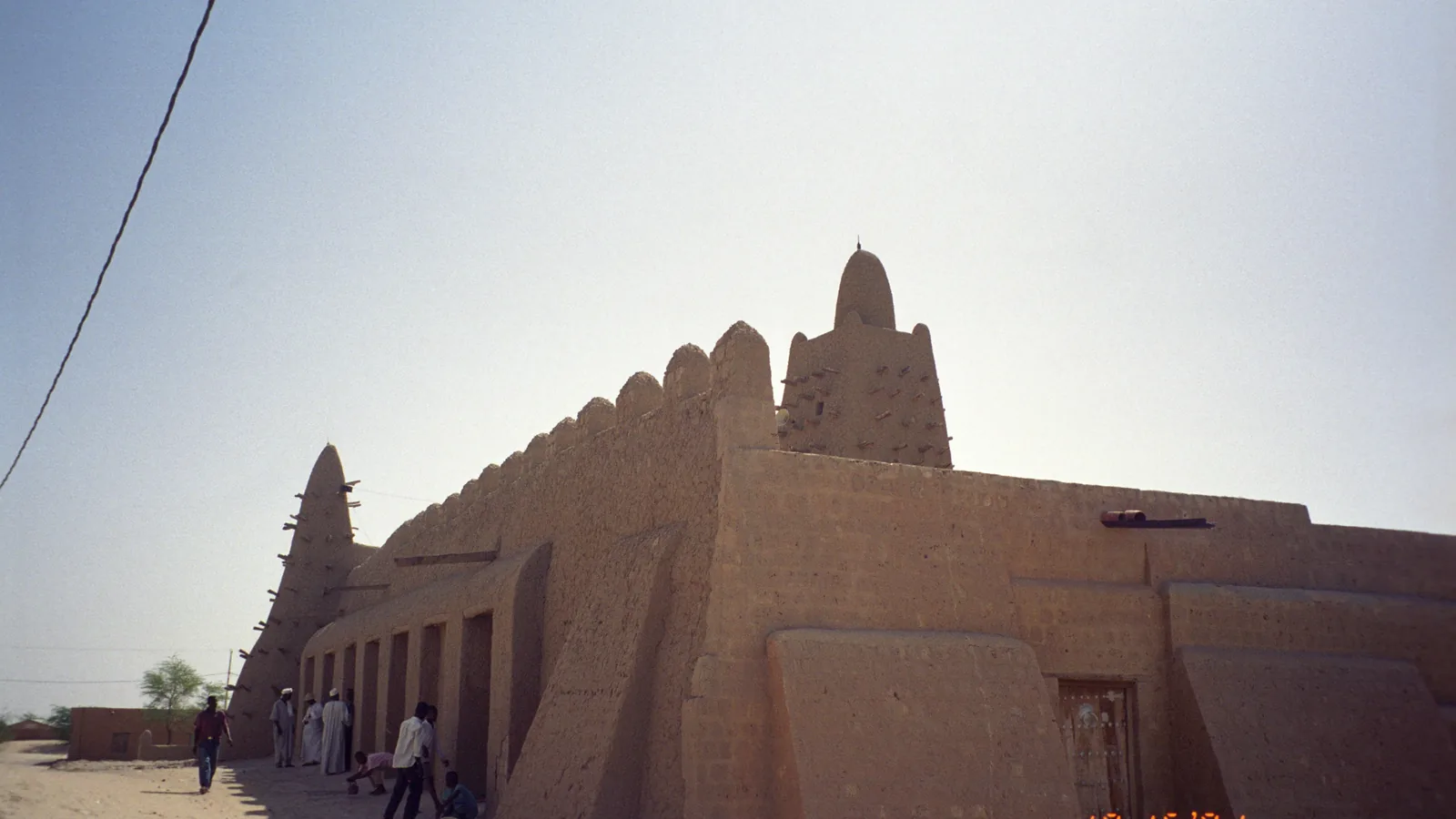

TL;DR — Timbuktu’s manuscripts sit in 35 private libraries; more than 300,000 are now digitized. The ICC’s 2016 sentence covered nine mausoleums and a mosque door, not the books.
“The battle of Tondibi in March 1591, and the subsequent defeat of the Askiya Isḥāq II, marked a turning point in both Moroccan and West African history,” Lansiné Kaba wrote in the Journal of African History. Four centuries later a court in The Hague dated a second event in the same city, an attack on ten religious sites “between around 30 June 2012 and 11 July 2012,” and gave judgment on September 27, 2016. Between the two dates lie the manuscripts of Timbuktu and the scholars who wrote, collected and cataloged them.
Quick facts
- When
- March 1591 (battle of Tondibi) · 1594 (exile of a group of scholars) · 1627 (death of Ahmad Baba) · September 1955 (death of Ahmad Bularaf) · early April 2012 to January 2013 (occupation of Timbuktu) · around June 30 to July 11, 2012 (attack on ten sites) · September 27, 2016 (ICC judgment and sentence)
- Where
- Tondibi and Timbuktu in what is now Mali; Marrakesh in Morocco; Bamako; The Hague
- Who
- Askiya Ishaq II; the Saadian sultan Mulay al-Mansur; Pasha Judar; Ahmad Baba al-Tinbukti (1556–1627); al-Sa'di (died 1656); Ahmad Bularaf; Ahmad Al Faqi Al Mahdi; Iyad Ag Ghaly; Judge Raul C. Pangalangan
- Outcome
- Songhay lost Timbuktu in 1591 and a group of its scholars were exiled in 1594. The manuscripts survived in 35 private libraries; an inventory of nearly 350,000 has run since 2012 and HMML has digitized more than 300,000. In 2016 the ICC sentenced Al Mahdi to nine years for the attack on nine mausoleums and one mosque door
Tondibi, March 1591, and an exile in 1594
Timbuktu in 1591 belonged to the Songhay empire, ruled from Gao downriver on the Niger. The Saadian sultan of Morocco, Mulay al-Mansur, sent musketeers under Pasha Judar across the Sahara, and Kaba gives the motive in one line: “Al-Mansūr wanted to regain control of the gold trade to stimulate the economy of his kingdom.” The army “got bogged down in the fly-infested southern swamps because of an unexpected protracted war of resistance led by the Askiya Nūḥu,” Kaba wrote, and by 1612 the musketeers refused to fight.
The scholars’ turn came three years after the battle. “Revolts in the cities and the countryside led to repression and the exile of a group of prominent ‘ulamā’ in 1594,” Kaba wrote. The best known of them was Ahmad Baba al-Tinbukti, whose dates, 1556 to 1627, stand in the title of J. O. Hunwick’s 2009 article on a new source for his biography. Kaba’s abstract names no individual among the exiles, so the tradition that puts Ahmad Baba among them rests on that biography. Michael A. Gomez, in the same journal in 2009, argued that Timbuktu under Songhay was less autonomous than its chronicles describe, and that Gao took the city for one thing, “financial profit.”
A chronicle with the wrong author for 40 years
Both of the Arabic chronicles that describe Songhay Timbuktu have authorship problems. The Tarikh al-Sudan was credited to Ahmad Baba by the German traveler Heinrich Barth in 1857. Hunwick’s abstract gives the result: “Aḥmad Bābā achieved a spurious fame which lasted for over 40 years as the supposed author of the Ta’rīkh al-Sūdān.” The French journalist Felix Dubois refuted the attribution in 1897, and “the work was correctly assigned to al-Sa’dī the Timbuctoo scholar who died in 1656.”
The second chronicle is known from an edition by Octave Houdas and Maurice Delafosse in the early 1900s. Mauro Nobili and Mohamed Shahid Mathee, in History in Africa in 2015, called it the “So-Called Tārīkh al-fattāsh” and, from manuscripts the editors had not seen, advanced a new theory: “the edited text in fact conflates two texts, a seventeenth-century chronicle and a nineteenth century one.”

Ahmad Bularaf and the private libraries
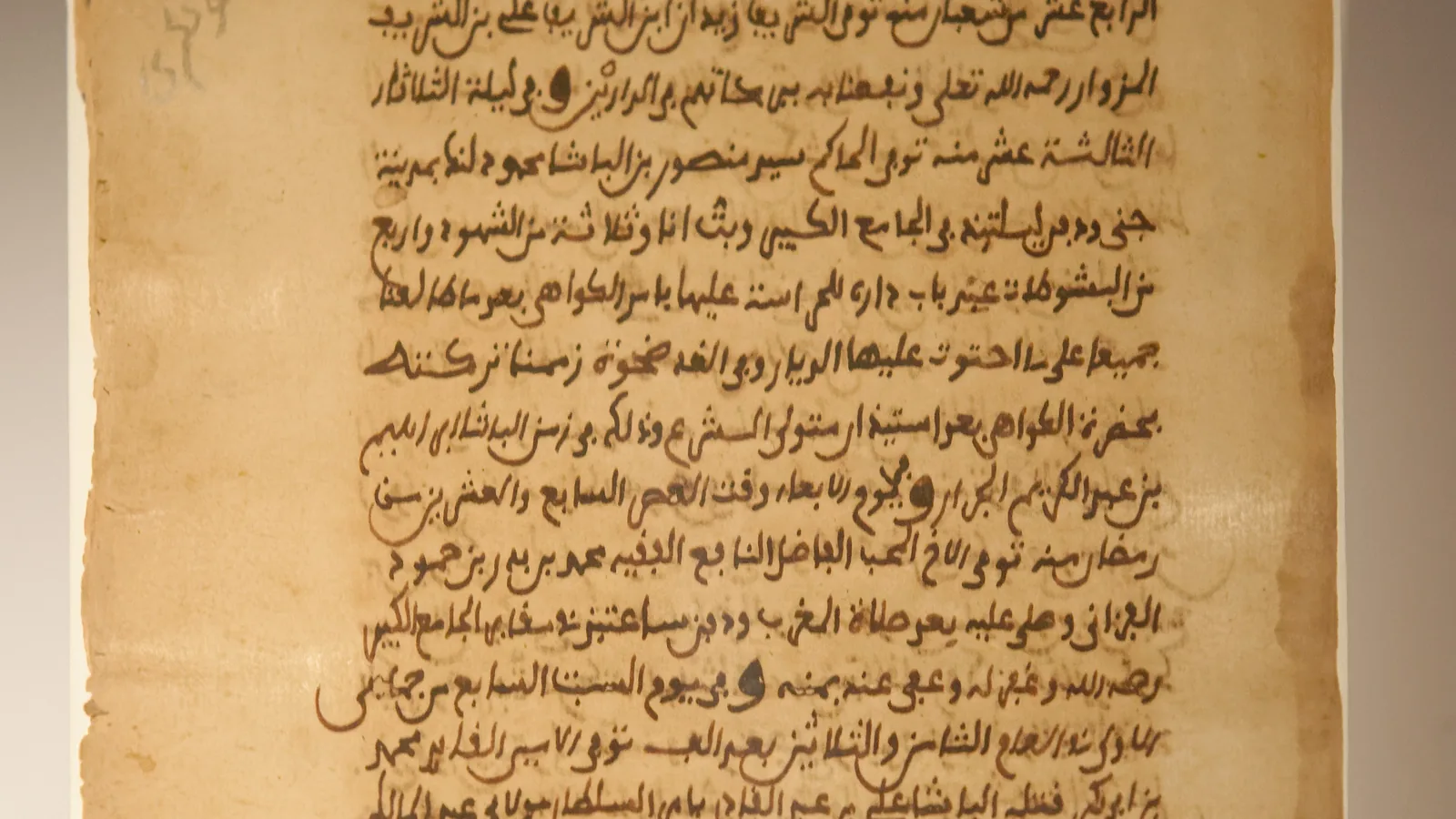
The books stayed in family hands. Shamil Jeppie’s 2014 article in History in Africa follows one collector of the 20th century: “Aḥmad Bul’arāf died in September 1955 and was buried in his adopted Timbuktu,” a man who “was devoted to conserving the manuscript heritage of Timbuktu.” Charles C. Stewart put a number on the whole in 2021: “Since 2012, an inventory of nearly 350,000 Timbuktu manuscripts in private libraries has been underway,” searchable in the West African Arabic Manuscript Database, and his survey covered 31 of the 35 libraries. Northwestern University’s Institute for the Study of Islamic Thought in Africa adds a caution: Timbuktu “is only one site in a much larger terrain of Arabic manuscripts on the continent.”
The digitizing was done with SAVAMA-DCI of Bamako. The Hill Museum & Manuscript Library’s page of September 21, 2026 states that its “decade-long project in Mali digitized more than 300,000 manuscripts, amounting to an estimated 4.35 million unique image files.” HMML’s catalogers Ali Diakite and Paul Naylor found the same authors and titles spelled many ways in the field spreadsheets, and a matching program let the team add “around 85,000 manuscripts” to the online Reading Room in six months.
Ten sites between June 30 and July 11, 2012
The judgment of Trial Chamber VIII sets the scene in paragraph 31. Around early April 2012, after the Malian army withdrew, Ansar Dine and Al-Qaeda in the Islamic Maghreb took control of Timbuktu and held it until January 2013, governing through, among other bodies, a morality brigade called the Hesbah. Ahmad Al Faqi Al Mahdi led the Hesbah from April to September 2012. In late June the Ansar Dine leader Iyad Ag Ghaly decided to destroy the mausoleums; Al Mahdi had advised against it and then agreed to carry it out.
The court lists the ten sites by name: the Sidi Mahamoud Ben Omar Mohamed Aquit, Sheikh Mohamed Mahmoud Al Arawani, Sheikh Sidi El Mokhtar Ben Sidi Mouhammad Al Kabir Al Kounti, Alpha Moya, Sheikh Mouhamad El Mikki, Sheikh Abdoul Kassim Attouaty and Sheikh Sidi Ahmed Ben Amar Arragadi mausoleums, the door of the Sidi Yahia Mosque, and the Ahmed Fulane and Bahaber Babadié mausoleums adjoining the Djingareyber Mosque. Nine of the ten were on the UNESCO World Heritage list. The Sankore mosque is absent from that list, and the manuscripts are absent from the charge.
"Imprisonment is a sufficient penalty"
A warrant for Al Mahdi’s arrest was issued on September 18, 2015. The trial ran from August 22 to 24, 2016, and he made an admission of guilt, the first in an ICC case according to the court’s case page. The chamber wrote in paragraph 78 that “Timbuktu is at the heart of Mali’s cultural heritage, in particular thanks to its manuscripts and to the mausoleums of the saints,” and that most of the ten sites were completely destroyed in an attack of about ten days. Oumar Ba, in African Studies Review in 2020, called the case “the first instance where one perpetrator was solely charged with the war crime of destruction of cultural heritage” and argued that the court chose the buildings over other atrocities in northern Mali out of “expediency.”
The sentence was nine years. Paragraph 110 reads that “none of the parties or participants requests the imposition of a fine or order of forfeiture,” so “the Chamber finds that imprisonment is a sufficient penalty,” and the last line of the ruling informs the parties that reparations to victims “shall be addressed in due course.” The judgment is signed by Judge Raul C. Pangalangan, presiding, and dated September 27, 2016, at The Hague.
Key facts
- Kaba (Journal of African History, 2009) dates the battle of Tondibi to March 1591 and the exile of “a group of prominent ‘ulamā’” to 1594, after revolts and repression.
- Al-Mansur’s motive, in Kaba’s words, was “to regain control of the gold trade”; by 1612 his musketeers refused to fight.
- Ahmad Baba al-Tinbukti lived from 1556 to 1627 (Hunwick, BSOAS, 2009).
- Barth attributed the Tarikh al-Sudan to Ahmad Baba in 1857; Dubois corrected it in 1897 to al-Sa’di, who died in 1656 (Hunwick).
- Nobili and Mathee (History in Africa, 2015) proposed that the edited Tarikh al-Fattash conflates a 17th-century chronicle and a 19th-century text.
- Stewart (History in Africa, 2021): an inventory of nearly 350,000 manuscripts in 35 private libraries has run since 2012; his survey covered 31 of them.
- HMML digitized more than 300,000 manuscripts in Mali, about 4.35 million image files, with SAVAMA-DCI of Bamako; about 85,000 went online in six months (page of September 21, 2026).
- The ICC judgment of September 27, 2016 covers nine mausoleums and the Sidi Yahia mosque door attacked between around June 30 and July 11, 2012; Al Mahdi received nine years, no fine, and reparations were left to a later decision.
FAQ
Did the ICC convict Al Mahdi for destroying the Timbuktu manuscripts?
No. The single charge and the judgment of September 27, 2016 concern ten protected sites: nine mausoleums and the door of the Sidi Yahia Mosque. The Sankore mosque is not among them. The chamber named the manuscripts only when describing Timbuktu's heritage in paragraph 78.
Who wrote the Tarikh al-Sudan?
Al-Sa'di, a Timbuktu scholar who died in 1656, according to Hunwick's 2009 abstract. Heinrich Barth had credited it to Ahmad Baba in 1857, and Felix Dubois corrected the attribution in 1897.
How many Timbuktu manuscripts exist?
No single count exists. Stewart's 2021 survey cites an inventory of nearly 350,000 manuscripts in 35 private libraries, and HMML reports more than 300,000 digitized across Mali with SAVAMA-DCI. The two figures come from different projects and do not describe the same set.
Sources
- Lansiné Kaba, "Archers, Musketeers, and Mosquitoes: The Moroccan Invasion of the Sudan and the Songhay Resistance (1591–1612)," Journal of African History (Cambridge Core, published online January 22, 2009), abstract.
- J. O. Hunwick, "A New Source For the Biography of Aḥmad Bābā Al-Tinbuktī (1556–1627)," Bulletin of the School of Oriental and African Studies (Cambridge Core, published online December 24, 2009), abstract.
- Mauro Nobili and Mohamed Shahid Mathee, "Towards a New Study of the So-Called Tārīkh al-fattāsh," History in Africa (Cambridge Core, published online May 29, 2015), abstract.
- Michael A. Gomez, "Timbuktu Under Imperial Songhay: A Reconsideration of Autonomy," Journal of African History (Cambridge Core, published online January 22, 2009), abstract.
- Charles C. Stewart, "What's In the Manuscripts of Timbuktu? A Survey of the Contents of 31 Private Libraries," History in Africa (Cambridge Core, published online May 20, 2021), abstract.
- Shamil Jeppie, "History for Timbuktu: Aḥmad Bul'arāf, Archives, and the Place of the Past," History in Africa (Cambridge Core, published online May 9, 2014), abstract.
- Oumar Ba, "Contested Meanings: Timbuktu and the Prosecution of Destruction of Cultural Heritage as War Crimes," African Studies Review (Cambridge Core, published online June 25, 2020), abstract.
- International Criminal Court, Trial Chamber VIII, The Prosecutor v. Ahmad Al Faqi Al Mahdi, Judgment and Sentence, ICC-01/12-01/15-171, September 27, 2016 (PDF, 49 pages).
- International Criminal Court, "Al Mahdi Case" (official case information page: charge, admission of guilt, sentence of September 27, 2016).
- Hill Museum & Manuscript Library (HMML), Ali Diakite and Paul Naylor, "Innovations in Mali Cataloging Work," HMML Stories, published September 21, 2026 (from the Summer 2026 issue of HMML Magazine).
- Institute for the Study of Islamic Thought in Africa (ISITA), Northwestern University, "African Arabic Script Manuscripts."
Cite this article
- APA
- Our Earth's History. (2026, September 22). Thirty-five libraries, 300,000 manuscripts: Timbuktu, 1591 to 2016. Our Earth's History. https://ourearthshistory.com/africa/medieval/timbuktu-manuscripts-ahmad-baba-1591-icc-al-mahdi-2016-hmml-300000/
- Chicago
- Our Earth's History. “Thirty-five libraries, 300,000 manuscripts: Timbuktu, 1591 to 2016.” Our Earth's History, September 22, 2026. https://ourearthshistory.com/africa/medieval/timbuktu-manuscripts-ahmad-baba-1591-icc-al-mahdi-2016-hmml-300000/.
- MLA
- “Thirty-five libraries, 300,000 manuscripts: Timbuktu, 1591 to 2016.” Our Earth's History, 22 Sep. 2026, https://ourearthshistory.com/africa/medieval/timbuktu-manuscripts-ahmad-baba-1591-icc-al-mahdi-2016-hmml-300000/.
Text licensed CC BY-NC-ND 4.0. Found an error? Tell us.