Sixty-three ships in the Veritable Records: Hansan Island, 1592

TL;DR — The Seonjo sillok records 63 Japanese ships burned at Hansan Island on the 8th day of the 7th lunar month, 1592; the Korean History Chronology counts 59, with 14 escaping.
The Seonjo sillok’s entry for the 21st day of the 6th month, year 25 of King Seonjo’s reign, opens: “慶尙右水使元均, 與全羅左水使李舜臣, 約會閑山島.” In English: “Gyeongsang Right Naval Commander Won Gyun arranged to meet with Jeolla Left Naval Commander Yi Sun-sin at Hansan Island.” That single entry, filed under the 21st day, goes on to narrate a run of battles from the 6th day of the 5th month through the 10th day of the 7th month, including the encounter at Hansan Island, which the entry dates to the 8th day of the 7th lunar month.
Quick facts
- When
- 8th day of the 7th lunar month, year 25 of King Seonjo's reign (1592)
- Where
- Gyeonnaeryang strait and the open sea off Hansan Island, in the waters of Gyeongsang province
- Who
- Left Naval Commander of Jeolla Yi Sun-sin; Right Naval Commander of Jeolla Yi Eok-gi; Right Naval Commander of Gyeongsang Won Gyun; Japanese naval commander Wakisaka Yasuharu
- Outcome
- The Sillok records 63 Japanese ships burned; the National Institute of Korean History's Korean History Chronology records 59 ships lost and 14 escaping, out of a fleet it counts at 73
Wakisaka Yasuharu at Gyeonnaeryang
The same sillok entry sets out the engagements that led to Gyeonnaeryang. On the 6th day of the 5th month it records that Yi Sun-sin “led 80 warships and finally advanced to the waters off Okpo,” where more than 30 enemy ships were anchored, and that “our forces burned 26 enemy ships.” On the 2nd day of the 6th month, at Dangpo, “20 enemy ships were anchored in a row along the shore.” On the 5th and 6th days of the 6th month, at Danghangpo, the entry states that 26 enemy ships were anchored along the shore, and that Joseon forces, “seizing the advantage, set fire and burned more than 100 enemy ships.” The same entry places the sillok’s account of a turtle ship in action (ramming ahead to fire cannon before the enemy’s ships were “all burned,” and Yi Sun-sin wounded in the left shoulder by a lead ball) under the date of the 29th day of the 5th month, at Noryang, separately from the Hansan Island narrative that follows. By the 6th day of the 7th month, the sillok records, Yi Sun-sin had met Yi Eok-gi at Noryang, where Won Gyun was already anchored after repairing seven damaged ships. The combined fleet learned that “more than 70 enemy ships had moved from Yeongdeungpo and anchored at Gyeonnaeryang.” The Korean History Chronology, published by the National Institute of Korean History, names the Japanese commander at Gyeonnaeryang as Wakisaka Yasuharu and counts his fleet at 73 ships: 36 large, 24 medium and 13 small.
The 8th day: a lure into open water
The sillok’s entry for the encounter reads: “On the 8th day the navy reached the middle of the sea; when the enemy saw that our forces were strong, they hurried their oars and turned back. All our forces pursued and found that more than 70 enemy ships had drawn up in battle order in the inner sea; the terrain there was narrow and there were many dangerous islands, making it hard to maneuver ships. So our forces advanced and retreated in turn to lure them out, and the enemy came out in full pursuit, drawing them out to the waters off Hansan.” Uri Yeoksanet, the National Institute of Korean History’s source-reader site, describes the same maneuver in its own account of Japan’s strategy for the war: Japanese forces meant to advance on land from three directions while their navy supplied them by sea around the southern and western coasts, a plan it calls “水陸竝進” (advancing by water and land together), and states that Yi Sun-sin’s fleet blocked the navy’s advance and defeated that plan.
Crane wing formation, Gyeonnaeryang
The sillok continues, in the same entry: “Our forces drew up in a line and formed the crane wing (鶴翼陣), waving flags and beating drums with a great clamor, advancing together at once, firing large and small cannon in succession; they first broke three enemy ships, and the enemy’s morale broke and they retreated a little; the generals and soldiers, seizing the moment, shouted and stamped their feet. Following up on this advantage they struck at the enemy, firing arrows and shot in turn, and burned 63 enemy ships; the remaining 400-odd enemy abandoned their ships and fled to land.” This passage is the sillok’s only narration of the Hansan Island engagement itself, and it does not use the word for turtle ship — that term appears in the same entry, but under the date of the 29th day of the 5th month, at Noryang.

73 ships, two counts of losses
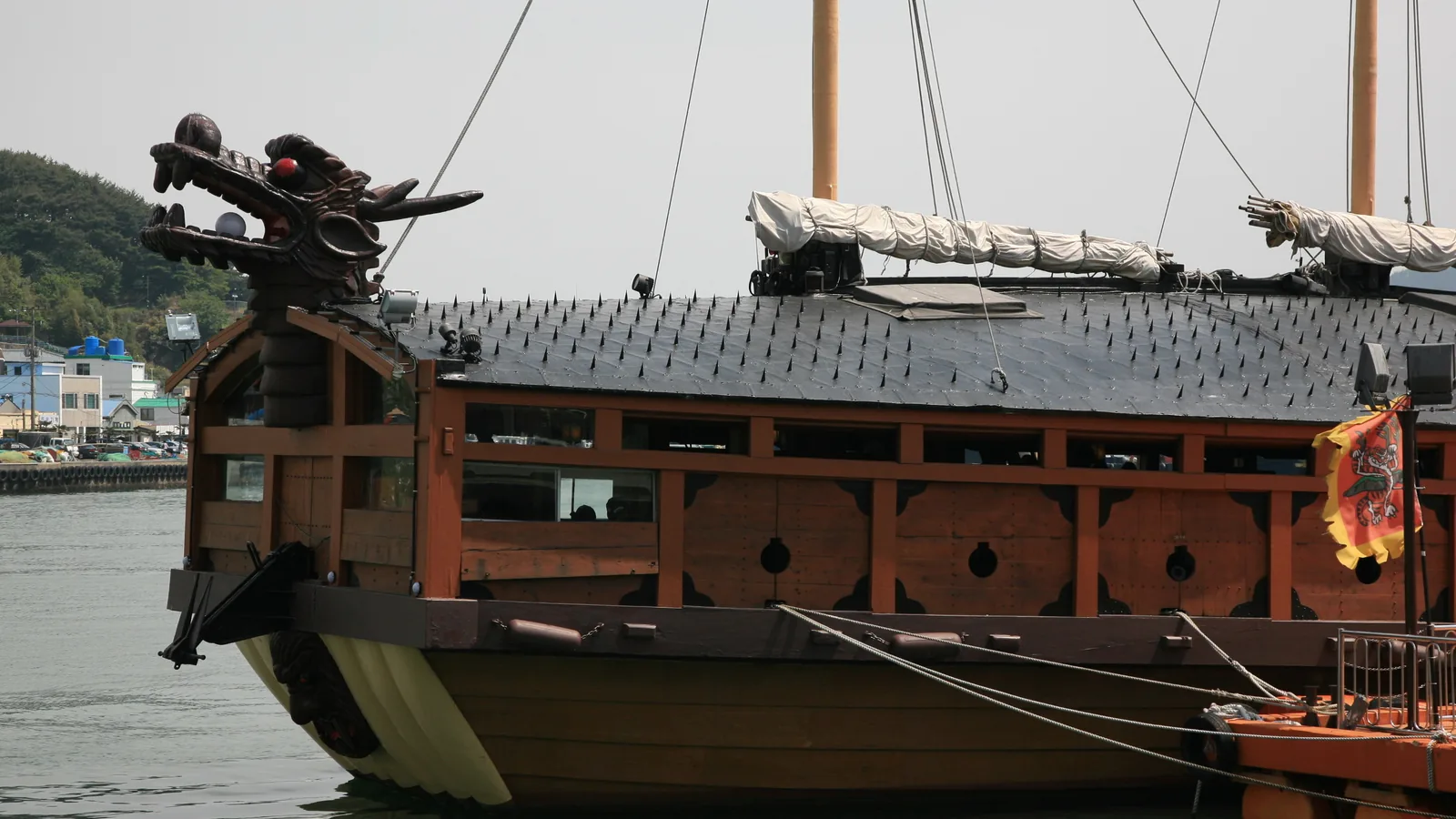
The Korean History Chronology gives its own tally for the same fleet: of 73 Japanese ships engaged, it records that 35 large, 17 medium and 7 small ships were lost (59 in all) while “only 14, one large ship and 13 medium ships, barely escaped.” That figure differs from the sillok’s own count of 63 ships burned. The Chronology also records Japanese dead at “more than 3,000” and Joseon losses at 19 killed and 119 wounded, figures that do not appear in the sillok’s own account of the battle. Uri Yeoksanet’s account states that the victory at Hansan Island destroyed the main fleet that had represented Japan’s navy at the time, and separately, in its narration of the run of battles leading up to Hansan Island, credits the turtle ship’s first appearance to the battle of Sacheon rather than to Noryang. Uri Yeoksanet’s own summary of the Hansan Island fight itself also names the turtle ship, alongside the crane wing formation, as one of the tactics behind the victory, a detail the sillok’s Hansan Island passage does not include.
The report to the court
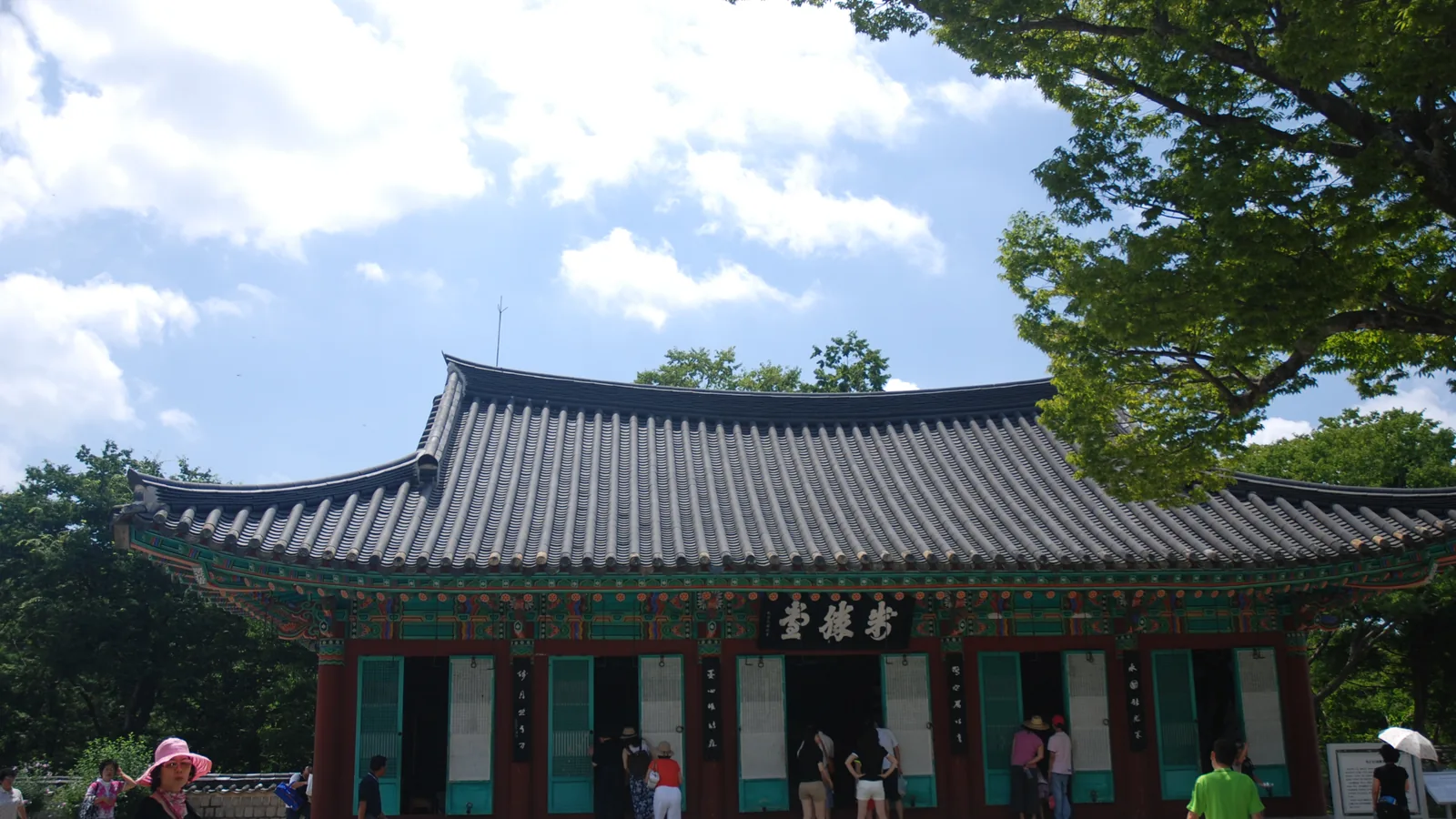
The sillok entry closes with the dispatch that carried the news to the government: Yi Sun-sin and the other commanders sent their military officer Yi Chung to report by relay dispatch, “and at the traveling court there was no one, high or low, who did not leap with joy and offer congratulations.” The entry itself states that it was written from that dispatch. The island now holds the Hansan-do Yi Chungmu-gong historic site in Tongyeong, which the Korea Heritage Service lists as a National Historic Site designated on January 21, 1963, covering 528,027 square meters.
Key facts
- Won Gyun and Yi Sun-sin arranged to meet at Hansan Island; the sillok entry recording this, dated the 21st day of the 6th month, 1592, narrates events through the 10th day of the 7th month.
- On the 6th day of the 7th month the combined fleet, joined at Noryang, learned that more than 70 Japanese ships lay at Gyeonnaeryang.
- The Korean History Chronology names the Japanese commander as Wakisaka Yasuharu and counts his fleet at 73 ships: 36 large, 24 medium, 13 small.
- On the 8th day of the 7th lunar month the Joseon fleet lured the Japanese fleet from Gyeonnaeryang into open water off Hansan Island.
- The sillok records the Joseon fleet forming the crane wing formation (鶴翼陣) and burning 63 Japanese ships, with more than 400 survivors fleeing to land.
- The Korean History Chronology counts the same engagement as 59 ships lost (35 large, 17 medium, 7 small) and 14 escaping.
- The Chronology records Japanese dead at more than 3,000 and Joseon losses at 19 killed and 119 wounded; the sillok gives no casualty count of its own.
- The Korea Heritage Service lists the Hansan Island site as a Historic Site since January 21, 1963, covering 528,027 square meters in Hansan-myeon, Tongyeong.
FAQ
How many Japanese ships did the Battle of Hansan Island destroy?
The Seonjo sillok states that 63 enemy ships were burned. The National Institute of Korean History's Korean History Chronology gives a different figure for the same battle: 59 ships lost, with 14 escaping out of a fleet it counts at 73.
What was the crane wing formation used at Hansan Island?
The sillok names it hagikjin (鶴翼陣), describing the Joseon fleet forming a line, waving flags and beating drums, then advancing together while firing cannon, which broke three enemy ships and their formation before the wider engagement.
Where is the Hansan Island battle site commemorated today?
The Korea Heritage Service lists "Yi Chungmugong Relics on Hansan Island, Tongyeong" as a Historic Site, designated January 21, 1963, covering 528,027 square meters in Hansan-myeon, Tongyeong, Gyeongsangnam-do.
Sources
- Seonjo sillok, 25th year, 6th month, 21st day, 4th entry, Veritable Records of the Joseon Dynasty (National Institute of Korean History)
- Korean History Chronology, "Hansando Battle (1592)," National Institute of Korean History
- Uri Yeoksanet, "Yi Sun-sin and the Great Victory at Hansando," Sources of Korean History, National Institute of Korean History
- Historic Site "Yi Chungmugong Relics on Hansan Island, Tongyeong," National Heritage Portal, Korea Heritage Service
Cite this article
- APA
- Our Earth's History. (2026, September 26). Sixty-three ships in the Veritable Records: Hansan Island, 1592. Our Earth's History. https://ourearthshistory.com/east-asia/early-modern/hansando-1592-yi-sun-sin-wakisaka-gyeonnaeryang-crane-wing-sillok-63-ships/
- Chicago
- Our Earth's History. “Sixty-three ships in the Veritable Records: Hansan Island, 1592.” Our Earth's History, September 26, 2026. https://ourearthshistory.com/east-asia/early-modern/hansando-1592-yi-sun-sin-wakisaka-gyeonnaeryang-crane-wing-sillok-63-ships/.
- MLA
- “Sixty-three ships in the Veritable Records: Hansan Island, 1592.” Our Earth's History, 26 Sep. 2026, https://ourearthshistory.com/east-asia/early-modern/hansando-1592-yi-sun-sin-wakisaka-gyeonnaeryang-crane-wing-sillok-63-ships/.
Text licensed CC BY-NC-ND 4.0. Found an error? Tell us.