Nerchinsk, 1689: a Qing-Russian treaty negotiated in Latin
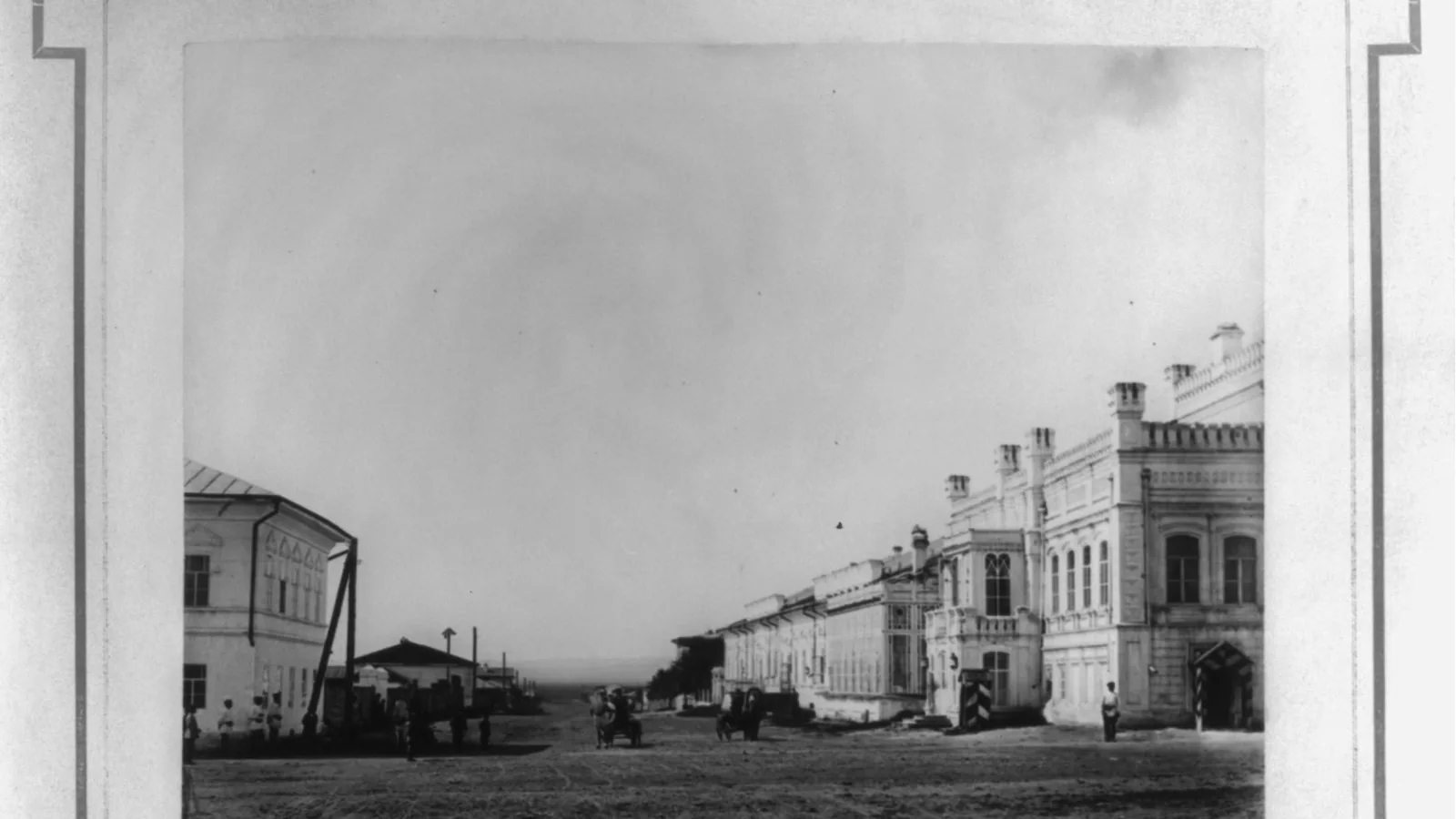

TL;DR — Two Jesuits translated the 1689 Qing-Russian talks at Nerchinsk into Latin, and the treaty survives in separate Latin, Russian, Manchu and Chinese texts.
“Anno Kam Hi 28, crocci serpentis dicti . . . 7 luna, die 24,” reads the dating line of the treaty text the Jesuit missionary Tomás Pereira copied into his diary of the Nerchinsk negotiations. That line names the twenty-fourth day of the seventh month of the twenty-eighth year of the Kangxi reign, the year the calendar called that of “the red snake.” Joseph Sebes, who published Pereira’s diary in 1961, adds an editorial note converting that date to September 7, 1689, on the Gregorian calendar. Elsewhere in the same book, a summary of Yevgenia Yakovleva’s history gives the day of the third and final meeting as August 27, 1689, in the Julian calendar Russia then used, a date that converts to September 6 by the ten-day correction in use that century. At Nerchinsk, on the Shilka River, Qing envoy Songgotu and Russian ambassador Fyodor Alexeevich Golovin signed a border settlement in a language neither government used at home, because the negotiation had gone entirely through the Latin of Pereira and a second Jesuit, Jean-François Gerbillon.
Quick facts
- When
- August 27, 1689, by the Julian-calendar reckoning Sebes's book gives for the third and final meeting; September 6 or 7, 1689, by the two Gregorian conversions the same book supplies
- Where
- Nerchinsk, on the Shilka River in Transbaikalia
- Who
- Qing envoys Songgotu and Tong Guogang; Russian ambassador Fyodor Alexeevich Golovin; Jesuit interpreters Tomás Pereira and Jean-François Gerbillon
- Outcome
- A Latin treaty text set the Qing-Russian border along the Argun and Gorbitsa rivers and the Stanovoy mountains, ordered the Albazin fortress destroyed, and left the Uda river valley undecided
Songgotu and Golovin took a year to reach the table
Songgotu, a son of Soni and a member of the Manchu Plain Yellow Banner, was named one of the Qing plenipotentiaries; Sebes’s editorial notes record that his niece was the Kangxi emperor’s empress, so Jesuit reports called him the crown prince’s uncle. Golovin left Moscow for the frontier on January 26, 1686, with instructions that let him fall back from the Amur River toward the Zeya if Qing negotiators rejected each proposed line. The Qing side had first agreed to meet at Selenginsk: Sebes quotes a letter of April 27, 1688, in which the emperor “fixed the town of Selenginsk as the place of the conference,” adding that “this was the very place the Russians had suggested.” Galdan’s invasion of the Khalkha Mongols forced the Qing delegation to turn back before it arrived, and the conference was postponed a year; a new Russian messenger, Ivan Loginov, reached Beijing on May 13, 1689, and five days later the emperor named Nerchinsk as the new venue.
1689: three meetings, a siege and a signature
A review of Gaston Cahen’s history of Russo-Chinese relations, in the Revue d’histoire moderne et contemporaine in 1912, summarizes what followed at Nerchinsk without giving troop figures: the two sides argued over the size of the armed escorts each would bring, talks broke off after a second meeting, and agreement came only after Qing forces put the town under siege. Sebes’s book gives the first meeting as August 12, 1689, the second as the point of breakdown over the escort question, and the third, at which the treaty was concluded, as August 27.
Latin carried words neither delegation could send on its own
The Études chinoises review of a 1994 biography of Gerbillon states that Nerchinsk “fut finalement choisie pour des négociations de paix entre des ambassadeurs chinois et russes, avec pour langue commune le latin” (finally chosen for peace talks between Chinese and Russian ambassadors, with Latin as their common language), and that the emperor “désigna le père Pereira comme interprète et le pria de se trouver un adjoint,” naming Pereira interpreter and asking him to find an assistant; Gerbillon, it adds, “fut jugé le plus capable,” judged most capable. The same review records that “les Chinois, qui ne comprenaient pas le latin, restaient méfiants,” the Chinese, who did not understand Latin, remained wary throughout. Sebes notes that Gerbillon, in China only since 1687, was not yet fluent in Manchu or Chinese, and that even Pereira could not later read a note the emperor had written in Manchu; Sebes concludes that Chinese served as the working language between the Latin sent to the Russians and the Manchu reports sent to the emperor.
'Both signed and sealed': a treaty with no single original
Sebes describes the outcome of that three-language relay as two documents, not one: “The two Latin copies . . . both signed and sealed by the delegates of the two countries, are the two official copies of the treaty,” one drafted by the Qing side and handed to the Russians, the other drafted by the Russians and handed to the Qing side. Alongside these stood two texts without seals, a Russian-language copy and a Manchu-language copy, each prepared by one side for the other. Chinese versions descend from two further originals; Sebes reports the work of W. Fuchs establishing that one, carried in the Kangxi-era veritable records, “does not represent the treaty-text but the inscription-text” cut later onto boundary markers, while the other carries the treaty itself. Article six ordered a physical record too: “this present treaty, with all its articles, shall be engraved in the Chinese, Russian and Latin languages, upon stones, which shall be placed as everlasting monuments on the frontiers of the two Empires.”
Six articles set a border, destroyed a fort and left one valley open
Article one, as Sebes transcribes it from Pereira’s diary, draws the boundary from a river the Latin calls Kerbichi, the Gorbitsa, along the mountain chain that is “the source of the said river Kerbichi, and extends as far as the eastern sea.” Further west, “the river Argun which falls into the Sagalien Ula shall serve for bounds to the two Empires,” with land south of it assigned to the Qing empire and land north of it to Russia. Between the mountains and the Uda river, the article states, “all the countries lying . . . shall continue undecided till the ambassadors of both powers on their return home shall have gotten proper information.” Article two ordered the Russian fortress at Yagza destroyed, in Latin that reads “Arx seu fortalitia in loco nomine Yagza a Russis extructa funditus eruetur ac destruetur,” its inhabitants moved into Russian territory with their belongings; it also barred retaliation for individual trespassers. Articles three through six pardoned past offenses, provided for the return of deserters, opened trade to travelers carrying a pass, and required the delegations to exchange sealed copies. Pereira’s diary lists six Qing signatories, led by Songgotu as “Capitaine des Officers de la Garde du Corps,” and four Russian signatories under Golovin. An English abstract of a 2021 study by Natalia Platonova, in La Revue russe, records that after Nerchinsk and the Treaty of Kiakhta of 1728, “the Russians were able to organize sixteen major caravans to trade in Beijing between 1698 and 1755.” The boundary stones article six required were erected in 1690.
Key facts
- Pereira’s diary, published by Sebes in 1961, dates the treaty text to the twenty-fourth day of the seventh month of the twenty-eighth year of the Kangxi reign, converted in an editorial note to September 7, 1689.
- The same book elsewhere gives the third and final meeting of the ambassadors as August 27, 1689, in the Julian calendar, which converts to September 6 by the ten-day correction then in use.
- The Kangxi emperor named Nerchinsk as the conference site on May 18, 1689, after an earlier conference planned for Selenginsk was abandoned when Galdan invaded the Khalkha Mongols.
- Golovin left Moscow for the frontier on January 26, 1686, more than three years before the treaty was signed.
- Kangxi named Tomás Pereira as chief interpreter and Jean-François Gerbillon as his assistant, and Latin became the negotiating language between the Qing and Russian delegations.
- The treaty survives as two signed and sealed Latin originals, one drafted by each side, plus unsealed Russian and Manchu copies and two distinct Chinese textual traditions.
- Article one set the border along the Gorbitsa river and the Stanovoy mountains to the Argun river, and left the Uda river valley undecided pending further information from both sides.
- Article two ordered the Albazin fortress destroyed and its Russian inhabitants moved into Russian territory; the boundary markers required by article six were set up in 1690.
FAQ
What language was the Treaty of Nerchinsk written in?
The negotiations and the treaty text were conducted in Latin, translated for the Qing delegation by the Jesuit missionary Tomás Pereira and his assistant, Jean-François Gerbillon. Unsealed Russian and Manchu versions were also produced, and Chinese versions were compiled afterward from two separate manuscript traditions.
When was the Treaty of Nerchinsk signed?
Joseph Sebes's 1961 edition of Pereira's diary gives the third and final meeting as August 27, 1689, in the Julian calendar, and separately converts the Chinese-calendar date on the treaty text to September 7, 1689, on the Gregorian calendar; the Julian date converts to September 6 by the correction used in that century.
What happened to the Albazin fortress under the treaty?
Article two of the treaty ordered the Russian fortress at Yagza, known as Albazin, demolished to its foundations, with its inhabitants relocated into Russian territory along with their property.
Sources
- Joseph Sebes, S.J., "The Jesuits and the Sino-Russian Treaty of Nerchinsk (1689): The Diary of Thomas Pereira, S.J.," Bibliotheca Instituti Historici S.I., vol. XVIII (Rome: Institutum Historicum S.I., 1961), full text via Internet Archive.
- Review (unsigned) of Mme Yves de Thomaz de Boissierre, "Jean-François Gerbillon, s.j. (1654-1707)" (Louvain, 1994), in Études chinoises 16-1 (1997), pp. 184-187.
- Review (unsigned) of Gaston Cahen, "Histoire des relations de la Russie avec la Chine sous Pierre le Grand (1689-1730)" (Paris, 1912), in Revue d'histoire moderne et contemporaine 17-6 (1912), pp. 510-514.
- Natalia Platonova, "Les caravanes russes à Pékin au XVIIIe siècle," La Revue russe 57 (2021/1), English abstract.
Cite this article
- APA
- LETTER. (2026, September 28). Nerchinsk, 1689: a Qing-Russian treaty negotiated in Latin. Our Earth's History. https://ourearthshistory.com/east-asia/early-modern/nerchinsk-1689-treaty-latin-jesuits-pereira-gerbillon-golovin-songgotu/
- Chicago
- LETTER. “Nerchinsk, 1689: a Qing-Russian treaty negotiated in Latin.” Our Earth's History, September 28, 2026. https://ourearthshistory.com/east-asia/early-modern/nerchinsk-1689-treaty-latin-jesuits-pereira-gerbillon-golovin-songgotu/.
- MLA
- LETTER. “Nerchinsk, 1689: a Qing-Russian treaty negotiated in Latin.” Our Earth's History, 28 Sep. 2026, https://ourearthshistory.com/east-asia/early-modern/nerchinsk-1689-treaty-latin-jesuits-pereira-gerbillon-golovin-songgotu/.
Text licensed CC BY-NC-ND 4.0. Found an error? Tell us.