The Jikji colophon of 1377 and a Paris copy shelved as Coréen 109
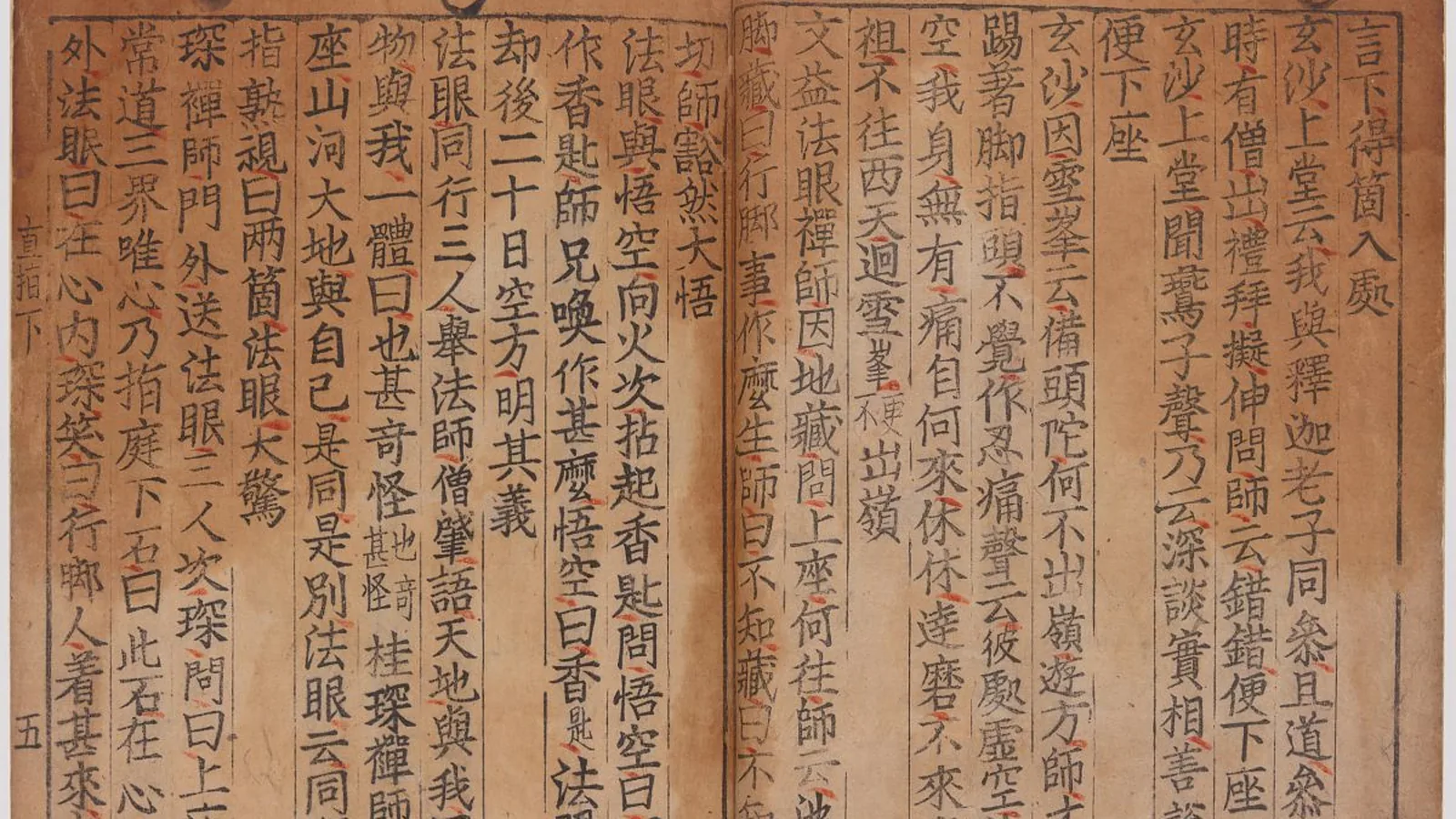

TL;DR — The Jikji’s colophon dates its metal-type printing to 1377 at Heungdeoksa; the one surviving volume reached the BnF in Paris through a consul and a jeweler.
“宣光七年丁巳七月日 淸州牧外興德寺鑄字印施” is the last line of the Jikji, written in classical Chinese. Cheongju City’s Global Jikji site reads it as printed with cast metal type at Heungdeoksa outside Cheongju-mok, in the seventh month of the seventh year of Seongwang, and dates it to 1377, the third year of King U of Goryeo. Only the second volume of that edition survives. It is in Paris, in the Manuscripts Department of the Bibliothèque nationale de France (BnF), under the shelf mark Coréen 109, and the BnF calls it “the oldest known book in the world printed with movable metal type.”
Quick facts
- When
- Seventh lunar month of 1377 (metal-type edition finished) · 1378 (woodblock edition) · between 1888 and 1899 (bought by Collin de Plancy) · 1900 (Paris Universal Exhibition) · 1911 (Drouot sale) · 1950, 1952 or 1953 (bequest to the national library, by institution) · 1972 (International Book Year exhibition) · October 1985 (Heungdeoksa inscription found) · May 7, 1986 (Historic Site No. 315) · September 4, 2001 (Memory of the World Register) · 2023 (BnF exhibition and cooperation agreement)
- Where
- Heungdeoksa, outside Cheongju-mok, in what is now Cheongju, South Korea; Seoul; the Drouot auction house and the Bibliothèque nationale de France, Paris
- Who
- The Seon master Gyeonghan, called Baegun; his disciples Seokchan and Daldam; the nun Myodeok; Victor Collin de Plancy; Maurice Courant; Henri Vever; Park Byeong-seon; the Cheongju University Museum excavation team
- Outcome
- Only the second volume of the 1377 metal-type edition survives, without its first leaf, at the BnF under Coréen 109. It was shown in Paris in 1900 and 1972, the temple named in its colophon was located in 1985, and the book entered UNESCO's Memory of the World Register in 2001
Colophon and casting at Heungdeoksa, 1377
The book is an anthology of Seon, or Zen, teaching; the BnF gives its full title as Baegun hwasang chorok buljo jikji simche yojeol and translates it as “Anthology of Great Buddhist Priests’ Zen Teachings.” The compiler was the Seon master Gyeonghan (1298–1374), known by the title Baegun. Yannick Bruneton of the École pratique des hautes études, who published a French translation in 2022, writes for the BnF that after the master’s death his disciples, among them Seokchan and Daldam, had it printed with the support of a nun and donor, Myodeok.
Two editions were begun at about the same time, one carved on woodblocks and one set in cast movable type. Bruneton dates the finished metal-type edition to the seventh lunar month of 1377, a year ahead of the woodblock edition; a complete woodblock text of 1378 is kept in Korea. How the type was cast is unknown. Bruneton writes that the technique cannot be identified as either lost-wax molding or sand casting, and he leaves the question to laboratory analysis.
1888 to 1911: a consul's cover and a jeweler's bid
Victor Collin de Plancy (1853–1922) went to Seoul to represent France after the treaty of 1886. Bruneton places his purchase of the volume between 1888 and 1899. It had lost its cover and first leaf and begins at folio 2. Collin de Plancy had a new cover made and wrote on it: “Le plus ancien livre coréen imprimé connu en caractères fondus, avec date : 1377,” the oldest known Korean book printed in cast type, with a date, 1377. The National Archives of Korea states that he bought it and that it was not taken by French troops in 1866, a belief it calls common.
The BnF records that the volume went on show in the Korean pavilion of the Universal Exhibition in Paris in 1900, its first public showing in Europe. Maurice Courant entered it as no. 3738 in his Supplément à la Bibliographie coréenne of 1901, an entry that drew little attention, according to Ra Gyeong-jun of the Cheongju Early Printing Museum, writing in 2009 for the Korea Heritage Service’s monthly. In 1911 Collin de Plancy sold his East Asian collection at the Drouot auction house, and the jeweler Henri Vever (1854–1942) bought the Jikji for 180 francs.
Bequeathed in 1950, entered in 1952
The year the book reached the national library differs by institution. The BnF’s English page states that Vever “bequeathed it to the Bibliothèque nationale in 1950. The book entered the collections in 1952.” Bruneton writes that Vever’s descendants gave it in 1950. The National Archives of Korea gives around 1950, and Ra’s article gives 1953. The volume is kept in the Grande Réserve and shown only with the department director’s authorization.
The lead over European printing is also stated two ways. The BnF and the National Archives of Korea both give 78 years before the Gutenberg Bible. Cheongju’s Global Jikji site puts the Jikji 63 years ahead of Gutenberg’s printing. None of the three pages says which Gutenberg date it counts from. The plain dates are 1377 for the Jikji and about 1455 for the Bible, the date the BnF uses.
Park Byeong-seon and the International Book Year, 1972
Park Byeong-seon, born in Seoul in 1926, went to France to study, and her frequent visits to the BnF led to a post there as a special researcher, Ra’s article states. The National Archives of Korea states that she worked at the library from 1967, sorting and describing Korean books, and found the Jikji there. UNESCO declared 1972 the International Book Year. The BnF planned an exhibition, which Ra calls “BOOKS,” and gave Park the Korean selection.
France had no studies of Korean printing, and friends in Korea wrote that they had nothing to send. Park read Chinese and Japanese printing studies, visited forges, and used potatoes and erasers to show how a metal-type impression differs from a woodblock one. Melting lead on a gas stove to make type, she started three fires. Ra writes that her findings were presented at the BnF exhibition and at a congress of European Orientalists, both in 1972. The BnF’s page states that in 1972 the Jikji “was recognised in the West as the oldest existing book printed with movable metal type.”
"Seowonbu Heungdeoksa" on a gong fragment, 1985
No written source recorded where Heungdeoksa had stood. In December 1984 a housing development began in the Uncheon district of Cheongju, and a Cheongju University Museum team found foundation stones and Goryeo tile fragments at an unnamed temple site, which it called the Yeondang-ri site. Construction had already carried off soil from its center. The provincial heritage committee voted for an emergency excavation in March 1985.
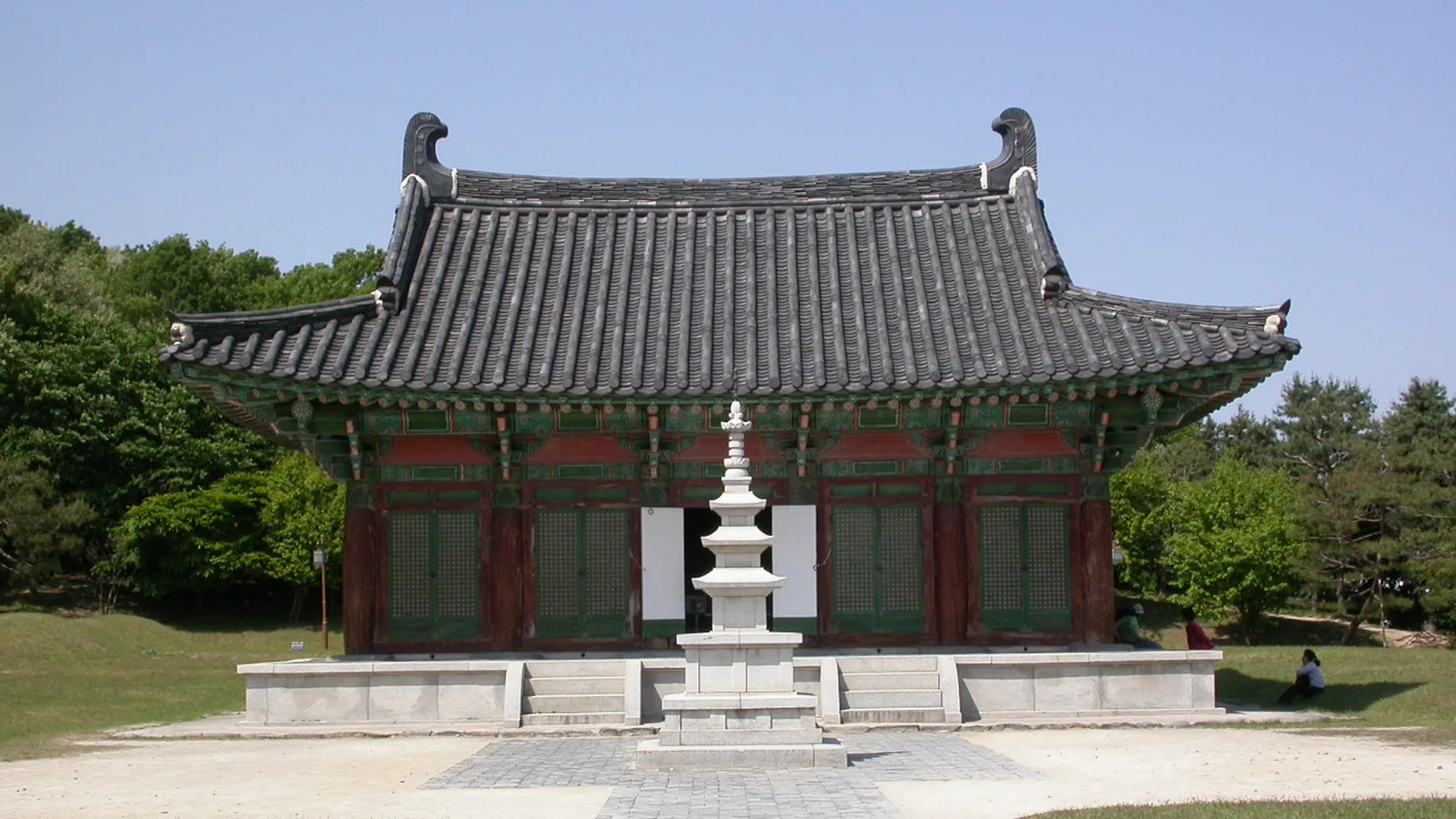
In October 1985, on the damaged eastern side, the team found a fragment of a bronze gong inscribed 西原府興德寺, Seowonbu Heungdeoksa, according to the Cheongju Early Printing Museum. The site became Historic Site No. 315 on May 7, 1986. A metal-detector search of the removed soil produced a bronze bowl lid inscribed with the temple’s name and the year 1150. The Global Jikji site places the temple about 2 kilometers northwest of the old Cheongju town walls, outside the county seat as the colophon says.
The Jikji entered UNESCO’s Memory of the World Register on September 4, 2001. In 2023 the BnF exhibition Imprimer ! L’Europe de Gutenberg showed the Bois Protat, a woodblock from about 1400, the Jikji and the Gutenberg Bible together for the first time. On April 11, 2023, the BnF and the Cultural Heritage Administration of the Republic of Korea signed a three-year agreement on scientific cooperation around the library’s Korean collections.

Key facts
- The colophon reads “宣光七年丁巳七月日 淸州牧外興德寺鑄字印施”: printed with cast metal type at Heungdeoksa outside Cheongju-mok, dated by Cheongju City to 1377 (Global Jikji).
- The metal-type edition was finished in the seventh lunar month of 1377, a year before the woodblock edition; the casting technique is unknown (BnF Essentiels).
- Only the second volume survives, beginning at folio 2, at the BnF as Coréen 109 (BnF; BnF Essentiels).
- Victor Collin de Plancy bought it in Seoul between 1888 and 1899 and wrote on its new cover that it was the oldest known Korean book printed in cast type (BnF Essentiels).
- Henri Vever bought it for 180 francs at the Drouot sale of 1911; the BnF gives the bequest as 1950 and entry to its collections as 1952, the Korea Heritage Service article as 1953 (BnF; Korea Heritage Service).
- The BnF and the National Archives of Korea give 78 years before the Gutenberg Bible; Cheongju’s Global Jikji site gives 63 years.
- Park Byeong-seon, at the BnF from 1967, presented her findings at the library’s International Book Year exhibition and a congress of European Orientalists in 1972 (Korea Heritage Service; National Archives of Korea).
- A gong fragment inscribed 西原府興德寺 identified the temple site in October 1985; it became Historic Site No. 315 on May 7, 1986 (Cheongju Early Printing Museum).
FAQ
Where is the Jikji kept?
The surviving metal-type volume is at the Bibliothèque nationale de France in Paris, in the Grande Réserve of the Manuscripts Department under the shelf mark Coréen 109. A woodblock edition dated 1378 is preserved in Korea.
How did the Jikji get to France?
Victor Collin de Plancy, France's representative in Seoul, bought it between 1888 and 1899. He sold his collection at the Drouot auction house in 1911, where Henri Vever bought the Jikji for 180 francs, and Vever's bequest brought it to the national library; the BnF gives 1950 for the bequest and 1952 for its entry.
How was Heungdeoksa found?
During a housing development in Cheongju, a Cheongju University Museum team excavated an unnamed temple site in 1985. In October a bronze gong fragment inscribed 西原府興德寺 identified it as Heungdeoksa, and a bowl lid dated 1150 with the temple's name was recovered later from soil removed from the site.
Sources
- Bibliothèque nationale de France, "'Jikji', a treasure of the world of printing" (English page)
- Yannick Bruneton, "Jikji : le plus ancien livre typographique connu," BnF Essentiels (French)
- Bibliothèque nationale de France, events calendar, "Le Jikji" (screening and discussion, April 18, 2023)
- Cheongju City, Global Jikji, "The printing of Jikji: Heungdeoksa" (Korean)
- Cheongju Early Printing Museum, "Excavation of the Heungdeoksa temple site" (Korean)
- Cheongju Early Printing Museum, "Heungdeoksa temple site" (Korean; Historic Site No. 315)
- Ra Gyeong-jun, "Dr. Park Byeong-seon, who revealed the true face of the Jikji," Korea Heritage Service monthly (Korean, April 10, 2009)
- National Archives of Korea, "Jikji and the Heungdeoksa temple site," written by Kim Jeong-mi (Korean)
Cite this article
- APA
- Song Letter. (2026, September 29). The Jikji colophon of 1377 and a Paris copy shelved as Coréen 109. Our Earth's History. https://ourearthshistory.com/east-asia/medieval/jikji-1377-heungdeoksa-metal-type-bnf/
- Chicago
- Song Letter. “The Jikji colophon of 1377 and a Paris copy shelved as Coréen 109.” Our Earth's History, September 29, 2026. https://ourearthshistory.com/east-asia/medieval/jikji-1377-heungdeoksa-metal-type-bnf/.
- MLA
- Song Letter. “The Jikji colophon of 1377 and a Paris copy shelved as Coréen 109.” Our Earth's History, 29 Sep. 2026, https://ourearthshistory.com/east-asia/medieval/jikji-1377-heungdeoksa-metal-type-bnf/.
Get the week in history
One email a week: the new articles, and what was happening elsewhere at the same moment. Free, no ads, unsubscribe any time. How we handle your email.
Text licensed CC BY-NC-ND 4.0. Found an error? Tell us.