The report of May 1, 1956, and twelve years to an official cause
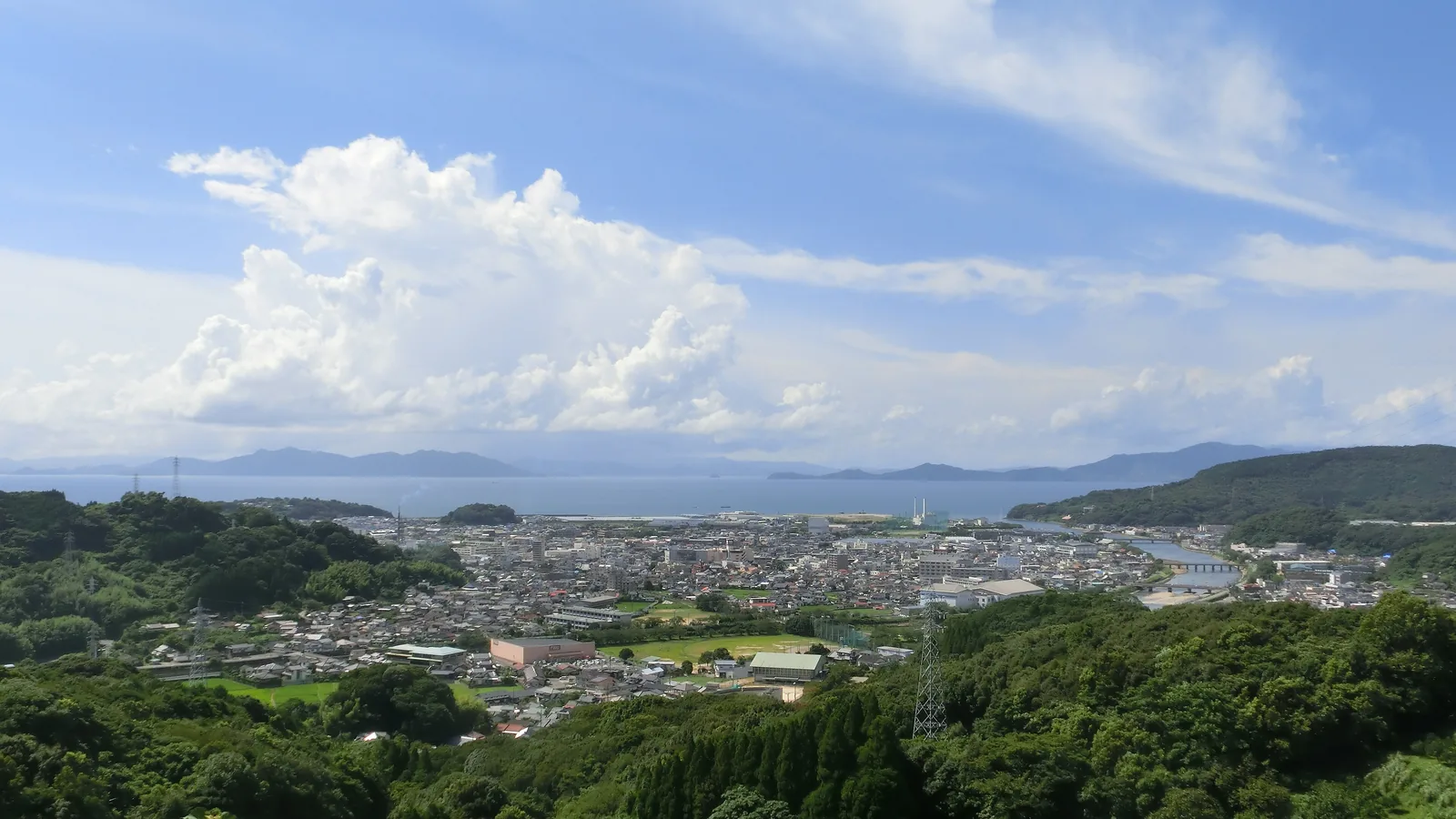

TL;DR — A Chisso factory doctor reported the disease on May 1, 1956; the government named methylmercury from the plant in September 1968; a mercury treaty took Minamata’s name in 2013.
On May 1, 1956, Hajime Hosokawa, Chisso’s company doctor in Minamata, reported patients with a nervous disease of unknown cause to the town’s public health center. Japan’s Ministry of the Environment counts that day as the official discovery of Minamata disease. Twelve years later, in September 1968, the government announced its opinion that Minamata disease “is a poisoning disease of central nervous system caused by methylmercury compound, which was produced as by-product in the process of manufacturing acetaldehyde at Chisso Co., Ltd. in Minamata City.” In between, Kumamoto University named heavy metal, then organic mercury, and Hosokawa fed the plant’s effluent to ten cats. On October 10, 2013 a convention on mercury adopted at Kumamoto took the town’s name.
Quick facts
- When
- May 1, 1956 (report to the Minamata public health center) · August 1956 (Kumamoto University research group) · November 1956 (heavy metal in fish and shellfish) · September 11, 1957 (Food Sanitation Act refused) · July 14, 1959 (organic mercury announced) · 1962 (methylmercury chloride extracted from sludge) · September 1968 (government opinion) · 1973 (Kumamoto judgment) · 1995 (settlement) · October 2004 (Supreme Court) · October 10, 2013 (convention adopted) · August 16, 2017 (in force)
- Where
- Minamata, on the Yatsushiro Sea coast of Kumamoto Prefecture, Japan; Minamata Bay; the Agano River basin in Niigata Prefecture; Kumamoto, where the convention was adopted
- Who
- Hajime Hosokawa, Chisso's company doctor; Shoji Kitamura of Kumamoto University; Chisso Co., Ltd.; Showa Denko Co., Ltd.; the Ministry of Health and Welfare; the Ministry of the Environment; the Supreme Court of Japan
- Outcome
- The government named methylmercury from Chisso's acetaldehyde process as the cause in September 1968. Courts found Showa Denko liable in 1971 and Chisso in 1973. By March 2001, 2,265 people had been certified on the Yatsushiro Sea coast and 690 in the Agano River basin. The Minamata Convention on Mercury was adopted at Kumamoto on October 10, 2013 and entered into force on August 16, 2017
August 1956: forty households and sixty-eight neighbors
S. Ekino and four colleagues wrote in the Journal of the Neurological Sciences in 2007 that “The first well-documented outbreak of acute methyl mercury (MeHg) poisoning by consumption of contaminated fish occurred in Minamata, Japan, in 1953,” three years before the report. In August 1956 Kumamoto University formed a research group. Its epidemiologist, Shoji Kitamura, a professor of public health, interviewed 40 households with patients and 68 adjacent households without. Takashi Yorifuji, writing in the Journal of Epidemiology in 2020, gives the result: households with patients “had higher odds of fishing occupation compared with the control households (odds ratio 21.6; 95% confidence interval, 6.8–68.7)”; the paper was available by January 1957.
In November 1956, in the Ministry of the Environment’s words, “the university reported that the disease is a certain type of heavy metal poisoning transmitted via fish and shellfish.” Kumamoto Prefecture considered using the Food Sanitation Act in March 1957 and asked Tokyo for an opinion. On September 11, 1957, according to Yorifuji, the Ministry of Health and Welfare replied that the act could not be applied “because there was no clear evidence that ‘all’ fish and ‘all’ shellfish are poisoned in the specified area in Minamata Bay.”
Ten cats and a sample of sludge, 1959 to 1962
On July 14, 1959, the university’s study group announced, in the words of a 2001 paper by K. Eto and colleagues, “that the disease was most likely caused by a kind of organic mercury.” Chisso’s own physicians then ran a test, which Peter Grandjean and three co-authors described in Environmental Health Perspectives in 2010: “Ten cats were fed standard cat food mixed with effluent from the acetaldehyde plant, where mercury was used as a catalyst.” The exposed cats developed symptoms similar to those seen in cats that had eaten fish from the bay. “Only in 1969 did Hosokawa reveal that the results existed and had been suppressed by his employer.”
Yorifuji states that acetaldehyde production at Minamata started in 1932 and peaked in 1960. In 1962 researchers extracted methylmercury chloride from the sludge of the acetaldehyde process and showed that the metal formed as a byproduct. Production stopped in May 1968, four months before the government spoke.
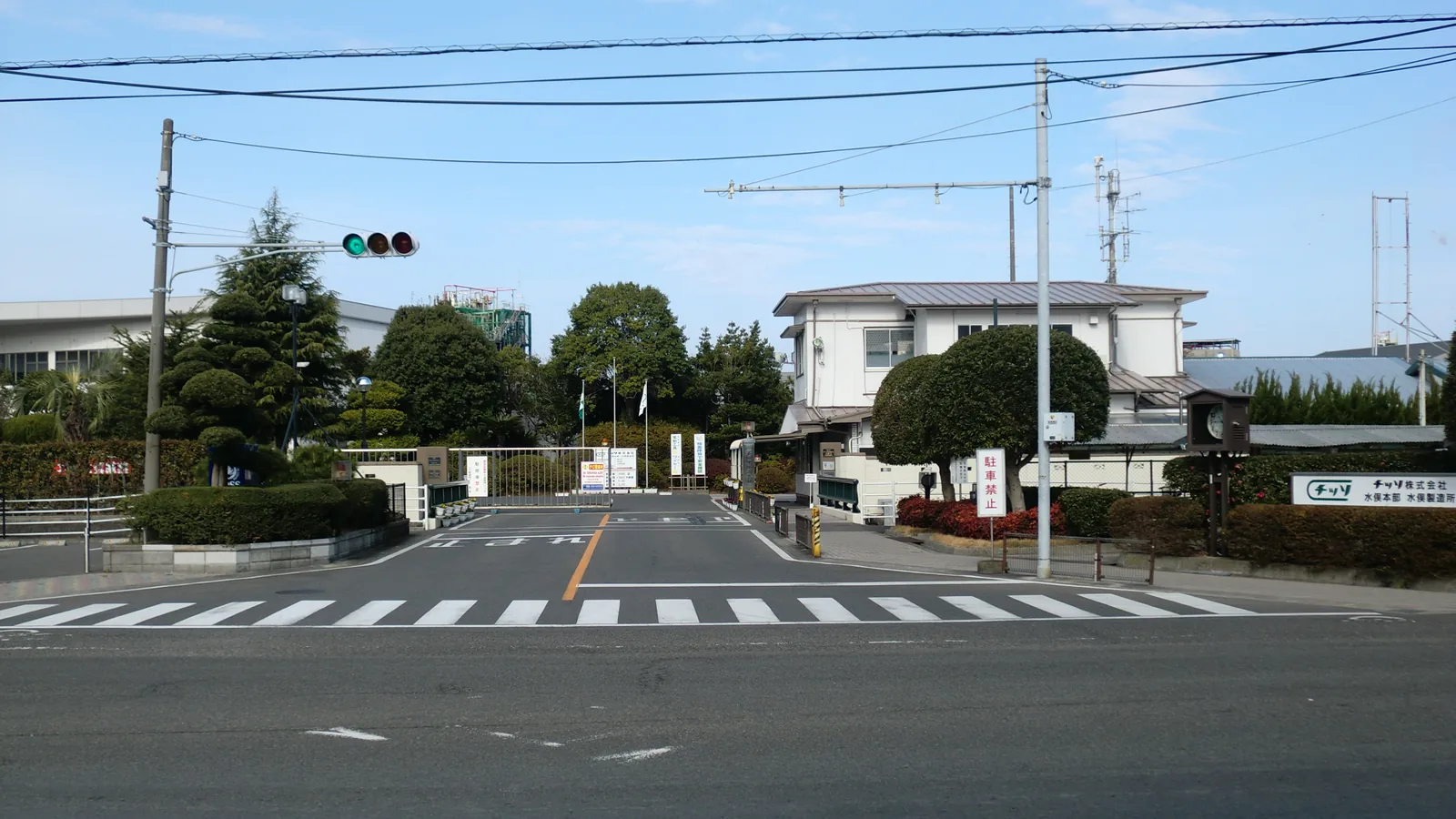

"A poisoning disease of central nervous system": the opinion of September 1968
Yorifuji writes that “in January 1965, similar methylmercury food poisoning occurred in Niigata,” from a Showa Denko plant on the Agano River; the National Institute for Minamata Disease’s chronology gives May 1965 as the month Niigata Minamata disease was confirmed officially. The government’s opinion of September 1968 named both companies and said the compound “was discharged with the factory effluent and polluted the environment, and then, through the food chain, it was accumulated in fish and shellfish.”
The ministry’s chronology lists a relief law for pollution-related disease in 1969, the Water Pollution Control Law in 1970 and the Pollution-related Health Damage Compensation Law in 1974. A court found Showa Denko liable for damages in the first Niigata suit in 1971 and a court found Chisso liable in the first Kumamoto suit in 1973; both decisions were finalized. The certification criteria under the compensation law, dated 1977, read in the ministry’s summary as “Symptoms including sensory disturbance in the distal portions of the extremities, ataxia, disorder of equilibrium, and narrowing of visual field.” The National Institute for Minamata Disease opened in the city in October 1978.
Dredging, split judgments and a lump sum, 1974 to 1995
From 1974 to 1990 Kumamoto Prefecture dredged about 1.5 million cubic meters of bottom sediment holding more than 25 parts per million of total mercury from Minamata Bay and made 58 hectares of landfill, at a total cost of 48 billion yen, of which the responsible company bore 30.5 billion yen. The state’s own liability took longer. The chronology lists a 1987 decision in the third Kumamoto suit that recognized the national government’s responsibility to pay, decisions in Tokyo and Niigata in 1992 that denied it, decisions in Kumamoto and Kyoto in 1993 that recognized it, and a Kansai decision in 1994 that denied it.
In September 1995 the three ruling coalition parties, the Liberal Democratic Party, the Socialist Party and New Party Sakigake, put forward “the final plan for settlement for Minamata Disease issues related to Kumamoto and Kagoshima Prefecture.” Under it “the company pays a lump sum (2.6 million yen per capita) to people who should be relieved,” the nation and the prefecture “express some responsible attitude, for example regret,” and those relieved withdraw their suits. By the end of March 2001 the ministry counted 2,265 persons certified on the Yatsushiro Sea coast and 690 in the Agano River basin, and “approximately 144.1 billion yen” paid by the two companies.
Kumamoto, October 10, 2013
In October 2004, in the account of Shigeru Takaoka, Yorifuji and three co-authors published in Toxics in 2018, “the Supreme Court of Japan ruled that the criteria stipulated by the Japanese Environmental Protection Agency for Minamata disease accreditation was too strict.” In 2009 came the “Act on Special Measures Concerning Relief for Victims of Minamata Disease and Solution to the Problem of Minamata Disease (Act No. 81 of 2009).” The counts differ by date and area: Yorifuji gives 2,282 patients officially recognized in Kumamoto and Kagoshima Prefectures up to January 2019, and the Ministry of the Environment gives “As of June 2022, 3,000 people have been certified” under the compensation law.
The United Nations Treaty Collection records that “The Convention was adopted on 10 October 2013 at Kumamoto (Japan) on the occasion of the Conference of Plenipotentiaries on the Minamata Convention on Mercury held from 7 to 11 October 2013.” Under article 31(1) it entered into force “on the ninetieth day after the date of deposit of the fiftieth instrument of ratification,” which fell on August 16, 2017.
Key facts
- On May 1, 1956, Hajime Hosokawa, Chisso’s company doctor, reported a nervous disease of unknown cause to the Minamata public health center; the Ministry of the Environment counts this as the official discovery (Grandjean et al. 2010; MoE chronology).
- Kumamoto University formed a research group in August 1956; Shoji Kitamura’s team compared 40 patient households with 68 neighbors and found an odds ratio of 21.6 for fishing occupation (Yorifuji 2020).
- In November 1956 the university reported “a certain type of heavy metal poisoning transmitted via fish and shellfish” (MoE, Chapter 2).
- On September 11, 1957, the Ministry of Health and Welfare replied that the Food Sanitation Act could not be applied to Minamata Bay (Yorifuji 2020).
- On July 14, 1959, the study group announced organic mercury as the likely cause; Chisso physicians then fed effluent to ten cats, and Hosokawa disclosed the suppressed results only in 1969 (Eto et al. 2001; Grandjean et al. 2010).
- Acetaldehyde production at Minamata ran from 1932 to 1968; methylmercury chloride was extracted from the process sludge in 1962 (Yorifuji 2020).
- In September 1968 the government announced that Minamata disease “is a poisoning disease of central nervous system caused by methylmercury compound” from Chisso and Showa Denko (MoE, Chapter 2; NIMD chronology).
- The Minamata Convention on Mercury was adopted at Kumamoto on October 10, 2013 and entered into force on August 16, 2017 (UN Treaty Collection).
FAQ
When was Minamata disease officially discovered?
On May 1, 1956, when Chisso's company doctor Hajime Hosokawa reported patients with a nervous disease of unknown cause to the Minamata public health center. The Ministry of the Environment's chronology calls this the official discovery of Minamata disease, and the memorial ceremony for the victims, held each May 1, is dated from it.
When did the Japanese government name the cause?
In September 1968. Its opinion stated that Minamata disease was caused by a methylmercury compound produced as a byproduct of acetaldehyde manufacture at Chisso in Minamata and at Showa Denko on the Agano River, discharged with factory effluent and accumulated in fish and shellfish.
How many people have been certified as Minamata disease patients?
The figure depends on the date and the area counted. The Ministry of the Environment counted 2,265 persons on the Yatsushiro Sea coast and 690 in the Agano River basin by the end of March 2001; Yorifuji gives 2,282 in Kumamoto and Kagoshima Prefectures up to January 2019; the ministry gives about 3,000 certified under the compensation law as of June 2022.
Sources
- Ministry of the Environment, Government of Japan, Minamata Disease: The History and Measures (2002), Chapter 2, Outbreak of Minamata Disease (the November 1956 report, the 1968 government opinion and the certified counts as of March 2001).
- Ministry of the Environment, Minamata Disease: The History and Measures (2002), Chapter 4, Measures against Minamata Disease (the 1968 stop, the 1970 law, dredging 1974 to 1990 and compensation paid by March 2001).
- Ministry of the Environment, Minamata Disease: The History and Measures (2002), Chapter 5 (the 1995 final plan for settlement by three ruling coalition parties).
- Ministry of the Environment, Minamata Disease: The History and Measures (2002), Reference: Chronology Related to Minamata Disease (court decisions 1971 to 1994, laws of 1969, 1970 and 1974).
- Ministry of the Environment, Government of Japan, "4. Environmental risk management (3) Environmental health measures [4] Promotion of measures on Minamata disease" (PDF 000130629; the 1977 judgment conditions, Act No. 81 of 2009, the count as of June 2022 and the May 1 memorial ceremony).
- National Institute for Minamata Disease, "About NIMD: Outline and historical development" (founding in October 1978; chronology entries for May 1956, May 1965 and September 1968).
- United Nations Treaty Collection, Chapter XXVII, 17, Minamata Convention on Mercury, Kumamoto, 10 October 2013 (status page with adoption, signature and entry-into-force notes).
- Yorifuji T., "Lessons From an Early-stage Epidemiological Study of Minamata Disease," Journal of Epidemiology 30(1), 2020, pp. 12–14 (PMC6908841).
- Kitamura S. et al., "A Central Nervous System Disease of Unknown Cause That Occurred in the Minamata Region: Results of an Epidemiological Study," reprinted in Journal of Epidemiology 30(1), 2020, pp. 3–11 (PMC6908842).
- Grandjean P., Satoh H., Murata K., Eto K., "Adverse Effects of Methylmercury: Environmental Health Research Implications," Environmental Health Perspectives 118(8), 2010, pp. 1137–1145 (PMC2920086).
- Takaoka S., Fujino T., Kawakami Y., Shigeoka S., Yorifuji T., "Survey of the Extent of the Persisting Effects of Methylmercury Pollution on the Inhabitants around the Shiranui Sea, Japan," Toxics 6(3), 2018, article 39 (PMC6160922).
- Eto K. et al., "Reappraisal of the historic 1959 cat experiment in Minamata by the Chisso Factory," Tohoku Journal of Experimental Medicine, 2001 (abstract, Europe PMC record MED/11725835).
- Ekino S., Susa M., Ninomiya T., Imamura K., Kitamura T., "Minamata disease revisited: an update on the acute and chronic manifestations of methyl mercury poisoning," Journal of the Neurological Sciences, 2007 (abstract, Europe PMC record MED/17681548).
Cite this article
- APA
- Our Earth's History. (2026, September 22). The report of May 1, 1956, and twelve years to an official cause. Our Earth's History. https://ourearthshistory.com/east-asia/contemporary/minamata-may-1-1956-hosokawa-report-1968-recognition-2013-convention/
- Chicago
- Our Earth's History. “The report of May 1, 1956, and twelve years to an official cause.” Our Earth's History, September 22, 2026. https://ourearthshistory.com/east-asia/contemporary/minamata-may-1-1956-hosokawa-report-1968-recognition-2013-convention/.
- MLA
- “The report of May 1, 1956, and twelve years to an official cause.” Our Earth's History, 22 Sep. 2026, https://ourearthshistory.com/east-asia/contemporary/minamata-may-1-1956-hosokawa-report-1968-recognition-2013-convention/.
Text licensed CC BY-NC-ND 4.0. Found an error? Tell us.