Three dates, one handshake: Stanley meets Livingstone, 1871
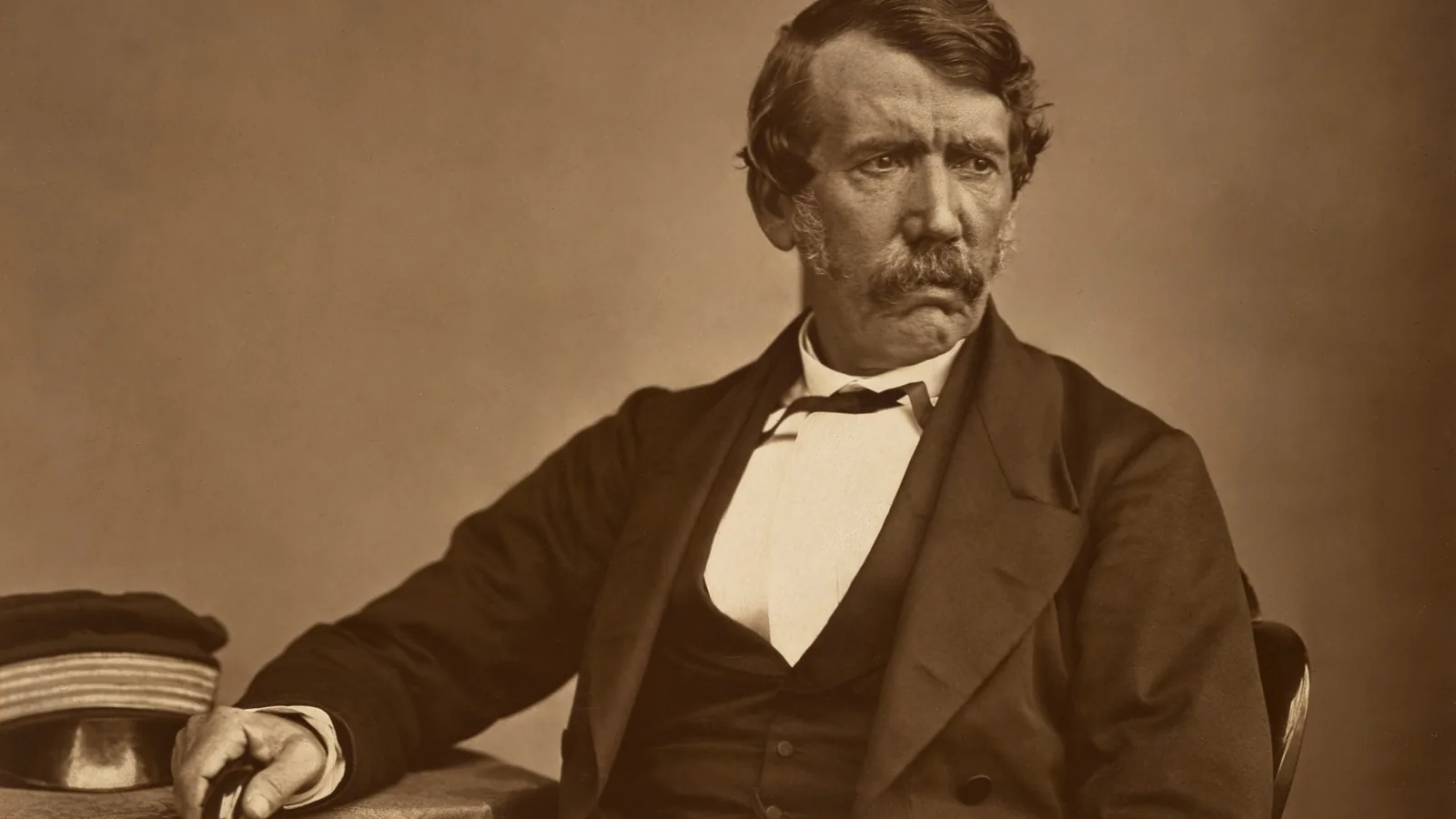

TL;DR — Stanley’s book puts the Ujiji meeting on November 10, 1871; his own dispatch said November 3, and Livingstone’s diary points to late October.
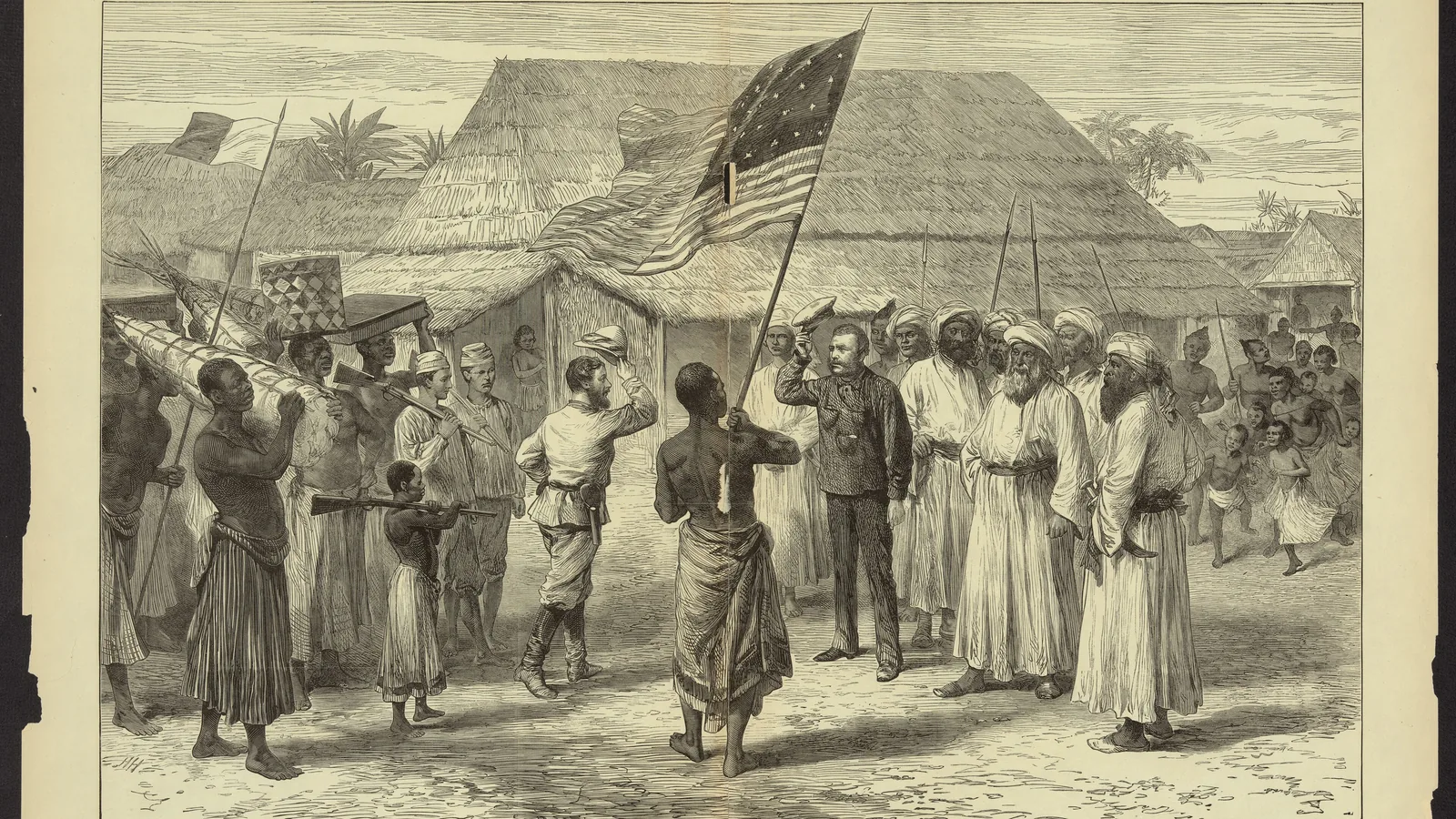
Henry Morton Stanley later wrote that, standing before a crowd at Ujiji, he “walked deliberately to him, took off my hat, and said: ‘DR. LIVINGSTONE, I PRESUME?’” His book, How I Found Livingstone, published in 1872, dates the meeting to November 10, 1871. Stanley’s own dispatch to the New York Herald had given a different day, and David Livingstone’s own diary points toward late October rather than November. Livingstone refused to leave Africa with Stanley and continued his search for the source of the Nile. He died in 1873, and his attendants carried his body to the coast for burial in London the following year.
Quick facts
- When
- Stanley's book gives November 10, 1871, his own New York Herald dispatch gave November 3, 1871, and Livingstone Online lists October 27, 28 or 29, or November 3 or 10, 1871, as the possible dates
- Where
- Ujiji, on the eastern shore of Lake Tanganyika; burial at Westminster Abbey, London
- Who
- Henry Morton Stanley; David Livingstone; James Gordon Bennett Jr.; Abdullah Susi; James Chuma
- Outcome
- Livingstone refused to leave Africa with Stanley, continued his search for the source of the Nile, died at Chitambo on May 1, 1873, and was buried at Westminster Abbey on April 18, 1874
James Gordon Bennett Jr.'s one order
Stanley wrote in his book that a telegram reached him in Madrid on October 16, 1869, calling him to Paris to meet James Gordon Bennett Jr., publisher of the New York Herald. Bennett told him to act on his own judgment and, according to Stanley’s account, to spare no expense: “Draw a thousand pounds now; and when you have gone through that, draw another thousand, and when that is spent, draw another thousand, and when you have finished that, draw another thousand, and so on; but, FIND LIVINGSTONE.” Two years later Stanley reached Ujiji, a town on the eastern shore of Lake Tanganyika.
Five candidate dates for one meeting
Stanley’s dispatch to the New York Herald, filed on November 10, 1871, told readers the meeting had happened “a week earlier, on the 3 November 1871.” His book, published the following year, instead gives the date as November 10; the two accounts by the same man disagree by a week, an essay published by Livingstone Online notes. Livingstone’s own diary, the Unyanyembe Journal, describes Stanley’s arrival in the middle of a long entry headed “24 October,” with the date “28 October” written in the margin of the next page and no clear break in the text to mark where a new entry starts. The essay describes Livingstone’s own account of the moment as fixing no hour, since it begins “one morning.” The last entry in Livingstone’s 1871 field diary carries a date that, once corrected for his own error, points to October 13 or 14, before the meeting rather than after it. The Belgian historian François Bontinck argued in 1979 that Stanley had simply miscorrected a date; Stanley’s biographer Tim Jeal wrote in 2007 that Stanley “fabricated the fact that he had made a mistake in the first place,” adding that “Livingstone’s ‘21-day discrepancy’ is by no means a proven quantity.” Livingstone Online’s own conclusion names five candidates and stops there, listing “the possible dates of 27, 28, 29 October, and 3 and 10 November for the Livingstone and Stanley meeting.”
_-_H.H_LCCN2008678860.jpg)
A field diary that stops before Ujiji
Livingstone Online, the scholarly edition of Livingstone’s manuscripts hosted by the University of Maryland Libraries, calls Stanley “the author of the famous (and possibly apocryphal) phrase” quoted above. The words survive only in Stanley’s own account. The notebook Livingstone kept after the meeting, Field Diary XIV, opens with Stanley already present: Livingstone “first records Stanley’s presence simply by noting ‘Mr Stanley severe fever.’” The exact date of the meeting, Livingstone Online states, “is in dispute.” Once the two men had rested, they traveled together around the northern end of Lake Tanganyika and confirmed that the Rusizi River flows into the lake rather than out of it, ruling the lake out as a direct source of the Nile. Livingstone Online notes that Stanley “was the only European whom Livingstone encountered during the seven years of his final travels.” The pair returned to Ujiji and then moved east to Unyanyembe, where boxes Livingstone had left four years earlier were waiting; opening one that held guns, ammunition and china still intact, he wrote in his diary, “cheese good.”
"Why should I go home before my task is ended?"
Stanley asked Livingstone why he had stopped short of finishing his exploration instead of returning home. Livingstone answered, as Stanley recorded it: “Why should I go home before my task is ended, to have to come back again to do what I can very well do now?” It was, Stanley’s account states, the want of supplies alone that had kept Livingstone from finishing his search for the Nile’s source. Livingstone stayed in Africa. Stanley left for the coast on March 14, 1872, carrying Livingstone’s sealed Unyanyembe Journal, marked in Livingstone’s own words: “sealed with 5 seals American gold coin - anna & ½ & cake of paint with royal arms - Positively not to be opened.”
April 18, 1874, at Westminster Abbey
Livingstone’s gravestone gives his death as “DIED MAY 1, 1873 AT CHITAMBO’S VILLAGE, ULALA,” a Westminster Abbey page states, noting that Ulala is a misspelling of Ilala. The Abbey’s account states that his attendants carried his body to the coast and on to London, arriving the following year. Two of those attendants, Abdullah Susi and James Chuma, are named in Livingstone Online’s account of a meeting held at Newstead Abbey in 1874, where they discussed Livingstone’s diaries, maps and plans with his children. The Dean of Westminster, Stanley, presided at the funeral. Jacob Wainwright, who had escorted the body from Africa, threw palm leaves into the grave when Livingstone was buried at Westminster Abbey on April 18, 1874.
Key facts
- Stanley’s book, How I Found Livingstone (1872), places the Ujiji meeting on November 10, 1871, though his earlier dispatch to the New York Herald had given November 3 (Livingstone Online date essay).
- Livingstone Online lists the possible dates as “27, 28, 29 October, and 3 and 10 November” 1871, without choosing one.
- James Gordon Bennett Jr., publisher of the New York Herald, ordered Stanley: “BUT FIND LIVINGSTONE!” and told him to draw a thousand pounds at a time (Stanley, How I Found Livingstone).
- Livingstone Online calls “Dr. Livingstone, I presume?” a “famous (and possibly apocryphal)” phrase; Stanley’s book is the only source for the words.
- Livingstone’s Field Diary XIV opens after the meeting, recording Stanley’s presence only as “Mr Stanley severe fever.”
- Livingstone refused to leave with Stanley, telling him: “I must not go home; I must finish my task.”
- David Livingstone died at Chitambo’s village, Ilala, on May 1, 1873, according to his gravestone inscription.
- Livingstone was buried at Westminster Abbey on April 18, 1874, after his attendants carried his body to the coast.
FAQ
Did Stanley really say "Dr. Livingstone, I presume?"
The only source for the line is Stanley's own account, published in 1872. Livingstone Online calls the phrase "famous (and possibly apocryphal)."
What date did Stanley and Livingstone actually meet at Ujiji?
No source settles it. Livingstone Online lists five candidates: October 27, 28 or 29, or November 3 or 10, 1871.
What happened to Livingstone's body after he died?
His attendants, including Abdullah Susi and James Chuma, carried his body to the coast, and he was buried at Westminster Abbey on April 18, 1874.
Sources
- Henry M. Stanley, 'How I Found Livingstone: Travels, Adventures, and Discoveries in Central Africa' (London, 1872), Project Gutenberg ebook #5157, plain text.
- Livingstone Online (University of Maryland Libraries), "Field Diary XIV: An Overview."
- Livingstone Online, "The Date of the Livingstone-Stanley Meeting" (Livingstone Spectral Imaging Project essay).
- Livingstone Online, introduction to "Livingstone's Final Manuscripts (1865-1873)."
- Livingstone Online, "The Aftermath of Livingstone's Death."
- Westminster Abbey, "David Livingstone" (official commemorations page).
Cite this article
- APA
- Our Earth's History. (2026, September 26). Three dates, one handshake: Stanley meets Livingstone, 1871. Our Earth's History. https://ourearthshistory.com/africa/modern/livingstone-stanley-ujiji-1871-three-dates-dr-livingstone-i-presume/
- Chicago
- Our Earth's History. “Three dates, one handshake: Stanley meets Livingstone, 1871.” Our Earth's History, September 26, 2026. https://ourearthshistory.com/africa/modern/livingstone-stanley-ujiji-1871-three-dates-dr-livingstone-i-presume/.
- MLA
- “Three dates, one handshake: Stanley meets Livingstone, 1871.” Our Earth's History, 26 Sep. 2026, https://ourearthshistory.com/africa/modern/livingstone-stanley-ujiji-1871-three-dates-dr-livingstone-i-presume/.
Text licensed CC BY-NC-ND 4.0. Found an error? Tell us.