Eight words out of section 51 and all of section 127: May 27, 1967
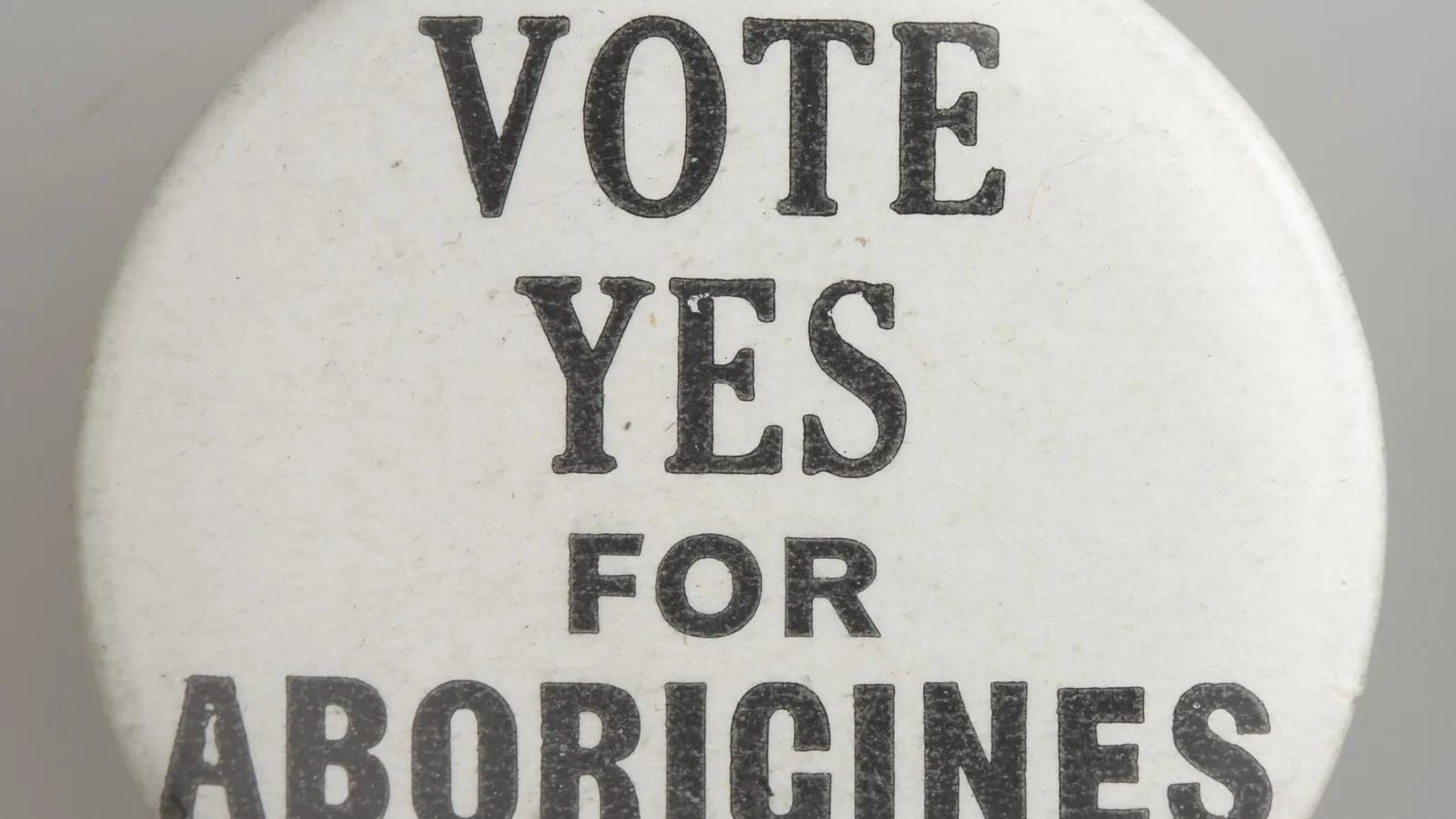

TL;DR — On May 27, 1967, 90.77% of Australian voters approved striking eight words from section 51 and all of section 127 of the Constitution; the day’s second question failed.
“The Constitution is altered by omitting from paragraph (xxvi.) of section 51 the words ’ ,other than the aboriginal race in any State,’.” That is section 2 of Constitution Alteration (Aboriginals) 1967, No. 55 of 1967, as the Federal Register of Legislation prints it. Section 3 is one line: “The Constitution is altered by repealing section 127.” The Act received royal assent on August 10, 1967. The vote behind it was held on Saturday, May 27, 1967, and the Australian Electoral Commission’s table of referendum results lists it as “Carried,” with a majority in “All” states and 90.77% of votes in favor. A second question on the same day, on the size of the House of Representatives, was “Not Carried” at 40.25%, with a majority in New South Wales alone. The Aboriginals vote did not give Aboriginal people the franchise, which had come in 1962, and it did not bring equal wages.
Quick facts
- When
- March 16, 1967 (Liberal Party internal note on the campaign) · March 21 (Holt's letter to Bowen on the joint Yes case) · April 28 (writ issued) · May 27, 1967 (polling day, two questions) · August 10, 1967 (royal assent to Constitution Alteration (Aboriginals) 1967) · February 1968 (first Minister for Aboriginal Affairs)
- Where
- Polling places in all six Australian states; Canberra (Parliament, the Prime Minister's office); the ABC's national network; Nambucca Heads, New South Wales (1958); the Warburton Ranges, Western Australia (1956 film)
- Who
- Prime Minister Harold Holt; John McEwen (Country Party); Gough Whitlam (Labor); Attorney-General Nigel Bowen; Faith Bandler; the Federal Council for the Advancement of Aborigines and Torres Strait Islanders (FCAATSI); Jan Merton; W. C. Wentworth
- Outcome
- The "Aboriginals" question was "Carried" with 90.77% of votes in favor and a majority in all six states; the "Parliament" question was "Not Carried" at 40.25%. The Act omitted "other than the aboriginal race in any State" from section 51(xxvi) and repealed section 127. The Council for Aboriginal Affairs followed, and W. C. Wentworth became the first Minister for Aboriginal Affairs in February 1968
"Carried" in all six states, "Not Carried" in five
The AEC’s table gives the writ for both questions as issued on April 28, 1967, and polling day as May 27. Both results turned on a rule the AEC describes as a double majority: a national majority of voters, and a majority of voters in a majority of the states, at least four of the six. The Aboriginals question met both conditions; the Parliament question met neither.
Reconciliation Australia’s fact sheet gives the clauses as they stood. Section 51(xxvi) had let the parliament make laws for “people of any race, other than the Aboriginal race in any state, for whom it was deemed necessary to make special laws.” Section 127 had read: “in reckoning the numbers of people of the Commonwealth, or of a State or other part of the Commonwealth, aboriginal natives shall not be counted.” The Act prints “aboriginal race in any State”; the fact sheet, “Aboriginal race in any state.” The Act’s long title covers both changes: “An Act to alter the Constitution so as to omit certain words relating to the People of the Aboriginal Race in any State and so that Aboriginals are to be counted in reckoning the Population.”
Voting rights came in 1962, and equal wages did not come in 1967
The referendum was not a vote on the franchise. Reconciliation Australia records that “All Aboriginal and Torres Strait Islander people finally gained the right to vote in Federal elections in 1962, and in all state elections by 1965.” Rights before 1967 varied by state, and the fact sheet puts the contrast in one sentence: “if an Aboriginal or Torres Strait Islander person lived in New South Wales, he or she had the right to do some of the things listed above. If the same person lived in Queensland, they had none of these rights.”
The same document draws a second line: “the referendum did not end discrimination. For example, Aboriginal and Torres Strait Islander people did not receive equal wages as a result of the referendum; this right was granted through a different process.”
Faith Bandler and a film from the Warburton Ranges
Reconciliation Australia credits campaigns by the Federal Council for the Advancement of Aborigines and Torres Strait Islanders (FCAATSI), the Australian Aborigines League, the Aboriginal-Australian Fellowship and the Aborigines Progressive Association, run “for close to a decade.” Lisa Waller and Kerry McCallum, writing in Media, Culture & Society in 2018, trace the push for constitutional reform to a campaign that gained momentum from 1958 through the newly formed FCAATSI, and place its starting point in a 20-minute film of 1956 from the Warburton Ranges of Western Australia, which “depicted Aboriginal people starving, covered in flies, barely able to stand” after the Maralinga nuclear tests had pushed them off their country.
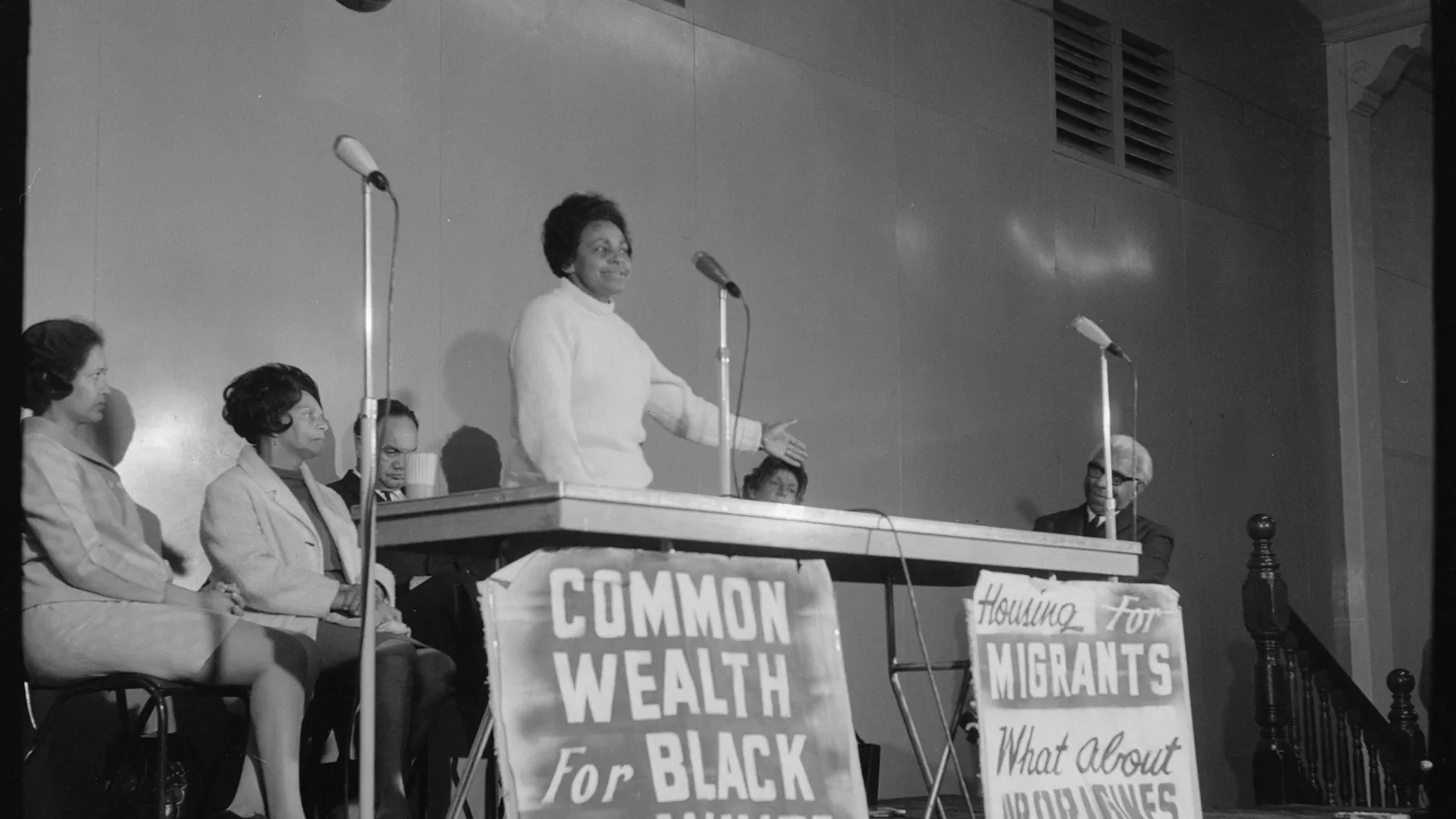
Waller and McCallum describe Faith Bandler, a civil rights campaigner of South Sea Islander heritage, as “the acceptable face of change and chief narrator of the 1967 referendum.” When white residents of Nambucca Heads, New South Wales, protested the sale of a house to an Aboriginal family, Bandler said in an interview on August 19, 1958: “To my way of thinking, there is no difference between what Little Rock people have done and the Nambucca protest. I think it is absolutely shocking and disgusting.”

March 21, 1967: three party leaders and one Yes case
Waller and McCallum cite letters held by the National Archives of Australia. On March 21, 1967, Prime Minister Harold Holt wrote to Attorney-General Nigel Bowen that John McEwen of the Country Party and Gough Whitlam of Labor “have agreed to join me in presenting the ‘Yes’ case in respect of the referendum proposals.” No “No” case was mounted. A Liberal Party internal note of March 16 had already set the method: “It is not contemplated that any State Division will be in a financial position to embark on an advertising campaign through the media of commercial TV, radio and press.” The plan was a joint statement and shared time on the ABC, with the three leaders appearing “to be speaking in one voice.”
On May 12 Holt answered Jan Merton, a volunteer publicity officer who had asked for front-page and prime-time coverage, that he would be “making two telecasts and two broadcasts supporting the ‘Yes’ case … These programmes will be used on the ABC’s national network covering all states.” A week before the poll the ABC broadcast The Day of the Aboriginal, which ended with members of the Aboriginal-Australian Fellowship singing Gary Shearston’s “Vote Yes for Freedom.” The New South Wales Vote Yes committee asked radio stations to run a “Vote Yes for Aborigines” jingle free of charge, because “the churches, trade unions and all political parties wish for an overwhelming ‘YES’ result.”
The Council for Aboriginal Affairs and the Acts that followed
Reconciliation Australia records that the first body the government set up under its new power was the Council for Aboriginal Affairs, and that W. C. Wentworth became the first Minister for Aboriginal Affairs in February 1968. The fact sheet lists the Acts that followed: the Aboriginal and Torres Strait Islanders (Queensland Discriminatory Laws) Act 1975, the Aboriginal Councils and Associations Act 1976, the Aboriginal Land Rights (Northern Territory) Act 1976, the Council for Aboriginal Reconciliation Act 1991 and the Native Title Act 1993.
Waller and McCallum read the same record differently, arguing that television made 1967 into a myth: “the referendum did not acknowledge human rights violations, remove all discriminatory clauses from the constitution or recognise the status of Australia’s First Nations.” Reconciliation Australia counts the symbol of recognition among the referendum’s main results. On paper the Act struck eight words from one paragraph and repealed one section, received assent on August 10, 1967, and in February 1968 Australia had its first Minister for Aboriginal Affairs.
Key facts
- Constitution Alteration (Aboriginals) 1967, No. 55 of 1967, omitted from section 51(xxvi) the words “other than the aboriginal race in any State” and repealed section 127; it was assented to on August 10, 1967 (Federal Register of Legislation).
- The AEC’s results table gives the writ as issued on April 28, 1967, polling day as May 27, 1967, the result as “Carried,” states in favor as “All” and votes in favor as 90.77%.
- The “Parliament” (nexus) question put to voters the same day was “Not Carried” at 40.25%, with a majority in New South Wales only (AEC).
- A constitutional change needs a double majority, a national majority and majorities in at least four of the six states; the AEC counts eight of 45 proposals carried since Federation.
- Aboriginal and Torres Strait Islander people gained the federal vote in 1962 and the vote in all state elections by 1965, with Queensland last (Reconciliation Australia).
- Reconciliation Australia states that the referendum “did not end discrimination” and that equal wages were “granted through a different process.”
- On March 21, 1967, Holt wrote that McEwen and Whitlam had “agreed to join me in presenting the ‘Yes’ case”; no “No” case was mounted (Waller and McCallum, 2018, citing the National Archives of Australia).
- The Council for Aboriginal Affairs was the first body created under the new power, and W. C. Wentworth became the first Minister for Aboriginal Affairs in February 1968 (Reconciliation Australia).
FAQ
What did the 1967 Australian referendum change in the Constitution?
It removed the words "other than the aboriginal race in any State" from section 51(xxvi), so that the federal parliament could make laws for Aboriginal people, and it repealed section 127, which had excluded "aboriginal natives" from population counts. The Act received royal assent on August 10, 1967.
Did the 1967 referendum give Aboriginal Australians the right to vote?
No. Reconciliation Australia's fact sheet records that the federal vote came in 1962 and the vote in all state elections by 1965. The referendum concerned the parliament's law-making power and the census, not the franchise.
What was the second question on May 27, 1967?
A proposal "to increase the number of Members of the House of Representatives without necessarily increasing the number of Senators." The AEC lists it as "Not Carried" with 40.25% of votes in favor and a majority in New South Wales alone.
Sources
- Federal Register of Legislation (Australian Government), Constitution Alteration (Aboriginals) 1967, No. 55 of 1967, as made: long title, section 2 (section 51(xxvi)) and section 3 (repeal of section 127), assented to August 10, 1967 (PDF).
- Australian Electoral Commission, "Referendum dates and results" (updated August 12, 2025): the 1967 "Parliament" and "Aboriginals" rows, with issue of writ, polling day, result, states in favor and percentage of votes in favor.
- Australian Electoral Commission, "Constitutional referendums 1901–1999" (fact sheet, PDF): the lines "Parliament 27.5.1967 NSW 40.25" and "Aborigines 27.5.1967 All 90.77".
- Australian Electoral Commission, "Referendums": the double majority condition and the count of 45 proposals since Federation, eight carried.
- Reconciliation Australia, "The 1967 Referendum" (fact sheet, April 2025 update, PDF): the wording of sections 51(xxvi) and 127 before 1967, voting rights in 1962 and 1965, rights by state, equal wages, the campaign organizations, the Council for Aboriginal Affairs and the later Acts.
- Lisa Waller and Kerry McCallum, "How television moved a nation: media, change and Indigenous rights," Media, Culture & Society 40, no. 7 (2018): 992–1007, open access via Europe PMC (PMC6146313): FCAATSI from 1958, the Warburton Ranges film, Faith Bandler, the letters of March 1967, the Liberal note of March 16, the Merton–Holt exchange, the ABC program and the NSW jingle.
Cite this article
- APA
- Our Earth's History. (2026, September 22). Eight words out of section 51 and all of section 127: May 27, 1967. Our Earth's History. https://ourearthshistory.com/oceania/contemporary/australia-may-27-1967-referendum-ninety-point-seven-seven-two-words/
- Chicago
- Our Earth's History. “Eight words out of section 51 and all of section 127: May 27, 1967.” Our Earth's History, September 22, 2026. https://ourearthshistory.com/oceania/contemporary/australia-may-27-1967-referendum-ninety-point-seven-seven-two-words/.
- MLA
- “Eight words out of section 51 and all of section 127: May 27, 1967.” Our Earth's History, 22 Sep. 2026, https://ourearthshistory.com/oceania/contemporary/australia-may-27-1967-referendum-ninety-point-seven-seven-two-words/.
Text licensed CC BY-NC-ND 4.0. Found an error? Tell us.