The Cooper Creek depot emptied nine hours before Burke returned

TL;DR — Brahe left the Cooper Creek depot nine hours before Burke, Wills and King arrived there on April 21, 1861; a royal commission later divided the blame.
“They eventually reached the rendezvous point on 21 April 1861, 9 hours after the rest of the party had given up waiting and left, leaving a note and some food, as they had not been relieved by the party supposed to be returning from Menindie,” the Burke & Wills Web states. Robert O’Hara Burke, William John Wills and John King rode into the Cooper Creek depot that day and found William Brahe’s party gone. Behind them lay a march out of Melbourne in August 1860, a run to the Gulf of Carpentaria and back, and a death on the way. Ahead lay two more deaths, a single survivor, and an inquiry that divided the blame.
Quick facts
- When
- August 20, 1860 (departure from Royal Park) · November 11, 1860 (Cooper Creek depot reached) · December 16, 1860 (Burke pushes north) · February 9, 1861 (Flinders River mangroves reached) · April 21, 1861 (Brahe leaves the depot; Burke, Wills and King arrive nine hours later) · September 15, 1861 (John King found by Edwin Welch) · Royal Commission report (Parliamentary Papers No. 97, printed "1861-2," reprint dateline "22 February 1861") · January 23, 1863 (state funeral, Melbourne)
- Where
- Royal Park, Melbourne; the Cooper Creek depot; the Flinders River mangroves near present-day Normanton; Melbourne
- Who
- Robert O'Hara Burke; William John Wills; John King; Charley Gray; William Brahe; Wright; Alfred William Howitt; Edwin Welch; the Yandruwandha people
- Outcome
- Burke and Wills died at or near Cooper Creek after being left behind by their own depot party; King survived with the Yandruwandha and was found alive five months later. A royal commission divided responsibility among Burke, Wright, the Exploration Committee and Brahe, and the two explorers received a state funeral in Melbourne.
Fifteen thousand watched the expedition leave
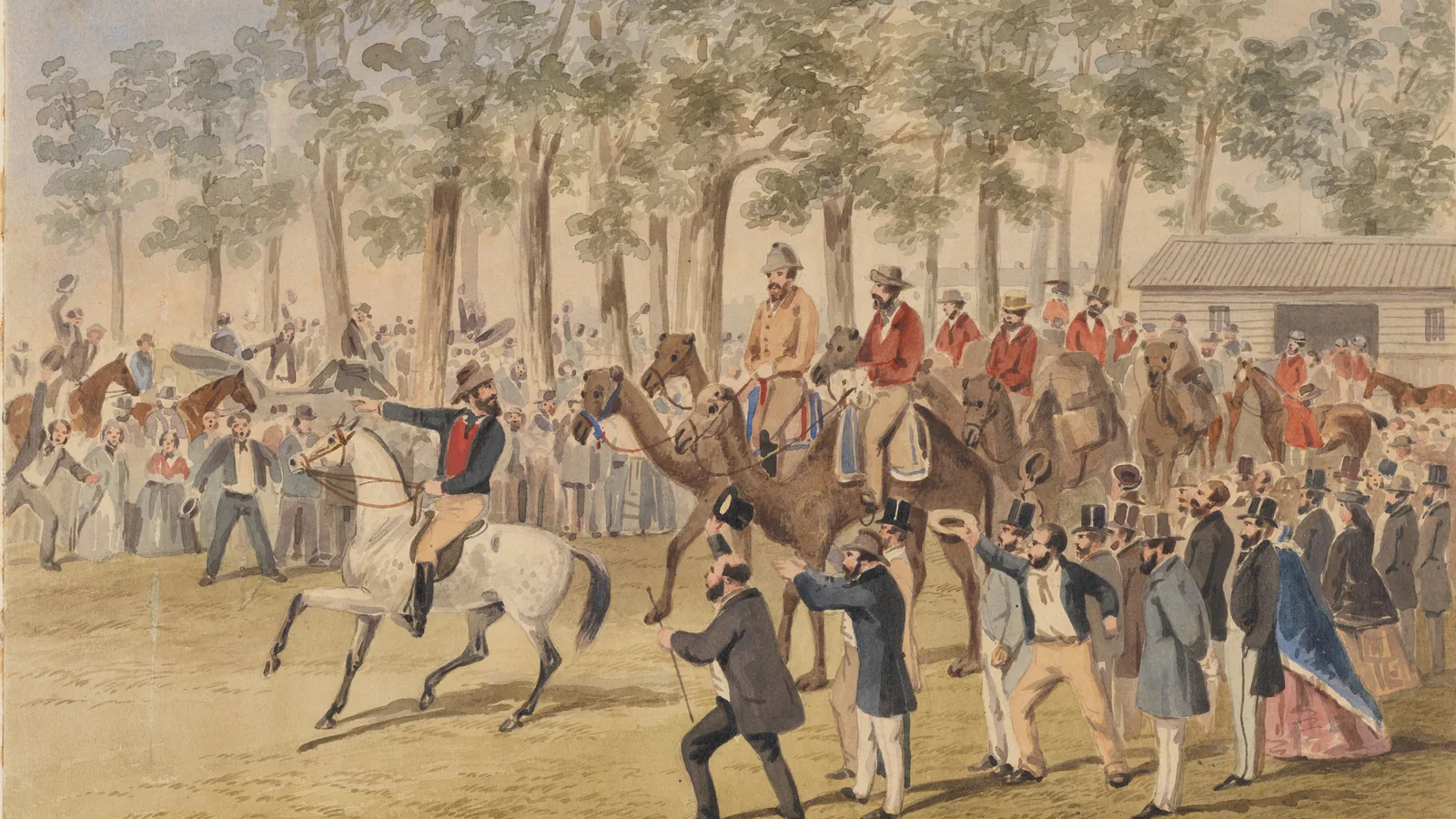
Fifteen thousand people watched the Victorian Exploring Expedition leave Royal Park on Monday, August 20, 1860, State Library Victoria’s history site Ergo records. Nineteen men, 27 camels and 23 horses left Melbourne that day under Burke, with Wills serving as surveyor and astronomical observer, according to the Burke & Wills Web. The Royal Society of Victoria stood behind the expedition; Ergo states that the society “was formed in 1859 as an amalgamation of the Philosophical Society of Victoria and the Victorian Institute for the Advancement of Science, with a brief to promote science and technology in Victoria.” An earlier body, the Philosophical Institute’s Exploration Committee, had promoted the crossing since 1857 and raised money for it; the Argus reported at the time that “a gentleman of Melbourne proposes to give the sum of £1000 towards the promotion of a judicious scheme of Australian exploration.”
Burke split the party at Cooper Creek
The advance group reached Cooper Creek, 400 miles past Menindee, on November 11, 1860, the Burke & Wills Web states. After a break there, Burke decided on a fast run to the Gulf of Carpentaria, leaving on December 16, 1860, and left Brahe in charge of the party that stayed behind. Burke, Wills, King and Charley Gray reached the mangroves at the mouth of the Flinders River, near the site of present-day Normanton, on February 9, 1861; flooding rains and swamps kept the four men from open water. Gray died four days before the surviving three reached the rendezvous at Cooper Creek, and they rested for a day to bury him.
April 21, 1861: a depot found empty
The Royal Commission’s report states that Brahe had held the Cooper Creek depot for “four months and five days,” and that his “powers of endurance gave way” only when he was “pressed by the appeals of a comrade sickening, even to death.” Brahe’s party left the camp on the morning of April 21, 1861. Burke, Wills and King rode in the same day, nine hours later, and found it abandoned, with a note and some food left for them. Neither party had been resupplied by the group that was to have returned from Menindee.

'I am King, sir'
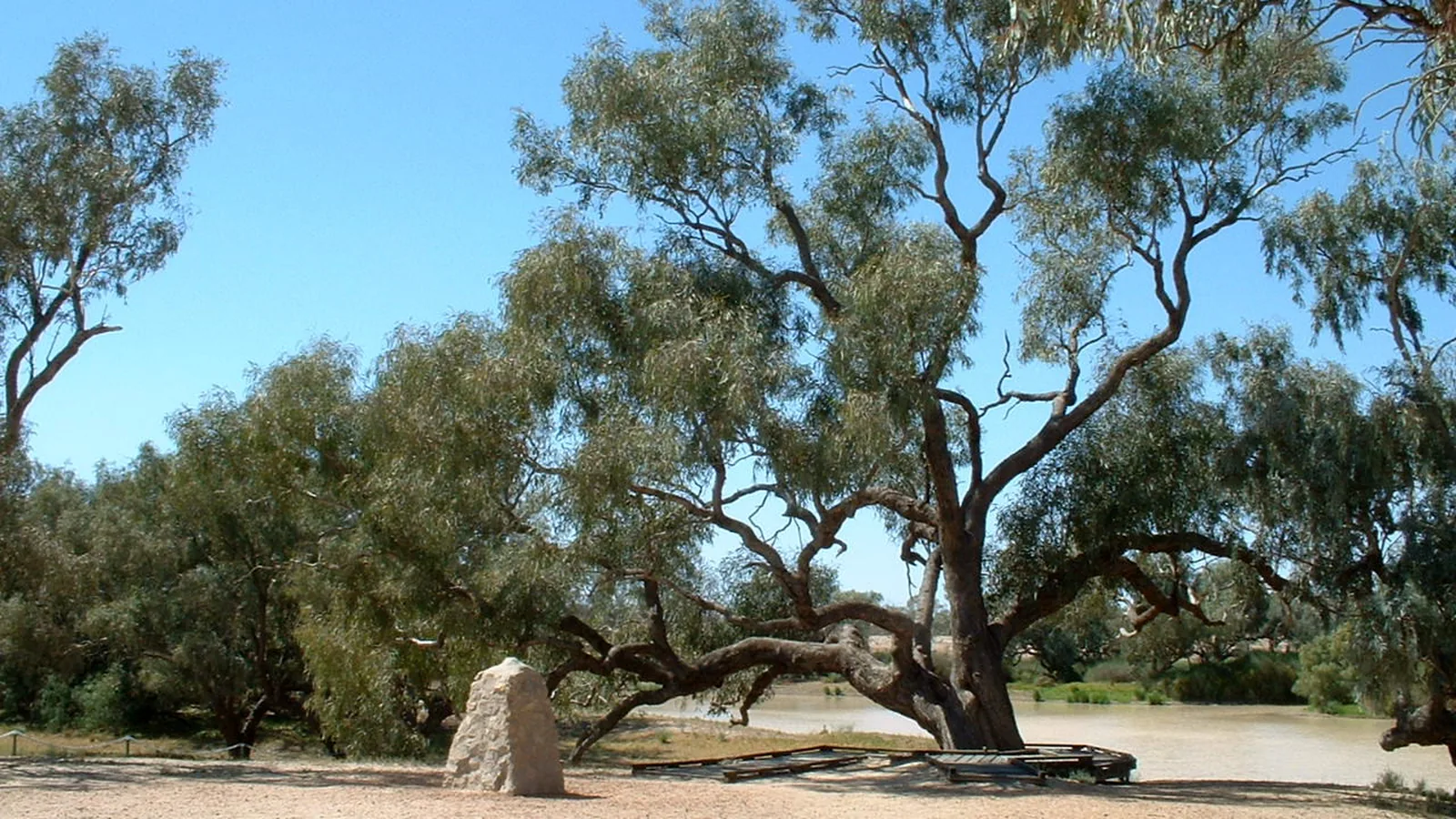
Burke and Wills died of exhaustion and starvation while waiting for rescue. The Burke & Wills Web states that “the exact date of their deaths is uncertain, but has generally been accepted to be 28 June 1861.” King survived alone. The Burke & Wills Web’s account of the relief expeditions records that the Yandruwandha “had taken pity on King and allowed him to live with them,” feeding him and showing him “how to construct a gunyah and a breakwind”; King in return shot crows and gave the group basic first aid. Edwin Welch, surveyor with Howitt’s relief party, found King on September 15, 1861. Welch later described a figure that “tottered, threw up its hands in an attitude of prayer, and fell on the sand,” and recorded asking, “Who in the name of wonder are you?” The reply came back, “I am King, sir.” Asked where Burke and Wills were, King answered, “Dead, both dead long ago.”
The Royal Commission's verdict
A royal commission examined, in its own words, “the circumstances connected with the suffering and death of Robert O’Hara Burke and William John Wills” and “the circumstances under which the depot at Cooper’s Creek was abandoned by Mr William Brahe.” Its report was printed as Parliamentary Papers No. 97, citing the year “1861-2”; the reprinted text carries the dateline “22 February 1861.” The commissioners found that the expedition “was most injudiciously divided” by Burke, who left Cooper Creek “before the depot party had arrived from Menindie, and without having secured communication with the settled districts as he had been instructed to do.” They placed heavier blame on Wright, calling his conduct “reprehensible in the highest degree” and writing that “the grave responsibility of not having left a larger supply of provisions, together with some clothing, in the cache, at Cooper’s Creek, rests with Mr Wright.” Brahe’s decision to retire from the depot, the commissioners wrote, “may be deserving of considerable censure,” but they judged that he had acted “from a conscientious desire to discharge his duty.” In 1862, Alfred William Howitt and Alexander Aitken returned to Cooper Creek, disinterred the bodies of Burke and Wills, and brought them to Melbourne by way of Adelaide. The commissioners also noted that Burke kept no regular journal and gave his officers no written instructions, and wrote that “had he performed any of these essential portions of the duties of a leader, many of the calamities of the expedition might have been averted.” On January 23, 1863, Burke and Wills received a state funeral in Melbourne, as the Public Record Office Victoria’s journal Provenance also records. The Burke & Wills Web notes that the same day, in Adelaide, Stuart and his companions were welcomed home after completing their own south-north crossing of the continent.
Key facts
- The Victorian Exploring Expedition left Royal Park on Monday, August 20, 1860, with 19 men, 27 camels and 23 horses, watched by 15,000 people (Burke & Wills Web; Ergo).
- The advance party reached Cooper Creek on November 11, 1860, and Burke left for the Gulf of Carpentaria on December 16, 1860, leaving Brahe in charge of the depot (Burke & Wills Web).
- Burke, Wills, King and Gray reached the Flinders River mangroves on February 9, 1861, without sighting open water (Burke & Wills Web).
- Gray died four days before the remaining three reached Cooper Creek; they buried him and rested a day (Burke & Wills Web).
- Brahe left the Cooper Creek depot on the morning of April 21, 1861, after holding it “four months and five days”; Burke, Wills and King arrived nine hours later to find it empty (Royal Commission report; Burke & Wills Web).
- Burke and Wills died of exhaustion and starvation; the Burke & Wills Web calls the exact date “uncertain” and says it “has generally been accepted to be 28 June 1861.”
- John King, cared for by the Yandruwandha, was found alive by Edwin Welch on September 15, 1861 (Burke & Wills Web).
- The Royal Commission divided responsibility among Burke, Wright, the Exploration Committee and Brahe; Burke and Wills received a state funeral in Melbourne on January 23, 1863 (Royal Commission report; Provenance).
FAQ
What happened at the Cooper Creek depot on April 21, 1861?
William Brahe's party left the depot on the morning of April 21, 1861, after holding the camp for four months and five days. Burke, Wills and King rode in nine hours later and found it abandoned, with a note and some food left behind.
Who survived the Burke and Wills expedition, and how?
John King was the sole survivor of the three men Burke led north from Cooper Creek. The Yandruwandha people fed him, sheltered him and taught him to build a gunyah and a breakwind; Edwin Welch, of Alfred William Howitt's relief party, found him on September 15, 1861.
What did the Royal Commission conclude about the deaths of Burke and Wills?
The commission found fault with several people rather than one. It criticized Burke for dividing the expedition and leaving Cooper Creek without securing communication with settled districts, assigned the heaviest blame to Wright for not leaving enough provisions at the depot, and judged that Brahe had acted from a conscientious sense of duty despite his decision to retire from the camp.
Sources
- State Library Victoria, Ergo, "Royal Society of Victoria"
- Burke & Wills Web, "Robert O'Hara Burke (1820/1 - 1861)"
- Burke & Wills Web, "John King (1838-1872)"
- Burke & Wills Web, "Melbourne to the Gulf: A brief history, Chapter 16: Relief expeditions"
- Report of the Commissioners appointed to enquire into and report upon the circumstances connected with the sufferings and death of Robert O'Hara Burke and William John Wills, Parliamentary Papers No. 97 (Melbourne: John Ferres, Government Printer), reprinted by Burke & Wills Web
- Donna Bourke, "What Happened to the Camels of the Burke and Wills Expedition?", Provenance, Public Record Office Victoria, issue no. 9 (2010)
Cite this article
- APA
- Our Earth's History. (2026, September 26). The Cooper Creek depot emptied nine hours before Burke returned. Our Earth's History. https://ourearthshistory.com/oceania/modern/burke-and-wills-cooper-creek-april-21-1861-depot-left-royal-commission/
- Chicago
- Our Earth's History. “The Cooper Creek depot emptied nine hours before Burke returned.” Our Earth's History, September 26, 2026. https://ourearthshistory.com/oceania/modern/burke-and-wills-cooper-creek-april-21-1861-depot-left-royal-commission/.
- MLA
- “The Cooper Creek depot emptied nine hours before Burke returned.” Our Earth's History, 26 Sep. 2026, https://ourearthshistory.com/oceania/modern/burke-and-wills-cooper-creek-april-21-1861-depot-left-royal-commission/.
Text licensed CC BY-NC-ND 4.0. Found an error? Tell us.