Mangaasi pottery, Efate, 1967: 17,000 sherds and a sequence reversed
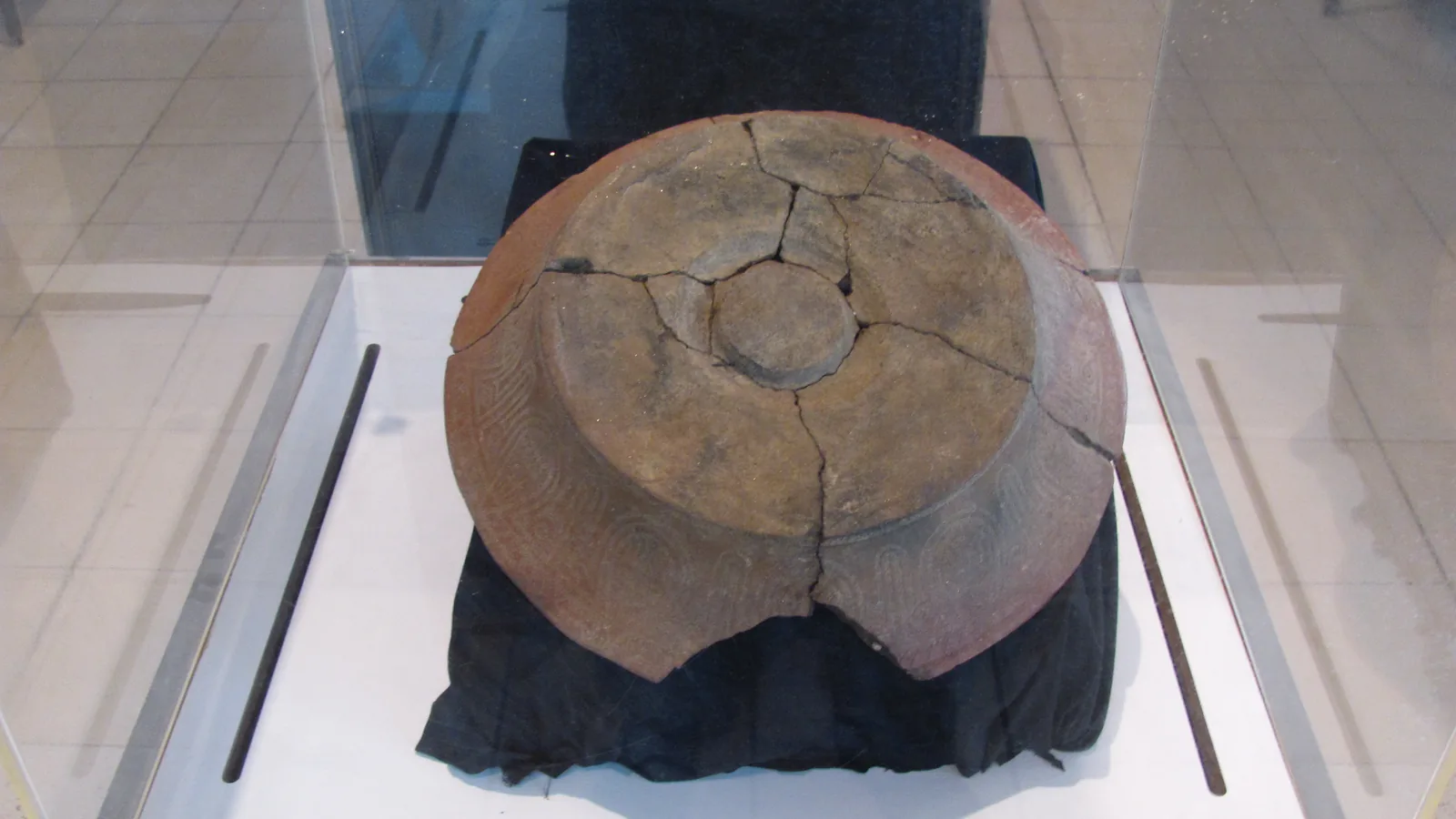

TL;DR — José Garanger named Mangaasi pottery after a 1966–67 dig on Efate and placed it before the Lapita-derived Erueti ware; re-excavation from 1996 put Erueti first.
During 12 months of fieldwork between October 1966 and October 1967, José Garanger excavated 118 square meters at Mangaasi, on the west coast of Efate in what is now Vanuatu. Some 17,000 sherds came out of the ground, about 3,500 of them diagnostic, from globular pots decorated with incised lines and with applied relief, such as pinched bands of clay. In 1971 Garanger gave the style the name of the site and judged it older than, and unrelated to, the Lapita-derived pottery he had dug at Erueti on the south coast. Stuart Bedford and Matthew Spriggs, whose re-excavation of Mangaasi began in 1996, reversed the order: Erueti came first, and Mangaasi grew out of it.
Quick facts
- When
- April to October 1964 (first surveys on Efate) · October 1966 to October 1967 (fieldwork that included Mangaasi) · 1968 (radiocarbon report) · 1971 (the name Mangaasi) · 1996 to 1999 (re-excavation) · 1999 and 2001 to 2003 (Arapus) · 2006 (revised sequence published)
- Where
- Mangaasi, on the west coast of Efate; Erueti, on the south coast of Efate; Retoka island; in what is now Vanuatu
- Who
- José Garanger (CNRS); Graeme Ward; Stuart Bedford; Matthew Spriggs
- Outcome
- Garanger dated Mangaasi pottery to about 2600 BP and judged it older than and unrelated to the Lapita-derived Erueti ware. Re-excavation showed a single sequence from Lapita through Arapus, Early and Late Erueti and Early and Late Mangaasi, ending around 1200 BP
October 1966 to October 1967: from Retoka to Mangaasi
Garanger, then employed by France’s Centre National de la Recherche Scientifique (CNRS), first worked in the New Hebrides from April to October 1964. Surveys around Efate and the offshore islands of Nguna, Mau and Moso returned large collections of what he called “incised and applied relief” pottery. He came back in 1966 on the trail of oral traditions about Roy Mata, a “foreign chief” said to have been buried with his supporters on the small island of Retoka. Told that Roy Mata’s village had stood on the Efate mainland, Garanger moved his work to Mangaasi.
Garanger decided that Mangaasi was a more accurate name for the tradition than the descriptive label, for two reasons given in Bedford’s account: the earliest date for the style came from this site, and its collection was abundant and varied. Further surveys on the west coast recovered 13,206 sherds, more than 40 percent of them decorated, from which he defined 12 major motifs and 32 motifs in all.
GX-0963 and GX-0964, the Mangaasi charcoal
Garanger published his radiocarbon results in the Journal de la Société des Océanistes in 1968. Sample GX-0963, charcoal from 130 centimeters down in level V, gave 2445 ± 80 years, which he converted to 495 BC. Level V was the deepest at the site, with applied decoration and handles absent from the incised pottery of level III. Sample GX-0964, from 100 centimeters, gave 2595 ± 95 years, or 645 BC. The shallower sample was the older one. Garanger wrote that “l’inversion des dates par rapport à la profondeur n’est qu’apparente compte tenu de la stratigraphie réelle des couches,” that the reversal of dates against depth was only apparent, given the real stratigraphy of the layers.
On those dates he argued that the tradition appeared around 2600 BP and lasted up to 2,000 years. He split it into Early and Late phases, the Early one marked out by handles and pinched bands. He recorded the difficulties himself. The layers at Mangaasi were disturbed, and 52 sherds from a single pot turned up in several different horizons. His 1972 publication gave the end of pottery making as around AD 1700 on one page and the end of the 16th century on another.
Erueti, six Lapita sherds on the south coast
Erueti lies on the south coast of Efate, some 400 meters from the beach at the back of a bay. B. Hébert and then the Shutlers had picked up dentate-stamped Lapita sherds on its surface, and at the time it was the only place in Vanuatu where Lapita pottery had been found. Garanger opened a single area of 35 square meters down to 80 centimeters and dug in arbitrary 20-centimeter spits because the layers looked disturbed. Of some 5,000 sherds, 96 percent were undecorated, against a 50:50 ratio of decorated to plain at the Mangaasi-style sites. Bedford, citing Garanger’s 1972 monograph, counts six dentate-stamped Lapita sherds and only six with Mangaasi-like appliqué in the Erueti collection, though Garanger’s 1968 report had said the excavation itself produced no Lapita pottery. His 1968 report gave charcoal from 60 centimeters a date of 2300 ± 95 years, or 350 BC.
Garanger classed the Erueti pottery as Lapitoid. Because a number of Early Mangaasi-style sherds came from the lowest levels at Erueti, a site he judged later than Mangaasi, he concluded in 1971 that the Mangaasi tradition was the older of the two in Vanuatu and that they were unrelated. In 1972 he suggested, tentatively, that Mangaasi’s origins lay far to the west, possibly in northeastern New Guinea, where he saw parallels with Markham Valley pottery.
Test pits nearer the sea, 1996 to 1999
Graeme Ward, who had excavated in the Banks Islands to the north, argued in 1979 and 1989 that the Mangaasi layers were disturbed and that pottery making had more likely ended around 2000 BP. In a 1996 article Garanger stated that he accepted Ward’s criticisms. Bedford, in a paper on the pottery of Erromango in southern Vanuatu published in ORSTOM conference proceedings, wrote that the Mangaasi material could be “reliably accepted as dating from around 2700 BP.”
The re-excavation of Mangaasi began in 1996 and ran over four field seasons to 1999. Eighteen test pits produced 5,811 sherds, 75 percent of them plain, with 13 handles and 26 wasters. The pots, Bedford wrote, appeared to have been made on site from local materials and to “show no significant change in their mineral composition over time.” Erueti-style pottery lay in place in five of the test pits, while Mangaasi-style pottery in place was largely confined to pits closer to the sea. In 1999 the team identified the Arapus site directly southwest of Mangaasi and returned there for field seasons from 2001 to 2003.

Five phases between about 2900 and 1200 BP
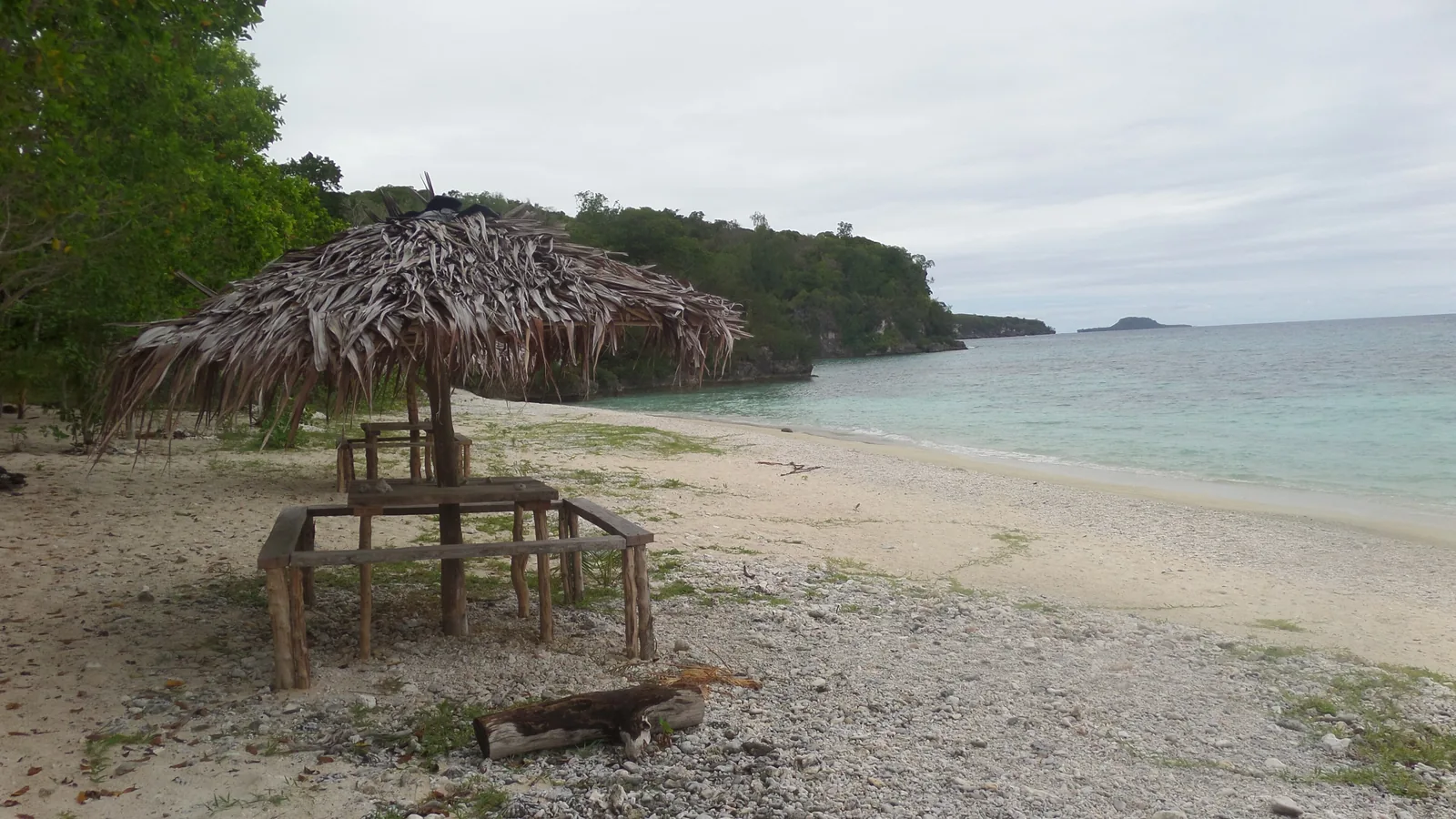
Bedford set out the revised sequence in 2006 in Pieces of the Vanuatu Puzzle. He divided almost 2,000 years of pottery at Mangaasi and Arapus into five phases: Arapus, about 2900 to 2800 BP; Early Erueti, 2800 to 2500 BP; Late Erueti, 2500 to 2200 BP; Early Mangaasi, 2200 to 1600 BP; and Late Mangaasi, 1600 to 1200 BP. Arapus rims, often notched, flattened over time into the wide lips of Erueti plainware. From about 2200 BP new decorative techniques on one dominant vessel form appeared, and from that point, in Bedford’s words, elements of “Garanger’s original Mangaasi tradition began to appear.” Lapita settlers with dentate-stamped pots had reached Efate first, about 100 years before Arapus on his data.
Mangaasi, Bedford concluded, could no longer be seen “as a lengthy conservative tradition separate from Lapita,” and no evidence supported links to New Guinea pottery. Of the first excavations he wrote that “none of the conclusions to which Garanger arrived . . . could be seen as particularly unjustified or suspect at the time.” In the Late Mangaasi phase an outcurving vessel form returned that had first been seen, in Bedford’s phrase, “some 1500 years previously during the Arapus Phase.” On the evidence of 2006, pottery making on Efate ended around 1200 BP.
Key facts
- Garanger surveyed Efate and the Shepherd Islands from April to October 1964 and returned for 12 months of fieldwork from October 1966 to October 1967 (Bedford 2006, chapter 2).
- He excavated 118 square meters at Mangaasi and recovered some 17,000 sherds, about 3,500 of them diagnostic (chapter 2).
- He named the tradition Mangaasi in 1971, dating it to about 2600 BP and giving it up to 2,000 years (chapters 2 and 6).
- His 1968 report dated charcoal GX-0963 from 130 centimeters to 495 BC and GX-0964 from 100 centimeters to 645 BC (Journal de la Société des Océanistes).
- At Erueti he dug 35 square meters; 96 percent of some 5,000 sherds were plain, and a charcoal sample gave 350 BC (chapter 2; 1968 report).
- Garanger concluded that Mangaasi was older than the Lapitoid Erueti tradition and unrelated to it; in 1996 he stated that he accepted Graeme Ward’s criticisms (chapters 2 and 6).
- The 1996 to 1999 re-excavation produced 5,811 sherds from 18 test pits, with 13 handles and 26 wasters (chapter 6).
- Bedford’s sequence ran Arapus, Early and Late Erueti, Early and Late Mangaasi, with pottery making on Efate ending around 1200 BP (chapters 8 and 11).
FAQ
What is Mangaasi pottery?
Pottery from Efate and neighboring islands in central Vanuatu, decorated with incision and applied relief, named by José Garanger in 1971 after the Mangaasi site on the west coast of Efate. Bedford dated the Early Mangaasi phase to about 2200 to 1600 BP and the Late phase to about 1600 to 1200 BP.
Did Mangaasi pottery come before or after Lapita?
After. Garanger first placed it before the Lapita-derived Erueti pottery. The re-excavation of 1996 to 1999 and the work at Arapus showed a single sequence on Efate from Lapita through Arapus and Erueti to Mangaasi.
When did pottery making end on Efate?
Around 1200 BP, on the evidence Bedford published in 2006. Garanger's 1972 publication had given both about AD 1700 and the end of the 16th century, and Graeme Ward had argued for about 2000 BP.
Sources
- Stuart Bedford, Pieces of the Vanuatu Puzzle: Archaeology of the North, South and Centre, Terra Australis 23 (ANU E Press, 2006), chapter 2, "Archaeology of Vanuatu" (PDF).
- Stuart Bedford, Pieces of the Vanuatu Puzzle, Terra Australis 23 (ANU E Press, 2006), chapter 6, "Efate ceramics" (PDF).
- Stuart Bedford, Pieces of the Vanuatu Puzzle, Terra Australis 23 (ANU E Press, 2006), chapter 8, "Vanuatu Ceramic Sequences and Inter-regional Comparisons" (PDF).
- Stuart Bedford, Pieces of the Vanuatu Puzzle, Terra Australis 23 (ANU E Press, 2006), chapter 11, "Discussion and Conclusion" (PDF).
- José Garanger, "Datation de vingt et un sites archéologiques de la Polynésie française et des Nouvelles-Hébrides par la méthode du C. 14," Journal de la Société des Océanistes 24 (1968), pp. 129–133 (Persée).
- Stuart Bedford, "Lapita and Post-Lapita ceramic sequences from Erromango, Southern Vanuatu," in Le Pacifique de 5000 à 2000 avant le présent / The Pacific from 5000 to 2000 BP (ORSTOM conference proceedings; IRD Horizon document library, PDF).
Cite this article
- APA
- Song Letter. (2026, September 30). Mangaasi pottery, Efate, 1967: 17,000 sherds and a sequence reversed. Our Earth's History. https://ourearthshistory.com/oceania/classical/mangaasi-1967-garanger-efate-pottery/
- Chicago
- Song Letter. “Mangaasi pottery, Efate, 1967: 17,000 sherds and a sequence reversed.” Our Earth's History, September 30, 2026. https://ourearthshistory.com/oceania/classical/mangaasi-1967-garanger-efate-pottery/.
- MLA
- Song Letter. “Mangaasi pottery, Efate, 1967: 17,000 sherds and a sequence reversed.” Our Earth's History, 30 Sep. 2026, https://ourearthshistory.com/oceania/classical/mangaasi-1967-garanger-efate-pottery/.
Get the week in history
One email a week: the new articles, and what was happening elsewhere at the same moment. Free, no ads, unsubscribe any time. How we handle your email.
Text licensed CC BY-NC-ND 4.0. Found an error? Tell us.