1,800 years in Tonga and Samoa: the long pause before East Polynesia
.jpg)
TL;DR — Lapita settlers landed at Nukuleka on Tongatapu about 2,800 years ago; their descendants stayed in Tonga and Samoa until about AD 1025, then reached all East Polynesia by 1293.
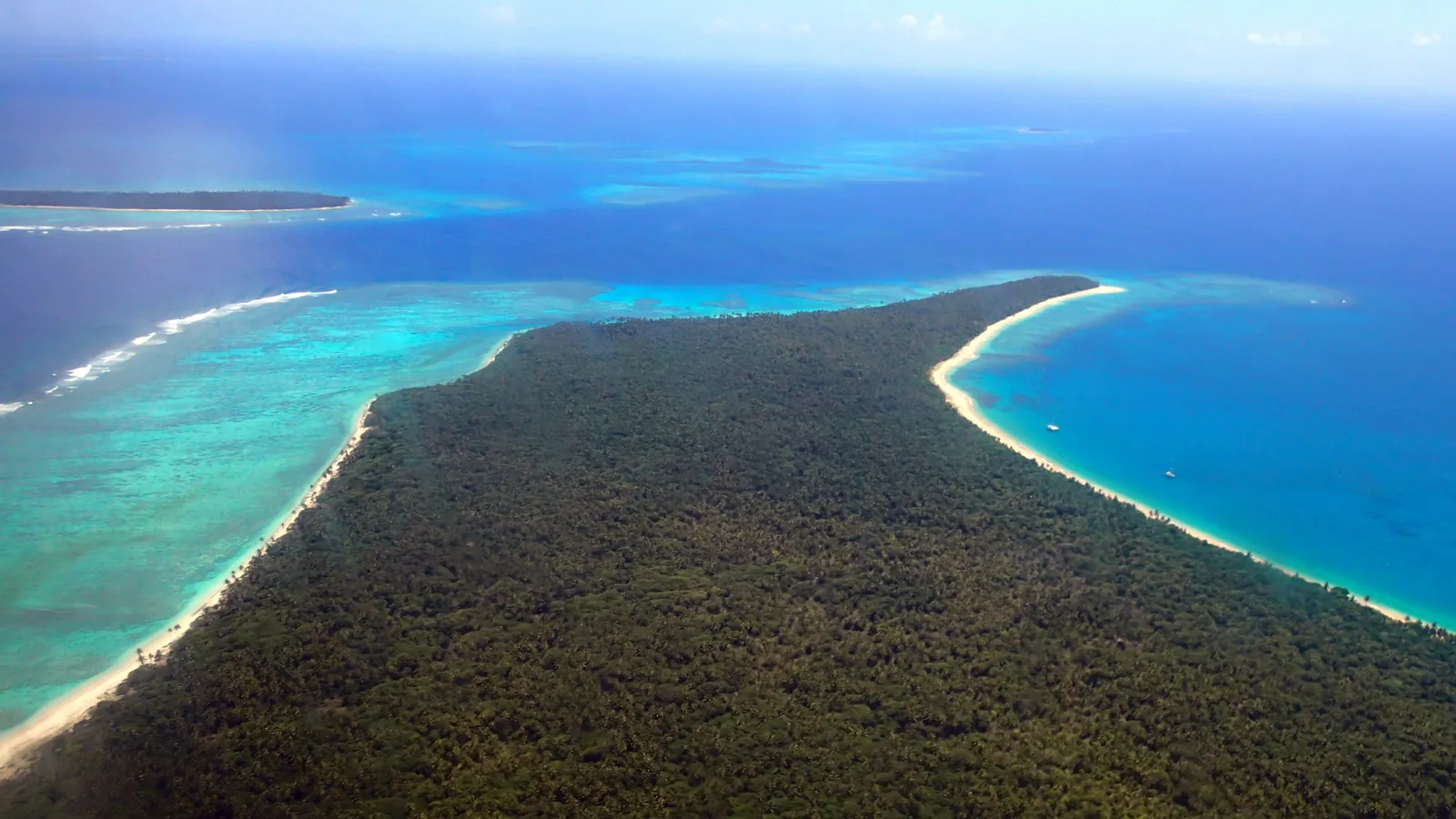
Nukuleka, a village on the eastern shore of Tongatapu in Tonga, holds the earliest known settlement in Polynesia, dated by coral tools to about 2,800 years ago. The people who landed there made the decorated pottery that archaeologists call Lapita. Within four generations their descendants had spread through Tonga and on to Samoa, and there the movement stopped. In 2011 Janet Wilmshurst and colleagues put the first crossing into East Polynesia, to the Society Islands, at about AD 1025 to 1120, and the settlement of nearly every remaining island in a single pulse between about AD 1190 and 1293. The interval in between is what archaeologists call the long pause.
Quick facts
- When
- About 2,800 years ago (first landfall at Nukuleka) to about AD 1025 to 1293 (settlement of East Polynesia)
- Where
- Tongatapu, Ha'apai and Vava'u in Tonga; Samoa; then the Society Islands, Marquesas, Hawaii, Rapa Nui and New Zealand
- Who
- Lapita colonists and their descendants, the first Polynesians; archaeologists David Burley, Marshall Weisler, Janet Wilmshurst and colleagues
- Outcome
- Tonga was filled within four generations and pottery making ended by about 2,350 years before 1950; no new archipelago was settled for about 1,800 years, then nearly all of East Polynesia in one pulse, AD 1190 to 1293
Coral files on a Tongatapu beach
The date comes from tools. Lapita settlers rasped wood and shell with files cut from fingers of living Acropora coral, and the coral records the year it was taken from the reef. David Burley, Marshall Weisler and Jian-xin Zhao dated those files by the decay of uranium into thorium and published the results in PLOS ONE in 2012. A file from the beach sand under the Nukuleka midden gave 2838 ± 8 years before 1950, the reference year of such dating. The authors read the result as a 16-year window, 2846 to 2830 years before 1950, for the first human landfall in Polynesia.
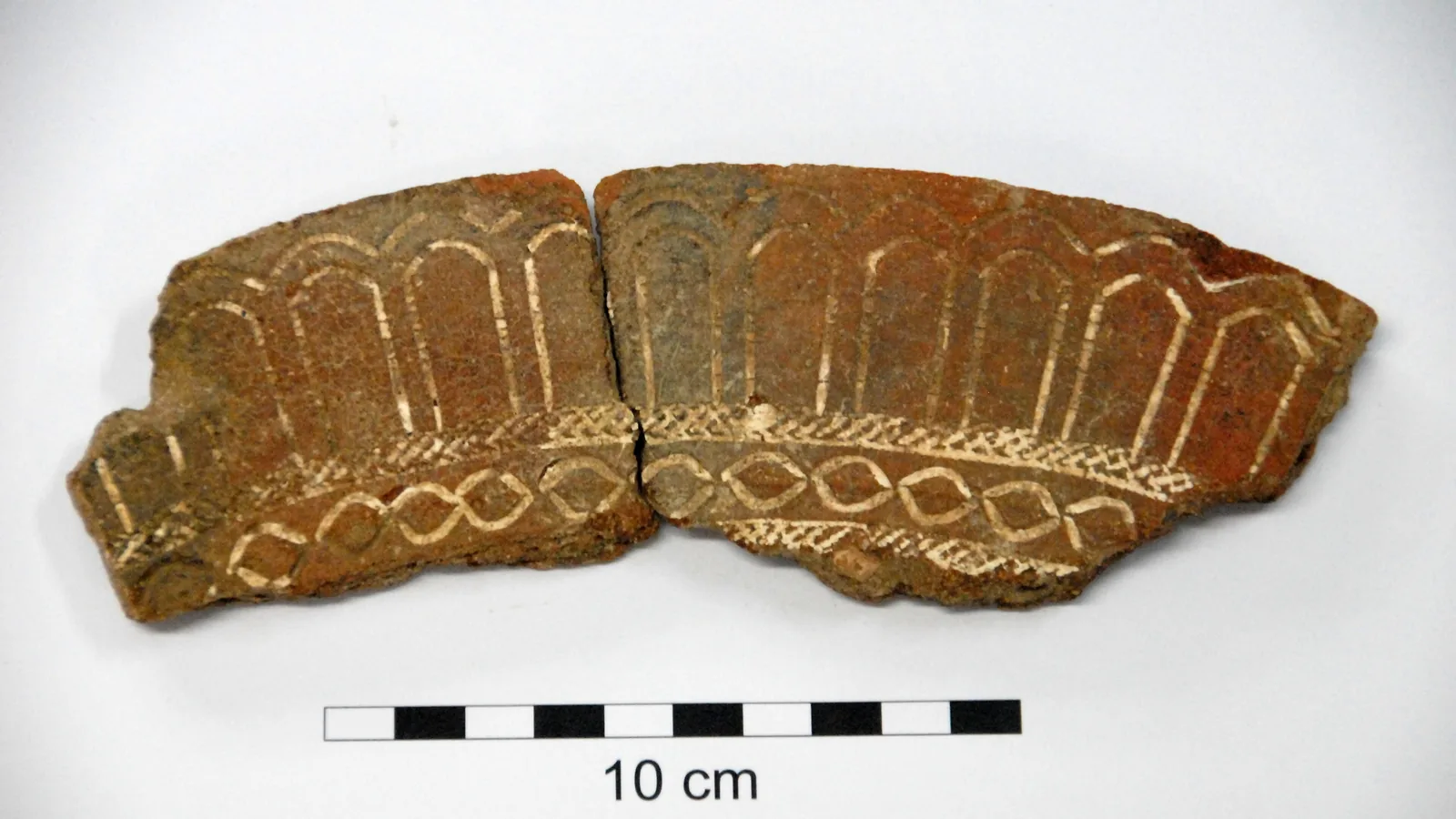
Nukuleka was a founder colony, the authors wrote, for four reasons. Its radiocarbon dates were the earliest of any Lapita site in Polynesia. Its earliest pots carried dense, complex designs unlike the later Lapita pottery of Tonga. The sand in the clay of those first pots was foreign to Tonga; the settlers had carried them from a homeland that had yet to be identified. And the settlement grew across 20 hectares of the Nukuleka peninsula over 200 to 250 years. Tonga’s 2007 submission to the UNESCO World Heritage tentative list counted more than 30 Lapita sites across its island groups and gave the same round figure, about 2,800 years ago.
Four generations to fill the archipelago
Tonga is more than 160 islands in three groups along an 800-kilometer line: Tongatapu in the south, Ha’apai in the center and Vava’u in the north. In 2015 Burley, Kevan Edinborough, Weisler and Zhao combined 46 radiocarbon dates with the coral dates in a statistical model and produced a timeline at the resolution of a 20-year generation. Lapita people moved north into Ha’apai 70 to 90 years after the Nukuleka landfall, about four generations, and settled no fewer than six of its islands at once. Vava’u followed at nearly the same time. The authors presumed that Samoa was an extension of the same movement.
The decorated pottery that defines Lapita did not last. On Tongatapu the designs simplified and then vanished within 129 to 158 years; in Ha’apai the span was 32 to 49 years, so the third generation of potters there had stopped decorating altogether. The loss was roughly simultaneous across Tonga at about 2,700 years before 1950, the point at which Patrick Kirch and Roger Green placed the beginning of what they named ancestral Polynesian society.
A homeland that gave up pottery
Plain pots went on being made, in a phase that Burley’s earlier work had put at about 800 years or longer. In 2018 Burley, Sean Connaughton and Geoffrey Clark assembled 44 radiocarbon dates from 13 plainware sites across Tonga and set the end of pottery making at no later than about 2,350 years before 1950. The whole phase lasted 350 years at most. After that Tongans made no pots, and no Polynesian society was making pottery when Europeans arrived. Kirch wrote that such a sequence runs “backwards from what we have become accustomed to seeing in most parts of the world.”
The plainware centuries were crowded ones. Sites with plain pottery lie on virtually every habitable island in Tonga, in the interior of Tongatapu as well as on its coasts. The archaeologist L. Groube wrote in 1971 that sherds lay so thick in places that Tongans considered them part of the soil itself. The 2018 paper described the long pause as the period in which Polynesians “literally became Polynesian.” Once West Polynesia was settled, the authors wrote, movement further east did not occur for as much as 1,800 years.

The departure, AD 1025 to 1293
Wilmshurst, Terry Hunt, Carl Lipo and Atholl Anderson assembled 1,434 radiocarbon dates from at least 45 islands of East Polynesia and kept only those on short-lived materials such as seeds and twigs, which cannot carry the built-in age of old wood. Their paper stated the gap in one sentence: “Migration into eastern Polynesia began after a 1,800-y pause since the first settlement of Samoa, ∼800 B.C.” D. G. Sutton and colleagues argued in 2008 for an earlier discovery of New Zealand, and Green and Weisler in 2002 for an earlier sequence on Mangareva; Wilmshurst’s team answered that those cases rested on claims of missing evidence and on dates from unidentified charcoal.
Why the pause ended is argued rather than known. Wilmshurst and colleagues offered population growth on small islands, deliberate exploration and the double canoe, and observed that their dispersal dates fell in a period of peak El Niño frequency. Ian Goodwin, Stuart Browning and Anderson reconstructed South Pacific winds for AD 800 to 1300 and reported in 2014 that a strengthened subtropical high-pressure belt opened downwind routes from Tonga, Fiji and the southern Cook Islands to New Zealand between AD 1140 and 1260, with no comparable window after 1300. They did not assert that Polynesian canoes could not sail to windward, only that the winds of those decades made the ability unnecessary.
The dates are the firmer ground. Polynesian sailors reached the Society Islands about AD 1025 to 1120. After a further 70 to 265 years, between about AD 1190 and 1293, the descendants of the Nukuleka settlers reached every remaining archipelago: the Marquesas by AD 1200 to 1277, Rapa Nui by 1200 to 1253, Hawaii by 1219 to 1266 and New Zealand by 1230 to 1282.
Key facts
- Burley, Weisler and Zhao (2012) dated a coral file from the lowest layer at Nukuleka, Tongatapu, to 2838 ± 8 years before 1950, a 16-year window for the first landfall in Polynesia.
- The Kingdom of Tonga’s 2007 UNESCO tentative-list submission counted more than 30 Lapita sites across all of its island groups and put first colonization at about 2,800 years ago.
- Burley, Edinborough, Weisler and Zhao (2015) modeled the move into Ha’apai at 70 to 90 years after landfall, about four generations of 20 years, with at least six islands settled at once.
- Decorated Lapita pottery lasted 129 to 158 years on Tongatapu and 32 to 49 years in Ha’apai; Burley, Connaughton and Clark (2018) set the end of plain pottery at about 2,350 years before 1950, a plainware phase of 350 years at most.
- Wilmshurst, Hunt, Lipo and Anderson (2011) screened 1,434 radiocarbon dates from East Polynesia and wrote of a 1,800-year pause since the first settlement of Samoa, about 800 BC.
- East Polynesia was settled in two steps: the Society Islands about AD 1025 to 1120, then all remaining archipelagos in one pulse about AD 1190 to 1293.
- Goodwin, Browning and Anderson (2014) reconstructed a downwind sailing window from Tonga, Fiji and the southern Cooks to New Zealand in AD 1140 to 1260, with none after 1300 except briefly in the 1440s.
FAQ
Where was the first settlement in Polynesia?
Nukuleka, on the eastern shore of Tongatapu in Tonga. Uranium-thorium dates on coral files from its lowest layer place the landfall in a 16-year window about 2,800 years ago, and its earliest pots were made from clay foreign to Tonga.
How long was the long pause?
About 1,800 years by the reckoning of Wilmshurst and colleagues, from the first settlement of Samoa about 800 BC to the settlement of the Society Islands about AD 1025 to 1120. During that time Polynesians lived in Tonga and Samoa and settled no new archipelago.
Why did Polynesians stop making pottery?
No source cited below gives a reason. Burley, Connaughton and Clark dated the end of plain pottery in Tonga to about 2,350 years before 1950, and no Polynesian society was making pots when Europeans arrived. Kirch described the sequence as running backwards from the usual pattern.
Sources
- PLOS ONE — Burley, Weisler and Zhao, "High Precision U/Th Dating of First Polynesian Settlement," 7(11): e48769, November 7, 2012.
- PLOS ONE (PubMed Central) — Burley, Edinborough, Weisler and Zhao, "Bayesian Modeling and Chronological Precision for Polynesian Settlement of Tonga," 10(3): e0120795, 2015.
- PLOS ONE (PubMed Central) — Burley, Connaughton and Clark, "Early cessation of ceramic production for ancestral Polynesian society in Tonga," 13(2): e0193166, 2018.
- UNESCO World Heritage Centre, Tentative Lists — "Lapita Pottery Archaeological Sites," Kingdom of Tonga, submitted August 9, 2007 (Ref. 5168).
- PNAS 108(5) via PubMed Central — Wilmshurst, Hunt, Lipo and Anderson, "High-precision radiocarbon dating shows recent and rapid initial human colonization of East Polynesia," 2011.
- PNAS 111(41) via PubMed Central — Goodwin, Browning and Anderson, "Climate windows for Polynesian voyaging to New Zealand and Easter Island," 2014.
Cite this article
- APA
- Our Earth's History. (2026, September 21). 1,800 years in Tonga and Samoa: the long pause before East Polynesia. Our Earth's History. https://ourearthshistory.com/oceania/classical/long-pause-tonga-samoa-polynesian-homeland/
- Chicago
- Our Earth's History. “1,800 years in Tonga and Samoa: the long pause before East Polynesia.” Our Earth's History, September 21, 2026. https://ourearthshistory.com/oceania/classical/long-pause-tonga-samoa-polynesian-homeland/.
- MLA
- “1,800 years in Tonga and Samoa: the long pause before East Polynesia.” Our Earth's History, 21 Sep. 2026, https://ourearthshistory.com/oceania/classical/long-pause-tonga-samoa-polynesian-homeland/.
Text licensed CC BY-NC-ND 4.0. Found an error? Tell us.