A one-hundred-dollar fine and a 1927 reversal: the Scopes trial

TL;DR — Tennessee’s Butler Act banned teaching evolution in schools. The 1925 trial of John Scopes ended in a $100 fine, reversed in 1927 on a jury technicality.
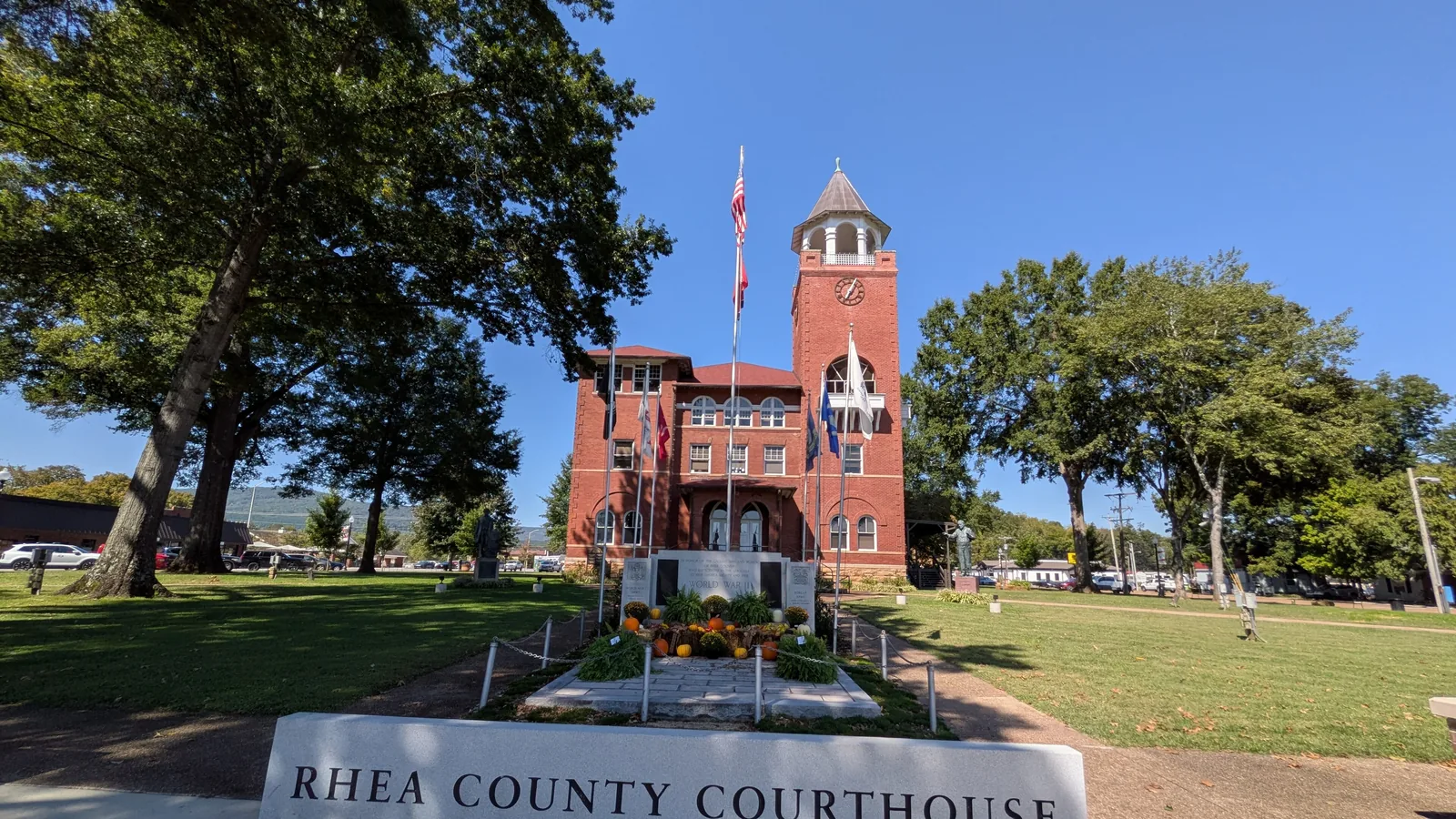
Tennessee’s Butler Act made it “unlawful for any teacher . . . to teach any theory that denies the story of the Divine Creation of man as taught in the Bible.” Governor Austin Peay signed the bill on March 21, 1925, and it set a fine of $100 to $500 for a teacher who taught instead “that man has descended from a lower order of animals.” The trial it produced ran from July 10 to July 21, 1925, in the Rhea County Courthouse at Dayton, Tennessee, according to the National Park Service’s 1972 nomination of the building to the National Register of Historic Places.
Quick facts
- When
- March 21, 1925 (Butler Act signed) · July 10-21, 1925 (trial) · July 26, 1925 (Bryan's death) · 1927 (Tennessee Supreme Court reversal) · 1967 (repeal)
- Where
- Rhea County Courthouse, Dayton, Tennessee
- Who
- John Thomas Scopes; Clarence Darrow; William Jennings Bryan; Judge John T. Raulston; Governor Austin Peay
- Outcome
- A jury found Scopes guilty and Judge Raulston fined him $100. The Tennessee Supreme Court reversed the conviction in 1927 because the fine exceeded $50 and only a jury could set it. The Butler Act itself stood until the legislature repealed it in 1967.
Dayton chose the defendant
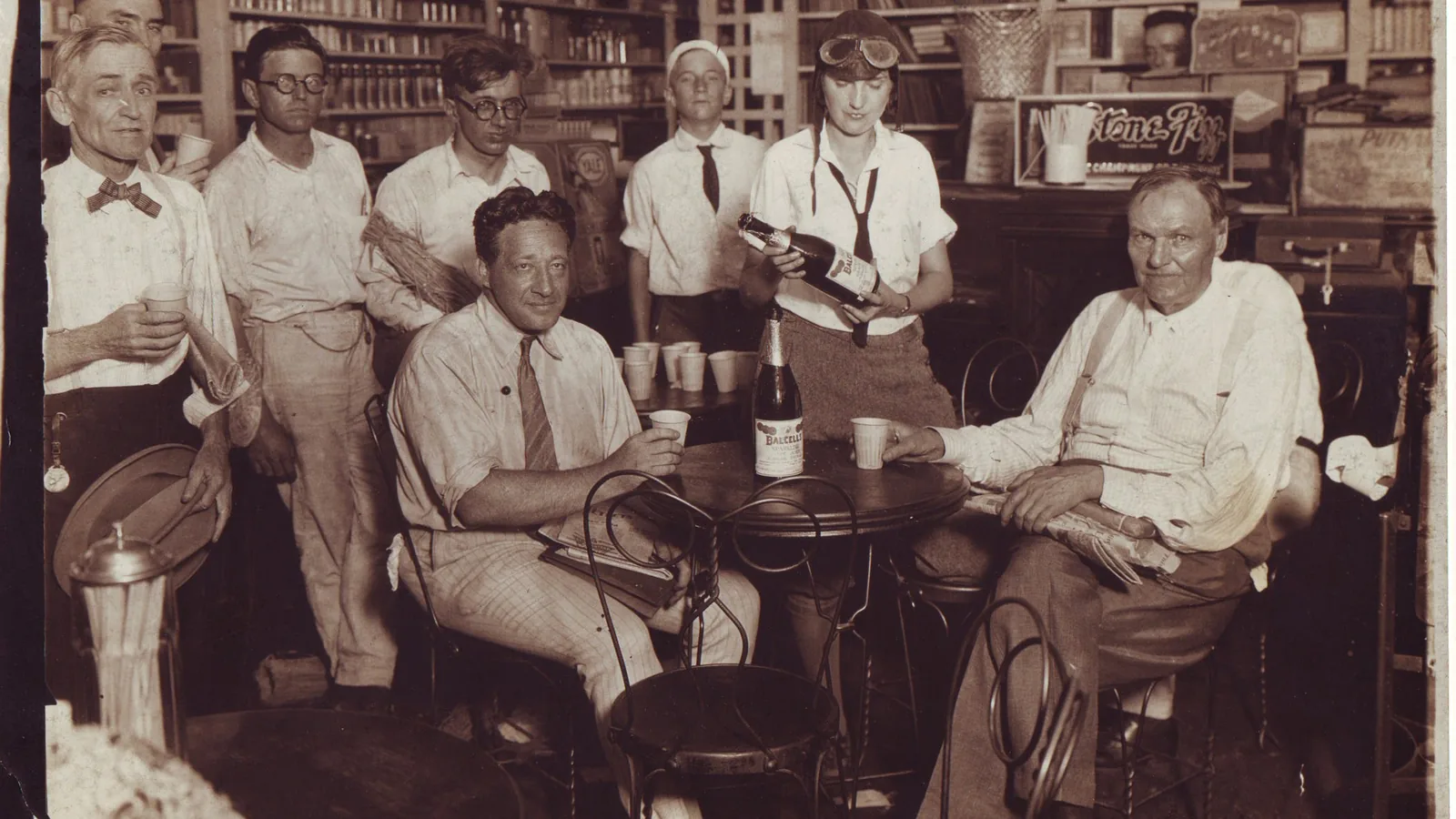
The American Civil Liberties Union placed an advertisement in the Chattanooga Times on May 4, 1925: “We are looking for a Tennessee teacher who is willing to accept our services in testing this law in the courts. Our lawyers think a friendly test case can be arranged without costing a teacher his or her job. Distinguished counsel have volunteered their services. All we need now is a willing client.” Michael Hannon’s 2010 study of the trial, published by the University of Minnesota Law Library, records that mining engineer George Rappleyea read the notice and met school superintendent Walter White, city attorney Sue Hicks and lawyer Wallace Haggard at Robinson’s Drugstore in Dayton to arrange a case. Hannon writes that Rappleyea’s motive was economic: “he wanted to stir up a controversy that would bring visitors to Dayton… because the town badly needed an economic boost.” John Scopes, a 24-year-old teacher and football coach, was asked to stand as the defendant. Hannon’s study quotes Scopes’s own 1967 autobiography: Scopes agreed to stand trial if the men could prove he had taught evolution and that he qualified as a defendant. He was arrested on May 7, 1925, the NPS nomination states.
"It does not say whale": Darrow questions Bryan
Judge John T. Raulston, an ordained Methodist minister who presided over the 18th circuit, moved the proceedings outdoors on July 20 because of the summer heat, which Scopes later called the real reason for the switch. That afternoon the defense team, led in the courtroom by Clarence Darrow, called William Jennings Bryan, the former secretary of state and prosecutor for the state, to the stand as a witness on the Bible. The exchange survives in the 1925 trial transcript published as “The World’s Most Famous Court Trial.” Darrow asked Bryan how he interpreted the story of Jonah and the whale. Bryan answered that the Bible said “a big fish swallowed Jonah–it does not say whale,” and added: “A big fish, and I believe it, and I believe in a God who can make a whale and can make a man and make both what He pleases.” Darrow then pressed Bryan on the six days of creation. Bryan’s impression, he said, was that the days were periods rather than a literal twenty-four hours, though he would not argue against anyone who believed otherwise. The next day Raulston struck Bryan’s testimony from the record, saying he was “pleased to expunge it.”
Nine minutes to a verdict, then a judge's fine
The jury deliberated for about nine minutes, Hannon’s study states, before returning its verdict. The trial transcript records the exchange that followed: “Foreman–We have found for the state, found the defendant guilty. Court–Did you fix the fine? Foreman–No, sir. Court–You leave it to the court? Foreman–Leave it to the court . . . The court now fixes your fine at $100.” Prosecutor Tom Stewart told the judge that both sides wanted the case appealed to a higher court, and Hannon’s study records that Darrow had made a similar point to the jury before the verdict, saying the case and the law would never be decided until a higher court took it up. Bryan died in his sleep on July 26, 1925, five days after the trial ended, the NPS nomination records.

The Tennessee Supreme Court, 1927
The Tennessee Supreme Court took up the case as Scopes v. State, 154 Tenn. 105, in 1927. Hannon’s study quotes its reasoning: “The Tennessee Supreme Court reversed Scopes’ conviction on the basis that the lower court exceeded its jurisdiction in levying a fine against the defendant… the jury found Scopes guilty of violating the statute but the judge assessed the $100 fine that was provided for. Under the Tennessee Constitution, a fine in excess of $50 must be assessed by a jury; the Butler Act did not permit the imposition of a fine smaller than $100. As a result, the court did not have the power to correct the trial judge’s error.” The court upheld the Butler Act itself as constitutional. It then declined to send the case back for a new trial, ruling that “the peace and dignity of the State, which all criminal prosecutions are brought to redress, will be the better conserved by the entry of a nolle prosequi herein. Such a course is suggested to the Attorney-General.” No second trial followed.
1967: the Butler Act repealed
The Butler Act remained on the books, unenforced, until the Tennessee legislature repealed it with House Bill No. 48 in 1967. The bill’s text, printed at todayinsci.com, reads: “Section 1. Section 49-1922, Tennessee Code Annotated, is repealed. Section 2. This Act shall take effect September 1, 1967.” That page gives the governor’s signature date as May 17, 1967. Scientific American’s account of the repeal gives the signature date as May 18, 1967, and states that the immediate cause was a lawsuit brought by Gary Scott, a Tennessee teacher fired that year for teaching evolution, who challenged the Butler Act’s constitutionality. Both accounts agree that the repeal took effect on September 1, 1967, forty-two years after Governor Peay signed the law it undid.
Key facts
- Governor Austin Peay signed the Butler Act, which set a fine of $100 to $500 for teaching evolution in Tennessee’s public schools, on March 21, 1925.
- The trial of John Scopes ran from July 10 to July 21, 1925, in the Rhea County Courthouse at Dayton, Tennessee.
- Darrow questioned Bryan on the witness stand on July 20, 1925; Judge Raulston struck the testimony from the record the next day.
- The jury deliberated about nine minutes before finding Scopes guilty; Judge Raulston, not the jury, set the fine at $100.
- Bryan died in his sleep on July 26, 1925, five days after the trial ended.
- The Tennessee Supreme Court, in Scopes v. State, 154 Tenn. 105 (1927), reversed the conviction because a fine over $50 had to be set by a jury under the state constitution, while upholding the Butler Act itself.
- The court ended the case with a nolle prosequi recommendation rather than ordering a retrial.
- Tennessee’s legislature repealed the Butler Act with House Bill No. 48, effective September 1, 1967; sources differ on whether the governor signed it May 17 or May 18.
FAQ
Why was the Scopes trial held in Dayton, Tennessee?
Dayton businessmen, including mining engineer George Rappleyea, arranged the case after reading the ACLU's May 4, 1925, newspaper advertisement seeking a teacher willing to test the Butler Act. Hannon's study states Rappleyea wanted the publicity to bring visitors to the town.
What did the Tennessee Supreme Court decide in 1927?
It reversed John Scopes's conviction because Judge Raulston, not the jury, had set the $100 fine, and the Tennessee Constitution required a jury to set any fine over $50. The court upheld the Butler Act's constitutionality and closed the case with a nolle prosequi rather than ordering a new trial.
When was the Butler Act repealed?
The Tennessee legislature repealed it with House Bill No. 48 in 1967, effective September 1. Sources give the governor's signature as either May 17 (todayinsci.com) or May 18 (Scientific American).
Sources
- Michael Hannon, "Clarence Darrow's Most Famous Trial" (2010), Clarence Darrow Digital Collection, University of Minnesota Law Library
- National Park Service, National Register of Historic Places Inventory-Nomination Form, "Rhea County Courthouse" (1972)
- The World's Most Famous Court Trial: Tennessee Evolution Case (National Book Company, 1925), Internet Archive
- Tennessee House Bill No. 48 (1967), text of the repeal act, todayinsci.com
- Scientific American, "50 Years Ago: Repeal of Tennessee's 'Monkey Law'" (Observations blog)
Cite this article
- APA
- Our Earth's History. (2026, September 26). A one-hundred-dollar fine and a 1927 reversal: the Scopes trial. Our Earth's History. https://ourearthshistory.com/americas/contemporary/scopes-trial-dayton-july-1925-butler-act-100-dollar-fine-1927-reversal/
- Chicago
- Our Earth's History. “A one-hundred-dollar fine and a 1927 reversal: the Scopes trial.” Our Earth's History, September 26, 2026. https://ourearthshistory.com/americas/contemporary/scopes-trial-dayton-july-1925-butler-act-100-dollar-fine-1927-reversal/.
- MLA
- “A one-hundred-dollar fine and a 1927 reversal: the Scopes trial.” Our Earth's History, 26 Sep. 2026, https://ourearthshistory.com/americas/contemporary/scopes-trial-dayton-july-1925-butler-act-100-dollar-fine-1927-reversal/.
Text licensed CC BY-NC-ND 4.0. Found an error? Tell us.