Groves to Stimson, July 18, 1945: the Trinity test in one memorandum

TL;DR — Groves’s memorandum of July 18, 1945 put the Trinity yield at 15,000 to 20,000 tons of TNT; Los Alamos measured 22.1 ± 2.7 kilotons in 2016.
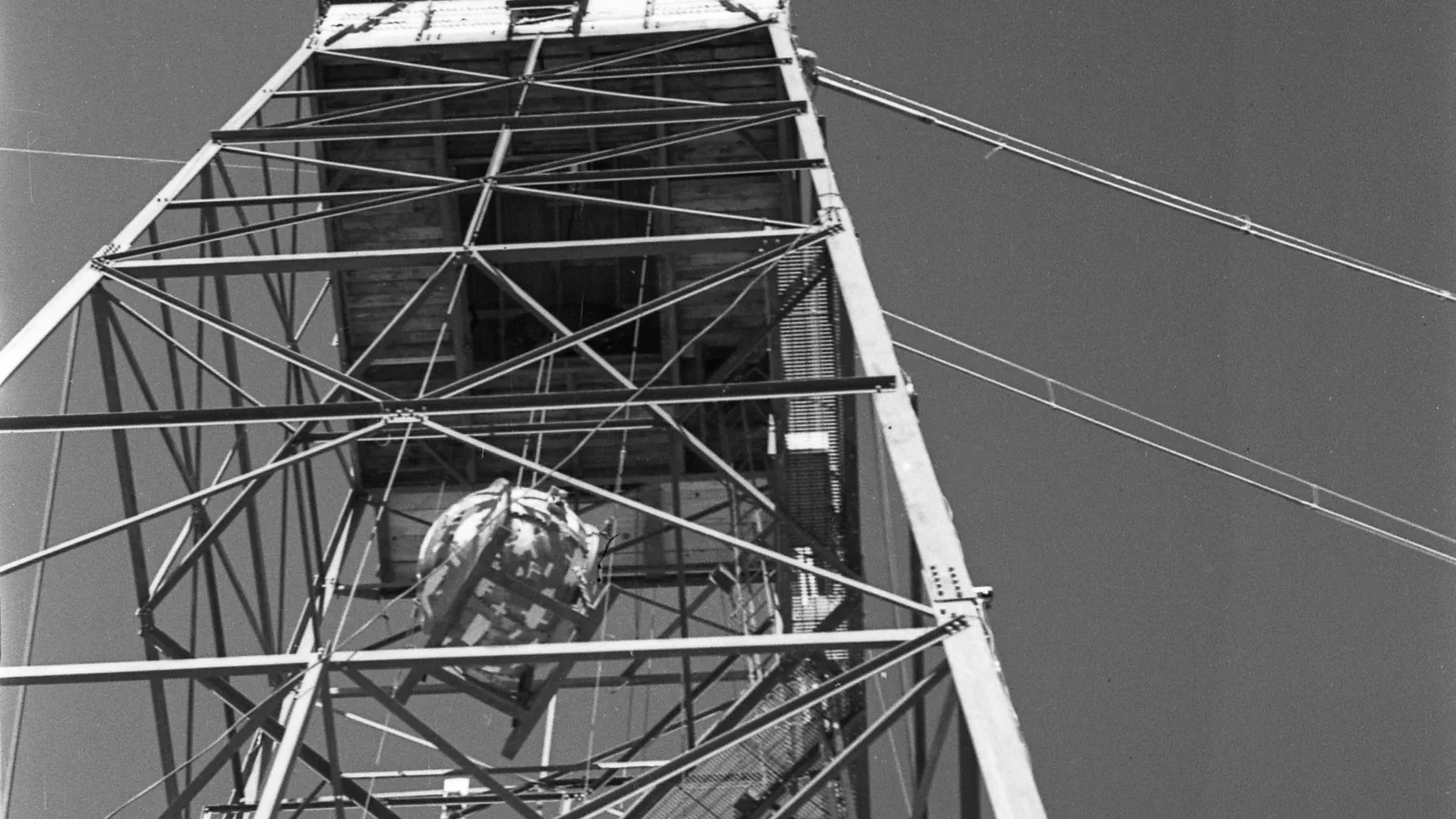
“At 5:29:45 a.m. the blast came. The world had entered the new era.” That is how the National Park Service’s nomination form for the Trinity Site, dated January 14, 1975, records July 16, 1945. Two days later, in Washington, General Groves, commanding general of the Manhattan District Project, signed a top-secret memorandum for the secretary of war, Stimson, headed “Subject: The Test”; the State Department printed it as Document 1305 of Foreign Relations of the United States, The Conference of Berlin (The Potsdam Conference), 1945, Volume II. “The bomb was not dropped from an airplane but was exploded on a platform on top of a 100–foot high steel tower,” Groves wrote, and put the energy “in excess of the equivalent of 15,000 to 20,000 tons of TNT.” The people downwind in the Tularosa Basin were still outside the federal compensation law when a new Senate bill was filed on January 24, 2025.
Quick facts
- When
- May 1945 (100-ton calibration shot) · July 16, 1945, 0530 by Groves's memorandum, 5:29:45 a.m. by the National Park Service (the Trinity shot) · July 18, 1945 (Groves's memorandum to Stimson) · July 21, 1945 (Stimson reads it at Potsdam) · 2016 (Los Alamos remeasurement, 22.1 ± 2.7 kilotons) · March 7, 2024 (S. 3853 passes the Senate) · January 24, 2025 (S. 243 introduced)
- Where
- Jornada del Muerto desert, Alamogordo Bombing Range, Socorro County, New Mexico; the control shelter 10,000 yards south of the tower; Washington; Potsdam
- Who
- General L. R. Groves, commanding general of the Manhattan District Project; Secretary of War Stimson; Brigadier General Thomas F. Farrell; J. Robert Oppenheimer; Enrico Fermi; Susan K. Hanson and Hugh D. Selby of Los Alamos National Laboratory; the Tularosa Basin Downwinders Consortium; Senator Josh Hawley
- Outcome
- A plutonium implosion device exploded on a 100-foot steel tower. Groves estimated 15,000 to 20,000 tons of TNT "and this is a conservative estimate"; the Department of Energy's official yield became 21 kilotons and a 2016 Los Alamos paper gave 22.1 ± 2.7. Trinity downwinders remained outside the Radiation Exposure Compensation Act; S. 3853 passed the Senate in 2024 and died, and S. 243 was introduced in 2025
Jornada del Muerto, May to July 1945
The site lay in the Jornada del Muerto desert, on the Alamogordo Bombing Range in Socorro County, New Mexico. The device, called the Gadget, was a plutonium implosion bomb, the Atomic Heritage Foundation states, and J. Robert Oppenheimer, the Los Alamos director, took the code name “Trinity” from the poetry of John Donne. In May 1945 the recording instruments were calibrated with a shot of 100 tons of high explosives. The Gadget was then placed on a 100-foot tower.
The shot was set for 0400 on July 16. Groves’s memorandum records thunderstorms all night, urgings from many of the scientists to postpone, and a delay of an hour and a half, to 0530, 30 minutes before sunrise. The memorandum gives the hour only; the seconds are the Park Service’s.
"In excess of the equivalent of 15,000 to 20,000 tons of TNT"
Paragraph 3 of the memorandum gives the number: “I estimate the energy generated to be in excess of the equivalent of 15,000 to 20,000 tons of TNT; and this is a conservative estimate. Data based on measurements which we have not yet been able to reconcile would make the energy release several times the conservative figure.”
Paragraph 4 describes the ground. “A crater from which all vegetation had vanished, with a diameter of 1200 feet and a slight slope toward the center, was formed. In the center was a shallow bowl 130 feet in diameter and 6 feet in depth.” The material in the outer circle, Groves wrote, “is greenish and can be distinctly seen from as much as 5 miles away”; the Park Service form calls that fused sand trinitite. The form measures the same ground as a barely noticeable depression “800 feet in radius, 8 feet deep at the point of explosion,” and the two government documents do not agree. A steel tower 70 feet high half a mile out was torn apart, and Groves added: “I no longer consider the Pentagon a safe shelter from such a bomb.”
Thomas F. Farrell at 10,000 yards
Paragraph 11 hands the page to Brigadier General Thomas F. Farrell, at the control shelter 10,000 yards south of the point of explosion. Farrell has Groves walking Oppenheimer in the rain for two hours before the shot, then leaving for the base camp twenty minutes before zero hour, “because of our rule that he and I must not be together in situations where there is an element of danger, which existed at both points.” Of the blast itself: “The effects could well be called unprecedented, magnificent, beautiful, stupendous and terrifying. No man-made phenomenon of such tremendous power had ever occurred before.”
The public heard something else. Enclosure 3 is Bulletin 6, issued on July 16 in the name of the commanding officer of the Alamogordo Army Air Base: a remotely located ammunition magazine holding high explosives and pyrotechnics had exploded, with no loss of life. The memorandum reached Stimson at Potsdam by special courier on July 21. His diary for that day calls it “an immensely powerful document.” He had Marshall read it, then read the whole of it to Truman and Byrnes. “They were immensely pleased.”
Ten thousand tons, twenty thousand, 22.1 kilotons
Other numbers were already in the air. The foundation’s profile of Enrico Fermi has him dropping strips of paper as the blast wave arrived, measuring their drift and announcing, “That corresponds to the blast produced by ten thousand tons of TNT.” The foundation adds that “several scientists participated in an informal pool, betting on how many or how few kilotons of TNT would actually be yielded by the bomb’s explosion.”
The official figure moved upward. A 2016 paper in the Proceedings of the National Academy of Sciences by Susan K. Hanson and eight Los Alamos colleagues summarized the record: “Many estimates of the bomb yield have been published, ranging from 8 to 61 kilotons (kT), with the official US Department of Energy yield of 21 kT based on historic radiochemical measurements.” Their own measurement of extinct zirconium fission products in trinitite gave “22.1 ± 2.7 kt.” A second Los Alamos team under Hugh D. Selby published “A New Yield Assessment for the Trinity Nuclear Test, 75 Years Later” in Nuclear Technology in November 2021; the Department of Energy’s record of it carries no abstract, and its figure is not given here.
A landmark plaque and a bill that died in the House
The nomination form marks Ground Zero with “a stone obelisk bearing the national historic landmark plaque.” The foundation dates the landmark to 1965 and the National Register listing to 1966; the form itself, prepared by Richard Greenwood of the Park Service’s Landmark Review Task Force, carries the date January 14, 1975 and no designation year. Nearby lies Jumbo, the $12 million steel vessel Groves ordered to hold the plutonium if the Gadget fizzled, never used, the foundation states. The site opens to visitors on the first Saturdays of April and October. The Manhattan Project National Historical Park covers Hanford, Los Alamos and Oak Ridge; Trinity is not one of its units.
Residents of Lincoln, Socorro, Otero and Sierra counties, organized as the Tularosa Basin Downwinders Consortium, have asked for compensation for cancers they attribute to the fallout. The Radiation Exposure Compensation Act of 1990, amended in 2000 and 2002, pays $50,000 to $100,000 to Nevada Test Site downwinders, some uranium miners and atmospheric test workers, and excludes Trinity, according to the foundation, which records a Senate Judiciary Committee hearing on June 27, 2018. S. 3853, introduced by Senator Josh Hawley on February 29, 2024, passed the Senate on March 7 of that year and died without a House vote, GovTrack records, citing Congress.gov. A successor, S. 243, was introduced on January 24, 2025.
Key facts
- The Trinity shot was fired at 0530 on July 16, 1945, after a delay of an hour and a half for thunderstorms, according to Groves’s memorandum; the Park Service form gives 5:29:45 a.m.
- The device, a plutonium implosion bomb called the Gadget, “was exploded on a platform on top of a 100–foot high steel tower” (Groves, July 18, 1945).
- Groves estimated the energy “in excess of the equivalent of 15,000 to 20,000 tons of TNT; and this is a conservative estimate.”
- Groves described a crater 1,200 feet in diameter with a central bowl 130 feet across and six feet deep; the 1975 Park Service form describes a depression 800 feet in radius and eight feet deep.
- Enrico Fermi, dropping strips of paper as the blast wave passed, put the yield at “ten thousand tons of TNT” (Atomic Heritage Foundation).
- Stimson received the memorandum by courier at Potsdam on July 21, 1945 and called it “an immensely powerful document” in his diary.
- A 2016 Los Alamos paper in PNAS cited the Department of Energy’s official yield of 21 kilotons and measured “22.1 ± 2.7 kt” from trinitite.
- S. 3853, extending the Radiation Exposure Compensation Act, passed the Senate on March 7, 2024, then died in the House; S. 243 was introduced on January 24, 2025 (GovTrack, citing Congress.gov).
FAQ
How powerful was the Trinity test?
Groves's memorandum of July 18, 1945 estimated 15,000 to 20,000 tons of TNT and called that conservative. The Department of Energy's official figure is 21 kilotons, and a 2016 Los Alamos measurement of fission products in trinitite gave 22.1 ± 2.7 kilotons.
Where was the Trinity test and can the site be visited?
On the Alamogordo Bombing Range in the Jornada del Muerto desert, Socorro County, New Mexico. The Atomic Heritage Foundation states that the site opens to visitors on the first Saturdays of April and October; it is not part of the Manhattan Project National Historical Park.
Are Trinity downwinders covered by the Radiation Exposure Compensation Act?
No. The 1990 act, as amended in 2000 and 2002, covers downwinders of the Nevada Test Site, some uranium miners and atmospheric test workers. S. 3853 to extend it passed the Senate on March 7, 2024, then died; S. 243 was introduced on January 24, 2025.
Sources
- U.S. Department of State, Office of the Historian, Foreign Relations of the United States, Diplomatic Papers, The Conference of Berlin (The Potsdam Conference), 1945, Volume II, Document 1305: The Commanding General, Manhattan District Project (Groves) to the Secretary of War (Stimson), Washington, 18 July 1945, "Subject: The Test," with Enclosure 3 (Bulletin 6) and the editorial footnote quoting Stimson's diary for July 21, 1945.
- U.S. Department of the Interior, National Park Service, National Register of Historic Places Inventory-Nomination Form, "Trinity Site" (NHL reference 66000493), prepared by Richard Greenwood, Historian, Landmark Review Task Force, dated January 14, 1975 (PDF text).
- National Park Service, Manhattan Project National Historical Park, official site (the park's three units: Hanford, Los Alamos and Oak Ridge).
- Hanson, Susan K.; Pollington, Anthony D.; Waidmann, Christopher R.; Kinman, William S.; Wende, Allison M.; Miller, Jeffrey L.; Berger, Jennifer A.; Oldham, Warren J.; Selby, Hugh D., "Measurements of extinct fission products in nuclear bomb debris: Determination of the yield of the Trinity nuclear test 70 y later," Proceedings of the National Academy of Sciences 113(29): 8104–8108 (2016), open-access text at PubMed Central (PMC4961180).
- U.S. Department of Energy, Office of Scientific and Technical Information, bibliographic record OSTI 1830870: Selby, Hugh D. et al., "A New Yield Assessment for the Trinity Nuclear Test, 75 Years Later," Nuclear Technology 207 (sup1): 321–325 (2021).
- Atomic Heritage Foundation / National Museum of Nuclear Science & History, "Trinity Test -1945."
- Atomic Heritage Foundation / National Museum of Nuclear Science & History, profile "Enrico Fermi."
- GovTrack.us, "S. 3853 (118th): Radiation Exposure Compensation Reauthorization Act" (bill status, citing Congress.gov).
Cite this article
- APA
- Our Earth's History. (2026, September 22). Groves to Stimson, July 18, 1945: the Trinity test in one memorandum. Our Earth's History. https://ourearthshistory.com/americas/contemporary/trinity-july-16-1945-groves-memo-july-18-frus-fifteen-to-twenty-thousand-tons/
- Chicago
- Our Earth's History. “Groves to Stimson, July 18, 1945: the Trinity test in one memorandum.” Our Earth's History, September 22, 2026. https://ourearthshistory.com/americas/contemporary/trinity-july-16-1945-groves-memo-july-18-frus-fifteen-to-twenty-thousand-tons/.
- MLA
- “Groves to Stimson, July 18, 1945: the Trinity test in one memorandum.” Our Earth's History, 22 Sep. 2026, https://ourearthshistory.com/americas/contemporary/trinity-july-16-1945-groves-memo-july-18-frus-fifteen-to-twenty-thousand-tons/.
Text licensed CC BY-NC-ND 4.0. Found an error? Tell us.