"In view of the opening of the Ocian": Lewis and Clark, 1804 to 1806
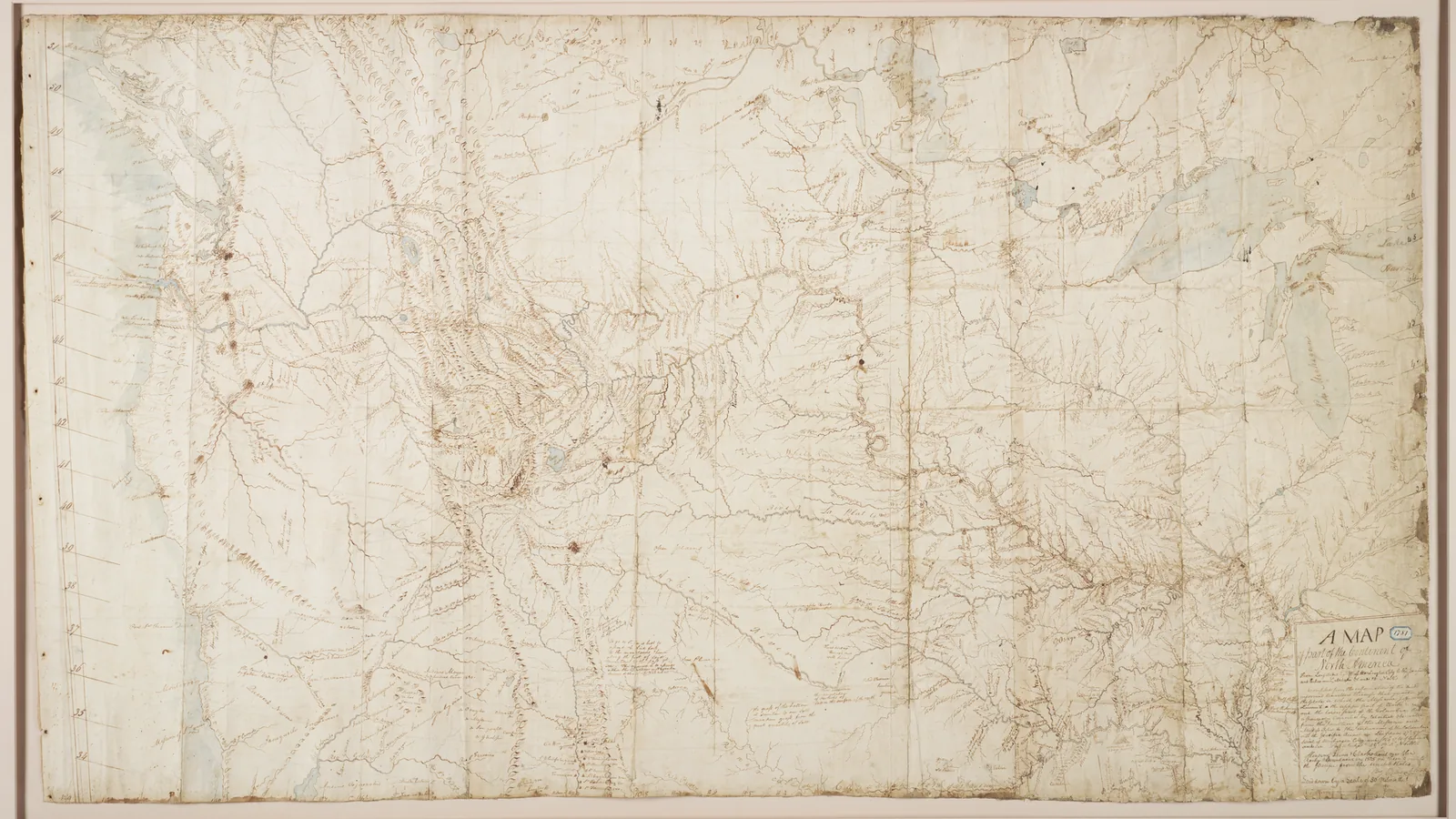

TL;DR — Instructions signed June 20, 1803, sent Lewis and Clark up the Missouri; the journals date the trip from Camp Dubois, May 14, 1804, to St. Louis, September 23, 1806.
“The object of your mission is to explore the Missouri river,” Thomas Jefferson wrote to Meriwether Lewis in instructions signed on June 20, 1803, and printed in the 1814 History of the Expedition prepared by Nicholas Biddle. The sentence went on: the Missouri “and such principal streams of it, as, by its course and communication with the waters of the Pacific ocean, whether the Columbia, Oregan, Colorado, or any other river, may offer the most direct and practicable water-communication across the continent, for the purposes of commerce.” Eleven months later William Clark opened the river journal at Camp Dubois, on the Wood River opposite the mouth of the Missouri: “I set out at 4 oClock to the head of the first Island in the Missouri 6 Miles and incamped.” The spellings throughout this article are the writers’ own.
Quick facts
- When
- June 20, 1803 (Jefferson's instructions signed) · May 14, 1804 (departure from Camp Dubois) · August 20, 1804 (Sergeant Charles Floyd dies) · November 4, 1804 (Charbonneau hired at Fort Mandan) · February 11, 1805 (Sacagawea's son born) · June 13, 1805 (Great Falls of the Missouri) · June 29, 1805 (flash flood in a ravine) · August 17, 1805 (Cameahwait recognized as Sacagawea's brother) · November 7, 1805 ("in view of the opening of the Ocian") · March 23, 1806 (Fort Clatsop abandoned) · September 23, 1806 (St. Louis)
- Where
- Camp Dubois on the Wood River opposite the mouth of the Missouri; Floyds Bluff; Fort Mandan; the Great Falls of the Missouri; the Shoshone camp; the lower Columbia; Fort Clatsop near the Pacific; St. Louis
- Who
- Thomas Jefferson; Captains Meriwether Lewis and William Clark; Sergeant Charles Floyd; John Ordway; Patrick Gass; Joseph Whitehouse; Toussaint Charbonneau; Sacagawea and her son; the Shoshone chief Cameahwait; the Clatsop chief Coboway; York
- Outcome
- The party reached the Pacific in November 1805, wintered at Fort Clatsop and landed at St. Louis about noon on September 23, 1806, firing a salute; Ordway ended his journal that day with the word "finis"
Clark's memorandum of May 1804 and a cedar post in August
A memorandum in Clark’s hand from about May 1804 lists the party: “2 Capts. 4 Sergeants, 3 Intptrs., 22 Amns. 9 or 10 French, & York also 1 Corpl. & Six in a perogue with 40 Days provisions for the party as far as the provisions last.” His entry for May 14 records rain for the greater part of the day and provisions found wet on examination before the boats moved.
On August 20, 1804, Sergeant Charles Floyd died. Clark wrote that “he expired, with a great deel of composure, haveing Said to me before his death that he was going away and wished me to write a letter.” The party buried him on a high round hill above the river and “fixed a Ceeder post at his head with his name title & Day of the month and year”; Lewis read the funeral service, and the hill became Sergts. Floyds Bluff. Patrick Gass wrote that the post was “to perpetuate the memory of the first man who had fallen in this important expedition.” The editors of the University of Nebraska–Lincoln edition of the journals, led by Gary E. Moulton, add a modern reading: “The probability is that Floyd died of a ruptured appendix and consequent peritonitis,” an ailment not recognized, they write, until twenty years after the expedition.
A Frenchman named Chabonah, November 4, 1804
At Fort Mandan on November 4, 1804, Clark recorded a visitor: “a french man by Name Chabonah, who Speaks the Big Belley language.” He wished to hire, and told the captains that “his 2 Squars were Snake Indians.” Clark engaged him to come on with one of his wives to interpret the Snake language. The editors give Toussaint Charbonneau’s birth as about 1758 and quote Lewis’s later verdict, “A man of no peculiar merit” who “was useful as an interpreter only.”
The wife who came was Sacagawea. On February 11, 1805, Lewis wrote: “about five oclock this evening one of the wives of Charbono was delivered of a fine boy.” Then the remedy: “Mr. Jessome informed me that he had freequently adminstered a small portion of the rattle of the rattle-snake, which he assured me had never failed to produce the desired effect, that of hastening the birth of the child.”
June 13, 1805: a column of smoke
Lewis, walking ahead of the boats on June 13, 1805, wrote that “my ears were saluted with the agreeable sound of a fall of water and advancing a little further I saw the spray arrise above the plain like a collumn of smoke,” a sight “too tremendious to be mistaken for any cause short of the great falls of the Missouri.” His measurements: “immediately at the cascade the river is about 300 yds. wide,” and ninety or a hundred yards of that width next the larboard bluff was “a smoth even sheet of water falling over a precipice of at least eighty feet.”
The portage around the falls filled the rest of the month. On June 29 Clark, with Charbonneau, Sacagawea and the baby, took shelter from a storm in a ravine, and “a torrent of rain and hail” came down “like one voley of water falling from the heavens.” With gun and shot pouch in his left hand, Clark “Scrambled up the hill pushing the Interpreters wife (who had her Child in her arms) before me, the Interpreter himself makeing attempts to pull up his wife by the hand much Scared and nearly without motion.” The water, by his account, “raised 10 feet deep” scarcely after he got out. He then had to “Cover the Child whose Clothes were all lost, and the woman who was but just recovering from a Severe indispostion.”
"The opening of the Ocian": August to November 1805
On August 17, 1805, Clark came up with Charbonneau and Sacagawea to the Shoshone camp where Lewis waited with the chief. The chief, Cameahwait, in Clark’s words, “proved to be the brother of the Woman with us.” Lewis’s business that day was horses: he asked the Shoshone to collect as many as were needed to carry the baggage to their village on the Columbia, and Cameahwait answered that “he would return tomorrow and encourage his people to come over with their horses.” The entry gives no count of horses bought.
On November 7, 1805, on the lower Columbia, Clark recorded “a Cloudy fogey morning, a little rain,” and then this line: “we are in view of the opening of the Ocian, which Creates great joy.” The shorter exclamation often printed, “Ocian in view! O! the joy,” does not appear in the University of Nebraska–Lincoln edition’s entry for that day; that edition prints the longer sentence.
Fort Clatsop to St. Louis, December 1805 to September 1806
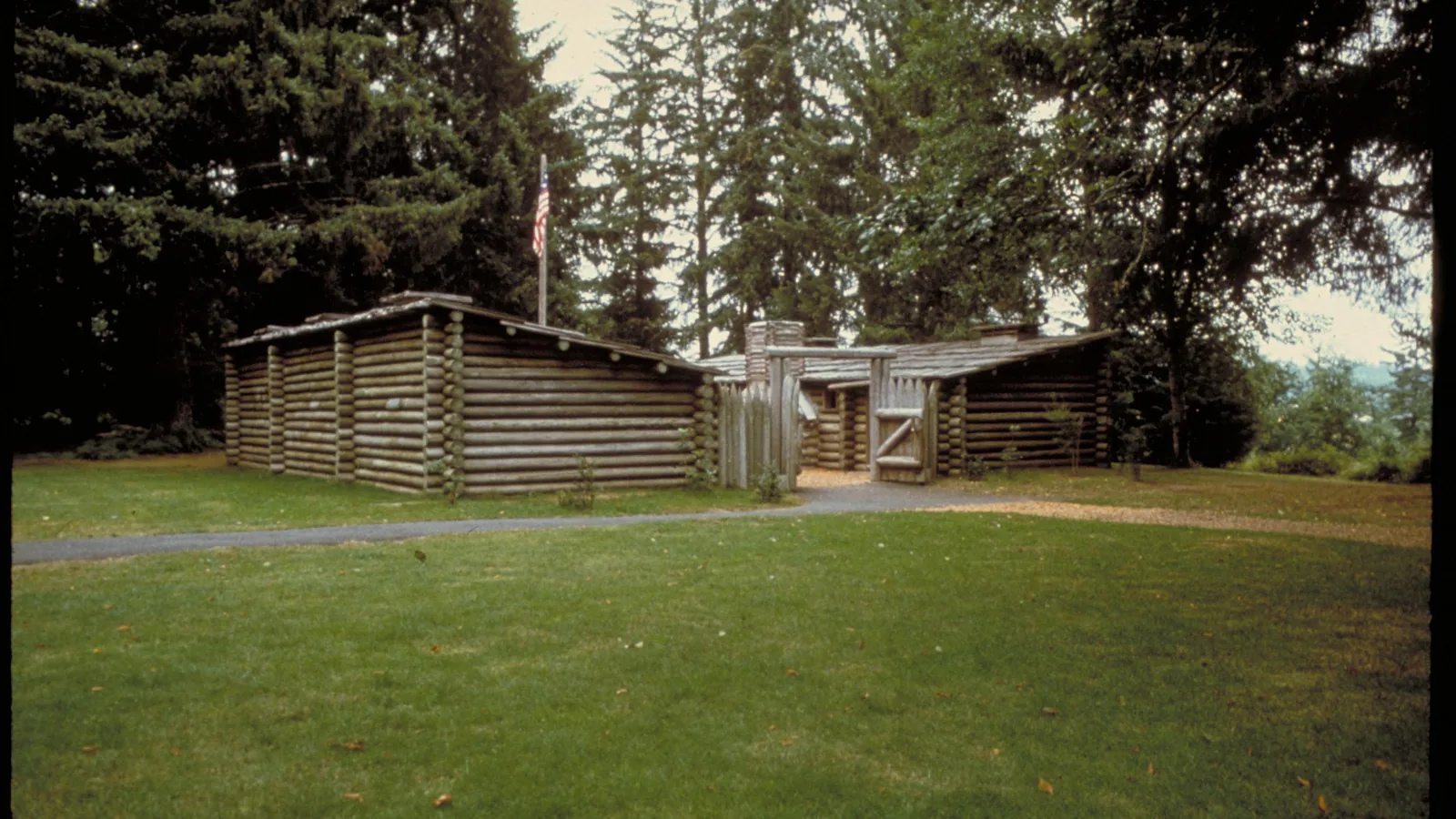
The winter post near the Pacific, in the National Park Service’s account, was “a fortification measuring just fifty feet square, housed 32 men, 1 woman, a baby, and a dog.” Gass kept the weather: “From the 4th of November 1805 to the 25th of March 1806, there were not more than twelve days in which it did not rain, and of these but six were clear.” Hunters killed 131 elk over the winter by Gass’s count, and the men stitched more than 300 pairs of moccasins from elk hide. On March 23, 1806, the party “bid a final adieu to Fort Clatsop” and left the post to the Clatsop chief Coboway.
Clark’s entry for Thursday, September 23, 1806, has the run down the Mississippi to St. Louis, reached “about 12 oClock.” The men fired their pieces “as a Salute to the Town” and “received a harty welcom from it’s inhabitants.” Ordway wrote that “the people gathred on the Shore and Huzzared three cheers.” He closed the entry for September 23, 1806, with a single word: “finis.”
.jpg)
Key facts
- Jefferson’s instructions to Lewis were signed on June 20, 1803, and open with “The object of your mission is to explore the Missouri river” (1814 History of the Expedition, Project Gutenberg 16565).
- Clark’s first river-journal line, May 14, 1804: “I set out at 4 oClock to the head of the first Island in the Missouri 6 Miles and incamped” (UNL edition).
- Clark’s memorandum of about May 1804 lists “2 Capts. 4 Sergeants, 3 Intptrs., 22 Amns. 9 or 10 French, & York also 1 Corpl.” (UNL edition).
- Sergeant Charles Floyd died on August 20, 1804; Gass called him “the first man who had fallen in this important expedition,” and the UNL editors give a ruptured appendix as the probable cause (UNL edition).
- Charbonneau was hired at Fort Mandan on November 4, 1804, because “his 2 Squars were Snake Indians”; Sacagawea’s son was born there on February 11, 1805 (UNL edition).
- On June 13, 1805, Lewis measured the Great Falls at “about 300 yds. wide” with a drop of “at least eighty feet”; on June 29 a flash flood in a ravine “raised 10 feet deep” and the child’s clothes were lost (UNL edition).
- On November 7, 1805, Clark wrote “we are in view of the opening of the Ocian, which Creates great joy”; the shorter “Ocian in view! O! the joy” is not in that edition’s entry (UNL edition).
- Fort Clatsop, “fifty feet square,” housed 32 men, one woman, a baby and a dog; hunters killed 131 elk, the men made more than 300 pairs of moccasins, and the party left on March 23, 1806, reaching St. Louis on September 23 (National Park Service; UNL edition).
FAQ
What did Jefferson tell Lewis the object of the expedition was?
In instructions signed June 20, 1803, Jefferson wrote that the object was "to explore the Missouri river" and its principal streams to find "the most direct and practicable water-communication across the continent, for the purposes of commerce." The text survives in the 1814 printed History of the Expedition.
Did Clark really write "Ocian in view! O! the joy"?
The University of Nebraska–Lincoln edition's entry for November 7, 1805, prints the longer sentence, "in view of the opening of the Ocian, which Creates great joy." The shorter exclamation is not in that edition's entry for the day.
How did Sergeant Charles Floyd die?
Floyd died on August 20, 1804, near a bluff the captains named for him. Whitehouse called the illness "a Bilious cholic"; the UNL editors write that "The probability is that Floyd died of a ruptured appendix and consequent peritonitis."
Sources
- Project Gutenberg, ebook 16565: History of the Expedition under the Command of Captains Lewis and Clark, prepared by Nicholas Biddle and edited by Paul Allen (1814), reprinted; the introduction prints Thomas Jefferson's instructions to Lewis signed June 20, 1803. The manuscript on Founders Online could not be opened, so the 1814 printed text is cited.
- National Park Service, Lewis and Clark National Historical Park, "Fort Clatsop": the fifty-foot-square post, 32 men, 1 woman, a baby and a dog; Gass's rain count; 131 elk; more than 300 pairs of moccasins; departure March 23, 1806; the fort given to Coboway.
- University of Nebraska–Lincoln, The Journals of the Lewis and Clark Expedition (Gary E. Moulton, ed.), entry for May 14, 1804: Clark's departure line and the memorandum listing the party and stores.
- University of Nebraska–Lincoln, Journals of the Lewis and Clark Expedition, entry for August 20, 1804: Clark, Ordway, Gass and Whitehouse on the death and burial of Sergeant Charles Floyd, with the editors' note on the cause of death.
- University of Nebraska–Lincoln, Journals of the Lewis and Clark Expedition, entry for November 4, 1804: Clark on hiring Charbonneau at Fort Mandan, with the editors' note quoting Lewis on him.
- University of Nebraska–Lincoln, Journals of the Lewis and Clark Expedition, entry for February 11, 1805: Lewis on the birth of Sacagawea's son and the rattlesnake remedy.
- University of Nebraska–Lincoln, Journals of the Lewis and Clark Expedition, entry for June 13, 1805: Lewis reaching the Great Falls of the Missouri.
- University of Nebraska–Lincoln, Journals of the Lewis and Clark Expedition, entry for June 29, 1805: Clark on the flash flood in the ravine with Charbonneau, Sacagawea and the child.
- University of Nebraska–Lincoln, Journals of the Lewis and Clark Expedition, entry for August 17, 1805: Lewis and Clark on Cameahwait, Sacagawea and the request for horses.
- University of Nebraska–Lincoln, Journals of the Lewis and Clark Expedition, entry for November 7, 1805: Clark's "in view of the opening of the Ocian" line, with the Ordway and Gass entries for the same day.
- University of Nebraska–Lincoln, Journals of the Lewis and Clark Expedition, entry for September 23, 1806: Clark and Ordway on the arrival at St. Louis.
Cite this article
- APA
- Our Earth's History. (2026, September 22). "In view of the opening of the Ocian": Lewis and Clark, 1804 to 1806. Our Earth's History. https://ourearthshistory.com/americas/modern/lewis-and-clark-1804-1806-journals-dated-entries/
- Chicago
- Our Earth's History. “"In view of the opening of the Ocian": Lewis and Clark, 1804 to 1806.” Our Earth's History, September 22, 2026. https://ourearthshistory.com/americas/modern/lewis-and-clark-1804-1806-journals-dated-entries/.
- MLA
- “"In view of the opening of the Ocian": Lewis and Clark, 1804 to 1806.” Our Earth's History, 22 Sep. 2026, https://ourearthshistory.com/americas/modern/lewis-and-clark-1804-1806-journals-dated-entries/.
Text licensed CC BY-NC-ND 4.0. Found an error? Tell us.