Why did an empire of millions fall to 168 men at Cajamarca?
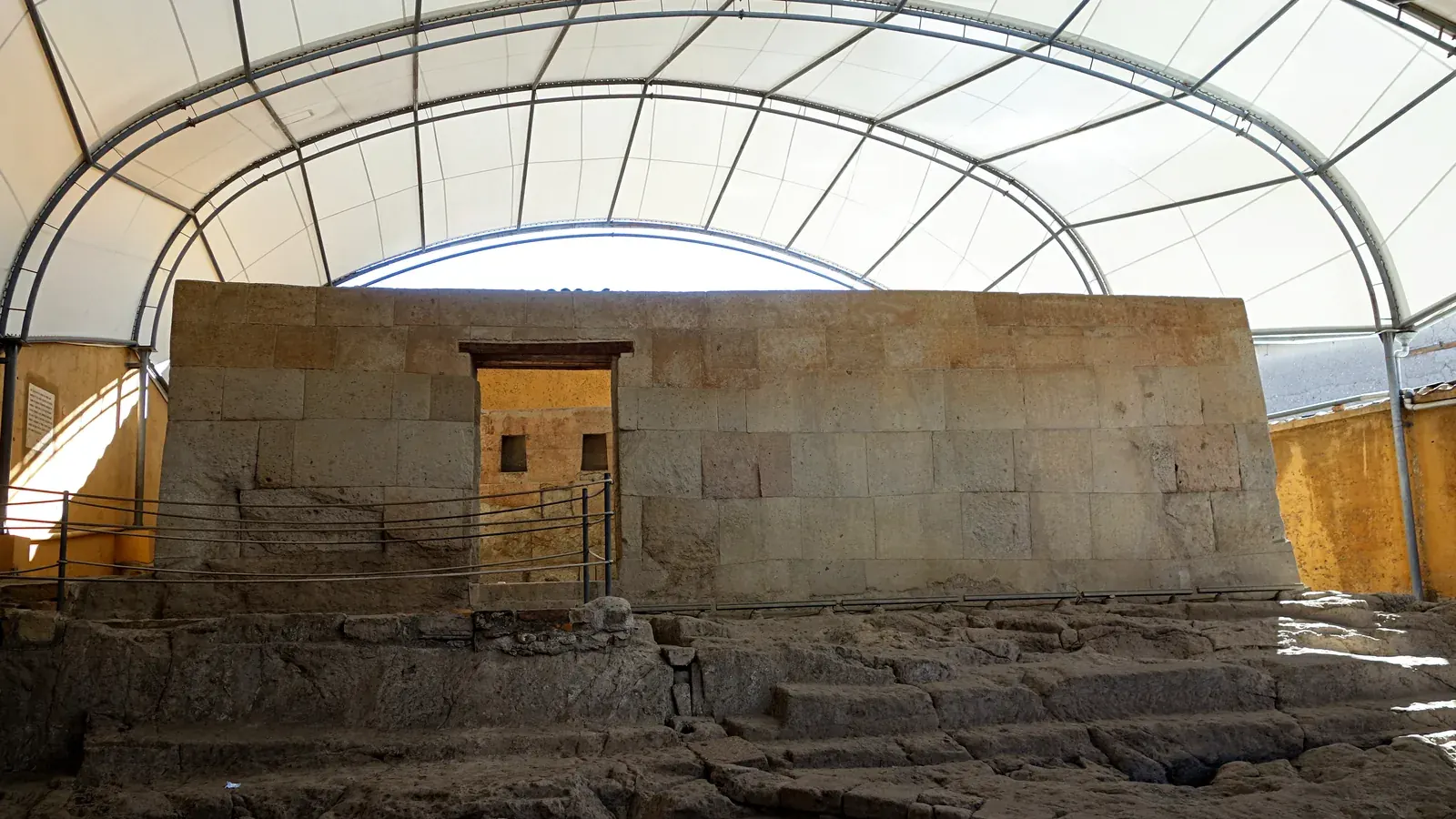

TL;DR — The Spaniards arrived after a plague and a civil war, took the Inca hostage in one afternoon, then fought for 40 years with Andean allies beside them.
The Inca Empire fell to a small Spanish force because it was already at war with itself when Pizarro seized its ruler, Atahualpa, at Cajamarca on November 16, 1532. Atahualpa had just won a civil war against his half-brother Huascar, a war that followed the sudden death of their father, Huayna Capac. Pizarro’s men, whom the chronicler Francisco de Xerez counted as 62 horsemen and 102 foot soldiers, held the Inca for eight months, took a room of gold as ransom, and executed him on July 26, 1533. The empire kept fighting: Cuzco fell in November 1533, Manco Inca besieged it in 1536, and a rival Inca state held out at Vilcabamba until 1572. The head count explains the ambush. It does not explain the conquest.
Quick facts
- When
- November 15–16, 1532 (ambush) · July 26, 1533 (execution) · November 15, 1533 (Cuzco taken) · 1536 (Manco Inca's revolt) · 1572 (Vilcabamba falls)
- Where
- Cajamarca, a highland town in what is now northern Peru; the Inca capital Cuzco; the refuge of Vilcabamba on the eastern slopes of the Andes
- Who
- Atahualpa, Sapa Inca; Francisco and Hernando Pizarro; the friar Vicente de Valverde; Huascar; Manco Inca; the chroniclers Xerez, Titu Cusi Yupanqui and Guaman Poma
- Outcome
- Atahualpa captured, ransomed and executed; Cuzco taken in 1533; a rival Inca state at Vilcabamba held out until 1572
The empire in 1527: roads, a dead ruler, a civil war
Tawantinsuyu, “the four parts together,” ran from what is now southern Colombia to central Chile, a distance the Metropolitan Museum of Art puts at some 3,000 miles. Its road system, the Qhapaq Ñan, covered more than 30,000 kilometers according to UNESCO, which listed it as World Heritage in 2014.
Huayna Capac, the eleventh Inca, died at Quito, along with his chosen heir, Ninan Cuyuchi. The year is unsettled; the historian Robert McCaa and his co-authors, writing in 2004, found chroniclers placing it anywhere from 1524 to 1530. Smallpox is the usual explanation, and their paper called it “historical canon,” but they argued that the written evidence for a smallpox epidemic in the Andes before 1558 was “thin and contradictory.” In July 2026 a team led by Shigeki Nakagome of Trinity College Dublin reported in Science the first variola DNA from early colonial Andean remains, in two people buried in northern Chile. That settles that the virus reached the Andes; it does not settle when, or what killed Huayna Capac.
The succession did the visible damage. Huascar was crowned at Cuzco and Atahualpa, based at Quito, held the loyalty of his father’s generals. Ralph Bauer’s introduction to Titu Cusi’s account records that Atahualpa’s general Quisquis defeated Huascar outside Cuzco, took him prisoner, and killed the nobility loyal to him.
November 16, 1532, as two sides told it
On Friday, November 15, the Spaniards reached Cajamarca, a highland town in what is now northern Peru. Atahualpa was camped on the plain a league away. Hernando Pizarro rode out to meet him and wrote that the Inca “smiled like a man who did not think so much of us.” The next afternoon Atahualpa entered the walled plaza in a litter, with 5,000 or 6,000 attendants whom Hernando described as unarmed apart from slings and small darts under their shirts. The friar Vicente de Valverde showed him a book; Atahualpa threw it down and, in Hernando’s version, said, “I know well who you are and what you have come for.” Pizarro gave the signal, the artillery fired, and the horsemen charged.
The dead are counted differently in every account. Xerez, Pizarro’s secretary, wrote that 2,000 were killed in the square and on the plain, and that the lords around the litter died in numbers so great “no account was taken of them.” Bauer’s introduction gives at least 1,500. Mark Cartwright’s 2016 survey for World History Encyclopedia gives 7,000. Felipe Guaman Poma de Ayala, an Andean writing in 1615, wrote that the dead were beyond counting and that the plaza wall collapsed under the crush. Titu Cusi Yupanqui, a grandson of Huayna Capac who dictated his account at Vilcabamba in 1570, dated the meeting to November 16, 1532, and, in Bauer’s summary, described an Inca who left most of his army outside the town because he underestimated the strangers.
The room measured with a sword
Atahualpa, now a prisoner, offered gold. Hernando Pizarro recorded the terms: a room 17 or 18 feet wide and 35 feet long, filled to a white line “the height of a man and a half from the floor,” within two months. Cartwright gives the room as 6.2 by 4.8 meters and adds that it was filled twice more with silver. Guaman Poma wrote that the Inca marked out the house and measured it with his own sword. Bauer’s introduction puts the melted result at more than 11 tons of gold and 13 tons of silver.
From captivity Atahualpa kept ruling. Hernando wrote that he had also sent orders for Huascar to be killed, “lest the Governor should restore him to his lordship,” and Bauer’s account agrees that the order came from the prisoner.
July 26, 1533: a garrote, or a beheading
The ransom paid, Pizarro tried Atahualpa in a summary court. Xerez wrote that the Inca was sentenced to be burned, agreed in the square to become a Christian, was baptized by Valverde, and was then “fastened to a pole in the open space and strangled.” The Andean record disagrees. Guaman Poma’s text on page 393 of his chronicle states that Pizarro ordered Atahualpa’s head cut off and that he “fue degollado,” and his drawing on the facing page shows a beheading under the caption “they cut off the head of Atahualpa Inca.” The Spanish accounts were written by the men who did it; Guaman Poma wrote 80 years later from Andean memory. The two records cannot both be right, and no third witness resolves them.
The war after Cajamarca, 1533 to 1572
Pizarro’s men entered Cuzco on Saturday, November 15, 1533, a year after the ambush. Bauer’s introduction records that Atahualpa’s general Quisquis fought them on the road while the Cuzco nobility and the peoples who had backed Huascar received them as friends. The Spaniards crowned a brother of the dead rivals, then, when he died, Manco Inca.
In 1536 Manco Inca left Cuzco and, by Bauer’s count, gathered 100,000 warriors, besieging Cuzco and Lima at once and killing Juan Pizarro. The siege failed. In 1537 Manco withdrew to Vitcos and Vilcabamba on the eastern slopes of the Andes and ran a state there for more than 30 years. His son Titu Cusi ruled Vilcabamba until 1571; Wernke’s 2007 review records that Titu Cusi dictated his history there in 1570, casting his father as the sole legitimate Inca. In 1572 an army sent by the viceroy Francisco de Toledo took Vilcabamba and executed Titu Cusi’s brother, Topa Amaru, in the main square of Cuzco.
What did the work, and why "168" misleads
Five things caught the Inca at Cajamarca. A plague, whatever it was, had removed the ruler and his heir. A civil war had split the army and the nobility and left Atahualpa’s enemies ready to welcome anyone who opposed him; Bauer’s introduction records that Paullu Topa, another son of Huayna Capac, fought beside the Spaniards during the siege of Cuzco. Horses, steel and arquebuses turned an unarmed escort into a massacre, and Bauer wrote that clubs, pikes and slings did little against armored riders. A hostage plan “well tried in the conquest of Mexico,” in Bauer’s words, gave the Spaniards an empire to rule by proxy for eight months. And reinforcements arrived: Xerez’s ransom roll lists 240 men under Diego de Almagro who reached Cajamarca after the ambush.
Even the number is soft. Cartwright uses 168. Xerez’s muster before the march was 164. Guaman Poma wrote of “160 Spaniards and one Black man from the Congo.” Whatever the count, it was the count on one afternoon in one plaza. The empire that fell in 1532 was a broken one, and the Inca who fell in 1572 had held out against Spain for 40 years.
Key facts
- Tawantinsuyu spanned some 3,000 miles (Metropolitan Museum of Art); its road system exceeded 30,000 kilometers (UNESCO, inscribed 2014).
- Huayna Capac and his heir died between 1524 and 1530, by different chroniclers’ reckonings; the smallpox diagnosis rests on thin and contradictory sources (McCaa, Nimlos and Hampe Martínez, 2004).
- Pizarro’s force at Cajamarca: 62 horse and 102 foot by Xerez’s muster; 168 in Cartwright’s account; 160 plus one African in Guaman Poma.
- Andean dead on November 16, 1532: 2,000 (Xerez), at least 1,500 (Bauer), 7,000 (Cartwright), “beyond counting” (Guaman Poma).
- Ransom room: 17 or 18 by 35 feet, filled to a line a man and a half high (Hernando Pizarro, 1533); melted to more than 11 tons of gold and 13 tons of silver (Bauer).
- Atahualpa died on July 26, 1533: strangled at a pole after baptism (Xerez); beheaded (Guaman Poma, text and drawing).
- Cuzco fell on November 15, 1533; Manco Inca’s siege failed in 1536; Vilcabamba fell and Topa Amaru was executed in 1572.
FAQ
Did 168 Spaniards really defeat the Inca Empire?
They seized Atahualpa in one ambush on November 16, 1532. Xerez counted 164 men, Guaman Poma 161. The conquest took until 1572, and by then Almagro's 240 reinforcements, thousands of Andean allies and the Inca civil war had done most of the fighting.
Did smallpox kill Huayna Capac?
Cieza de León and other chroniclers reported it, with hedges. McCaa, Nimlos and Hampe Martínez argued in 2004 that the evidence was thin and contradictory, and a 2026 DNA study found variola in two early colonial burials in Chile without dating an epidemic to the 1520s. The question stays open.
How was Atahualpa executed?
Xerez, Pizarro's secretary, wrote that he was baptized and then strangled at a pole in the plaza of Cajamarca on July 26, 1533. Guaman Poma, writing in 1615, wrote and drew a beheading. The sources disagree and no independent witness settles it.
Sources
- Francisco de Xerez — "Report of Francisco de Xeres, Secretary to Francisco Pizarro" (1534), in Reports on the Discovery of Peru, trans. Clements R. Markham, Hakluyt Society (1872), Internet Archive full text.
- North Carolina State University, Department of History — "Hernando Pizarro Describes the Conquest of Peru, 1533" (letter to the Audiencia of Santo Domingo, November 1533).
- Ralph Bauer — Introduction to Titu Cusi Yupanqui, An Inca Account of the Conquest of Peru (1570), University Press of Colorado (2005), PDF excerpt.
- Steven A. Wernke — review of An Inca Account of the Conquest of Peru, Journal of Latin American Anthropology 12 (2007), PDF.
- Royal Danish Library — Felipe Guaman Poma de Ayala, El primer nueva corónica y buen gobierno (1615), digital edition, table of contents.
- Royal Danish Library — Guaman Poma, Nueva corónica, page 393, "The imprisonment and execution of Atahualpa Inka" (transcription).
- Robert McCaa, Aleta Nimlos and Teodoro Hampe Martínez — "Why Blame Smallpox? The Death of the Inca Huayna Capac and the Demographic Destruction of Tawantinsuyu (Ancient Peru)," conference paper (2004), University of Minnesota, PDF.
- CIDRAP, University of Minnesota — Sarah Boden, "Telltale DNA: First direct evidence found that the Spanish brought smallpox to the Inca" (July 31, 2026).
- UNESCO World Heritage Centre — "Qhapaq Ñan, Andean Road System" (inscribed 2014).
- World History Encyclopedia — Mark Cartwright, "Atahualpa: Last of the Inca Rulers" (March 17, 2016).
- The Metropolitan Museum of Art, Heilbrunn Timeline of Art History — "Central and Southern Andes, 1400–1600 A.D."
Cite this article
- APA
- Our Earth's History. (2026, September 20). Why did an empire of millions fall to 168 men at Cajamarca? Our Earth's History. https://ourearthshistory.com/americas/early-modern/cajamarca-1532-why-the-inca-fell/
- Chicago
- Our Earth's History. “Why did an empire of millions fall to 168 men at Cajamarca?” Our Earth's History, September 20, 2026. https://ourearthshistory.com/americas/early-modern/cajamarca-1532-why-the-inca-fell/.
- MLA
- “Why did an empire of millions fall to 168 men at Cajamarca?” Our Earth's History, 20 Sep. 2026, https://ourearthshistory.com/americas/early-modern/cajamarca-1532-why-the-inca-fell/.
Text licensed CC BY-NC-ND 4.0. Found an error? Tell us.