How did Haiti win freedom in 1804, then pay France for it until 1888?
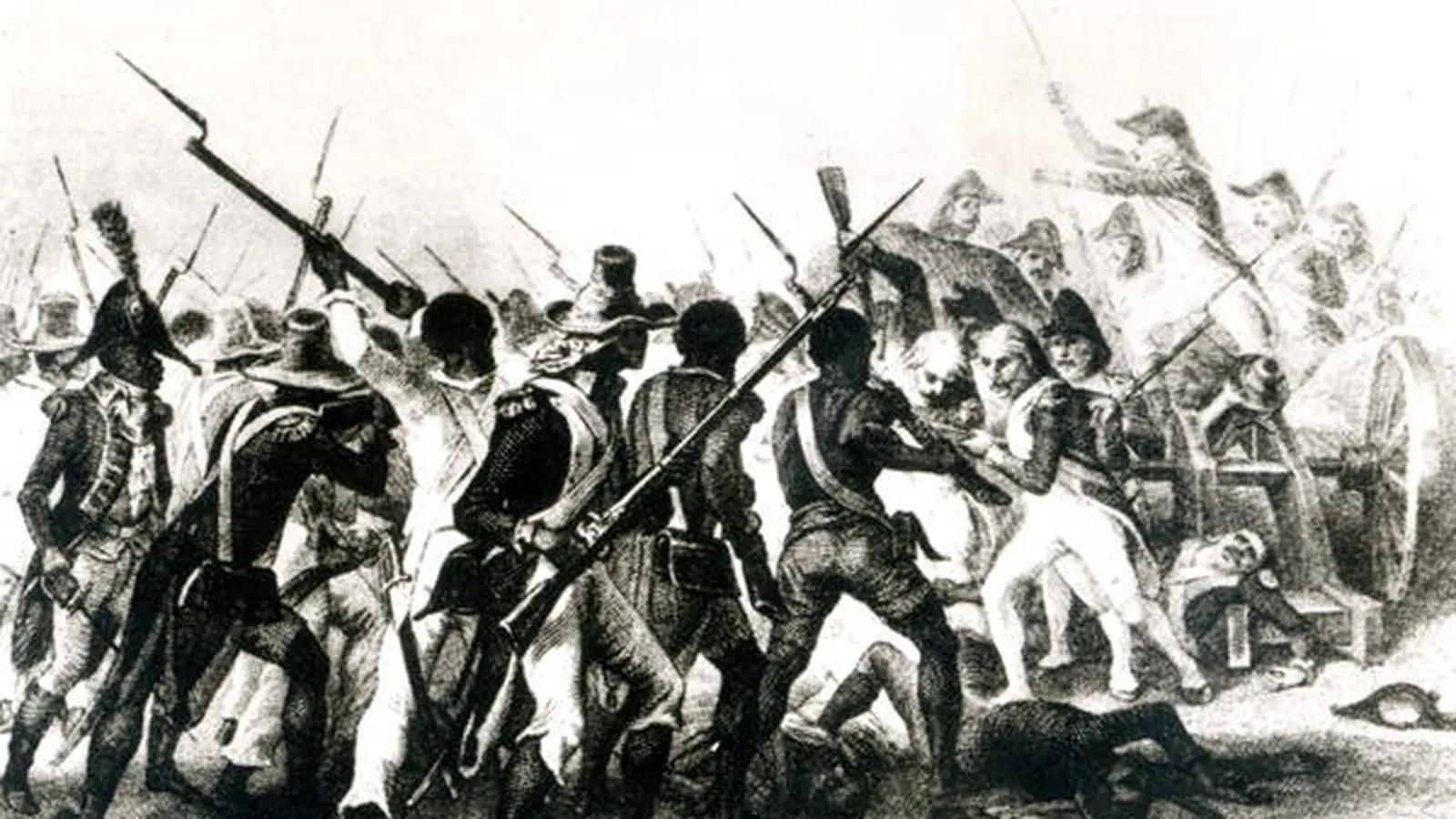

TL;DR — Enslaved people rose in 1791, outlasted Spanish, British and French armies, declared Haiti in 1804, and from 1825 paid France a 150 million franc ransom for recognition.
Enslaved people in Saint-Domingue rose on August 22, 1791, fought off Spain, Britain and Napoleon’s France over 12 years, and declared the state of Haiti on January 1, 1804. The colony was the French western third of Hispaniola, and the lawyer Moreau de Saint-Méry counted 452,000 enslaved people there against 40,000 whites. French commissioners freed the enslaved in August 1793, the National Convention abolished slavery in every French colony on February 4, 1794, and Napoleon’s expedition to undo that died on the island in 1802 and 1803. On July 3, 1825, a French squadron anchored off Port-au-Prince with an ordinance from Charles X: recognition for 150 million francs, paid to the former slaveholders. Haiti borrowed to pay, the sum fell to 90 million in 1838, and the last payments tied to the slaveholders went out in 1888, according to a 2022 New York Times investigation.
Quick facts
- When
- August 22, 1791 (rising in the north) · August 1793 (commissioners free the enslaved) · February 4, 1794 (Convention abolishes slavery) · 1801 (Toussaint's constitution) · February 6, 1802 (Leclerc lands) · November 18, 1803 (Vertières) · January 1, 1804 (independence) · July 3, 1825 (French ordinance, 150 million francs) · 1838 (reduced to 90 million) · 1888 (last payments to former slaveholders) · 1947 (end of US financial control)
- Where
- Saint-Domingue, the French western third of Hispaniola, now Haiti; the northern plain around Cap-Français (now Cap-Haïtien), Gonaïves, the Citadelle above Milot, and the harbor of Port-au-Prince
- Who
- about 452,000 enslaved people counted by Moreau de Saint-Méry; Toussaint Louverture; Jean-Jacques Dessalines; Henry Christophe; the French generals Leclerc and Rochambeau; Charles X and his envoy the Baron de Mackau; the Haitian president Jean-Pierre Boyer
- Outcome
- The enslaved won freedom in 1793 and 1794 and a state in 1804, then paid France for recognition from 1825; the ordinance's 150 million francs, cut to 90 million in 1838, took until 1888 to clear, and the loans behind it ran into the 20th century
Saint-Domingue in 1789: the numbers
Moreau de Saint-Méry, a colonial lawyer who published his description of the colony in Philadelphia in 1797, gave the French part of the island about 520,000 people: 40,000 whites, 28,000 freedmen or their descendants, and 452,000 enslaved, or “eleven and three-tenths slaves for one white.” A chart drawn from James E. McClellan’s 1992 study puts the enslaved share near nine tenths. By the late 1780s, the Times wrote, the colony absorbed 40 percent of the entire trans-Atlantic trade in enslaved Africans.
The wealth sat on sugar and coffee; the State Department’s Office of the Historian calls the colony the most profitable in the Americas by the 1760s. Control rested on public violence: the Times described colonists gathering in one of the colony’s squares to watch enslaved people burned or broken on the wheel.
August 1791: the northern plain burns
The rising began on the night of August 22, 1791, in the north. The Times found little documentation of its first days: one enslaved man, most likely under torture, confessed that about 200 people from across the north had met in the woods and later held a ceremony vowing to destroy their oppressors. Haitian tradition places that ceremony at Bois Caïman on August 14 under the Vodou priests Boukman Dutty and Cécile Fatiman; the guidebook writer Paul Clammer, writing for the Age of Revolutions blog in 2016, called it “quasi-mythical” and recorded that several sites claim it.
The fire is not in doubt. A French surgeon quoted by the Times wrote that the smoke over Cap-Français made the sky glow after sunset like the northern aurora. Within two weeks every plantation within 50 miles of the town was ash, and the rebels had formed three armies.
Toussaint, the commissioners and the republic, 1793 to 1801
Toussaint Louverture was born enslaved in 1745 on the Bréda estate near Cap-Français, according to Marcus Rainsford, a British officer who published an account of Haiti in 1805. Rainsford wrote that he learned to read, rode as postilion for the estate manager, got that man safely to Baltimore when the rising came, and only then joined the rebel commander Biassou. Rainsford had him still enslaved in 1791; Clammer wrote that he had been free for 15 years and had owned enslaved people himself.
In August 1793 the civil commissioners sent from Paris proclaimed the enslaved free and French citizens, a step the Times called practical, since the colony needed soldiers against Britain and Spain. On February 4, 1794, three deputies from Saint-Domingue addressed the National Convention, which decreed that “all men, without distinction of color, residing in the colonies are French citizens.” The historian Laurent Dubois, quoted by the Times, called it “only the end of the beginning of a long struggle for freedom.”
The war that followed was, in the State Department’s words, “a complex and multi-sided civil war in which Spanish and British forces also intervened.” Toussaint had taken Spanish aid across the border; after 1794 he fought for France. British troops held Port-au-Prince and other ports from 1793 until a treaty with Toussaint let them leave in 1798, Clammer recorded. By 1801 he governed the whole island under a constitution that named him governor for life while still calling the colony French.
Leclerc, Dessalines, Vertières and January 1, 1804
In December 1801 Napoleon sent about 50 ships under his brother-in-law, General Charles Leclerc, with orders, quoted by the Times, to “rid us of these gilded Africans.” He expected three months. Leclerc landed on February 6, 1802; Henry Christophe burned Cap-Français rather than let him disembark there. Toussaint signed a peace that year, was seized, shipped to France and jailed without trial in the Jura Mountains, where he died in 1803.
The army he left did not stop. The historian Philippe Girard, cited by the Times, put French losses at as many as 50,000 soldiers, sailors and colonists. Leclerc died of yellow fever; his successor Rochambeau lost the last battle at Vertières, outside Cap-Français, on November 18, 1803, and asked for ten days to take the survivors off. On January 1, 1804, at Gonaïves, Jean-Jacques Dessalines proclaimed the independence of Haiti. Dessalines then ordered the execution of the French who remained, the State Department page records. He also ordered 30 forts against the return he expected; the largest, the Citadelle on Pic Laferrière, was inaugurated in 1813, according to UNESCO.
The price: 1825 to 1888, and after
On July 3, 1825, a warship and two escorts under the Baron de Mackau entered Port-au-Prince, 11 more warships waiting up the coast, with an ordinance from Charles X: France would recognize Haiti for 150 million francs and a deep cut in duties on French goods. The baron’s own account, quoted by the Times, has him telling President Jean-Pierre Boyer, “I am not a negotiator. I am only a soldier.” Boyer accepted.
Haiti could not pay the first installment, about six times the government’s income that year by the records of the Haitian historian Beaubrun Ardouin. It borrowed 30 million francs from Paris bankers including the Rothschilds, received 24 million after commissions, and so owed 156 million plus interest, what the Times called the “double debt.” In 1838 French envoys cut the sum to 90 million francs. The Times tracked the payments over 64 years, found that some years sent more than 40 percent of state revenue to France, and dated the last payments connected to the former slaveholders to 1888. The loans taken to finish them ran on. The United States, which had recognized Haiti only on July 12, 1862, occupied it in 1915; the Marines left in 1934 and US financial control ended in 1947.
How the debt is weighed
The Times put what Haitians paid at about $560 million in 2022 dollars and estimated that, kept at home, the money would have added $21 billion to the economy; 14 of the 15 economists it consulted accepted the figure or called it conservative. The French economist Thomas Piketty told the paper the drain “totally disrupted the process of state building.” The Swedish economist Mats Lundahl said the debt was not the main cause of Haiti’s poverty, pointing to 22 governments between 1843 and 1915, of which 17 fell to revolts or coups.
A colony of 452,000 enslaved people and 40,000 whites became a state in 12 years of war, and the state then spent 63 years paying the people it had defeated for the property they said they had lost.
Key facts
- Moreau de Saint-Méry counted about 520,000 people in French Saint-Domingue in 1797: 40,000 whites, 28,000 freedmen and their descendants, and 452,000 enslaved.
- The rising began on the night of August 22, 1791; within two weeks every plantation within 50 miles of Cap-Français had burned (New York Times).
- The commissioners freed the enslaved in August 1793; the National Convention abolished slavery in all colonies on February 4, 1794.
- Leclerc landed on February 6, 1802; Toussaint was seized that year and died in a Jura prison in 1803; Girard puts French losses at up to 50,000.
- Vertières was fought on November 18, 1803; Dessalines declared independence at Gonaïves on January 1, 1804.
- Charles X’s ordinance of 1825 demanded 150 million francs; the sum was cut to 90 million in 1838 and the last slaveholder-linked payments went out in 1888 (New York Times).
- The United States recognized Haiti on July 12, 1862; its financial control of Haiti, begun with the 1915 occupation, ended in 1947.
FAQ
Which three empires did the Haitian revolutionaries fight?
Spain, which aided the rebels from its side of the island; Britain, whose troops held Port-au-Prince and other ports from 1793 to 1798; and France, whose 1802 expedition under Leclerc ended at Vertières in November 1803.
How much did Haiti pay France?
The 1825 ordinance asked 150 million francs, reduced to 90 million in 1838. The New York Times, which tracked the payments in French and Haitian archives, put the total paid to former slaveholders and to the bankers behind the first loan at about $560 million in 2022 dollars, with the last slaveholder-linked payments in 1888.
Did Haiti pay until 1947?
Not the indemnity itself. The 1888 date marks the last payments tied to the former slaveholders; the loans taken to make them, and later loans held by French and then American banks, ran into the 20th century, and 1947 is the year the United States gave up control of Haiti's finances.
Sources
- U.S. Department of State, Office of the Historian — "The United States and the Haitian Revolution, 1791–1804," Milestones in the History of U.S. Foreign Relations (retired page).
- U.S. Department of State, Office of the Historian — "Haiti," A Guide to the United States' History of Recognition, Diplomatic, and Consular Relations, by Country, since 1776.
- Liberty, Equality, Fraternity: Exploring the French Revolution (Roy Rosenzweig Center for History and New Media / American Social History Project) — Moreau de Saint-Méry, "Saint Domingue: Some Geography" (1797), translated by Ivor D. Spencer (1985).
- Liberty, Equality, Fraternity — Marcus Rainsford, An Historical Account of the Black Empire of Hayti (London, 1805), pp. 239–248, on Toussaint L'Ouverture.
- Liberty, Equality, Fraternity — "Decree of the National Convention of 4 February 1794, Abolishing Slavery in all the Colonies," translated by Lynn Hunt (1996).
- Liberty, Equality, Fraternity — "Demographics of Saint Domingue," chart after James E. McClellan III, Colonialism and Science (Johns Hopkins University Press, 1992), p. 47.
- Liberty, Equality, Fraternity — timeline entries "Slave rebellion begins in Saint Domingue" (August 22, 1791) and "Leclerc lands in Saint Domingue" (February 6, 1802).
- The New York Times — Catherine Porter, Constant Méheut, Matt Apuzzo and Selam Gebrekidan, "The Root of Haiti's Misery: Reparations to Enslavers" (May 20, 2022); read via an Internet Archive copy dated May 21, 2022.
- Age of Revolutions — Paul Clammer, "Touring the Haitian Revolution: A Photo Journal" (June 27, 2016).
- UNESCO World Heritage Centre — "National History Park – Citadel, Sans Souci, Ramiers," World Heritage List no. 180, Outstanding Universal Value statement.
Cite this article
- APA
- Our Earth's History. (2026, September 20). How did Haiti win freedom in 1804, then pay France for it until 1888? Our Earth's History. https://ourearthshistory.com/americas/modern/haitian-revolution-1791-and-the-ransom/
- Chicago
- Our Earth's History. “How did Haiti win freedom in 1804, then pay France for it until 1888?” Our Earth's History, September 20, 2026. https://ourearthshistory.com/americas/modern/haitian-revolution-1791-and-the-ransom/.
- MLA
- “How did Haiti win freedom in 1804, then pay France for it until 1888?” Our Earth's History, 20 Sep. 2026, https://ourearthshistory.com/americas/modern/haitian-revolution-1791-and-the-ransom/.
Text licensed CC BY-NC-ND 4.0. Found an error? Tell us.