Ash from AD 1314 and the dating of New Zealand's first settlement

TL;DR — Tarawera’s Kaharoa ash, dated to about AD 1314, holds rat-gnawed seeds; a 2022 study placed the first North Island settlement at AD 1250 to 1275.
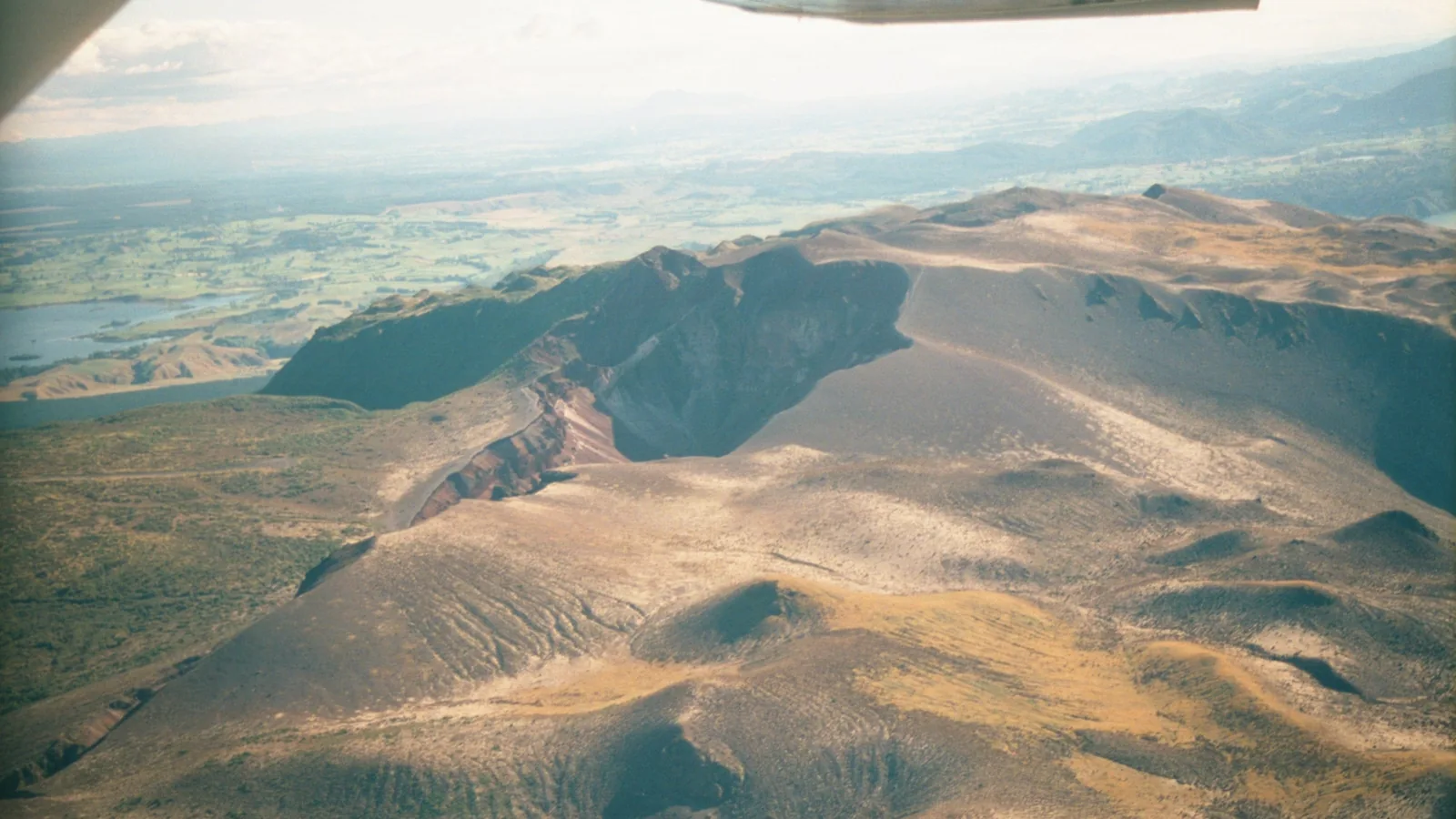
In about AD 1314 Mount Tarawera, on New Zealand’s North Island, erupted and spread the Kaharoa ash over the northeast, a layer that later yielded seeds gnawed by the Pacific rat. The rat, or kiore, came to New Zealand with people, so seeds inside the ash show that people had reached that district before it fell. Rat bones dated in 1996 had put the animal in New Zealand by about 200 BC; in 2008 Janet Wilmshurst and her colleagues dug the same caves again and found nothing that old. In 2022 Magdalena Bunbury, Fiona Petchey and Simon Bickler modeled 2,254 radiocarbon dates and placed the first settlement of the North Island at AD 1250 to 1275.
Quick facts
- When
- about AD 1314 (Kaharoa eruption; 1314 ± 6 or 1314 ± 12, depending on the paper) · 1996 (rat-bone dates reaching about 200 BC reported) · June 3, 2008 (Wilmshurst and colleagues' redating) · 2010 and 2014 (South Island lake records) · November 7, 2022 (Bunbury, Petchey and Bickler's chronology)
- Where
- Mount Tarawera and the northeast of the North Island, including Te Rerenga and Cross Creek on the Coromandel Peninsula; Predator Cave, Earthquakes
- Who
- Janet M. Wilmshurst, Atholl J. Anderson, Thomas F. G. Higham and Trevor H. Worthy; R. N. Holdaway; David B. McWethy and colleagues; Fiona Petchey and Martin M. E. Schmid; Magdalena M. E. Bunbury, Fiona Petchey and Simon H. Bickler; Steve Sahetapy-Engel and colleagues
- Outcome
- Rat-gnawed seeds inside the ash show that rats, and so people, were in the northeast before it fell. The 1996 rat-bone dates were not reproduced in 2008, and the 2022 model placed the first North Island settlement at AD 1250 to 1275
Tarawera and the ash of AD 1314
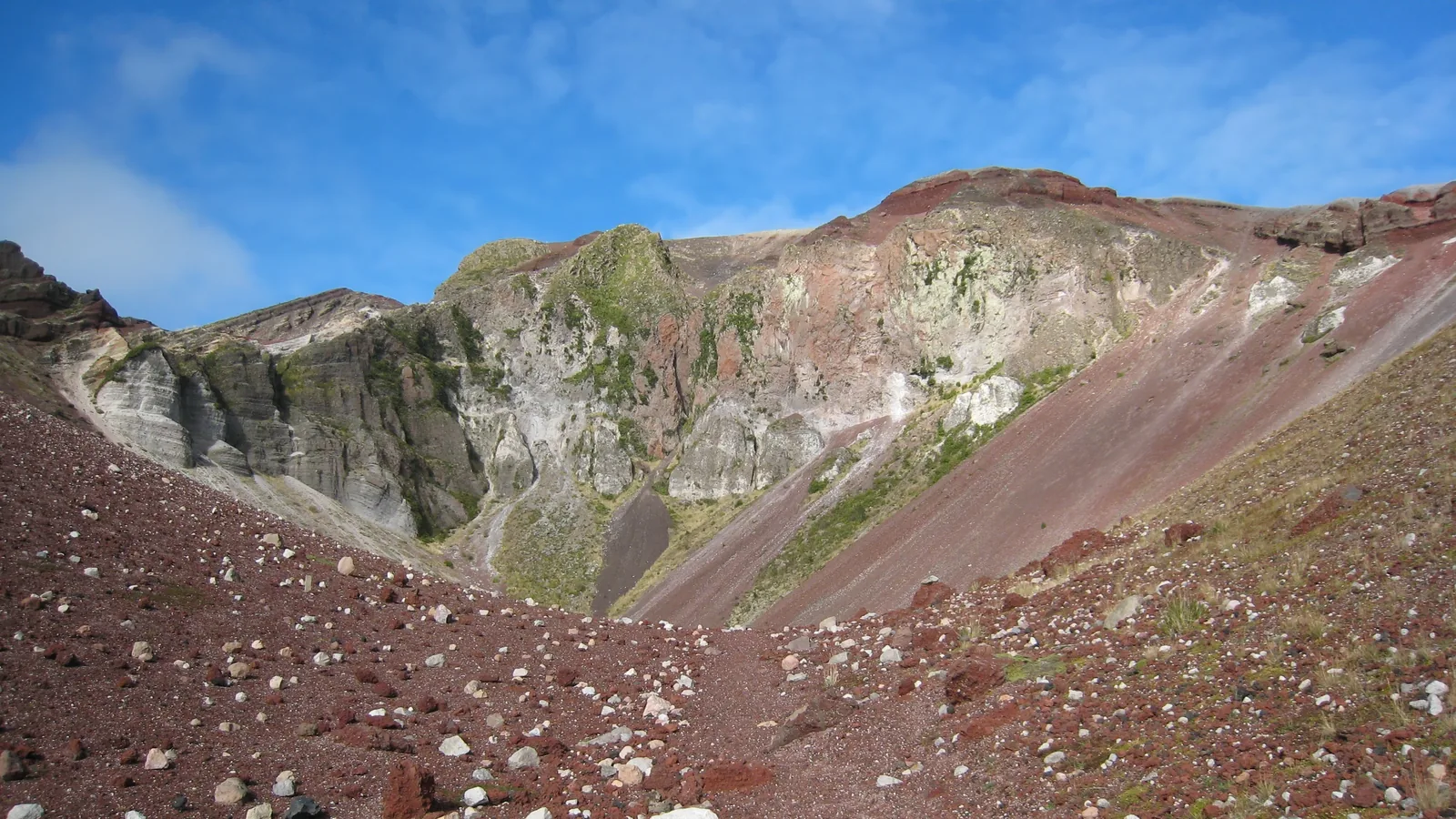
The abstract of a 2014 study in the Bulletin of Volcanology by Steve Sahetapy-Engel and three colleagues describes up to 13 separate explosive phases from at least two vents along a fissure 8 kilometers long. The explosive activity possibly lasted about two weeks, followed by about four years of mainly lava-dome building. At least 15 cubic kilometers of tephra, the ash and pumice thrown into the air, came out during the main explosive episodes.
The date goes back to a 2003 paper in the journal Antiquity by A. G. Hogg and colleagues, “A wiggle-match date for Polynesian settlement of New Zealand,” as cited by the later studies. Wilmshurst’s team in 2008 gave 1314 ± 12; Bunbury’s team in 2022 gave AD 1314 ± 6 years. Petchey and Martin Schmid, in Scientific Reports in 2020, wrote 1314 ± 6 AD with a range of 1310 to 1320 AD at 68 percent probability, and in a table note gave the age “modelled at 2σ resolution” as 1314 ± 12 AD.
Bunbury and her coauthors recorded that some scholars had used the ash as a fixed point in support of settlement in the 14th century AD. They also named its weakness: few archaeological sites in the northeast of the North Island have the ash identified in place, within the site or directly beneath it.
Charcoal and pollen in lake mud
A 2014 paper by David McWethy and colleagues in PLoS ONE cites, among records of podocarp pollen falling while bracken, grasses and charcoal rose, a 1998 study by R. Newnham and four coauthors titled “The Kaharoa Tephra as a critical datum for earliest human impact in northern New Zealand.” Bunbury’s team summarized a 2018 study by Newnham and colleagues in The Holocene as describing “a two-step pattern with an initial phase of forest clearance starting just before the Kaharoa tephra deposit,” followed by wider inland clearance at about AD 1400 to 1450.
Farther south the burning is dated lake by lake. McWethy and colleagues, writing in the Proceedings of the National Academy of Sciences (PNAS) in 2010, analyzed the sediments of 16 small South Island lakes. They took Māori arrival as about AD 1280 and noted that charcoal in soils suggests fires before people came had been rare, one or two events per millennium. Within 200 years of arrival, every site except the wettest and highest recorded a sharp rise in charcoal. Summer temperatures rebuilt from silver pine tree rings showed no statistical relationship with the burning, and the authors concluded that people set the fires. The 2014 paper dated two lakes more closely: native forest taxa fell by more than 15 percent within 17 years (standard deviation 7) at Lake Kirkpatrick and within 48 years (standard deviation 19) at Dukes Tarn.

"Anachronously old": the rat bones of 1996
In 1996 R. N. Holdaway reported in Nature, as the 2008 PNAS paper recounts, the first accelerator radiocarbon dates on Pacific rat bones from sites of the extinct laughing owl. The oldest was about 200 BC. The dates were used to argue that a brief human contact had left rats in New Zealand more than 1,100 years before the earliest evidence of people, at about AD 1280.
Wilmshurst, Atholl Anderson, Thomas Higham and Trevor Worthy went back to the two caves with the oldest dates, Predator Cave and Earthquakes #1, and dated 17 newly excavated rat bones. None overlapped at the 2σ range with the old series from the same layers, processed in 1995 and 1996, and all were younger than AD 1280. The team concluded that the explanation for the “anachronously old series of rat bone dates” lay “most probably in laboratory pretreatment procedures at that time.”
Seeds gave a check, since gnawed seed cases need simpler laboratory treatment than bone. The oldest rat-gnawed seed from Nguroa Bay, in the South Island, dated to 702 ± 32 years before present, statistically the same as the oldest from the North Island, and the Kaharoa ash, with gnawed seeds buried inside it, capped the range. The authors placed the rat’s arrival, with the first colonists from central East Polynesia, at about AD 1280, and wrote that their results “generally agree with, but shorten by about one century, the short prehistory model.”
Petchey and Schmid in 2020 called the rat-gnawed seeds found within the ash at Te Rerenga, on the Coromandel Peninsula, “a definitive indication that humans had made landfall in this region by this time.” Another Coromandel site stays disputed. At Cross Creek, L. Furey and colleagues identified a yellow sand layer between two occupation layers as the Kaharoa ash; C. Jacomb and colleagues called the association “unconvincing” and read the layer as redeposited.
November 2022: 2,254 dates and a decade between islands
In 2017 R. Walter and colleagues had argued, in words Bunbury’s team quoted, that “the sudden and widespread appearance of sites in the 14th century is the result of mass migration.” Bunbury, Petchey and Bickler collated 2,254 published radiocarbon ages from 712 archaeological sites, against 334 to 481 land-based dates in earlier studies, and rejected 696 as outliers.
Their model put the first settlement of the North Island at AD 1250 to 1275 and of the South Island a decade later, at AD 1280 to 1295. Rats (22 bones and two gnawed seeds from four sites) appeared in the North Island at AD 1245 to 1285, which the authors put at 35 to 70 years before the ash fell, while warning that rat-bone dates “have a troubled history of reliability.” They wrote that “our analysis refutes a 14th century mass migration event,” and that the eruption would have had little effect on most of the population, which had by then spread to the South Island.
The paper appeared in PNAS on November 7, 2022, its map marking the Kaharoa tephra as a red ellipse over the eastern North Island, dated AD 1314 ± 6.
Key facts
- The Kaharoa eruption of Mount Tarawera, about AD 1314, had up to 13 explosive phases and ejected at least 15 cubic kilometers of tephra in its main episodes (Sahetapy-Engel and colleagues, 2014).
- Wilmshurst’s team gave the ash date as 1314 ± 12 in 2008; Petchey and Schmid gave 1314 ± 6 (1310 to 1320 at 68 percent) and, at 2σ, 1314 ± 12 in 2020.
- Rat-gnawed seeds found within the ash at Te Rerenga show that people had reached the Coromandel before it fell (Petchey and Schmid, 2020).
- Rat-bone dates reported in 1996 reached about 200 BC; 17 re-excavated bones dated in 2008 were all younger than AD 1280 (Wilmshurst and colleagues).
- In 16 South Island lakes, charcoal rose within 200 years of Māori arrival, and forest taxa fell by more than 15 percent within 17 years at Lake Kirkpatrick (McWethy and colleagues, 2010 and 2014).
- The 2022 model of 2,254 dates placed first settlement at AD 1250 to 1275 in the North Island and AD 1280 to 1295 in the South Island (Bunbury, Petchey and Bickler).
FAQ
When did the Kaharoa eruption happen?
About AD 1314. The date comes from a 2003 wiggle-match study by Hogg and colleagues; later papers give it as 1314 ± 6 or 1314 ± 12, and Petchey and Schmid state the ± 12 figure at 2σ.
What do rat-gnawed seeds have to do with human settlement?
The Pacific rat reached New Zealand with the first colonists, so a seed gnawed by a rat dates the animal's presence. Seeds gnawed by rats lie inside the Kaharoa ash at Te Rerenga, which places people in that district before about AD 1314.
When were the North and South Islands first settled?
Bunbury, Petchey and Bickler's 2022 model places the first settlement of the North Island at AD 1250 to 1275 and of the South Island at AD 1280 to 1295. Wilmshurst and colleagues in 2008 placed the arrival of rats with the first colonists at about AD 1280.
Sources
- Magdalena M. E. Bunbury, Fiona Petchey and Simon H. Bickler, "A new chronology for the Māori settlement of Aotearoa (NZ) and the potential role of climate change in demographic developments," Proceedings of the National Academy of Sciences 119(46): e2207609119, November 7, 2022, via PubMed Central.
- Janet M. Wilmshurst, Atholl J. Anderson, Thomas F. G. Higham and Trevor H. Worthy, "Dating the late prehistoric dispersal of Polynesians to New Zealand using the commensal Pacific rat," Proceedings of the National Academy of Sciences 105(22): 7676-7680, June 3, 2008, via PubMed Central.
- Fiona Petchey and Martin M. E. Schmid, "Vital evidence: Change in the marine 14C reservoir around New Zealand (Aotearoa) and implications for the timing of Polynesian settlement," Scientific Reports 10, 14266 (2020), via PubMed Central.
- David B. McWethy, Cathy Whitlock, Janet M. Wilmshurst, Matt S. McGlone and others, "Rapid landscape transformation in South Island, New Zealand, following initial Polynesian settlement," Proceedings of the National Academy of Sciences 107(50): 21343-21348 (2010), via PubMed Central.
- David B. McWethy, Janet M. Wilmshurst, Cathy Whitlock, Jamie R. Wood and Matt S. McGlone, "A High-Resolution Chronology of Rapid Forest Transitions following Polynesian Arrival in New Zealand," PLoS ONE 9(11): e111328 (2014), via PubMed Central.
- Steve Sahetapy-Engel, Stephen Self, Rebecca J. Carey and Ian A. Nairn, "Deposition and generation of multiple widespread fall units from the c. AD 1314 Kaharoa rhyolitic eruption, Tarawera, New Zealand," Bulletin of Volcanology 76, article 836, published July 24, 2014 (abstract), Springer Nature.
Cite this article
- APA
- LETTER. (2026, September 28). Ash from AD 1314 and the dating of New Zealand's first settlement. Our Earth's History. https://ourearthshistory.com/oceania/medieval/kaharoa-tephra-1314-new-zealand-settlement-dates/
- Chicago
- LETTER. “Ash from AD 1314 and the dating of New Zealand's first settlement.” Our Earth's History, September 28, 2026. https://ourearthshistory.com/oceania/medieval/kaharoa-tephra-1314-new-zealand-settlement-dates/.
- MLA
- LETTER. “Ash from AD 1314 and the dating of New Zealand's first settlement.” Our Earth's History, 28 Sep. 2026, https://ourearthshistory.com/oceania/medieval/kaharoa-tephra-1314-new-zealand-settlement-dates/.
Text licensed CC BY-NC-ND 4.0. Found an error? Tell us.