December 6, 1917: the Mont-Blanc, the Imo and the Halifax explosion

TL;DR — The Mont-Blanc and the Imo collided in Halifax’s Narrows on December 6, 1917. Counts of the dead run from 1,500 to over 2,000, depending on the institution.
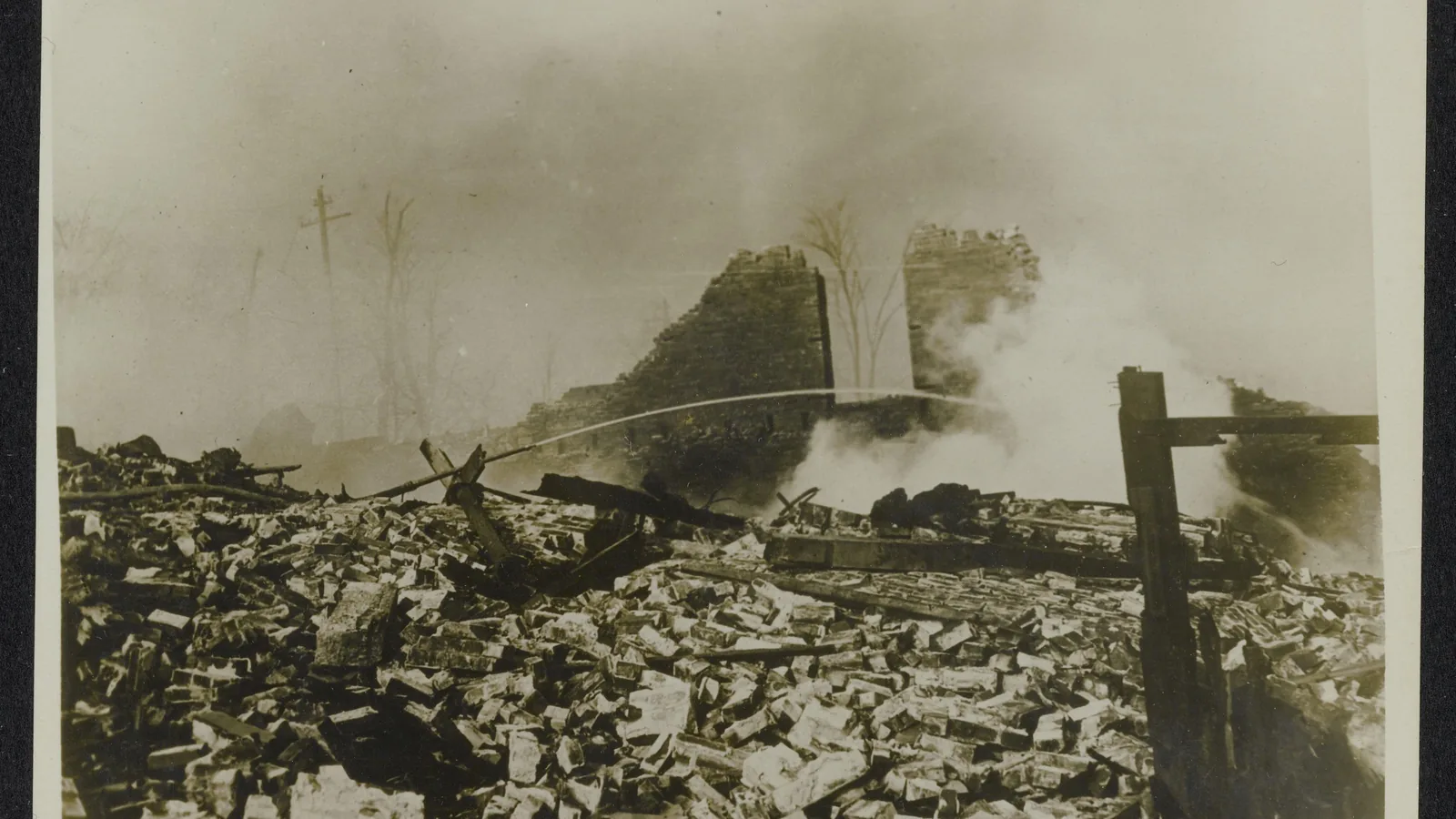
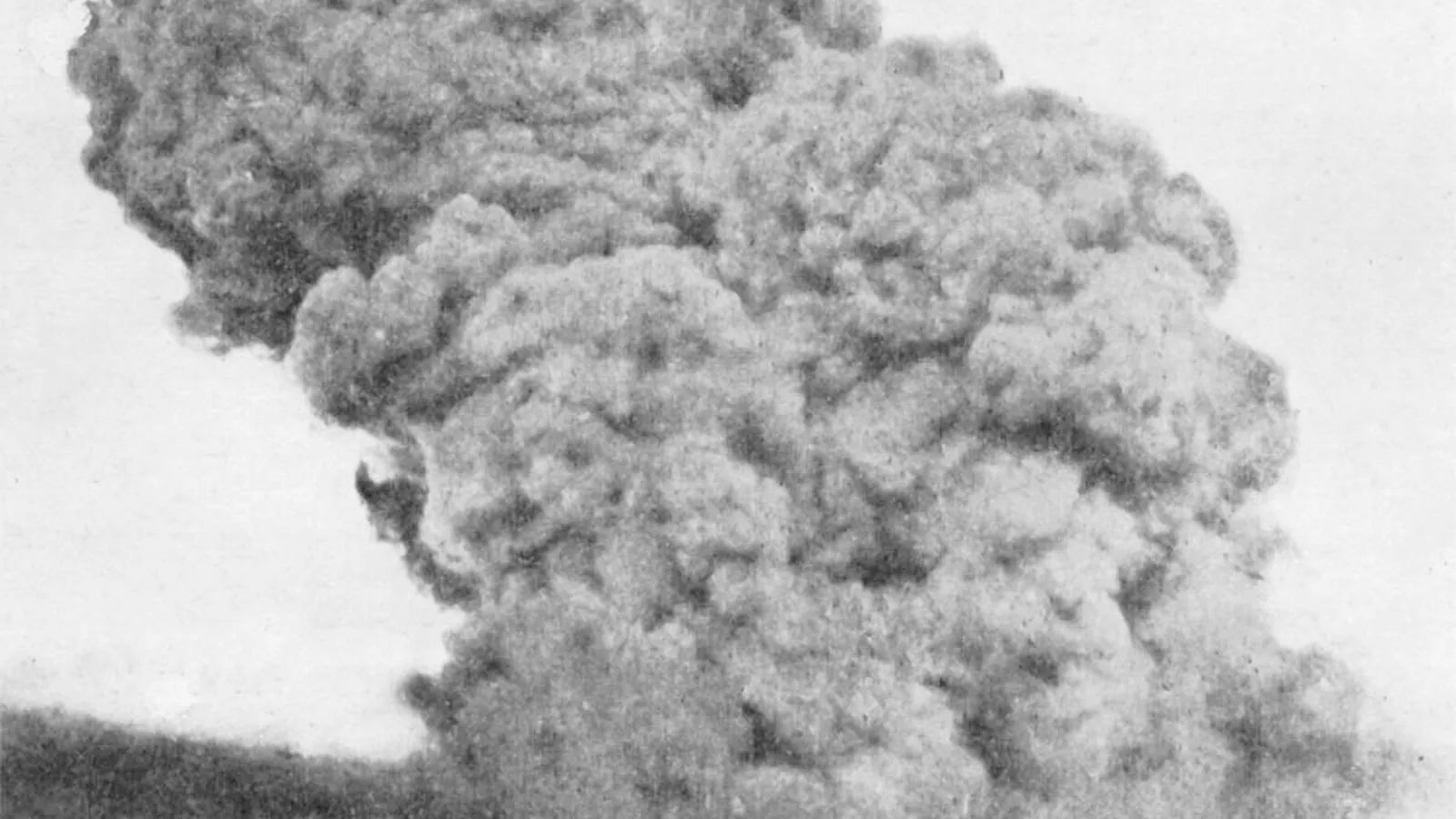
The French cargo ship Mont-Blanc, loaded with war material for France, entered the Narrows of Halifax Harbour on the morning of December 6, 1917, the Maritime Museum of the Atlantic writes. The Norwegian ship Imo, outbound from Bedford Basin for New York to load relief supplies for occupied Belgium, struck the Mont-Blanc’s bow. Fire spread on the Mont-Blanc’s deck, and the ship exploded about seventeen minutes later. Nova Scotia Archives writes that the blast “killed more than 1600 people instantly and injured over 9000 others”; railway dispatcher Vincent Coleman died sending a warning from his telegraph key, and a Wreck Commissioner’s Inquiry into the collision sat through 1917 and 1918.
Quick facts
- When
- December 6, 1917, morning; the two ships collided in the Narrows and the Mont-Blanc exploded "a few seconds before 9:05 a.m." (Nova Scotia Archives)
- Where
- The Narrows, Halifax Harbour, Nova Scotia, an area the Mi'kmaw people called Kepe'kek
- Who
- The French cargo ship Mont-Blanc; the Norwegian ship Imo; railway dispatcher Vincent Coleman; pilot Francis Mackey
- Outcome
- Nova Scotia Archives counts more than 1,600 killed instantly; final counts differ by institution, from 1,631 (the 1918 register) to "over 2000" (a 2007 medical paper); a Wreck Commissioner's Inquiry sat through 1917 and 1918
December 6, 1917: the collision in the Narrows
The two ships struck each other in the channel the Mi’kmaw people knew as Kepe’kek, “at the Narrows,” the Maritime Museum writes. The Mont-Blanc exploded at “a few seconds before 9:05 a.m.,” Nova Scotia Archives states, shattering the 3,000-ton vessel and throwing wreckage over 325 acres. The archives describe Halifax as a metropolitan area of 65,000 people at the time; the British Journal of Ophthalmology instead calls it “a seaport of 47,000 people.” The Halifax police department’s own duty log for that morning records a single entry: “9:05 a.m. Explosion.”
Vincent Coleman's telegraph
Railway dispatcher Vincent Coleman worked at North Street Station, where an incoming passenger train, No. 10 from Saint John, carried about 300 people and was due at 8:55 a.m., the Maritime Museum writes. As the burning Mont-Blanc drifted toward Pier 6, Coleman stayed at his key and sent a message the museum and a 2017 paper in the Canadian Journal of Surgery both quote in the same words: “Hold up the train. Ammunition ship afire in harbor making for Pier 6 and will explode. Guess this will be my last message. Good-bye boys.” His station, 750 feet from the center of the blast, was crushed and buried in debris. The museum writes that Coleman “likely died instantly at his telegraph key.” His pocket watch, wallet and telegraph key stayed with his family until they were donated to the Maritime Museum of the Atlantic in 2005.

"The record is unclear"
Whether Coleman’s warning actually stopped Train No. 10 is not settled. The Maritime Museum poses the question directly and answers, “The record is unclear.” Archibald MacMechan interviewed passengers and crew in 1917, and that account, printed later in Graham Metson’s 1978 book on the disaster, holds that the train had already passed Rockingham station and was beyond a point where it could stop. A different account, a Moncton Transcript article of December 7, 1917, reprinted in Jay Underwood’s railway history Built for War, says the opposite: “His train was running on time, but was held fifteen minutes by the dispatcher at Rockingham.” The museum cites both without choosing between them.
Turtle Grove and a hospital of one
The Mi’kmaw community of Turtle Grove, on the Dartmouth side of the harbor, was in the blast’s path. Two children of the Mi’kmaw elder Jerry Lonecloud, born Germain Bartlett Alexis, named Hannah and Rosie, died in the explosion, the Maritime Museum writes. Dr. Clement Courtenay Ligoure, a physician from Trinidad, was turned away from the city’s hospitals because of his race and opened his own house as a hospital, where he treated survivors for weeks; he also edited the Atlantic Advocate, one of Canada’s early magazines for readers of colour. Eye injuries were severe enough that, by the count in both the Canadian Journal of Surgery and the British Journal of Ophthalmology, twelve oculists treated 592 patients and removed 249 eyes, sixteen of them both eyes of the same patient. The two medical papers disagree on how many doctors took part: the 2017 paper counts 90 physicians in Halifax and Dartmouth, while the 2007 paper counts 322 medical doctors, 52 of them from the Halifax area and 96 from the United States. On the arrival of American aid, the Halifax municipal archives date the first relief train from Boston to December 8, 1917, while the Canadian Journal of Surgery places the arrival of American medical units, from the Massachusetts State Guard, the Maine National Guard and the Red Cross chapters of Boston and Rhode Island, between December 9 and 12. Eight firefighters were killed at Pier 6, the municipal archives write, and the city’s Board of Firewards minutes for 1913 to 1928 are now missing.
1,631 names, then 1,782
Nova Scotia’s government opened a ledger of the dead within days of the explosion. Nova Scotia Archives writes that “when the register was closed in December 1918, it contained 1,631 entries.” That ledger sat with the province’s Vital Statistics Office before it went to the archives in 2004, and its 272 pages have since been digitized. The archives’ current database adds to that register a list of 1,535 identified dead printed in the 1918 edition of McAlpine’s Halifax City Directory, a 1998 supplement compiled by the Genealogical Association of Nova Scotia, records of the Halifax Relief Commission and contemporary newspapers, and now holds 1,782 names. Other counts differ further: a photograph book published in 1917 by Royal Print & Litho Limited put the toll at “1500 men, women and children”; the Maritime Museum’s own gallery text, revised in 2019, says “more than 1700 people”; the Canadian Journal of Surgery gives an immediate toll of 1,600 dead that “eventually rose to 1950 dead”; and the British Journal of Ophthalmology states that “over 2000 died.” The Wreck Commissioner’s Inquiry sat through 1917 and into 1918, using scale models later kept by the Maritime Museum to re-enact the piloting rules and decisions behind the collision, and pilot Francis Mackey, in the museum’s own words, was “one of the individuals who were unfairly blamed for the disaster.”
Key facts
- The Mont-Blanc, carrying munitions for France, and the Imo, bound for New York to load Belgian relief supplies, collided in the Narrows on the morning of December 6, 1917 (Maritime Museum of the Atlantic).
- Fire broke out on the Mont-Blanc and the ship exploded about seventeen minutes later, “a few seconds before 9:05 a.m.” (Nova Scotia Archives).
- The Halifax police duty log for that morning records only “9:05 a.m. Explosion” (Halifax Municipal Archives).
- Vincent Coleman sent the telegraph message “Hold up the train. Ammunition ship afire in harbor making for Pier 6 and will explode. Guess this will be my last message. Good-bye boys,” then died at his station 750 feet from the blast (Maritime Museum; Canadian Journal of Surgery).
- Whether the warning stopped the 300-person Train No. 10 is disputed between two contemporary accounts; the Maritime Museum calls the record “unclear.”
- The 1918 death register closed with 1,631 entries; the Nova Scotia Archives database now lists 1,782 names, while other counts range from 1,500 to “over 2000” (Nova Scotia Archives; Canadian Journal of Surgery; British Journal of Ophthalmology).
- Twelve oculists treated 592 eye-injury patients and performed 249 eye removals, sixteen of both eyes (Canadian Journal of Surgery; British Journal of Ophthalmology).
- The Wreck Commissioner’s Inquiry examined the collision through 1917 and 1918, with pilot Francis Mackey at the center of the dispute over blame (Maritime Museum of the Atlantic).
FAQ
What caused the Halifax Explosion of 1917?
The Mont-Blanc, loaded with war cargo for France, and the Imo, outbound to collect relief supplies for Belgium, collided in the Narrows of Halifax Harbour on December 6, 1917. Fire spread on the Mont-Blanc's deck, and the ship exploded about seventeen minutes later.
How many people died in the Halifax Explosion?
Institutions differ. Nova Scotia's official register, closed in December 1918, held 1,631 entries; the province's archives now list 1,782 names in an expanded database. A 1917 photograph book gave 1,500; the Maritime Museum's 2019 exhibit text says "more than 1700"; a 2017 medical paper puts the toll at 1,950; and a 2007 medical paper states "over 2000."
Did Vincent Coleman's telegraph message save Train No. 10?
Accounts disagree. One 1917 interview record says the train had already passed the point where it could stop; a Moncton Transcript article from December 7, 1917, says the train was held fifteen minutes at Rockingham. The Maritime Museum of the Atlantic, which holds Coleman's telegraph key, describes the record as unclear.
Sources
- Nova Scotia Archives, "A Vision of Regeneration" (online exhibit on the Halifax Explosion and reconstruction)
- Nova Scotia Archives, "Halifax Explosion: A List of those that Died" (death register and database page)
- Maritime Museum of the Atlantic, Nova Scotia Museum, "Vincent Coleman and the Halifax Explosion"
- Maritime Museum of the Atlantic, Nova Scotia Museum, "Explosion in The Narrows: The 1917 Halifax Harbour Explosion"
- Chryssa N. McAlister, Allan E. Marble and T. Jock Murray, "The 1917 Halifax Explosion: the first coordinated local civilian medical response to disaster in Canada," Canadian Journal of Surgery 60, no. 6 (2017)
- Chryssa N. McAlister, T. Jock Murray, Hesham Lakosha and Charles E. Maxner, "The Halifax disaster (1917): eye injuries and their care," British Journal of Ophthalmology 91, no. 6 (2007)
- Halifax Regional Municipality, Municipal Archives, "Historical municipal sources on the Halifax Explosion"
Cite this article
- APA
- LETTER. (2026, September 28). December 6, 1917: the Mont-Blanc, the Imo and the Halifax explosion. Our Earth's History. https://ourearthshistory.com/americas/modern/halifax-explosion-december-6-1917-mont-blanc-imo-narrows-coleman/
- Chicago
- LETTER. “December 6, 1917: the Mont-Blanc, the Imo and the Halifax explosion.” Our Earth's History, September 28, 2026. https://ourearthshistory.com/americas/modern/halifax-explosion-december-6-1917-mont-blanc-imo-narrows-coleman/.
- MLA
- LETTER. “December 6, 1917: the Mont-Blanc, the Imo and the Halifax explosion.” Our Earth's History, 28 Sep. 2026, https://ourearthshistory.com/americas/modern/halifax-explosion-december-6-1917-mont-blanc-imo-narrows-coleman/.
Text licensed CC BY-NC-ND 4.0. Found an error? Tell us.