Magna Carta 1215: what did it say? Clause 39, a papal bull and 1297

TL;DR — John’s charter of June 15, 1215, set rules on church, taxes and justice; Innocent III annulled it on August 24, and three chapters of a 1297 confirmation remain unrepealed.
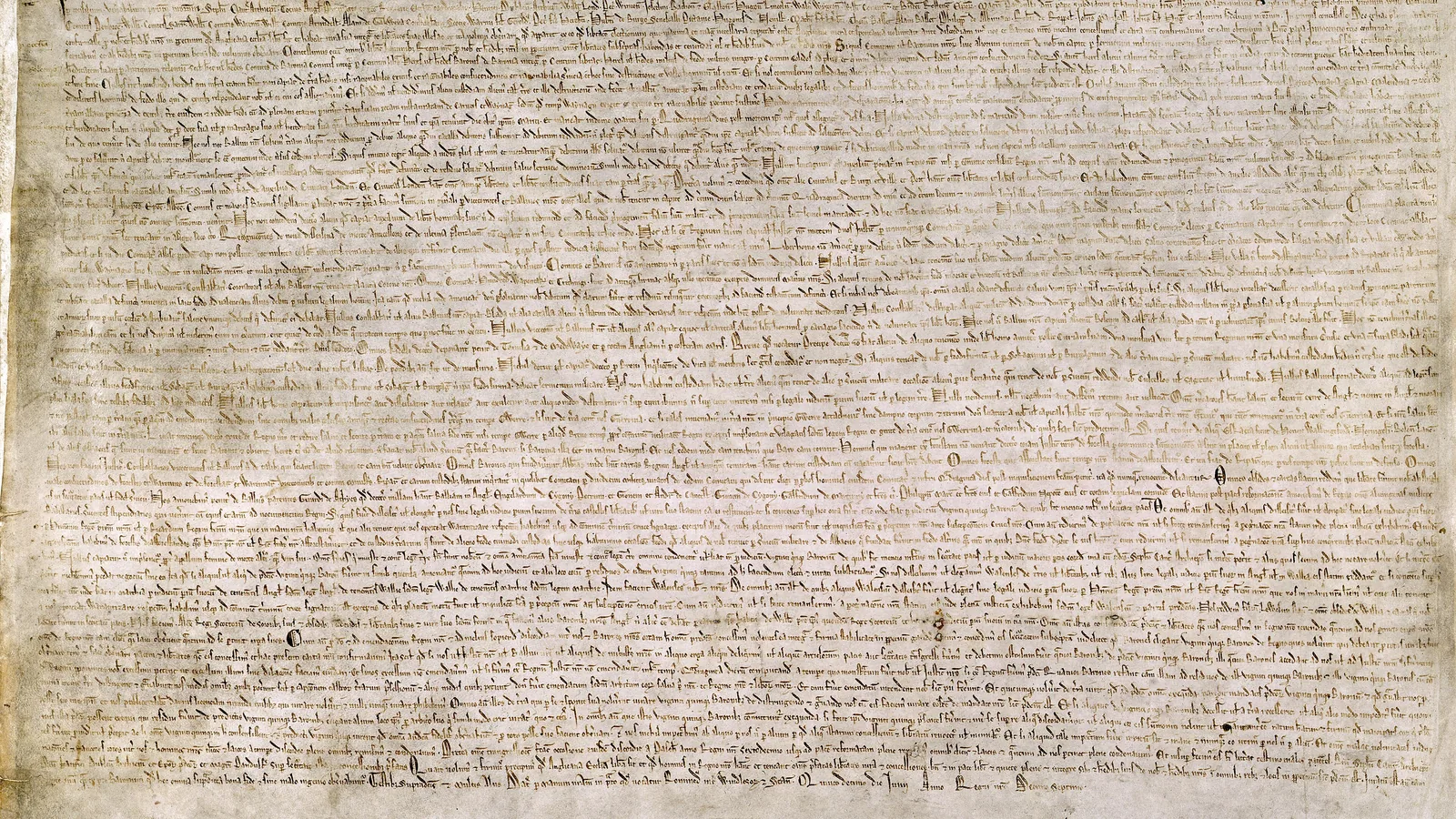
On June 15, 1215, King John granted a charter “in the meadow that is called Runnymede, between Windsor and Staines.” The British Library’s English translation numbers 63 clauses and notes that “the original version does not include numbers and the text reads continuously”; the Magna Carta Project, a research team at the University of East Anglia and King’s College London, describes “no fewer than sixty chapters.” The charter promised a free English Church, limited feudal taxes, and in clause 39 protected free men from punishment except by the judgment of their equals or the law of the land. Pope Innocent III annulled it on August 24, 1215. Henry III reissued it three times, and the text left on the United Kingdom’s statute book is Edward I’s confirmation of 1297, which recites Henry’s charter of 1225.
Quick facts
- When
- June 15, 1215 (charter given at Runnymede) · August 24, 1215 (Innocent III's bull annuls it) · September 13, 1215 (John writes to the pope from Dover) · October 1216 (John dies; first reissue under Henry III) · June 23, 1217 (sheriffs ordered to read the charters in county courts) · 1225 (Henry III's reissue in his own name) · 1297 (Edward I confirms Henry's charter)
- Where
- Runnymede, a meadow between Windsor and Staines, in what is now southern England; Dover; the papal court
- Who
- King John; the barons; Pope Innocent III; Henry III; Edward I
- Outcome
- The pope declared the charter void within ten weeks. It was reissued in 1216, 1217 and 1225; Edward I's confirmation of 1297 recites the 1225 text, and chapters 1, 9 and 29 of that statute carry no repeal note on the UK statute database
Runnymede, June 15, 1215
The charter speaks in the name of “John, by the grace of God King of England, Lord of Ireland, Duke of Normandy and Aquitaine, and Count of Anjou.” Its first clause concerns the church: the king granted “that the English Church shall be free, and shall have its rights undiminished, and its liberties unimpaired.” Clause 13 confirmed that the city of London “shall enjoy all its ancient liberties and free customs, both by land and by water.”
Clause 12 dealt with money. It barred any “scutage” or “aid” raised without the kingdom’s “general consent,” except to ransom the king, to knight his eldest son, and once to marry his eldest daughter. Clause 14 set out how that consent was to be sought: archbishops, bishops, abbots, earls and greater barons by individual letter, the king’s other tenants by a general summons through the sheriffs, with at least 40 days’ notice.
The name Magna Carta came later. According to the Magna Carta Project, when it was first issued the charter “was known as ‘the Charter of Runnymede’.” The same project counts four original manuscripts of the 1215 text: two at the British Library, Lincoln Cathedral’s copy, and the copy at Salisbury Cathedral. Salisbury Cathedral describes its own as the best preserved of the four.
"No free man shall be seized"
Clause 39, in the British Library translation, reads in full: “No free man shall be seized or imprisoned, or stripped of his rights or possessions, or outlawed or exiled, or deprived of his standing in any other way, nor will we proceed with force against him, or send others to do so, except by the lawful judgment of his equals or by the law of the land.” Clause 40 follows in a single line: “To no one will we sell, to no one deny or delay right or justice.”
The clause names two routes to punishment, a judgment by a man’s equals and the law of the land. It does not use the word jury.
The charter’s reach was narrow. The British Library’s medieval manuscripts blog stated in 2015 that the terms of Magna Carta in 1215 “applied only to the elite of society, the nobles and barons.”
Clause 61 gave those barons a means of enforcement. “The barons shall elect twenty-five of their number to keep, and cause to be observed with all their might, the peace and liberties granted and confirmed to them by this charter.” If the king made no redress within 40 days of a complaint, the 25 could seize his castles and lands until redress was made, sparing only the persons of the king, the queen and their children.

August 24, 1215
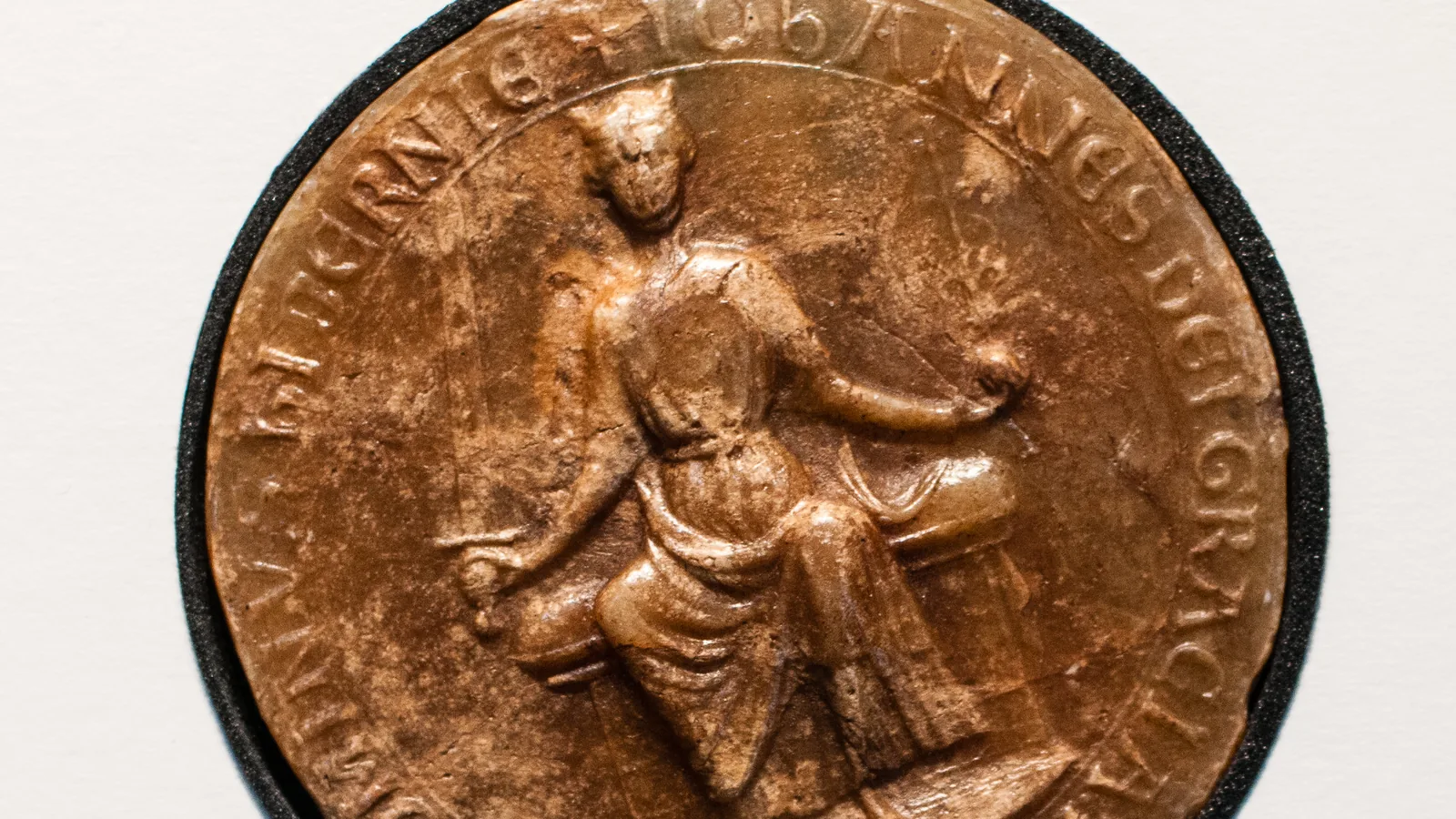
John sent messengers to the pope, who was his overlord. On August 24, 1215, Innocent III issued a bull that, in the British Library’s account, described the charter as “shameful, demeaning, illegal and unjust” and declared it “null and void of all validity for ever.” The British Library holds the bull as Cotton MS Cleopatra E I, folios 155–156.
On September 13, in a letter from Dover printed by the National Archives, John committed to the pope his authority over everything that belonged to him and his realm.
The annulment did not end the copying. In an essay on copies made in the century after 1215, David Carpenter of the Magna Carta Project records 116 copies of the charter, 31 of them from the 1215 text. That text, he writes, “was neither superseded by later versions nor invalidated by the papal nullification.” He adds: “The papal bull to that effect was never copied.”
Reissues in 1216, 1217 and 1225
John died in October 1216, with many barons again in rebellion and a French army in England, the British Library blog states, and a revised charter was issued for the nine-year-old Henry III “in order to get the barons back on side.”
A second revision followed in 1217 alongside a new Charter of the Forest, and the Magna Carta Project dates the name Magna Carta from this reissue. On June 23, 1217, the government ordered the sheriffs to have “the charters of liberties” read aloud at the county court. The order added that the papal legate had confirmed them with his seal.
Henry issued the third reissue in 1225 in his own name, granting its terms, the preamble says, out of “spontaneous goodwill.” The National Archives describes the result: “This 1225 version became the definitive version of Magna Carta.”
Edward I and the chapters of 1297
In 1297, the 25th year of his reign, King Edward confirmed his father’s charter. The text on legislation.gov.uk, the UK government’s statute database, recites “the Great Charter of the Lord Henry sometimes King of England.” The charter confirmed was Henry’s, not the text sealed at Runnymede.
The database notes the repeal of chapter after chapter, among them chapters 2 to 6 by the Statute Law Revision Act 1863 and chapter 14 by the Criminal Law Act 1967. Chapters 1, 9 and 29 carry no repeal note, and the database cites the statute as 25 Edw 1 cc 1 9 29. Chapter 1 repeats the free church: “the Church of England shall be free.” Chapter 9 keeps “all the old Liberties and Customs” of the City of London.
Chapter 29 joins the old clauses 39 and 40. “NO Freeman shall be taken or imprisoned, or be disseised of his Freehold, or Liberties, or free Customs, or be outlawed, or exiled, or any other wise destroyed,” it begins, and it closes: “We will sell to no man, we will not deny or defer to any man either Justice or Right.”
Key facts
- King John’s charter is dated at Runnymede, between Windsor and Staines, on June 15, 1215 (British Library translation).
- The British Library translation numbers 63 clauses, which the original does not number; the Magna Carta Project describes “no fewer than sixty chapters.”
- At its first issue the charter was known as “the Charter of Runnymede”; the name Magna Carta dates from the 1217 reissue (Magna Carta Project).
- Clause 39 forbids action against a free man “except by the lawful judgment of his equals or by the law of the land.”
- Clause 61 set up 25 barons to enforce the charter, with power to seize the king’s castles and lands.
- Innocent III annulled the charter on August 24, 1215, calling it “shameful, demeaning, illegal and unjust” (British Library).
- David Carpenter lists 116 copies made in the century after 1215, 31 of them from the 1215 text.
- Edward I’s statute of 1297 recites Henry III’s charter; chapters 1, 9 and 29 carry no repeal note on legislation.gov.uk.
FAQ
Did Magna Carta create trial by jury?
Clause 39 of the 1215 charter, in the British Library translation, speaks of "the lawful judgment of his equals" and "the law of the land." It does not use the word jury.
How many original copies of the 1215 Magna Carta survive?
Four, according to the Magna Carta Project: two at the British Library, Lincoln Cathedral's copy and Salisbury Cathedral's copy.
Is any part of Magna Carta still law?
Not the 1215 text. King Edward's confirmation of 1297 recites Henry III's charter, and on legislation.gov.uk its chapters 1 (the church), 9 (the City of London) and 29 (imprisonment and justice) carry no repeal note.
Sources
- British Library, Translation of Magna Carta (the 1215 charter in English, clauses 1 to 63), PDF hosted by Salisbury Cathedral.
- legislation.gov.uk (The National Archives), Magna Carta (1297), 1297 c. 9, 25 Edw 1 cc 1 9 29, with editorial notes on repeals.
- The National Archives (UK), education resource "Magna Carta 1214–1225": King John's letter to the pope (September 13, 1215), the order to sheriffs of June 23, 1217, and the 1225 charter.
- The Magna Carta Project (University of East Anglia and King's College London), David Carpenter, "Copies of Magna Carta in the Century After 1215."
- The Magna Carta Project (University of East Anglia and King's College London), "Magna Carta 1215."
- British Library, Medieval manuscripts blog, "Shameful and demeaning: the annulment of Magna Carta" (2015), Internet Archive copy.
- Salisbury Cathedral, "Magna Carta at Salisbury Cathedral."
Cite this article
- APA
- Song Letter. (2026, November 16). Magna Carta 1215: what did it say? Clause 39, a papal bull and 1297. Our Earth's History. https://ourearthshistory.com/europe/medieval/magna-carta-1215-what-it-actually-said-clause-39/
- Chicago
- Song Letter. “Magna Carta 1215: what did it say? Clause 39, a papal bull and 1297.” Our Earth's History, November 16, 2026. https://ourearthshistory.com/europe/medieval/magna-carta-1215-what-it-actually-said-clause-39/.
- MLA
- Song Letter. “Magna Carta 1215: what did it say? Clause 39, a papal bull and 1297.” Our Earth's History, 16 Nov. 2026, https://ourearthshistory.com/europe/medieval/magna-carta-1215-what-it-actually-said-clause-39/.
Get the week in history
One email a week: the new articles, and what was happening elsewhere at the same moment. Free, no ads, unsubscribe any time. How we handle your email.
Text licensed CC BY-NC-ND 4.0. Found an error? Tell us.