Thirty copies of Ajanta and the Crystal Palace fire of 1866
.jpg)
TL;DR — Gill copied Ajanta’s paintings after 1844; all but five burned at the Crystal Palace in 1866. Griffiths copied them again, 1873 to 1885; the inscriptions stayed in the rock.
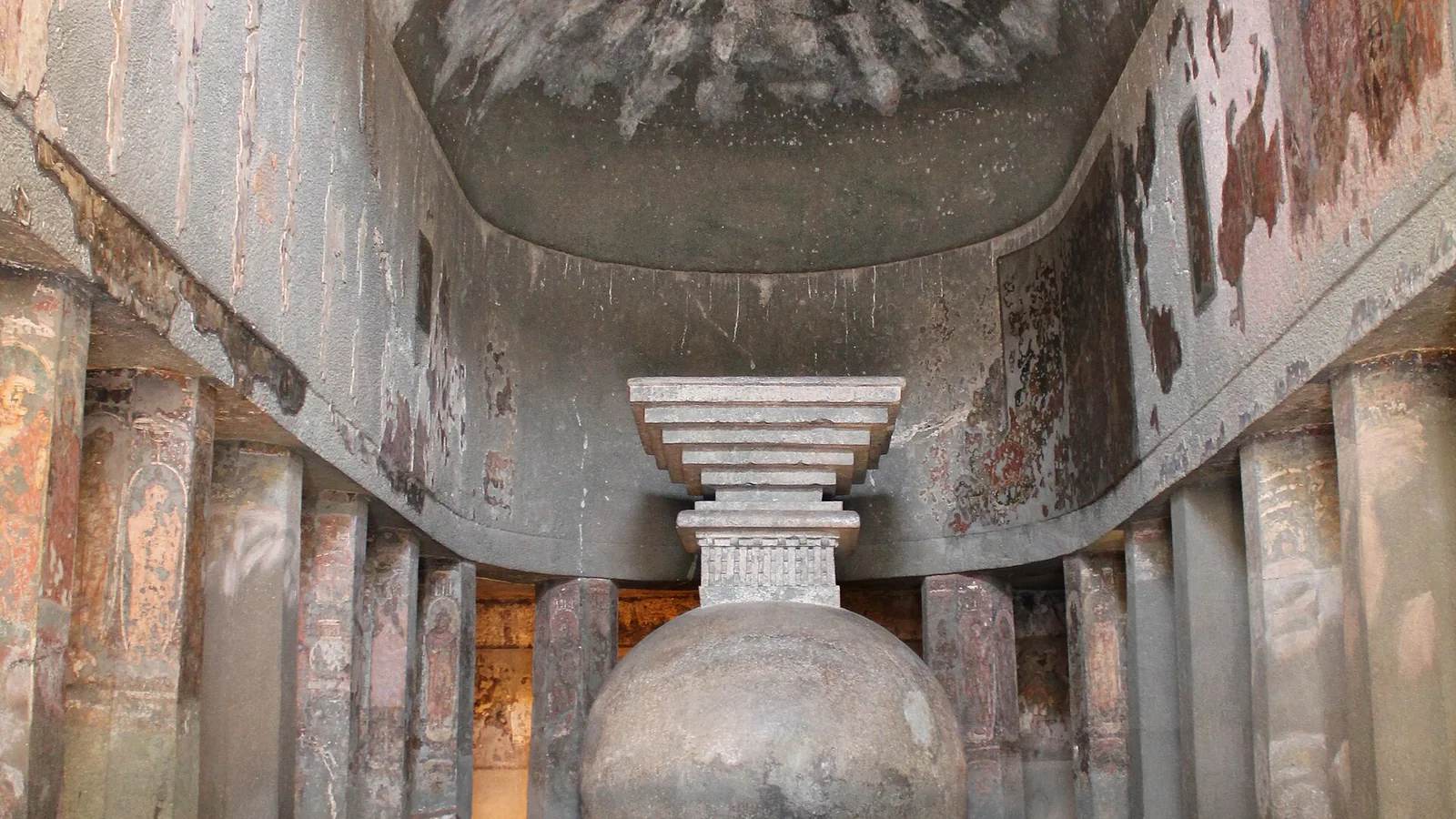
“As those drawings are the only authentic records that exist of many of the usages of the people of India at the probable date of their execution, it would no doubt be little creditable to an enlightened government to suffer them to perish without an effort to perpetuate their subjects by faithful and artistic delineation.” So ran the order of the Court of Directors of the East India Company dated May 29, 1844, as James Burgess printed it in 1879 in his Notes on the Bauddha Rock-Temples of Ajanta. The drawings were the wall paintings of the Buddhist caves cut into a river gorge in what is now Maharashtra, and Burgess gave their finding one sentence: “The first Europeans known to have seen them were some officers of the Madras army in 1819.” The order sent Robert Gill of the Madras army to copy the paintings; he made about thirty canvases, and all but five burned at the Crystal Palace in 1866. John Griffiths of the Bombay School of Art copied the walls again from 1873 to 1885. The fire could not touch the Sanskrit inscriptions in the rock, which name a minister, a local king and a monk as the donors of Caves 16, 17 and 26.
Quick facts
- When
- 1819 (officers of the Madras army see the caves) · 1843 (Fergusson's paper to the Royal Asiatic Society) · May 29, 1844 (order of the Court of Directors) · 1866 (Gill's copies burn at the Sydenham Crystal Palace) · December 1873 to 1885 (Griffiths and his students copy the paintings) · c. AD 460-477 (Harishena's reign, Spink) or c. AD 475-500 (Mirashi)
- Where
- A river gorge in what is now Maharashtra, India; the Royal Asiatic Society and the Crystal Palace at Sydenham, London; the Bombay School of Art; the India Museum at South Kensington
- Who
- James E. Alexander; James Fergusson; the Court of Directors of the East India Company; Robert Gill of the Madras army; John Griffiths; James Burgess; Georg Bühler; V. V. Mirashi; Walter M. Spink; the donors Varahadeva and Buddhabhadra and the Vakataka king Harishena
- Outcome
- Gill made about thirty copies between the 1840s and the 1857 rising; twenty-five burned in 1866 with no tracing or photograph taken. Griffiths and seven students made about 300 paintings, accessioned at South Kensington in 1885. The inscriptions of Caves 10, 16, 17 and 26 stayed in the rock and were edited in 1883 and 1963
Alexander, Gresley, Bird and Blake: twenty years of visitors
Neither Burgess nor The Cave Temples of India (1880), his book with Fergusson, named the officers. The first scholarly notice came from Lieutenant James E. Alexander, who traveled through the Nizam’s territory in 1824 and sent a short account to the Royal Asiatic Society; its Transactions printed it in 1829. Captain Gresley and Mr. Ralph visited in 1828, and Sir John Malcolm sent Dr. J. Bird to examine the site; Burgess judged Bird’s reading of the Buddhist subjects wrong in many places and his plates inaccurate. Lieutenant Blake’s account ran in the Bombay Courier in 1839, the year James Fergusson himself went to the caves.
In 1843 Fergusson read the Royal Asiatic Society his paper on the rock-cut temples of India, “about a dozen pages of which is devoted to a critical architectural description of the Ajanta caves and their paintings.” Early in 1844 the society asked the Court of Directors for copies, “with reference, also, to the peculiarly perishable nature of the paintings in the caves of Ajanta.” The order of May 29 followed.
"Till the mutiny": Gill's canvases and the Sydenham fire
The officer was Robert Gill, a captain and later a major. Burgess wrote that “the work occupied several years, till the mutiny,” the rising of 1857, and that the finished copies were “thirty or thereabouts in number, many of them of very large size.” The Victoria and Albert Museum holds survivors, four of them from Cave 1 under accession numbers IS.52-1885 to IS.55-1885, dated between 1850 and 1856. The museum’s records give two dates for his commission: one entry states that “In 1844 Major Robert Gill was commissioned,” another that “In 1846 the Royal Asiatic Society had commissioned Gill to make a pictorial record of the caves.” Burgess, quoting the directors’ order, put it in 1844.
The copies went on show. “All, except the five last executed, were exhibited in the Indian Court of the Sydenham Crystal Palace. There they were destroyed by fire in the latter part of 1866 . . . no copy, tracing, or photograph, was taken from them before sending them to be exhibited, and finally burnt.” The V&A entry counts the loss at “twenty-five of Gill’s copies.”
December 1873: Griffiths and seven students
The Government of India approved Rs. 5,000 a year in 1872, and John Griffiths of the Bombay School of Art began at the caves in December 1873. The V&A entry for IS.96-1885, a copy from Cave 6, states that “from 1872, John Griffiths from the Bombay school of Art and seven Indian students spent every winter for the following 13 years at the caves producing approximately 300 paintings.” The canvases went in batches to the India Museum at South Kensington, now the V&A, under accession numbers IS.6-1885 to IS.96-1885.
Maurya characters on the arch of Cave 10
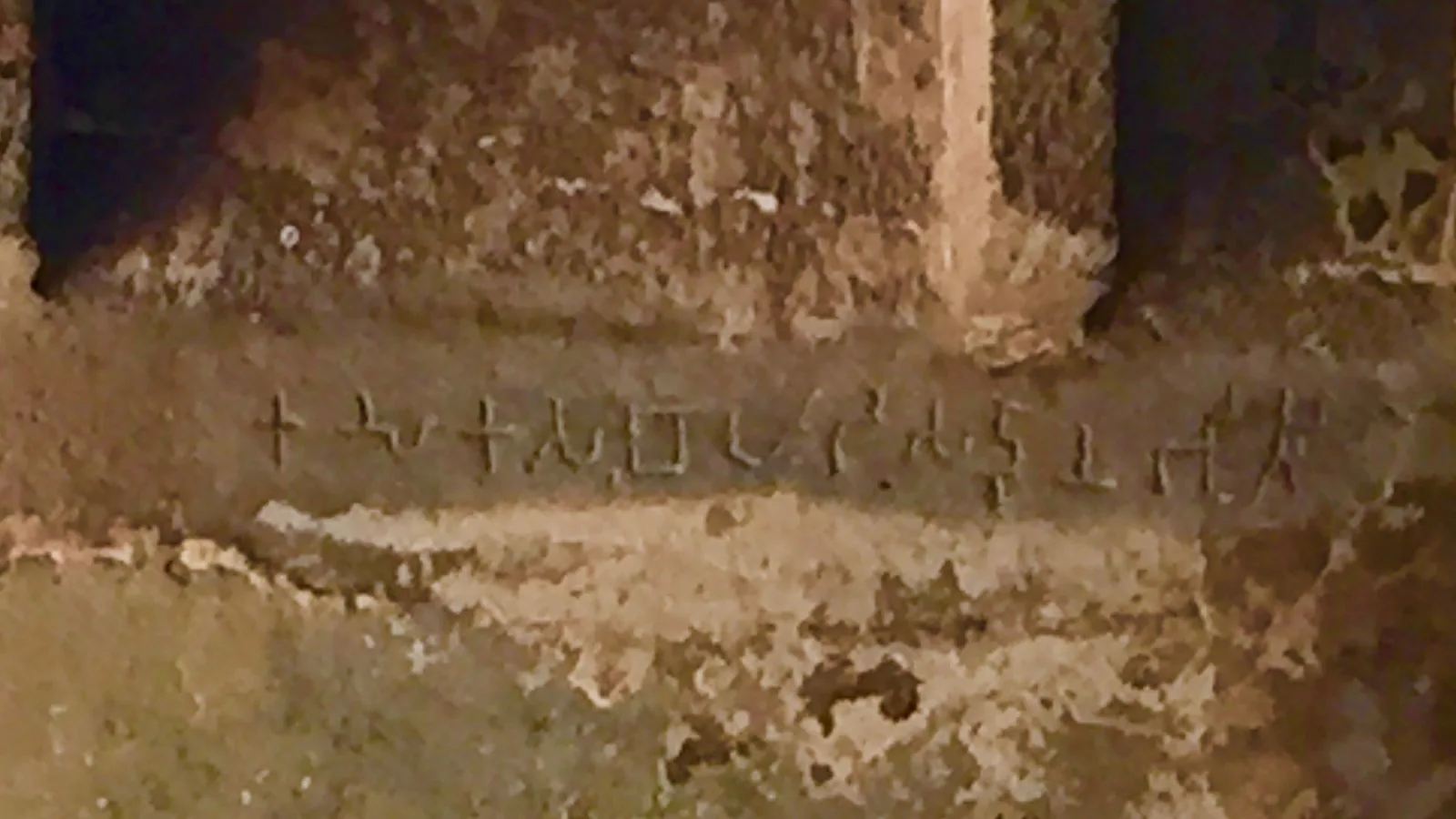
Burgess and Georg Bühler’s Report on the Buddhist Cave Temples and their Inscriptions (1883) dated the oldest by the shape of its letters: “The inscription on the right foot of the bargeboard or facing of the arch is in Maurya characters of as early a date as the first half of the second century B.C., and simply records that the cave-front was the gift of Katahadi, the son of the wife of the Vasishtha family.” The report set two monasteries beside it in age: “Caves XII. and XIII. are acknowledged to be of the earliest type of monastic abodes.”

Three inscriptions, two readings of Harishena's reign
The later caves carry their donors’ names in Sanskrit verse. V. V. Mirashi’s Inscriptions of the Vakatakas (1963) read the Cave 16 inscription as the gift of Varahadeva, minister of the Vakataka king Harishena, who, “realising that life, youth, wealth and happiness are transitory,” cut the cave “in honour of his father and mother for the use of the best of ascetics.” A damaged verse lists Harishena’s conquests as “Kuntala, Avanti, Kalinga, Kosala, Trikuta, Lata and Andhra.”
Cave 17’s donor was a local king whose name is lost from the stone. In Mirashi’s translation he was the elder of two brothers; after the younger, Ravisamba, died, the elder “made thereafter the great tree of religious merit grow,” and verse 21 sets the work in the time “While that moon among the princes, Harishena, whose face resembles a lotus and the moon… is protecting the earth.” Burgess in 1879 followed Bhau Daji in reading Cave 26 as the work of “Bhavviraja, the minister of Asmakaraja, and of his son Devaraja.” Bühler corrected that in 1883: “the person who ordered Cave XXVI. to be excavated, and provided the funds for the work, was a monk called Buddhabhadra (vs. 18),” the cave cut in honor of his friend, the minister of the king of Asmaka. Bühler dated the letters of that inscription to “the latter half of the sixth or beginning of the seventh century A.D.”
Harishena’s own dates differ by edition. Mirashi wrote that “Harishena probably ruled from circa 475 to 500 A.C.” and that the dynasty then “suddenly crumbled to pieces owing to the incompetence of Harishena’s successor.” Walter M. Spink’s Ajanta: History and Development (Brill, 2005) sets the reign at “c. 460 – 477 A.D.” and ends the work at the site with his death. The paintings Gill copied burned at Sydenham in 1866; the paintings Griffiths copied were entered at South Kensington under the accession year 1885.
Key facts
- The Court of Directors’ order of May 29, 1844 called the Ajanta paintings “the only authentic records that exist of many of the usages of the people of India” and ordered copies made (Burgess, 1879).
- Burgess in 1879 and Fergusson and Burgess in 1880 both wrote that “some officers of the Madras army in 1819” were the first Europeans known to have seen the caves; neither names them.
- Fergusson’s paper on the rock-cut temples of India, read to the Royal Asiatic Society in 1843, gave “about a dozen pages” to Ajanta.
- Robert Gill’s copying lasted “till the mutiny”; the copies numbered “thirty or thereabouts,” and V&A examples IS.52-1885 to IS.55-1885 are dated between 1850 and 1856.
- All but the five last made burned at the Sydenham Crystal Palace “in the latter part of 1866” with “no copy, tracing, or photograph” taken; the V&A counts “twenty-five” lost.
- The Government of India voted Rs. 5,000 a year in 1872; Griffiths began at the caves in December 1873, and the V&A gives seven Indian students, 13 winters and “approximately 300 paintings.”
- Burgess and Bühler (1883) dated the Cave 10 arch inscription to “the first half of the second century B.C.” by its Maurya characters and called Caves 12 and 13 “the earliest type of monastic abodes.”
- Mirashi (1963) dated Harishena “circa 475 to 500 A.C.”; Spink (Brill, 2005) gives “c. 460 – 477 A.D.”
FAQ
Who discovered the Ajanta caves in 1819?
The two nineteenth-century surveys, Burgess (1879) and Fergusson and Burgess (1880), say only that "some officers of the Madras army in 1819" were the first Europeans known to have seen them. Neither book gives a name, a regiment or a day.
What happened to Robert Gill's copies of the Ajanta paintings?
All except the last five were shown in the Indian Court of the Crystal Palace at Sydenham and burned there in the latter part of 1866. Burgess wrote that no copy, tracing or photograph had been taken first; the V&A's catalog puts the loss at twenty-five copies.
Who paid for Caves 16, 17 and 26 at Ajanta?
Cave 16 was the gift of Varahadeva, minister of the Vakataka king Harishena, in honor of his parents (Mirashi, 1963). Cave 17 was cut by a local king whose name is lost, during Harishena's reign. Cave 26 was ordered and funded by the monk Buddhabhadra, as Bühler read the inscription in 1883.
Sources
- James Burgess, Notes on the Bauddha Rock-Temples of Ajanta, Their Paintings and Sculptures (Archaeological Survey of Western India, 1879), full text of the printed report.
- James Fergusson and James Burgess, The Cave Temples of India (London, 1880), full text of the printed book.
- James Burgess and Georg Bühler, Report on the Buddhist Cave Temples and their Inscriptions, Archaeological Survey of Western India, vol. IV (1883), the epigraphic edition of the Cave 10, 12, 13, 17 and 26 inscriptions.
- V. V. Mirashi (ed.), Corpus Inscriptionum Indicarum, vol. V: Inscriptions of the Vakatakas (Government Epigraphist for India, 1963), the epigraphic edition of the Cave 16 and 17 inscriptions.
- Victoria and Albert Museum, Collections API, search results for "Ajanta Gill" (objects 1128-1869 and IS.52-1885 to IS.55-1885, with dates and media).
- Victoria and Albert Museum, object record O108360, "Buddhist vihara cave, Ajanta," watercolor by William Simpson, 1862 (catalog note on Gill's commission and the 1866 fire).
- Victoria and Albert Museum, object record O115458, IS.96-1885, copy of a painting in Cave 6 by John Griffiths, 1872-1885 (catalog note on Gill, Griffiths and the seven students).
- Brill, catalog page for Walter M. Spink, Ajanta: History and Development, Volume 1: The End of the Golden Age (Handbook of Oriental Studies, 2005; paperback 2011), with table of contents.
Cite this article
- APA
- Our Earth's History. (2026, September 22). Thirty copies of Ajanta and the Crystal Palace fire of 1866. Our Earth's History. https://ourearthshistory.com/south-asia/classical/ajanta-caves-1819-fergusson-1843-gill-copies-burned-1866-griffiths/
- Chicago
- Our Earth's History. “Thirty copies of Ajanta and the Crystal Palace fire of 1866.” Our Earth's History, September 22, 2026. https://ourearthshistory.com/south-asia/classical/ajanta-caves-1819-fergusson-1843-gill-copies-burned-1866-griffiths/.
- MLA
- “Thirty copies of Ajanta and the Crystal Palace fire of 1866.” Our Earth's History, 22 Sep. 2026, https://ourearthshistory.com/south-asia/classical/ajanta-caves-1819-fergusson-1843-gill-copies-burned-1866-griffiths/.
Text licensed CC BY-NC-ND 4.0. Found an error? Tell us.