Fragment 8 of Priscus: wooden cups at Attila's court, 448 or 449
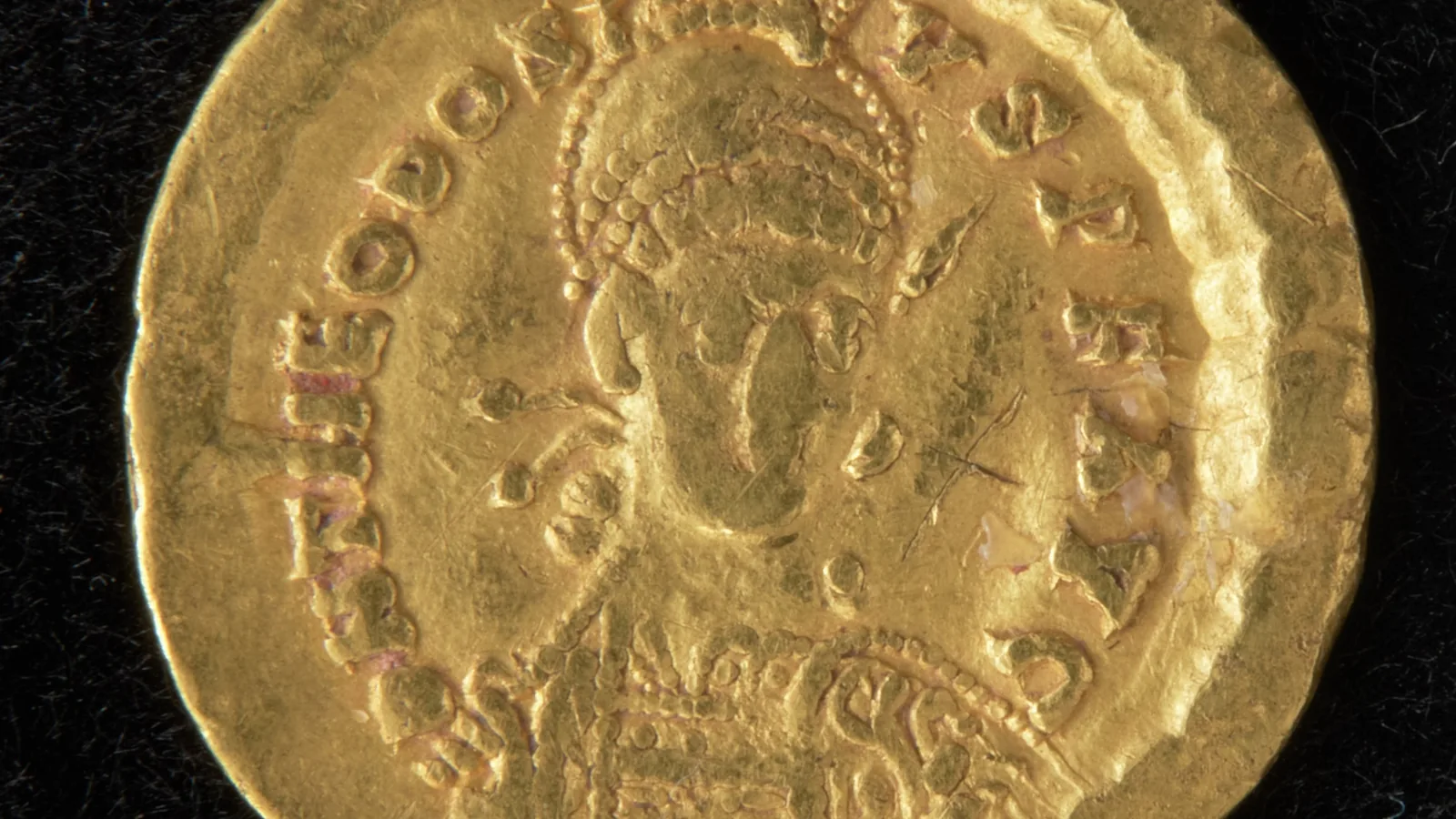

TL;DR — Priscus’s fragment 8 records the East Roman embassy to Attila, dated 449 by Encyclopaedia Iranica: a Danube crossing, a Greek merchant turned Hun and a banquet with wooden cups.
“We set out with the barbarians, and arrived at Sardica, which is thirteen days for a fast traveller from Constantinople,” begins Priscus of Panium’s account of the 449 embassy to Attila. Priscus traveled with Maximin, the envoy of Emperor Theodosius, the interpreter Bigilas and Attila’s men Edecon and Orestes. His history survives in pieces; fragment 8 in Fragmenta Historicorum Graecorum, translated by J. B. Bury and published by Fordham University’s Internet Medieval Sourcebook, follows the party across the Danube to Attila’s tents, his village and his banquet. Encyclopaedia Iranica, in Martin Schottky’s entry on the Huns, places Priscus at the court in 449. Bury’s History of the Later Roman Empire (1923) dates the embassy to 448, and Charles Mierow’s 1908 translation of Jordanes prints “Embassy to Attila 448” in its margin.
Quick facts
- When
- 449 (Encyclopaedia Iranica's date for Priscus's stay at Attila's court; J. B. Bury, 1923, and Charles Mierow's Jordanes, 1908, give 448) · Sardica 13 days from Constantinople for a fast traveler · a follow-up embassy of Anatolius and Nomus, AD 449–450 (Bury)
- Where
- Sardica and Naissus in the Balkans; a crossing of the Danube; Attila's tents beyond the river; a village of timber halls that Bury placed between the Theiss and Körös rivers
- Who
- Priscus of Panium; the envoy Maximin; the interpreter Bigilas; Edecon and Orestes; Attila; Onegesius and his brother Scottas; Attila's wife Kreka; a Greek-born merchant from Viminacium; the western envoys Romulus, Promotus and Romanus
- Outcome
- Attila received the embassy, demanded that Nomus, Anatolius or Senator be sent next, and hosted a banquet at which he alone used a wooden cup and trencher; Bury records that the emperor sent Anatolius and Nomus and that Attila promised to keep the treaty
Sardica, Naissus and the Danube crossing
At a dinner in Sardica the Huns praised Attila and the Romans their emperor, until Bigilas remarked “that it was not fair to compare a man and a god, meaning Attila by the man and Theodosius by the god.” The Huns, Priscus wrote, “grew excited and hot.” Maximin later gave Edecon and Orestes silk garments and Indian gems.
At Naissus the party found the city “deserted, as though it had been sacked; only a few sick persons lay in the churches.” Nearby, Agintheus, commander of the Illyrian armies, handed over five of the 17 deserters Attila had written to the emperor about. At the Danube, ferrymen rowed the Romans over in boats “made by themselves out of single trees hewn and hollowed.” They had been gathered, Priscus wrote, for Huns crossing on a pretended hunt.
"It shall be unto the Romans as they wish it to be unto me"
Guides brought the embassy to Attila’s tents at about three o’clock. Twice Attila sent word that if the Romans carried nothing he did not already know, they should leave. Priscus went to Scottas, brother of Onegesius, with Rusticius interpreting, and promised gifts if Scottas could win them an audience. Scottas rode to Attila’s tent, and the Romans were called in.
“We found Attila sitting on a wooden chair,” Priscus wrote. Maximin handed over the emperor’s letter and said the emperor prayed for the safety of Attila and his people. Attila replied, “It shall be unto the Romans as they wish it to be unto me,” then turned on Bigilas, “calling him a shameless beast,” for coming before all the deserters had been given up. Bigilas soon returned to the empire, officially to find those deserters, “but really to get the money for his fellow-conspirator Edecon.” Fragment 8 says nothing more about the scheme.
Seven days north to Attila's village
The Romans then traveled north, crossing the Drecon, Tigas and Tiphesas in dugout boats. Villages supplied millet instead of grain and mead instead of wine, and the attendants received a barley drink “which the barbarians call kam.” Seven days farther on they met envoys from the western court, the count Romulus, Promotus, governor of Noricum, and Romanus, who had come about gold vessels from Sirmium that Attila claimed as his.
The village beyond held Attila’s house of polished boards inside a wooden enclosure; in the passage of Priscus that Jordanes quotes, in Mierow’s translation, it is “a village, I say, like a great city.” Bury placed the residence between the rivers Theiss and Körös.
A merchant from Viminacium at Onegesius's gate
The next morning, as Priscus waited with gifts at Onegesius’s enclosure, a man in Scythian dress greeted him in Greek with “Xaire.” Few of the Huns’ subjects spoke Greek, Priscus wrote, except ragged captives from the Thracian or Illyrian coast, and this man was well dressed, “having his hair cut in a circle after Scythian fashion.” He had been born a Greek, traded at Viminacium on the Danube and married a rich wife there. When the city fell he was allotted to Onegesius as a wealthy prisoner, fought against the Romans and the Acatiri, paid his spoils to his master and won his freedom.
His new life, he said, was better. Roman subjects could not bear arms, their generals were cowards, taxes were severe, and lawsuits dragged on. “The climax of the misery is to have to pay in order to obtain justice.” Priscus defended Rome’s division of lawmakers, soldiers and farmers, and the Roman master’s right to free slaves in life or by will. The merchant, in Priscus’s account, “shed tears, and confessed that the laws and constitution of the Romans were fair, but deplored that the governors, not possessing the spirit of former generations, were ruining the State.” Priscus never gives his name.
Wooden cups at the banquet
Onegesius accepted the emperor’s gold but refused to go to Constantinople; the Romans could never make him “prefer wealth among the Romans to bondage with Attila.” Attila told Maximin he would receive only Nomus, Anatolius or Senator as the next ambassador, or “the differences will be adjusted by arms.” Encyclopaedia Iranica cites another fragment in which Romulus told Priscus that Attila was planning a campaign against Persia. It never came: Aetius defeated Attila in Gaul in 451, the year Henri d’Arbois de Jubainville gave in the Bibliothèque de l’École des chartes in 1870, and Iranica dates Attila’s death to 453.
At the banquet, seats on Attila’s right ranked first; the Romans sat on his left. A cup-bearer handed Attila “a wooden cup of wine,” and he saluted each guest in order of rank. A meal on silver plate went round, “but Attila ate nothing but meat on a wooden trencher,” and “his cup was of wood, while to the guests were given goblets of gold and silver.” Two singers praised his victories, and some older guests wept. Zerkon, a Moorish dwarf, set the hall laughing in a jumble of Latin, Hunnic and Gothic while Attila kept a still face, until his youngest son, Ernas, came in and he pulled the boy by the cheek. A guest who knew Latin told Priscus, asking him not to repeat it, that prophets had foretold that Attila’s race would fall and be restored by this boy.
Bury records that the emperor sent two of the three men Attila had named, Anatolius and Nomus, and that Attila promised to observe the treaty and not to cross the Danube, a settlement Bury dates to AD 449–450.
Key facts
- Priscus of Panium traveled with the envoy Maximin and the interpreter Bigilas; Sardica lay “thirteen days for a fast traveller from Constantinople” (fragment 8, Bury translation).
- Encyclopaedia Iranica dates Priscus’s stay at Attila’s court to 449; Bury (1923) and Mierow’s Jordanes (1908) give 448.
- Near Naissus the embassy received five of the 17 deserters Attila had written to the emperor about.
- Attila received the Romans “sitting on a wooden chair” and answered the emperor’s letter: “It shall be unto the Romans as they wish it to be unto me.”
- Bigilas went back to the empire “to get the money for his fellow-conspirator Edecon,” in fragment 8’s words.
- A Greek-born merchant from Viminacium, freed after fighting and handing his spoils to Onegesius, told Priscus that Roman subjects had “to pay in order to obtain justice.”
- At the banquet Attila used a wooden cup and a wooden trencher while guests drank from “goblets of gold and silver.”
- Attila named Nomus, Anatolius or Senator as the only envoys he would accept; Bury records that Anatolius and Nomus went, AD 449–450.
FAQ
Who was Priscus of Panium?
Priscus was a historian who accompanied Maximin, the envoy of Emperor Theodosius, to Attila's court and wrote an account of the journey. Only fragments of his history survive; fragment 8 in Fragmenta Historicorum Graecorum is the long narrative of the embassy, translated by J. B. Bury.
What did Attila drink from at his banquet?
A wooden cup. Priscus wrote that Attila ate meat from a wooden trencher and that "his cup was of wood, while to the guests were given goblets of gold and silver," and that his sword, shoe latchets and bridle carried no gold or gems.
Who was the Greek merchant Priscus met at Attila's court?
Priscus gives no name. The man had traded at Viminacium on the Danube, was allotted to Onegesius as a prisoner when the city fell, earned his freedom by fighting and paying his spoils to his master, and married again among the Huns.
Sources
- Priscus, fragment 8 in Fragmenta Historicorum Graecorum, "Priscus at the court of Attila," translated by J. B. Bury, Internet Medieval Sourcebook, Internet History Sourcebooks Project, Fordham University (Paul Halsall, March 1996; page revised September 21, 2026).
- The same Bury translation of Priscus, fragment 8, on a Georgetown University faculty page, used to check the wording of each quotation.
- J. B. Bury, History of the Later Roman Empire, vol. 1 (1923), chapter IX, "The Empire of Attila," transcribed by Bill Thayer, LacusCurtius, University of Chicago.
- Jordanes, The Origin and Deeds of the Goths, translated by Charles C. Mierow (Princeton, 1908), chapter XXXIV, sections 178–179, Project Gutenberg eBook 14809.
- Martin Schottky, "HUNS," Encyclopaedia Iranica, vol. XII, fasc. 6, pp. 575–577 (published December 15, 2004; last updated June 11, 2013).
- Henri d'Arbois de Jubainville, "Encore un mot sur la bataille de Mauriacus," Bibliothèque de l'École des chartes, tome 31 (1870), pp. 211–216 (Persée).
Cite this article
- APA
- Song Letter. (2026, September 29). Fragment 8 of Priscus: wooden cups at Attila's court, 448 or 449. Our Earth's History. https://ourearthshistory.com/europe/classical/priscus-embassy-attila-449-bury-fragment-8/
- Chicago
- Song Letter. “Fragment 8 of Priscus: wooden cups at Attila's court, 448 or 449.” Our Earth's History, September 29, 2026. https://ourearthshistory.com/europe/classical/priscus-embassy-attila-449-bury-fragment-8/.
- MLA
- Song Letter. “Fragment 8 of Priscus: wooden cups at Attila's court, 448 or 449.” Our Earth's History, 29 Sep. 2026, https://ourearthshistory.com/europe/classical/priscus-embassy-attila-449-bury-fragment-8/.
Get the week in history
One email a week: the new articles, and what was happening elsewhere at the same moment. Free, no ads, unsubscribe any time. How we handle your email.
Text licensed CC BY-NC-ND 4.0. Found an error? Tell us.