Alcuin's letters on Lindisfarne, 793, and a cemetery dug since 2016

TL;DR — The Anglo-Saxon Chronicle, Alcuin of York and a Durham chronicle recorded the 793 raid on Lindisfarne; excavation since 2016 has found a cemetery used by the whole island community.
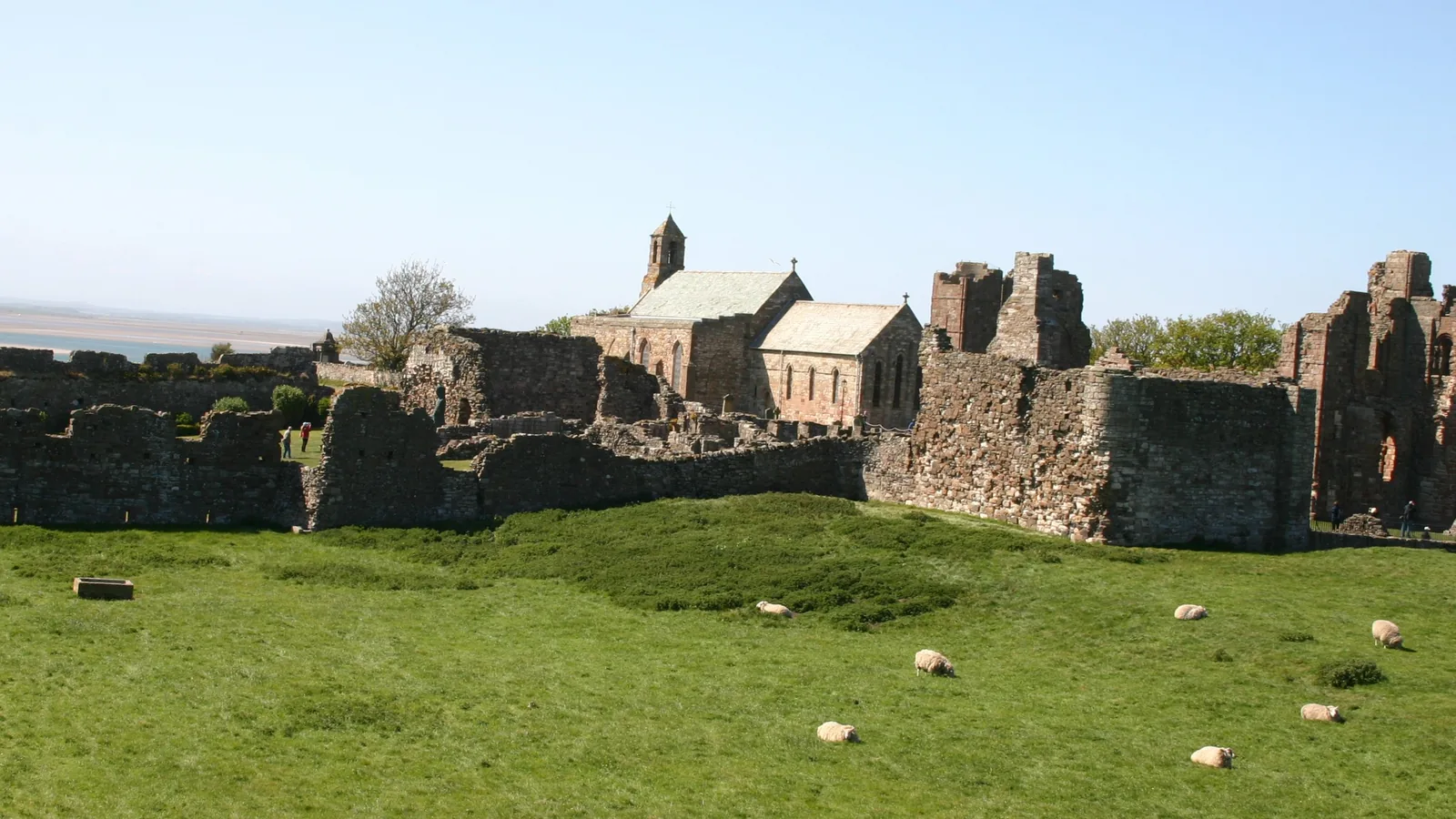
Raiders from the sea plundered the monastery on the island of Lindisfarne in 793, and Alcuin of York wrote about it to Bishop Higbald and to King Æthelred of Northumbria. Lindisfarne is a small tidal island off the coast of Northumbria, in what is now northeast England; King Oswald granted it to the Irish monk Aidan of Iona in 635 to found a monastery, according to English Heritage. The Anglo-Saxon Chronicle entered the raid under 793, but its texts disagree on the day. A copy of the Peterborough manuscript posted by the University of Wisconsin–Milwaukee gives 8 June, while James Ingram’s translation gives the sixth day before the ides of January. A later chronicle from Durham listed monks killed, taken away and drowned. Since 2016, Durham University and the excavation company DigVentures have dug east of the later priory and found a cemetery holding adults, children and babies.
Quick facts
- When
- 635 (monastery founded, per English Heritage) · 787 or 789 (earlier landing of three ships, depending on the manuscript) · 793 (raid on Lindisfarne; the Peterborough manuscript gives 8 June, Ingram's translation the sixth day before the ides of January) · 875 (community leaves the island) · 2016 onward (Durham University and DigVentures excavation)
- Where
- Lindisfarne, or Holy Island, a small tidal island off the coast of Northumbria, in what is now northeast England
- Who
- Alcuin of York; Bishop Higbald; King Æthelred of Northumbria; the monks of Lindisfarne; Symeon of Durham; the archaeologist David Petts of Durham University
- Outcome
- The monastery survived the raid; its community withdrew to Norham in the 830s and left the island in 875. Excavation since 2016 has found an early medieval cemetery used by the wider island community, dated by radiocarbon to the 8th to 11th centuries AD
793 in two texts of the Chronicle
Ingram’s translation, published online by the Avalon Project at Yale Law School and by Project Gutenberg, opens the year with “dreadful fore-warnings over the land of the Northumbrians.” It lists sheets of light in the air, whirlwinds and “fiery, dragons flying across the firmament,” then a great famine. The raid comes last in the entry: “on the sixth day before the ides of January in the same year, the harrowing inroads of heathen men made lamentable havoc in the church of God in Holy-island, by rapine and slaughter.”
The Milwaukee page, which lists Michael Swanton’s 1996 translation among its references, quotes the Peterborough manuscript differently. There the raiders came “on 8 June” and “miserably devastated God’s church in Lindisfarne island by looting and slaughter.” English Heritage also gives the date as June 8, 793. Ingram’s printed text does not name the manuscript behind its January date.
English Heritage calls the raid the Vikings’ “first significant attack in western Europe.” The Chronicle holds an earlier landing. Ingram files it under 787: three ships of the Northmen arrived, and the king’s reeve rode to meet them and tried to drive them to the king’s town “for he knew not what they were.” They killed him. The entry ends: “These were the first ships of the Danish men that sought the land of the English nation.” The Winchester manuscript, as quoted on the Milwaukee page, places the same landing under 789.
Alcuin's letter to Bishop Higbald
Alcuin was not on the island. Born in England around 732 and educated at York, he met Charlemagne at Parma in 781 and taught at the Carolingian court until 796, according to the introduction to the letter posted by the Yale historian Anders Winroth. He wrote to Higbald from there.
His letter, in the 1974 translation by S. Allott, says that “the pagans have desecrated God’s sanctuary, shed the blood of saints around the altar.” Further on, it asks what protection the churches of Britain could expect if Saint Cuthbert and his company of saints did not defend their own. Alcuin gave his own answer in the next lines: “It has not happened by chance, but is the sign of some great guilt.”
The letter also mentions captives. He offered to help “about the boys who have been carried off by the pagans as prisoners.” He gave no number of dead and none of the boys taken. English Heritage quotes the same opening passage from Allott’s edition, where it is letter no. 26.
"Never before has such terror appeared in Britain"
In his letter to the king, headed “Letter to Ethelred, King of Northumbria” on the Milwaukee page, Alcuin wrote that “it is nearly 350 years that we and our fathers have inhabited this most lovely land, and never before has such terror appeared in Britain as we have now suffered from a pagan race.” He added that no one had thought “such an inroad from the sea could be made.” He named the place as the church of St. Cuthbert, “despoiled of all its ornaments,” and called it “a place more venerable than all in Britain.”
The same page quotes a longer account from the Historia Regum of Symeon of Durham. The raiders “laid everything waste with grievous plundering,” it records, “dug up the altars and seized all the treasures of the holy church.” Some brothers were killed and some taken away “in fetters”; many were driven out and some were drowned in the sea. The Historia Regum gives no count either.
After 793, the monks and their burial ground
The monks did not leave at once. English Heritage records that they withdrew inland to Norham in the 830s and decided in 875 to abandon Lindisfarne altogether; after seven years of wandering, the community settled at Chester-le-Street.
The burial ground stayed in use through those decades. “At least 23 carved stones found here date from the late 8th to the late 10th centuries,” English Heritage states, a period when Viking armies ravaged Northumbria. One 9th-century grave marker, known as the Viking Domesday stone, is carved on one side with seven armed men brandishing weapons, and it is on display in the site museum.
Excavations in the 1980s found a 9th-century farmstead at Greenshiel, on the north side of the island. The bones of hundreds of young cattle there led D. O’Sullivan and R. Young, writing in 1995, to suggest the site prepared parchment for the monastery’s scriptorium. English Heritage’s own list of open research questions begins with the monastery itself: whether any archaeological evidence survives for it beneath or around the later priory and the modern village.


Trenches east of the priory since 2016
Durham University’s Department of Archaeology describes a campaign on the island in the 1980s and a 20-hectare geophysical survey, funded by National Geographic, in September 2012. Since 2016, David Petts of Durham has worked with DigVentures on a planned ten-year research project, digging in an area east of the later medieval monastic site.
The trenches have revealed a cemetery, a metal-working area and deposits of animal bone, radiocarbon dated to the 8th to 11th centuries AD. The skeletons include adults, children and babies, which the department reads as a burial area for the wider community as well as for the monks. Fragments of early sculpture from the same area carry the names of some of the people buried there.
The finds also include a growing quantity of early medieval coins, a decorated glass gaming piece and the remains of fish, birds, seals and whale, evidence of wide use of the sea around the island. In 2017 Petts published a chapter on the island’s early archaeology under a title that repeats Alcuin’s words to the king: “‘A place more venerable than all in Britain’: The Archaeology of Anglo-Saxon Lindisfarne.”
Key facts
- English Heritage dates the founding of the monastery on Lindisfarne to 635, when King Oswald granted the island to Aidan of Iona.
- James Ingram’s translation of the Anglo-Saxon Chronicle dates the raid of 793 “on the sixth day before the ides of January” (Avalon Project; Project Gutenberg).
- The Peterborough manuscript, as quoted on a University of Wisconsin–Milwaukee page, dates it “on 8 June”; English Heritage also gives June 8, 793.
- The Chronicle records an earlier landing of three ships in which the king’s reeve was killed, under 787 in Ingram’s translation and under 789 in the Winchester manuscript.
- Alcuin, then at Charlemagne’s court, wrote to Bishop Higbald that “the pagans have desecrated God’s sanctuary” and offered help with “the boys who have been carried off by the pagans as prisoners.”
- In his letter to King Æthelred of Northumbria, Alcuin wrote that “never before has such terror appeared in Britain.”
- English Heritage records that the community withdrew to Norham in the 830s and left the island in 875.
- Durham University and DigVentures have excavated east of the later priory since 2016, finding a cemetery of adults, children and babies dated to the 8th to 11th centuries AD.
FAQ
What date was the Viking raid on Lindisfarne?
The texts give two dates in 793. The Peterborough manuscript of the Anglo-Saxon Chronicle, as quoted by the University of Wisconsin–Milwaukee, gives 8 June, and English Heritage uses June 8, 793. James Ingram's translation of the Chronicle gives the sixth day before the ides of January.
What did Alcuin write about the attack on Lindisfarne?
He wrote to Bishop Higbald that "the pagans have desecrated God's sanctuary" and that the attack was "the sign of some great guilt." To King Æthelred of Northumbria he wrote that "never before has such terror appeared in Britain" and called the place "a place more venerable than all in Britain."
What have archaeologists found on Lindisfarne?
Since 2016, Durham University and DigVentures have found an early medieval cemetery with adults, children and babies, a metal-working area, coins, the bones of fish, birds, seals and whale, and a decorated glass gaming piece, dated by radiocarbon to the 8th to 11th centuries AD.
Sources
- English Heritage, "History of Lindisfarne Priory," by Joanna Story, University of Leicester.
- The Anglo-Saxon Chronicle, translated by James Ingram, "Eighth Century," The Avalon Project, Yale Law School Lillian Goldman Law Library.
- The Anglo-Saxon Chronicle, translated by James Ingram, Project Gutenberg ebook no. 657 (plain text).
- Alcuin of York, letter to Higbald (793), translated by S. Allott, Alcuin of York (York, 1974), reprinted in Paul Edward Dutton, Carolingian Civilization: A Reader (1993); posted by Anders Winroth, Yale University, "Viking Sources in Translation" (Internet Archive copy of May 6, 2017).
- Martha Carlin, University of Wisconsin–Milwaukee, Department of History, "Lindisfarne" (a reposted essay by James Grout quoting Alcuin's letter to Ethelred, the Winchester and Peterborough manuscripts of the Anglo-Saxon Chronicle, and the Historia Regum).
- Durham University, Department of Archaeology, "Lindisfarne: The search for the heart of Anglo-Saxon Northumbria" (research project page).
- English Heritage, "Research on Lindisfarne Priory."
- English Heritage, "Significance of Lindisfarne Priory."
Cite this article
- APA
- LETTER. (2026, September 29). Alcuin's letters on Lindisfarne, 793, and a cemetery dug since 2016. Our Earth's History. https://ourearthshistory.com/europe/medieval/lindisfarne-793-alcuin-letter-anglo-saxon-chronicle/
- Chicago
- LETTER. “Alcuin's letters on Lindisfarne, 793, and a cemetery dug since 2016.” Our Earth's History, September 29, 2026. https://ourearthshistory.com/europe/medieval/lindisfarne-793-alcuin-letter-anglo-saxon-chronicle/.
- MLA
- LETTER. “Alcuin's letters on Lindisfarne, 793, and a cemetery dug since 2016.” Our Earth's History, 29 Sep. 2026, https://ourearthshistory.com/europe/medieval/lindisfarne-793-alcuin-letter-anglo-saxon-chronicle/.
Text licensed CC BY-NC-ND 4.0. Found an error? Tell us.