Bone arrowheads at Fa-Hien Lena cave, Sri Lanka, 48,000 years old

TL;DR — Science Advances, June 12, 2020: bone points from Fa-Hien Lena cave, Sri Lanka, are shaped like arrows, not spears, from 48,000 to 34,000 years ago.
“Of the artifacts made on terrestrial bone, 130 are consistent in size, morphology, weight, and use wear with having served as projectile points.” Michelle Langley and her coauthors wrote that in Science Advances on June 12, 2020. The points came from Fa-Hien Lena, a limestone cave in Sri Lanka’s Wet Zone, about 75 kilometers southeast of Colombo. They lay in Phase D, dated to about 48,000 to 34,000 cal BP. Twenty-four points were complete enough to classify as unipoints, tapered to a single end; eighteen were bipoints, tapered at both ends; two were geometric shapes. The remaining 66.1 percent were too broken to classify.
Quick facts
- When
- 1968 (first recorded by S. U. Deraniyagala, per the 2019 and 2020 papers) or 1979 (Sri Lanka Department of Archaeology website); excavated 1986 to 1988 by W. H. Wijeyapala and 2009 to 2012 by Wedage, Deraniyagala and N. Perera; Phase D dated to about 48,000 to 34,000 cal BP; the Science Advances paper published June 12, 2020
- Where
- Fa-Hien Lena cave, Sri Lanka's Wet Zone, at 80°12'55" E, 6°38'55" N, about 75 kilometers southeast of Colombo, near Bulathsinhala (the academic papers) or Horana (the Department of Archaeology website)
- Who
- Oshan Wedage, Michelle C. Langley, Noel Amano, Siran Deraniyagala, Patrick Roberts and Michael Petraglia, authors of the 2019 and 2020 papers; the Department of Archaeology, Government of Sri Lanka, citing work by W. H. Wijeyapala and N. Perera
- Outcome
- 130 bone points were classified by size, hafting and impact fractures as projectile points rather than spear points; the 2020 paper concluded the bow and arrow was in use at Fa-Hien Lena from at least 48,000 to 34,000 years ago, alongside shell beads, ochre beads and 136 pigment fragments
Wedage and colleagues, 2019: hunting monkeys in a closed rainforest
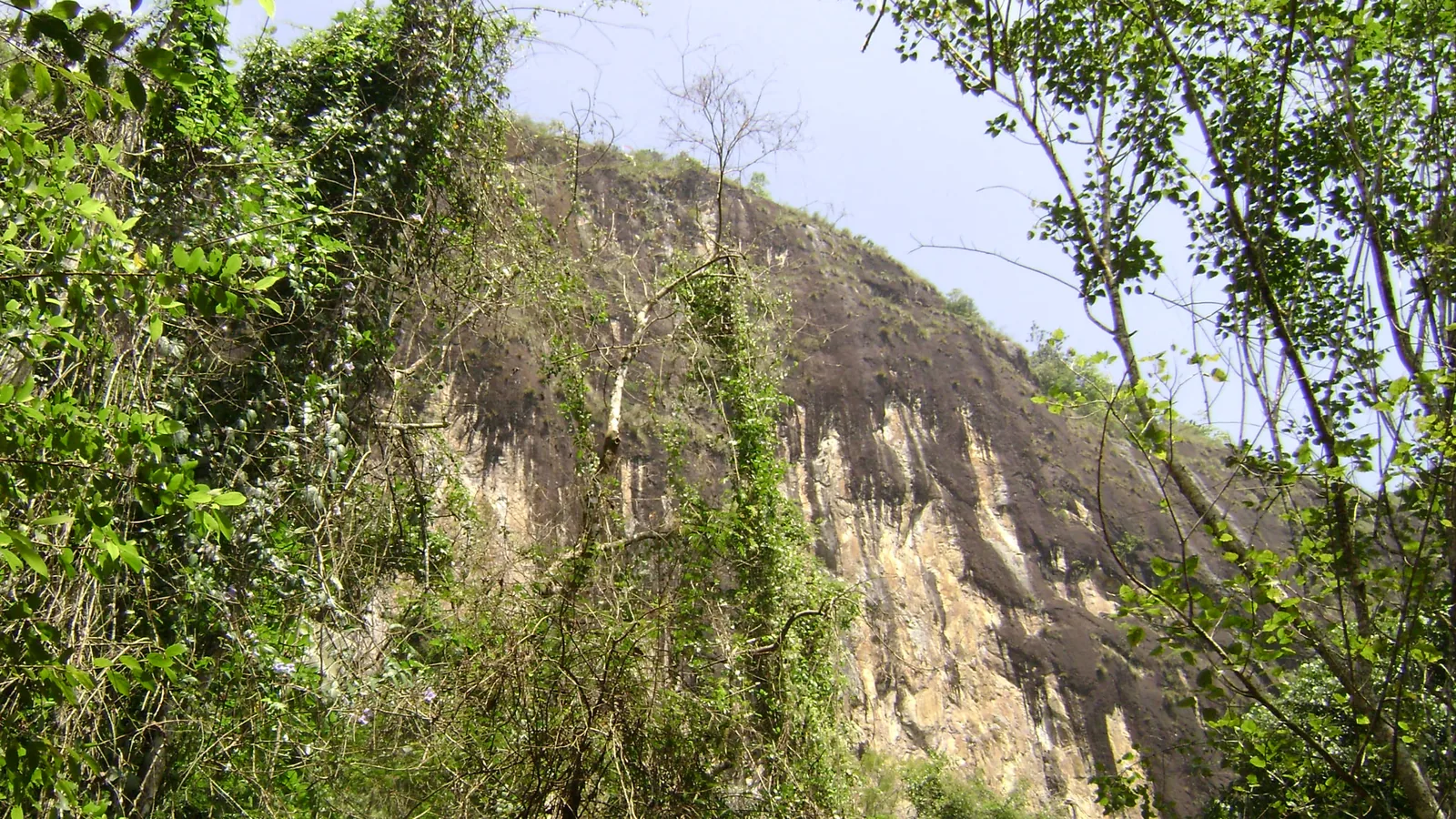
Fa-Hien Lena sits on the slope of a gneiss cliff, with a roughly 30-by-20-meter, east-facing entrance and two chambers, shelters A and B, Oshan Wedage and his coauthors wrote in Nature Communications in 2019. Phase D held the cave’s Late Pleistocene occupation, dated from about 48,000 to 34,000 cal BP, a span that “probably included several episodes of occupation,” the team wrote. Within that layer they recorded 92 bone fragments with butchery marks, 92.2 percent of them from small mammals, and 36 bone specimens showing the surface modification of tool manufacture. Three monkey species live in Sri Lanka, the study recorded: the toque macaque, Macaca sinica; the purple-faced langur, Trachypithecus vetulus; and the tufted gray langur, Semnopithecus priam. All three turned up at the site. “The results demonstrate specialized, sophisticated hunting of semi-arboreal and arboreal monkey and squirrel populations from 45,000 years ago in a tropical rainforest environment,” Wedage said in a Max Planck Institute for the Science of Human History release.
Two starting dates: 1968 and 1979 for the first dig
Fa-Hien Lena was first recorded by S. U. Deraniyagala in 1968, Wedage and his coauthors wrote, then excavated over several seasons from 1986 to 1988 by W. H. Wijeyapala and from 2009 to 2012 by a team led by Wedage, Deraniyagala and N. Perera. The Department of Archaeology, Government of Sri Lanka, gives a different account on its own website: “This research has been initially carried out in 1979. Excavations were carried out in three caves. Batadomba Cave at Kuruwita, Fa Hien Cave at Horana, Alu Lena Cave at Kegalle.” That page places the cave at Horana; the academic papers use Bulathsinhala. The government page also gives a shorter chronology: “modern researches reveal that the cave settlements in Sri Lanka date back to 40,000 years before present,” it states, without naming the study behind that figure. Wedage’s team built its chronology from 30 radiocarbon dates for the site, recalibrated with OxCal 4.3.
Bone tools carved from the bones of the hunted
Animals hunted at Fa-Hien Lena also supplied the raw material for the tools used against them. “This was complemented by sophisticated bone tool technologies which were, in turn, created from the bones of hunted monkeys,” Noel Amano said in the Max Planck Institute’s release on the 2019 paper. Of the 36 modified bone specimens from Phase D, ten were finished artifacts. Michael Petraglia, a coauthor of the 2019 paper, said the pattern was not an isolated case: “This ‘monkey menu’ was not a one-off, and the use of these difficult-to-catch resources is one more example of the behavioural and technological flexibility of H. sapiens.” Petraglia, also a coauthor of the 2020 paper, said in the Max Planck Institute of Geoanthropology’s later release that the Sri Lankan evidence showed the invention of bows and arrows, clothing and symbolic signaling “occurred multiple times and in multiple different places, including within the tropical rainforests of Asia.”

"The bow and arrow was in use": sorting spear from arrow
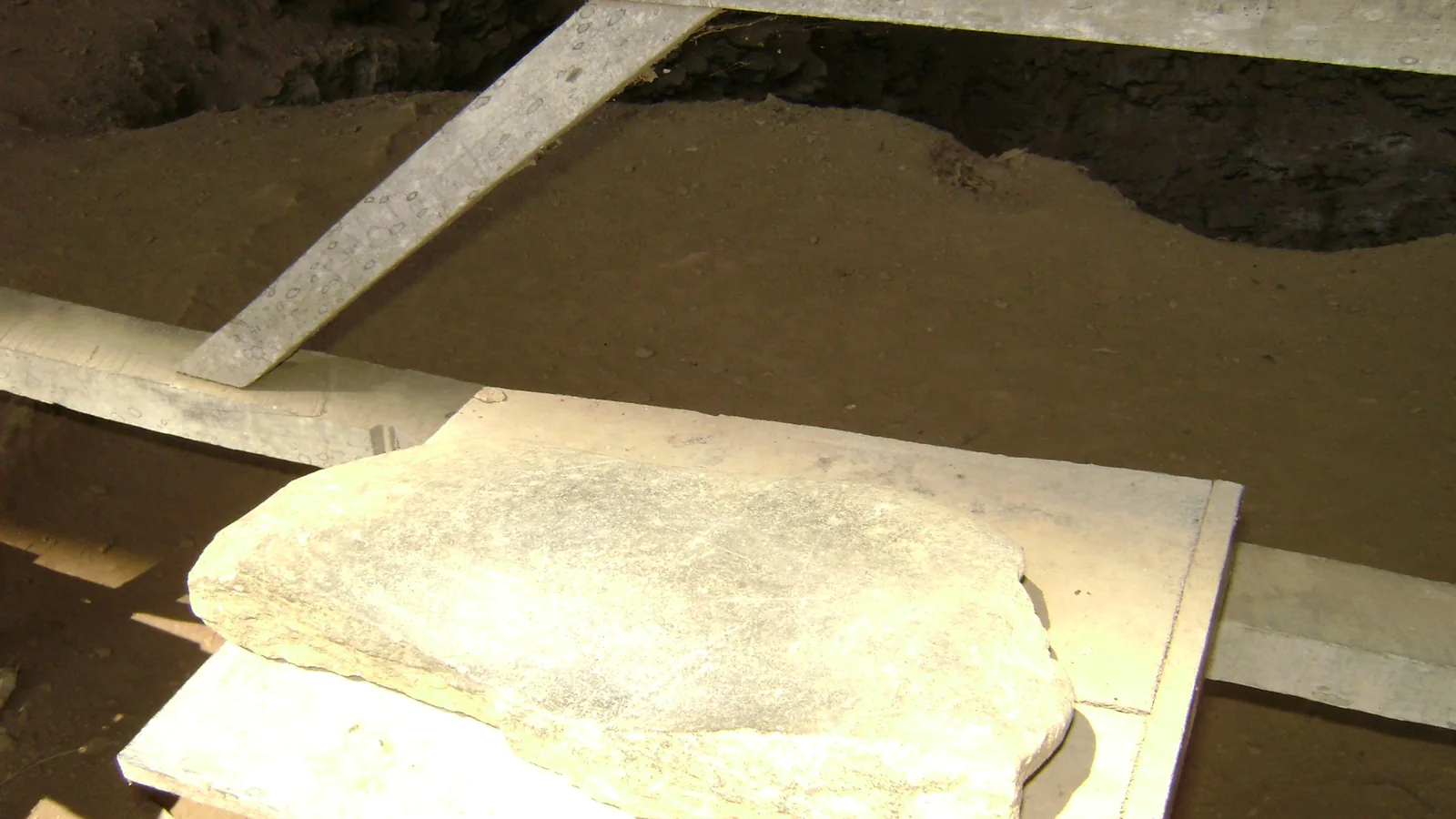
Notches near the midline of the unipoints, and on some bipoints, showed fixed hafting with ligatures, Langley’s team wrote, while the geometrics carried no sign of having been mounted on a shaft. The team wrote that use wear alone cannot reliably tell an arrow point from a spear point, but the points were too small for a single-pointed spear, and “closed forest environments do not allow for the lengthy arced trajectory” a multipronged spear would need. “The size, form, and damage found on many of the bone points were best explained by their having been used as arrow tips to hunt difficult-to-catch rainforest prey, rather than spears,” Langley said in the Griffith University release that announced the paper. Dental eruption and wear showed that prime-aged adults were targeted, which the authors read as evidence “this projectile technology allowed for the deliberate targeting of specific individuals.” Their conclusion: “the small size, light weight, fixed hafting, presence of hunting-consistent impact fractures on distal extremities, assemblage composition, and ethnographic analogies combine to indicate that the bow and arrow was in use at Fa-Hien Lena from at least 48 to 34 ka cal. BP.”
Shell beads, ochre beads and pigment
Phase D and the layers above it also held three marine shell beads, two cut from Conus shells (phases D and B) and one from a mud snail (phase C); each had a single hole and wear from stringing, Langley’s team wrote. “Completely unique to the site,” the paper stated, “are three large beads made entirely of red ochre nodules,” one from phase B, dated to 8.7 to 8 thousand cal BP, and two without secure context from excavations before 2010; all three had holes about three millimeters across, worn at the edges from stringing. “As far as we are aware, no other ochre beads have been reported for any other Pleistocene or Early Holocene-aged contexts anywhere in the world,” the authors wrote. Separate from the beads, 136 fragments of yellow, red and mica pigment carried grinding and scraping marks from the production of powdered color. The Griffith University release also described scraping and piercing tools “suitable for making nets or working skins or plant fibres,” quoting Langley on the rarity of that evidence: “Evidence for the construction of nets is extremely scarce in artefacts many thousands of years old, making this aspect of the Fa-Hien Lena assemblage a startling find.”
Key facts
- On June 12, 2020, Michelle Langley and her coauthors classified 130 bone points from Fa-Hien Lena as probable projectile points (Science Advances).
- The points break down as 24 unipoints (18.4 percent), 18 bipoints (13.8 percent) and 2 geometrics (1.5 percent); 66.1 percent were too broken to classify (Langley et al., 2020).
- Fa-Hien Lena’s Phase D dates to about 48,000 to 34,000 cal BP, built from 30 radiocarbon dates recalibrated with OxCal 4.3 (Wedage et al., 2019).
- Wedage and his coauthors recorded 92 bone fragments with butchery marks and 36 modified bone specimens in Phase D, with 92.2 percent of the butchered bone from small mammals (Nature Communications, 2019).
- Three monkey species were identified at the site: Macaca sinica, Trachypithecus vetulus and Semnopithecus priam (Wedage et al., 2019).
- The cave was first recorded by S. U. Deraniyagala in 1968, per the two academic papers; the Sri Lanka Department of Archaeology’s website dates its research to 1979 and gives the cave’s location as Horana rather than Bulathsinhala.
- Fa-Hien Lena also held three shell beads, three ochre beads and 136 pigment fragments; Langley’s team called the ochre beads “completely unique to the site” (Science Advances, 2020).
- The 2020 paper concluded the bow and arrow was in use at Fa-Hien Lena “from at least 48 to 34 ka cal. BP.”
FAQ
What did the 2020 Science Advances paper find at Fa-Hien Lena?
Michelle Langley and her coauthors classified 130 bone points from the cave's Phase D deposits as probable arrow points rather than spear points, based on their size, hafting notches and impact fractures, and concluded the bow and arrow was in use at the site from at least 48,000 to 34,000 years ago.
Why do sources disagree on when Fa-Hien Lena was first investigated?
The Nature Communications and Science Advances papers both state that S. U. Deraniyagala first recorded the cave in 1968. The website of the Sri Lanka Department of Archaeology dates its own research program to 1979 and places the cave at Horana rather than Bulathsinhala; neither page explains the difference.
What animals were hunted at Fa-Hien Lena?
Wedage and his coauthors identified three monkey species, Macaca sinica, Trachypithecus vetulus and Semnopithecus priam, along with squirrels, among the butchered bone in Phase D, with dental eruption and wear pointing to prime-aged adults as the main prey.
Sources
- Oshan Wedage, Noel Amano, Michelle C. Langley, Katerina Douka, James Blinkhorn, Alison Crowther, Siran Deraniyagala, Nikos Kourampas, Ian Simpson, Nimal Perera, Andrea Picin, Nicole Boivin, Michael Petraglia and Patrick Roberts, "Specialized rainforest hunting by Homo sapiens ~45,000 years ago," Nature Communications 10, 739 (2019), PubMed Central full text.
- Michelle C. Langley, Noel Amano, Oshan Wedage, Siran Deraniyagala, Nikos Kourampas, Nicole Boivin, Michael D. Petraglia and Patrick Roberts, "Bows and arrows and complex symbolic displays 48,000 years ago in the South Asian tropics," Science Advances 6(24), eaba3831, published June 12, 2020, PubMed Central full text.
- Max Planck Institute of Geoanthropology (formerly MPI for the Science of Human History), "Discovery of Oldest Bow and Arrow Technology in Eurasia," press release, June 12, 2020.
- Max Planck Institute for the Science of Human History, "The Monkey Hunters: Humans Colonize South Asian Rainforest by Hunting Primates," press release.
- Griffith University, Griffith News, "Discovery of oldest bow-and-arrow technology outside Africa," June 15, 2020.
- Department of Archaeology, Government of Sri Lanka, "Excavations."
Cite this article
- APA
- LETTER. (2026, September 28). Bone arrowheads at Fa-Hien Lena cave, Sri Lanka, 48,000 years old. Our Earth's History. https://ourearthshistory.com/south-asia/prehistory/fa-hien-lena-sri-lanka-bone-tools-bow-arrow-48000-years/
- Chicago
- LETTER. “Bone arrowheads at Fa-Hien Lena cave, Sri Lanka, 48,000 years old.” Our Earth's History, September 28, 2026. https://ourearthshistory.com/south-asia/prehistory/fa-hien-lena-sri-lanka-bone-tools-bow-arrow-48000-years/.
- MLA
- LETTER. “Bone arrowheads at Fa-Hien Lena cave, Sri Lanka, 48,000 years old.” Our Earth's History, 28 Sep. 2026, https://ourearthshistory.com/south-asia/prehistory/fa-hien-lena-sri-lanka-bone-tools-bow-arrow-48000-years/.
Text licensed CC BY-NC-ND 4.0. Found an error? Tell us.