February 1, 2018: Attirampakkam and a 385,000-year Middle Paleolithic
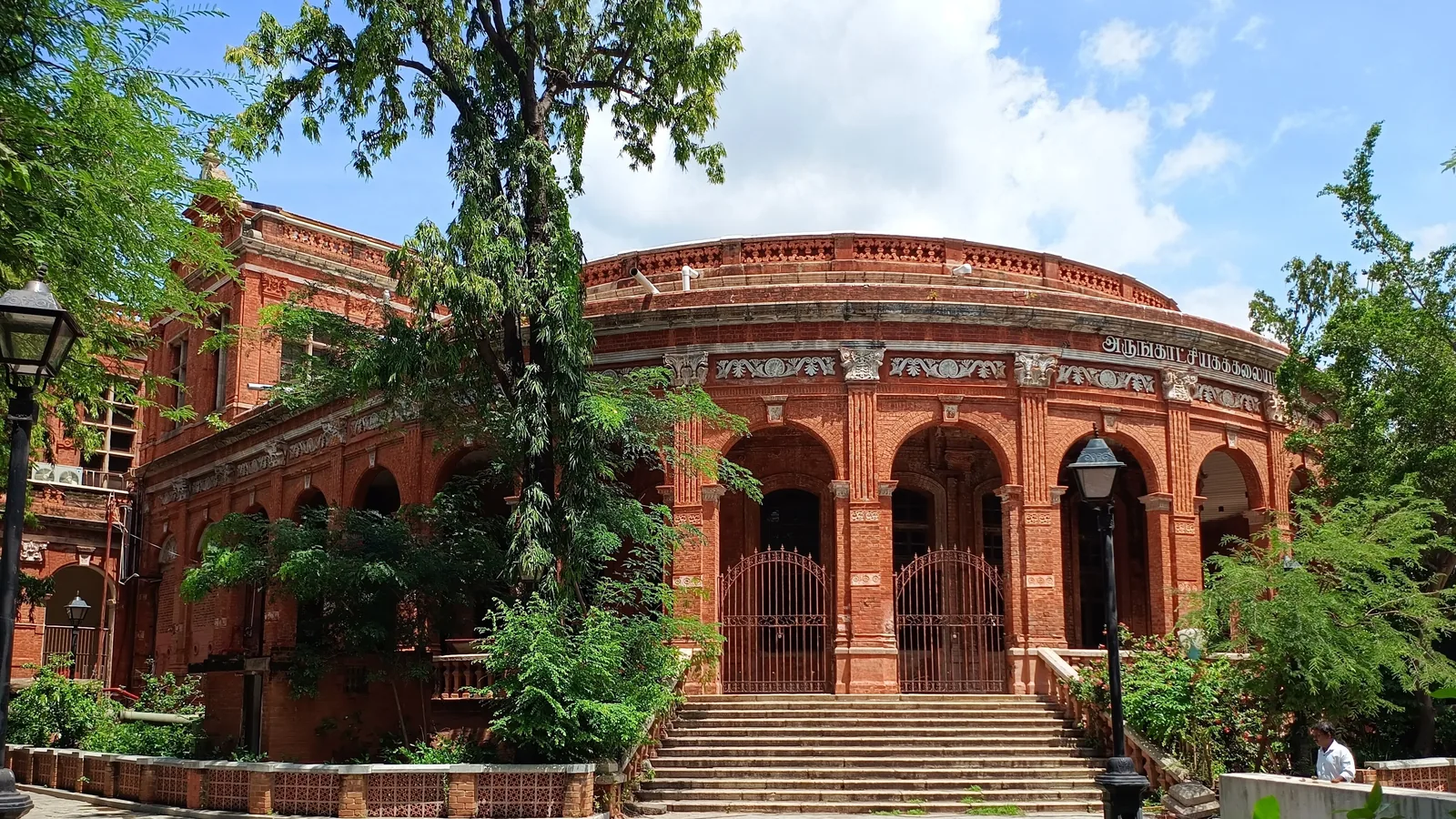

TL;DR — Luminescence dates published in Nature on February 1, 2018 place a Middle Paleolithic at Attirampakkam, near Chennai, from 385 ± 64 to 172 ± 41 thousand years ago.
“Luminescence dating at the stratified prehistoric site of Attirampakkam, India, has shown that processes signifying the end of the Acheulian culture and the emergence of a Middle Palaeolithic culture occurred at 385 ± 64 thousand years ago (ka), much earlier than conventionally presumed for South Asia.” So opens the abstract of a letter that Nature published on February 1, 2018, by Kumar Akhilesh, Shanti Pappu, Haresh M. Rajapara, Yanni Gunnell, Anil D. Shukla and Ashok K. Singhvi. The site lies at 13° 13′ 55.59″ N and 79° 52′ 48.36″ E in Tamil Nadu, near Chennai, the Madras of the nineteenth century. The abstract continued: “The Middle Palaeolithic continued at Attirampakkam until 172 ± 41 ka.” The same stream gravel had given W. King and Robert Bruce Foote their first handaxes in September 1863, and a paper in Science in 2011 had put the Acheulian layers beneath at about 1.5 million years. The target was a model tying the Indian Middle Paleolithic to modern humans arriving after about 125,000 years ago.
Quick facts
- When
- September 1863 (first handaxes picked up by W. King and Robert Bruce Foote) · 1904 (Foote collection bought by the Madras Government) · 2011 (Science paper on the Acheulian layers, cited at about 1.5 million years) · February 1, 2018 (Nature letter dating the Middle Paleolithic to 385 ± 64 and 172 ± 41 thousand years ago)
- Where
- Attirampakkam, a stratified site at 13° 13′ 55.59″ N and 79° 52′ 48.36″ E in Tamil Nadu, southern India, near Chennai (the Madras of Foote's day); trenches T7A, T7B and T7C
- Who
- Robert Bruce Foote of the Geological Survey of India and W. King; Kumar Akhilesh and Shanti Pappu of the Sharma Centre for Heritage Education, Chennai; Haresh M. Rajapara, Anil D. Shukla and Ashok K. Singhvi for the luminescence dating; Yanni Gunnell for the geomorphology
- Outcome
- Luminescence dates placed the end of the Acheulian and the start of a Middle Paleolithic at 385 ± 64 thousand years ago, with the Middle Paleolithic lasting to 172 ± 41 ka; the authors called for a re-evaluation of models tying the Indian Middle Paleolithic to modern human dispersals after about 125 ka
Trenches T7A, T7B and T7C
The letter’s figures come from three trenches: layer 5 of trench T7A, and layers 2, 3 and 4 in trenches T7A, T7B and T7C. The Acheulian, in the abstract’s words, was a world of “large-flake technologies,” the handaxes of the kind Foote had picked out of the gravel. Above it the authors described “the gradual disuse of bifaces, the predominance of small tools, the appearance of distinctive and diverse Levallois flake and point strategies, and the blade component,” and wrote that these “all highlight a notable shift away from the preceding Acheulian large-flake technologies.”
Levallois is the name for flakes and points struck from a core prepared beforehand, so that their shape is set before the blow. The change, the abstract stated, “occurred in India at 385 ± 64 ka” and was contemporary with “similar processes recorded in Africa and Europe.” The abstract does not say who made the tools; it lists “the paucity of excavated sites and hominin fossils” among the limits on Indian work.
Feldspar under infrared light
The method was pIR-IRSL, post-infrared infrared-stimulated luminescence, applied to feldspar grains from the sediment. Extended Data Figure 9 records the check on the method for sample ATSP#2013/12L1: “A beta dose of 60 Gy was given after 8 h of bleaching of a fresh natural sample under a solar stimulator,” and the doses recovered at 260 °C, 290 °C and 320 °C “fell within the 5% of the total variation, that is within 57–63 Gy for an administered dose of 60 Gy.”
The contributions line names who did what: “K.A. and S.P. direct the project, are researching ATM and neighbouring sites and analysed the lithic artefacts; H.M.R., A.D.S. and A.K.S. were responsible for the luminescence sampling and dating; Y.G. analysed the geomorphology and palaeoenvironmental evidence at the site.” The letter gives Akhilesh and Pappu’s address as the Sharma Centre for Heritage Education in Chennai; the centre’s website, sharmaheritage.com, carried no content in September 2026, only a redirect.
September 1863: a nullah in Chingleput district
The catalogue of Foote’s collection, published by the Madras Government Museum in 1916 after his death, lists the site under the Chingleput District as “Attrampakkam nullah,” a nullah being a stream bed. Entry 2204-7 is a palaeolith “oblique edged; in lateritic gravel; Attrampakkam nullah; found by Dr. W. King in September 1863; quartzite, drab brown.” The next entry is Foote’s own, “straight edged, in situ lateritic gravel; Attrampakkam nullah; found by self in September 1863; quartzite pinkish,” and then, “The first palaeolith found actually in situ.” Entry 2204-9 is a “narrow pointed oval” palaeolith “found by my wife in 1864.” Entry 2204-11 is a broken bone from the same gravel, “Considered by Professors Busk and Boyd Dawkins to be part of a platycnemic tibia.”
The preface states that “By the discovery of palaeolithic implements near Madras, in 1863, Mr. Foote became the pioneer of this branch of research in India,” and that “The entire collection was purchased by the Madras Government in 1904, and a special room was built for its reception in the Art and Ethnological Section of the Madras Museum.”
Pappu, Gunnell and the Science paper of 2011
Shanti Pappu, Yanni Gunnell, Kumar Akhilesh, R. Braucher, M. Taieb, F. Demory and N. Thouveny published “Early Pleistocene Presence of Acheulian Hominins in South India” in Science, volume 331, pages 1596 to 1599, in 2011. The Science text is not open to read; the ages given here are as two later reviews cite them. Ignacio de la Torre wrote in 2016 that an age “of ca 1.5 Myr is reported through radiometric dating and palaeomagnetism for the Acheulean from Attirampakkam in South India,” and called it “the Early Acheulean site closest to the sea.” The 2026 review in Evolutionary Anthropology, with Pappu among its 21 authors, gives “Attirampakkam (1.7–1.07 Ma, mean estimated average 1.5 Ma)” among the earliest Acheulean evidence in Asia. A 2021 data paper by A. Tamilarasi and three colleagues in Chennai added the stone itself: rock samples from the site, read by infrared spectroscopy and X-ray diffraction, contained quartz, kaolinite, montmorillonite, calcite, orthoclase, microcline and illite.
"After approximately 125 ka"
The model the 2018 letter set out to test held that the Indian Middle Paleolithic came in with Homo sapiens. For it the letter cites M. Petraglia and colleagues, “Middle Paleolithic assemblages from the Indian subcontinent before and after the Toba super-eruption,” Science 317 (2007), and P. Mellars and colleagues in PNAS 110 (2013). A 2024 paper by Devara Anil and six colleagues in PLoS One lists Late Pleistocene dates at Jwalapuram, Kataoti, Sandhav and Dhaba that, they wrote, corroborate “the pre-Toba model, which argues that the Middle Palaeolithic in the region was a product of Homo sapiens dispersals into Eurasia.”
At Retlapalle in Andhra Pradesh, Anil’s team dated a Middle Paleolithic layer by the same pIR-IRSL method to 139 ± 17 thousand years, cited the Nature letter for “parallel emergence and evolution of Levallois technology” in India, and wrote that “The last decade of Palaeolithic research in India have shown evidence of deep-rooted history of Middle Palaeolithic, lasting for more than ~350 kyrs in the Indian subcontinent.” The Attirampakkam authors had asked for that reading on February 1, 2018, in the last sentence of their abstract: “Together, these observations call for a re-evaluation of models that restrict the origins of Indian Middle Palaeolithic culture to the incidence of modern human dispersals after approximately 125 ka.”
Key facts
- Attirampakkam is a stratified Paleolithic site at 13° 13′ 55.59″ N and 79° 52′ 48.36″ E in Tamil Nadu, southern India (Tamilarasi et al., 2021).
- W. King found an oblique-edged quartzite palaeolith in the lateritic gravel of “Attrampakkam nullah” in September 1863; Foote found “The first palaeolith found actually in situ” there the same month (Foote, 1916).
- Foote’s wife found a palaeolith in the same gravel in 1864; the Madras Government bought his whole collection in 1904 (Foote, 1916).
- Pappu, Gunnell, Akhilesh, Braucher, Taieb, Demory and Thouveny published the Acheulian dates in Science 331 (2011); reviews cite the age as “ca 1.5 Myr” (de la Torre, 2016) and “1.7–1.07 Ma, mean estimated average 1.5 Ma” (Moncel et al., 2026).
- Nature published the Middle Paleolithic dates on February 1, 2018: 385 ± 64 ka for the end of the Acheulian, 172 ± 41 ka for the end of the Middle Paleolithic.
- The dating used pIR-IRSL on feldspar; a preheat plateau test returned 57–63 Gy for an administered dose of 60 Gy (Extended Data Figure 9).
- The letter cites Petraglia et al. (2007) and Mellars et al. (2013) for the model of a Middle Paleolithic brought by modern humans after about 125 ka.
- A 2024 PLoS One paper dated a Middle Paleolithic layer at Retlapalle, Andhra Pradesh, to 139 ± 17 ka by the same method and cited the Attirampakkam letter for a Middle Paleolithic “lasting for more than ~350 kyrs” in India.
FAQ
How old are the stone tools at Attirampakkam?
Two sets of dates exist. The Acheulian handaxe layers were dated in a 2011 Science paper that later reviews cite at about 1.5 million years (a range of 1.7 to 1.07 million years). The overlying Middle Paleolithic layers were dated in Nature in 2018 to between 385 ± 64 and 172 ± 41 thousand years ago.
Who discovered Attirampakkam?
Foote's 1916 catalogue records that Dr. W. King found a palaeolith in the lateritic gravel of "Attrampakkam nullah" in September 1863 and that Foote himself found "The first palaeolith found actually in situ" there in the same month. Foote's wife found another in 1864.
Why did the 2018 dates matter for the Out of Africa debate?
The Nature letter's abstract stated that its findings "call for a re-evaluation of models that restrict the origins of Indian Middle Palaeolithic culture to the incidence of modern human dispersals after approximately 125 ka." The Indian Middle Paleolithic had been read as a marker of early Homo sapiens in the region; a 2024 PLoS One paper wrote that research had since "pushed back the timeline of the Middle Palaeolithic to the Middle Pleistocene epoch, indicating a potential in-situ emergence from the earlier Late Acheulian culture."
Sources
- Kumar Akhilesh, Shanti Pappu, Haresh M. Rajapara, Yanni Gunnell, Anil D. Shukla and Ashok K. Singhvi, "Early Middle Palaeolithic culture in India around 385–172 ka reframes Out of Africa models," Nature 554, 97–101, published February 1, 2018 (abstract, author contributions, figure and Extended Data captions, reference list).
- M.-H. Moncel, C. Cucart-Mora, M. Arzarello, N. Ashton, J. Baena, D. Barsky, I. de la Torre, N. Galanidou, P. García-Medrano, C. Hertler, G. Herzlinger, T. Ingicco, H. Li, D. Ma, M. Mosquera, A. Ollé, S. Pappu, S. Pei, C. Tian, W. Wang and C. J. Bae, "What Is the Acheulean?" Evolutionary Anthropology 35(2), e70029 (2026), open access at PubMed Central.
- Ignacio de la Torre, "The origins of the Acheulean: past and present perspectives on a major transition in human evolution," Philosophical Transactions of the Royal Society B 371, 20150245 (2016), open access at PubMed Central.
- A. Tamilarasi, V. Sathish, S. Manigandan and A. Chandrasekaran, "Data on minerals and crystallinity index of quartz in rock samples collected from Paleolithic archaeological site of Attirampakkam, Tamil Nadu," Data in Brief 39, 107571 (2021), open access at PubMed Central.
- Devara Anil, Monika Devi, Gopesh Jha, Zakir Khan, Vrushab Mahesh, P. Ajithprasad and Naveen Chauhan, "Deep-rooted Indian Middle Palaeolithic: Terminal Middle Pleistocene lithic assemblage from Retlapalle, Andhra Pradesh, India," PLoS One 19(8), e0302580, August 27, 2024, open access at PubMed Central.
- R. Bruce Foote, The Foote Collection of Indian Prehistoric and Protohistoric Antiquities: Catalogue Raisonné (Madras Government Museum, 1916), preface and Chingleput District entries 2204-7 to 2204-11; Digital Library of India scan, full text at the Internet Archive (identifier dli.chennai.141).
Cite this article
- APA
- Our Earth's History. (2026, September 22). February 1, 2018: Attirampakkam and a 385,000-year Middle Paleolithic. Our Earth's History. https://ourearthshistory.com/south-asia/prehistory/attirampakkam-tamil-nadu-stone-tools-385000-years/
- Chicago
- Our Earth's History. “February 1, 2018: Attirampakkam and a 385,000-year Middle Paleolithic.” Our Earth's History, September 22, 2026. https://ourearthshistory.com/south-asia/prehistory/attirampakkam-tamil-nadu-stone-tools-385000-years/.
- MLA
- “February 1, 2018: Attirampakkam and a 385,000-year Middle Paleolithic.” Our Earth's History, 22 Sep. 2026, https://ourearthshistory.com/south-asia/prehistory/attirampakkam-tamil-nadu-stone-tools-385000-years/.
Text licensed CC BY-NC-ND 4.0. Found an error? Tell us.