Found in a Moroccan mine in 1961: the Jebel Irhoud fossils

TL;DR — Two Nature papers of June 8, 2017 dated fossils from a Moroccan mine to about 315,000 years and assigned them to Homo sapiens.
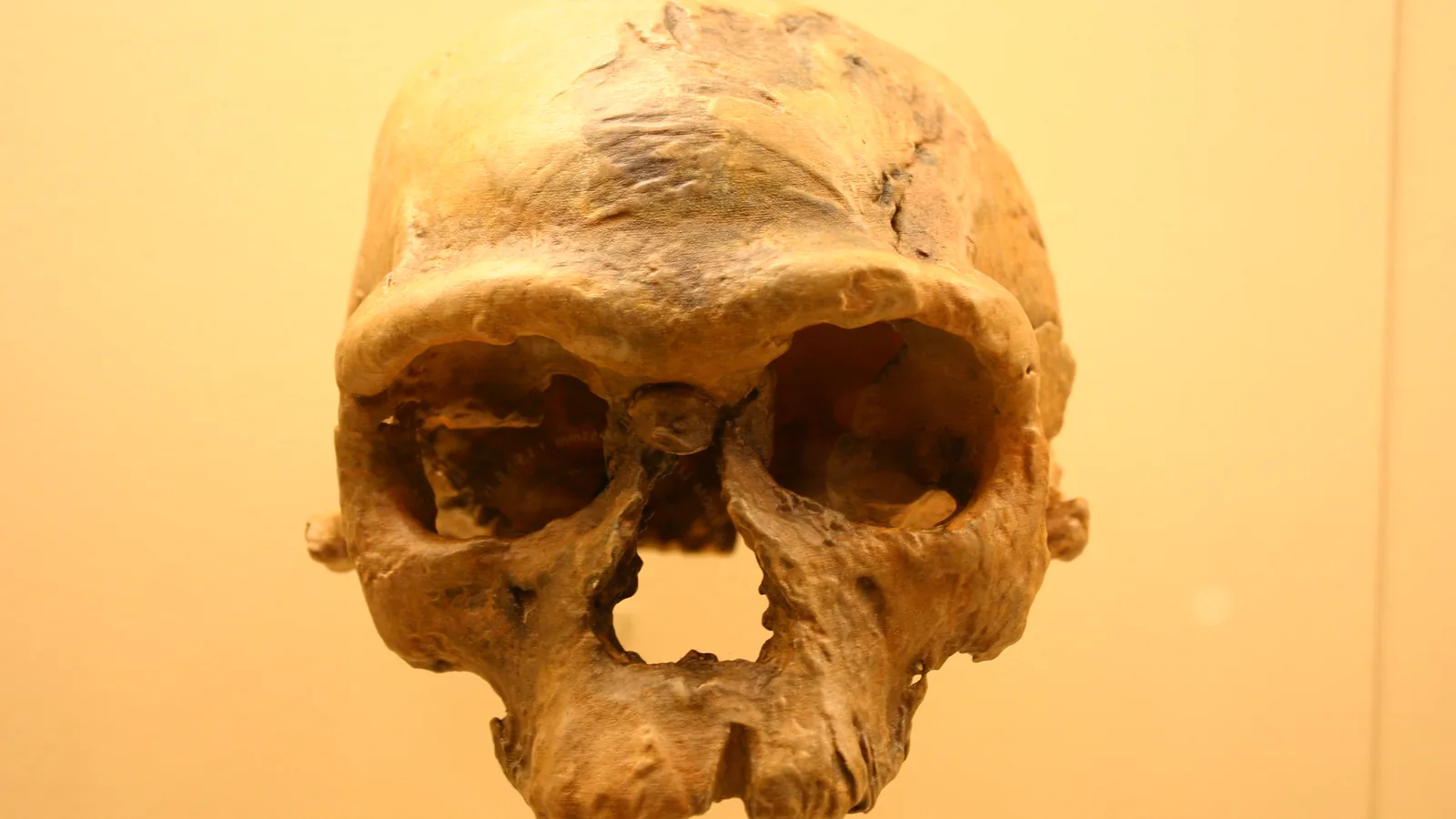
Mining exposed a Paleolithic site at Jebel Irhoud, Morocco, in 1960, and a skull came out of the ground there in 1961. Jean-Jacques Hublin and his co-authors described the find in Nature on June 8, 2017: “In 1960, mining operations in the Jebel Irhoud massif 55 km south-east of Safi, Morocco exposed a Palaeolithic site in the Pleistocene filling of a karstic network. An almost complete skull (Irhoud 1) was accidentally unearthed in 1961, prompting excavations that yielded an adult braincase (Irhoud 2), an immature mandible (Irhoud 3), an immature humeral shaft, an immature ilium and a fragment of a mandible.” The same paper adds a caveat: these bones were reported as coming from the base of the deposit, but only the position of the arm bone had actually been recorded.
Quick facts
- When
- 1961 (Irhoud 1 skull unearthed) · 1968 (Ennouchi publishes a second skull, Irhoud 2) · 2004–2011 (Hublin and Ben-Ncer excavations) · June 8, 2017 (Nature publishes Hublin et al. and Richter et al.) · 2018 (Nature Author Correction; Morocco heritage designation) · 2022 (Bergmann and Hublin, Scientific Reports)
- Where
- Jebel Irhoud massif, 55 km southeast of Safi, Morocco, in the Pleistocene filling of a karstic network exposed by mining
- Who
- Émile Ennouchi; Jean-Jacques Hublin, Max Planck Institute for Evolutionary Anthropology; Abdelouahed Ben-Ncer, Institut National des Sciences de l'Archéologie et du Patrimoine (INSAP), Rabat; Daniel Richter; Philipp Gunz; Shannon McPherron
- Outcome
- Thermoluminescence dating of burnt flints from layer 7 gave a weighted average of 315 ± 34 thousand years; Hublin and colleagues described the skull as having a modern-looking face and teeth with a more archaic braincase, and argued for a pan-African rather than single-region origin of Homo sapiens
Ennouchi's Neanderthal, 1962
Émile Ennouchi, who studied the first skull, named it in 1962: “Un Néanderthalien: l’homme du Jebel Irhoud” (“A Neanderthal: the man of Jebel Irhoud”). Hublin’s 2017 paper explains the label: “They were initially considered to be around 40 thousand years (kyr) old and an African form of Neanderthals.” Ennouchi described a second skull, Irhoud 2, in a 1968 paper. A 1960s attempt to date one fossil directly, combining uranium series with electron spin resonance, produced an age of 160 ± 16 thousand years.
2004 to 2011: a mine becomes an excavation
Hublin, of the Max Planck Institute for Evolutionary Anthropology, and Abdelouahed Ben-Ncer, of the Institut National des Sciences de l’Archéologie et du Patrimoine in Rabat, led a new excavation starting in 2004. The Max Planck Institute’s press release states the project “resulted in the discovery of new Homo sapiens fossils in situ, increasing their number from 6 to 22,” including “an adult skull (Irhoud 10) comprising a distorted braincase and fragments of the face” and “a nearly complete adult mandible (Irhoud 11),” the 2017 Nature paper reports. Most specimens came from a single bone bed that, the paper says, “contains the remains of at least five individuals (three adults, one adolescent and one immature individual, around 7.5 years old).” The stone tools used Levallois prepared-core techniques and favored pointed forms in imported high-quality flint; handaxes, common at older sites, were absent. Animal bones in the same deposits, the press release notes, showed signs of hunting, most often of gazelle.
Richter and his co-authors dated the work with thermoluminescence, heating 15 burnt flints from four layers. Their weighted average for layer 7, the abstract states, places “these Middle Stone Age artefacts and fossils at 315 ± 34 thousand years ago,” with a 95 percent probability of falling between 383,000 and 247,000 years. A recalculated uranium-series and electron-spin-resonance date for a tooth from the Irhoud 3 mandible gave a supporting figure of 286 ± 32 thousand years.
A modern face, an older braincase
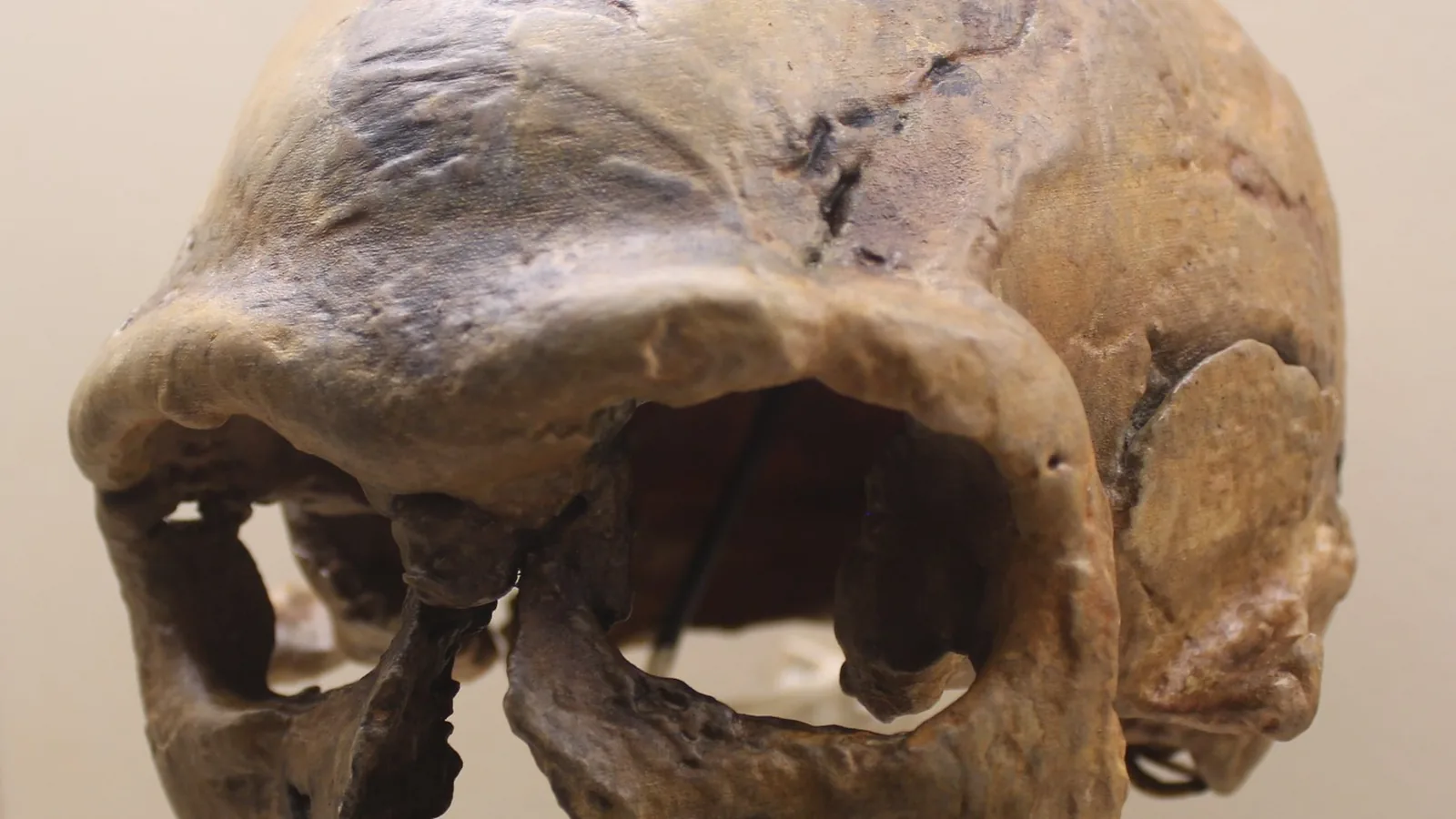
Hublin summarized the skull’s mixed anatomy in the press release: “The fossils from Jebel Irhoud display a modern-looking face and teeth, and a large but more archaic-looking braincase.” Philipp Gunz, also of the Max Planck Institute, said: “The inner shape of the braincase reflects the shape of the brain. Our findings suggest that modern human facial morphology was established early on in the history of our species, and that brain shape, and possibly brain function, evolved within the Homo sapiens lineage.” Hublin said: “We used to think that there was a cradle of mankind 200 thousand years ago in east Africa, but our new data reveal that Homo sapiens spread across the entire African continent around 300 thousand years ago.” Ben-Ncer added: “North Africa has long been neglected in the debates surrounding the origin of our species.” The press release set the new date beside two East African fossils dated by earlier work: Herto, Ethiopia, at 160,000 years, and Omo Kibish, Ethiopia, then given at 195,000 years.

Three named objections
Scientific American’s Kate Wong gathered reactions from paleoanthropologists outside Hublin’s team in a June 8, 2017 article. John Hawks, of the University of Wisconsin-Madison, said the team had not compared its skulls with the 800,000-year-old Spanish fossil Homo antecessor, and offered an alternative reading: “Maybe Jebel Irhoud was evolving into modern humans, but another possibility is that it is retaining facial morphology from an H. antecessor-like population that may have been the last common ancestor of Neandertals and later African archaic humans.” Marta Mirazón Lahr, of the University of Cambridge, said the fossils raised “major questions about what features define our species,” and asked whether a globular braincase was the deciding trait: “If so, the Irhoud population represents our close cousins” rather than direct ancestors. Christian Tryon, of Harvard University, said the find made “the picture nicely complicated,” since other human species, including Homo heidelbergensis and Homo naledi, lived in Africa around the same 300,000 years ago.
A 2018 correction and a 2022 follow-up
Nature issued an Author Correction to the 2017 paper in 2018, fixing an axis label in one figure and a mislabeled specimen, stating that “these changes do not alter any inferences drawn from the data.” In 2022, Inga Bergmann, working with Hublin, published a study in Scientific Reports on Aterian-period jawbones from northern Africa, writing that “the redating of the Kabwe and Jebel Irhoud fossils to around 300 ka BP questions the direct descent of our lineage” from older large-brained African specimens, and argued instead for regional continuity in North Africa. In January 2018 Morocco’s Ministry of Culture and Communication classified Jebel Irhoud as national historical heritage, Morocco World News reported. Ben-Ncer told the outlet: “Jbel Irhoud was discovered by coincidence in the early 1960s. Since then, a substantial number of fossils have been unearthed from the site.” Minister Mohammed Laâraj visited the site and said it held “certain archaeological value for the whole of humanity,” as Morocco pursued a bid for World Heritage status.
Key facts
- Mining exposed the site in 1960; the first skull, Irhoud 1, was found by accident in 1961 (Hublin et al., 2017).
- Émile Ennouchi classified the first skull as an African Neanderthal in 1962 and described a second skull, Irhoud 2, in 1968.
- Hublin and Ben-Ncer’s 2004-2011 excavation raised the fossil count from 6 to 22 specimens, including the Irhoud 10 skull and Irhoud 11 mandible.
- A single bone bed held the remains of at least five individuals: three adults, one adolescent and one child of about 7.5 years.
- Richter et al. (2017) dated burnt flints from layer 7 by thermoluminescence to a weighted average of 315 ± 34 thousand years, with a 95 percent range of 383,000-247,000 years.
- Stone tools used Levallois techniques with pointed forms and no handaxes; animal bones showed hunting marks, mostly of gazelle.
- John Hawks, Marta Mirazón Lahr and Christian Tryon, quoted by Scientific American in 2017, each raised separate objections to calling the fossils Homo sapiens without qualification.
- Morocco’s Ministry of Culture and Communication classified Jebel Irhoud as national heritage in January 2018.
FAQ
What did the 1961 discovery at Jebel Irhoud consist of?
An almost complete skull, Irhoud 1, unearthed by accident during mining in the Jebel Irhoud massif southeast of Safi, Morocco, in 1961. Émile Ennouchi described it as an African Neanderthal in a 1962 publication, and described a second skull, Irhoud 2, in 1968.
How old are the Jebel Irhoud fossils according to the 2017 Nature papers?
Daniel Richter and colleagues dated burnt flints from the same layer as the fossils by thermoluminescence to a weighted average of 315 ± 34 thousand years, with a 95 percent probability of falling between 383,000 and 247,000 years.
Do paleoanthropologists agree the Jebel Irhoud fossils are Homo sapiens?
Not without qualification. John Hawks, Marta Mirazón Lahr and Christian Tryon, all quoted by Scientific American in 2017, raised separate objections about comparison fossils, the criteria used to define the species and the presence of other human species in Africa at the same time.
Sources
- Jean-Jacques Hublin et al., "New fossils from Jebel Irhoud, Morocco and the pan-African origin of Homo sapiens," Nature 546, 289–292 (2017); full text via the Max Planck Institute for Evolutionary Anthropology press-kit PDF.
- Daniel Richter et al., "The age of the hominin fossils from Jebel Irhoud, Morocco, and the origins of the Middle Stone Age," Nature 546, 293–296 (2017); full text via the Max Planck Institute for Evolutionary Anthropology press-kit PDF.
- Max Planck Institute for Evolutionary Anthropology, press release, "The first of our kind - Scientists discover the oldest Homo sapiens fossils at Jebel Irhoud, Morocco" (June 7, 2017).
- Kate Wong, "Ancient Fossils from Morocco Mess Up Modern Human Origins," Scientific American (June 8, 2017).
- Nature, "Author Correction: New fossils from Jebel Irhoud, Morocco and the pan-African origin of Homo sapiens" (2018).
- Inga Bergmann, Jean-Jacques Hublin et al., "The relevance of late MSA mandibles on the emergence of modern morphology in Northern Africa," Scientific Reports 12, 8841 (2022); full text via PubMed Central.
- Morocco World News, "Morocco's Archaeological Site Jebel Irhoud Classified as Historical National Heritage" (January 2018).
Cite this article
- APA
- LETTER. (2026, September 28). Found in a Moroccan mine in 1961: the Jebel Irhoud fossils. Our Earth's History. https://ourearthshistory.com/africa/prehistory/jebel-irhoud-morocco-1961-mine-hublin-2017-315000-years/
- Chicago
- LETTER. “Found in a Moroccan mine in 1961: the Jebel Irhoud fossils.” Our Earth's History, September 28, 2026. https://ourearthshistory.com/africa/prehistory/jebel-irhoud-morocco-1961-mine-hublin-2017-315000-years/.
- MLA
- LETTER. “Found in a Moroccan mine in 1961: the Jebel Irhoud fossils.” Our Earth's History, 28 Sep. 2026, https://ourearthshistory.com/africa/prehistory/jebel-irhoud-morocco-1961-mine-hublin-2017-315000-years/.
Text licensed CC BY-NC-ND 4.0. Found an error? Tell us.