KNM-WT 15000: the Nariokotome boy, 1.6 million years old, found 1984

TL;DR — KNM-WT 15000, a male Homo erectus skeleton found by Kamoya Kimeu at Nariokotome, Kenya, in 1984, is dated to 1.60 ± 0.05 million years and described in Nature in 1985.
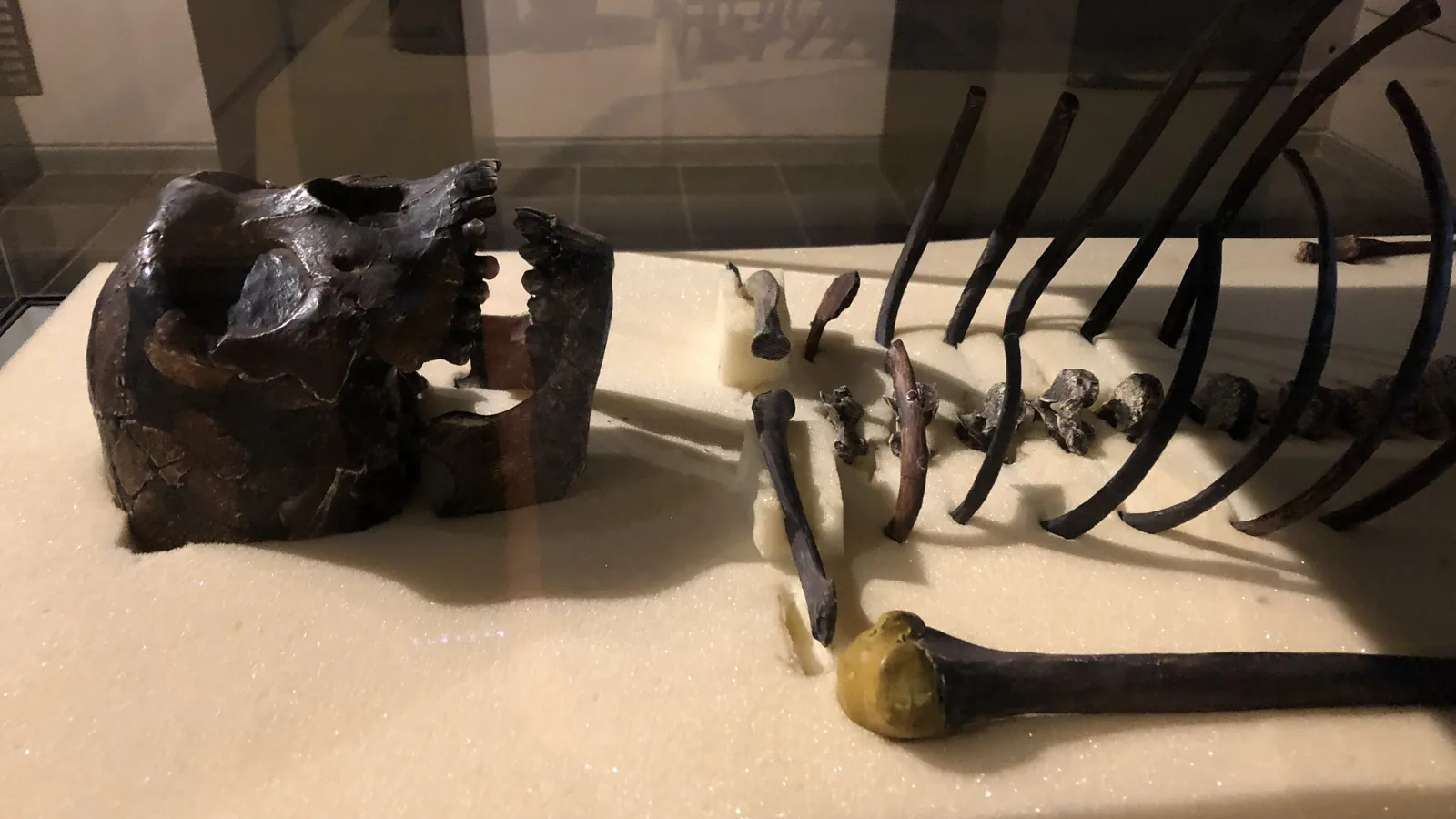
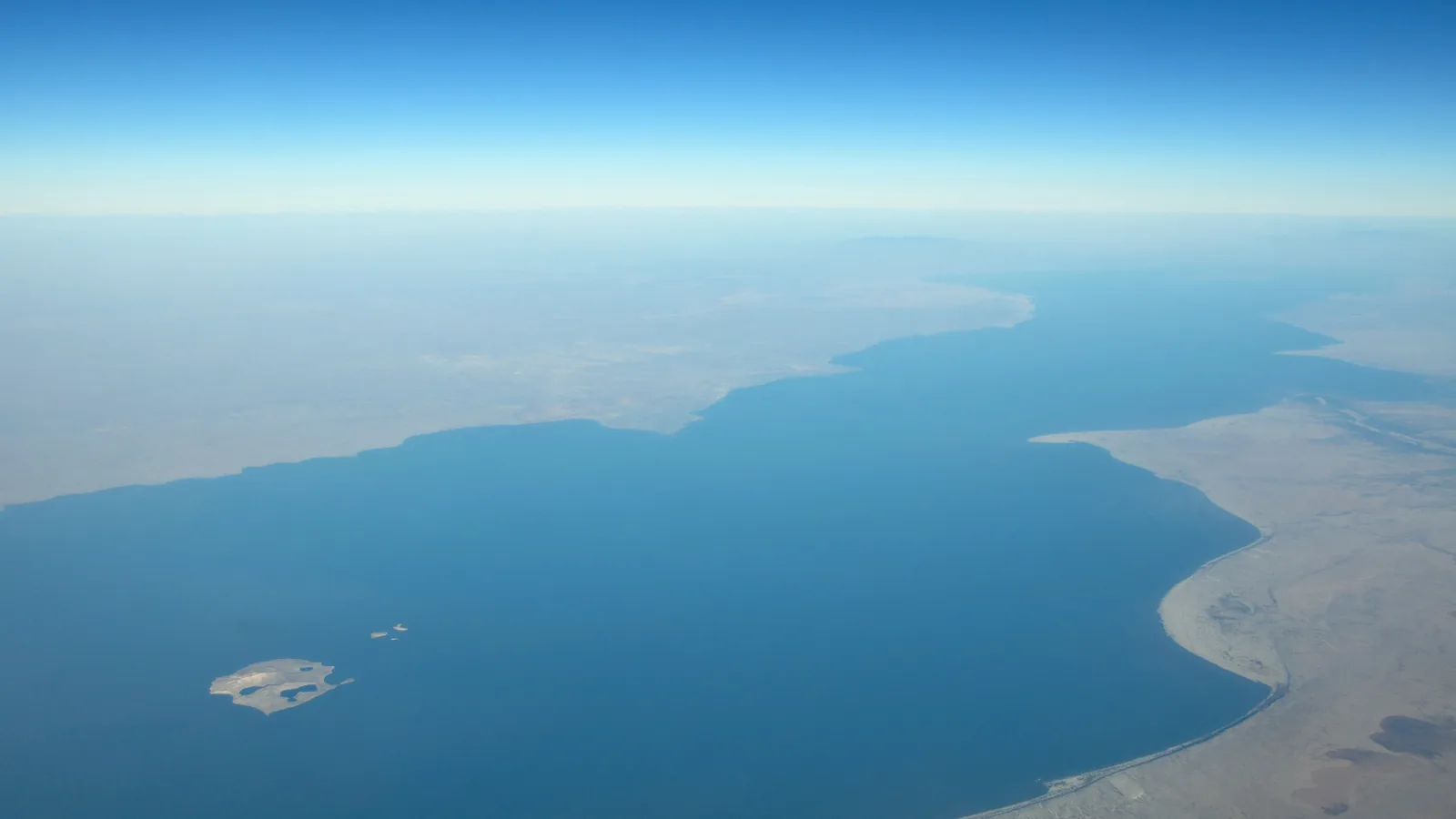
The 1985 report in Nature put the fossil in one sentence: a male Homo erectus that “died at 12 ± 1 years of age, as judged by human standards, but was already 1.68 m tall.” The skeleton, cataloged as KNM-WT 15000 and called the Turkana Boy, was spotted in 1984 by Kamoya Kimeu, the Kenyan fossil hunter who ran Richard Leakey’s field operations, beside the dry Nariokotome River on the west shore of Lake Turkana in northern Kenya. Frank Brown, John Harris, Leakey and Alan Walker published it on August 29, 1985, as “the most complete early hominid skeleton ever found.” Since then his age, height, species name and spine have each been measured again and argued over. The fossil is held by the National Museums of Kenya in Nairobi.
Quick facts
- When
- Found in 1984; described in Nature on August 29, 1985; dated 1.60 ± 0.05 million years by ash correlation (Brown and Feibel, 1985) and 1.64 ± 0.03 million years by K-Ar on Okote Tuff pumice (McDougall and colleagues, 1985)
- Where
- Nariokotome III, a dry riverbed on the west shore of Lake Turkana, northern Kenya; the fossil is held by the National Museums of Kenya in Nairobi
- Who
- Kamoya Kimeu, who found the first fragment; Richard Leakey and Alan Walker, who led the work; Frank Brown, John Harris, Leakey and Walker, who wrote the 1985 description
- Outcome
- A male Homo erectus skeleton, described in 1985 as the most complete early hominid skeleton ever found, whose age at death, height, species name, spinal canal and pathology have been argued over since
A dark bit of bone beside a dry river
Kimeu was walking a slope of black rocks beside the dry riverbed, where Leakey and Alan Walker were running a field season, when he noticed a dark bit of bone, according to Carol Broderick’s 2018 account for the Leakey Foundation. Walker, of the Johns Hopkins University School of Medicine, wrote of the find: “How he found it, I’ll never know.” Kimeu radioed Leakey that it might be part of a Homo erectus skull, and Leakey confirmed it.
How much of the boy came out of the ground depends on who is counting. The Smithsonian’s Human Origins Program states that the skeleton is 40 percent complete, counting a bone from one side of the body for its missing partner. The Turkana Basin Institute says excavation “revealed all but the feet.”

Two volcanic ashes fix the date
The date comes from volcanic ash. Ian McDougall and three colleagues at the Australian National University reported in the same Nature issue that potassium-argon measurements on pumice from the Okote Tuff Complex at Koobi Fora, across the lake, gave 1.64 ± 0.03 million years. Brown and C. S. Feibel of the University of Utah then matched ash layers across the basin by composition. “This allows us to estimate an age of 1.60 ± 0.05 Myr for the Homo erectus skeleton recovered at Nariokotome in 1984,” they wrote. The Smithsonian rounds this to “about 1.6 million years ago”; the Turkana Basin Institute’s page says 1.5 million.
The species name has been less stable. The 1985 paper and the Smithsonian call the fossil Homo erectus. The Turkana Basin Institute’s page says that “among some paleontologists, the scientific term for Turkana boy is Homo ergaster”; Broderick’s article says some classified it so, “but today it is considered to be an example of Homo erectus.”
Twelve, eleven, nine or eight years old
Age at death is the number that has moved most. The 1985 abstract gave 12 ± 1 years. The Leakey Foundation article calls him “a young male between 9 and 11 years old.” The Turkana Basin Institute reads his lower jaw, with no third molars, as matching an 11-year-old, then adds that on growth curves between human and ape norms “we now think he was around 9.” The Smithsonian, from the microscopic growth of his teeth, gives “eight or nine years old.”
Height varies less. The Nature abstract said 1.68 meters. The Smithsonian gives 1.6 meters (5 feet 3 inches) and 48 kilograms (106 pounds), and says he “might have grown only a little bit taller.” The Turkana Basin Institute reads his thigh bone as about 5 feet 3 inches and his bone breadth as about 103 pounds. Both describe long legs and narrow shoulders.
Narrow spinal canal, and the argument over speech
A. M. MacLarnon and G. P. Hewitt of the Roehampton Institute London reported in the American Journal of Physical Anthropology in 1999 (PMID 10407464) that modern humans and Neanderthals had a wider thoracic vertebral canal than australopithecines and Homo ergaster, “who had canals of the same relative size as extant nonhuman primates.” They read the extra nerve supply as breath control for speech, which “evolved sometime between 1.6 Mya and 100,000 ya.” The Turkana Basin Institute’s page says the same of the boy: his narrower spinal cord “could not have handled control of his lung capacity to his mouth to form speech.”
Marc Meyer of Chaffey College and Martin Haeusler of the University of Zurich answered in the Journal of Human Evolution in 2015 (PMID 26553817). Measured against the Homo erectus vertebrae from Dmanisi in Georgia, most of KNM-WT 15000’s vertebrae fell within the human range, with three constricted, “suggesting spinal stenosis.” They “contest the notion that vertebrae yield information about respiratory control or language evolution.” The two papers agree on the narrow bones and disagree on what bones can tell.
Diseased spine, or a normal youth with an injury
In 2001 Latimer and Ohman reported severe congenital pathology in the skeleton, as R. Schiess and Haeusler summarized it in 2013 (PMID 23283736): flattened, undersized vertebrae, spina bifida, spinal stenosis and scoliosis, read together as a rare skeletal dysplasia. Schiess and Haeusler’s remeasurement found the vertebrae shaped like those of normal modern adolescents, with no flattening and no spina bifida. In 2014, with T. Boeni and F. Rühli, they placed the skeleton among non-scoliotic modern humans (PMID 24491377), allowing only a short curve at the top of the chest and lower-back asymmetries “that probably resulted from juvenile traumatic disc herniation.”
Cause of death is stated two ways. The Turkana Basin Institute’s page says root fragments from a broken milk tooth caused an infection under an erupting premolar, “and septicemia, blood poisoning, leading to an early demise.” The Smithsonian says his diseased vertebrae may have contributed to his death and that “his cause of death at such a young age is unknown.”
The bones are in Nairobi, at the National Museums of Kenya, which presented the fossil at a “Night Out with the Turkana Boy” at the Nairobi National Museum in June 2026. One count has been revised. Earlier accounts, resting mainly on this skeleton, gave early hominins six lumbar vertebrae, one more than modern humans. In 2011 Haeusler, Schiess and Boeni reported new vertebral and rib fragments (PMID 21868059) that “indicate the presence of only five lumbar and twelve thoracic segments, as is characteristic of modern humans.” The Turkana Basin Institute’s page still prints six.
Key facts
- KNM-WT 15000 was found in 1984 by Kamoya Kimeu at Nariokotome III, a dry riverbed on the west shore of Lake Turkana, Kenya, during fieldwork led by Richard Leakey and Alan Walker.
- Frank Brown, John Harris, Leakey and Walker described it in Nature on August 29, 1985, as a male Homo erectus that died at 12 ± 1 years and was already 1.68 meters tall.
- Brown and Feibel dated the skeleton to 1.60 ± 0.05 million years by ash correlation; McDougall and colleagues dated Okote Tuff pumice at Koobi Fora to 1.64 ± 0.03 million years by potassium-argon.
- The Smithsonian calls the skeleton 40 percent complete; the Turkana Basin Institute says the excavation revealed all but the feet.
- Age at death is given as 12 ± 1 (Nature, 1985), 9 to 11 (Leakey Foundation), 11 or about 9 (Turkana Basin Institute) and eight or nine (Smithsonian).
- The 1985 paper and the Smithsonian use Homo erectus; the Turkana Basin Institute and Leakey Foundation pages say some paleontologists use Homo ergaster.
- MacLarnon and Hewitt (1999) read the narrow thoracic canal as a limit on breath control for speech; Meyer and Haeusler (2015) contest that vertebrae can inform on speech at all.
- Haeusler, Schiess and Boeni (2011) corrected the lumbar count from six to five; Schiess and Haeusler (2013, 2014) found no skeletal dysplasia and no idiopathic scoliosis.
FAQ
How old was the Turkana Boy when he died?
The 1985 Nature paper said 12 ± 1 years by human standards. Later estimates are lower: 9 to 11 (Leakey Foundation), 11 by tooth eruption or about 9 by recalculated growth curves (Turkana Basin Institute), and eight or nine from tooth microstructure (Smithsonian).
Is the Turkana Boy Homo erectus or Homo ergaster?
The original description and the Smithsonian call him Homo erectus. The Turkana Basin Institute and the Leakey Foundation both say some paleontologists have used Homo ergaster, and the Leakey Foundation adds that he is now considered an example of Homo erectus.
Where is the Turkana Boy fossil kept?
At the National Museums of Kenya in Nairobi, which presented the fossil at the Nairobi National Museum in June 2026. Richard Leakey signed the 1985 description from that museum.
Sources
- Smithsonian National Museum of Natural History, Human Origins Program — "KNM-WT 15000," fossil record page.
- Frank Brown, John Harris, Richard Leakey and Alan Walker — "Early Homo erectus skeleton from west Lake Turkana, Kenya," Nature 316, 788–792 (August 29, 1985), abstract.
- F. H. Brown and C. S. Feibel — "Stratigraphical notes on the Okote Tuff Complex at Koobi Fora, Kenya," Nature 316, 794–797 (August 29, 1985), abstract.
- Ian McDougall, T. Davies, R. Maier and R. Rudowski — "Age of the Okote Tuff Complex at Koobi Fora, Kenya," Nature 316, 792–794 (August 29, 1985), abstract.
- The Leakey Foundation — Carol Broderick, "Fossil Finders: Kamoya Kimeu" (April 13, 2018).
- Turkana Basin Institute — "All About Turkana Boy."
- National Museums of Kenya — "Night Out with the Turkana Boy (Homo erectus)," event notice, Nairobi National Museum (June 17, 2026).
- A. M. MacLarnon and G. P. Hewitt — "The evolution of human speech: the role of enhanced breathing control," American Journal of Physical Anthropology 109, 341–363 (1999), abstract, PubMed PMID 10407464.
- Marc R. Meyer and Martin Haeusler — "Spinal cord evolution in early Homo," Journal of Human Evolution 88, 43–53 (2015), abstract, PubMed PMID 26553817.
- R. Schiess and Martin Haeusler — "No skeletal dysplasia in the Nariokotome boy KNM-WT 15000 (Homo erectus)—a reassessment of congenital pathologies of the vertebral column," American Journal of Physical Anthropology 150, 365–374 (2013), abstract, PubMed PMID 23283736.
- R. Schiess, T. Boeni, F. Rühli and Martin Haeusler — "Revisiting scoliosis in the KNM-WT 15000 Homo erectus skeleton," Journal of Human Evolution 67, 48–59 (2014), abstract, PubMed PMID 24491377.
- Martin Haeusler, R. Schiess and T. Boeni — "New vertebral and rib material point to modern bauplan of the Nariokotome Homo erectus skeleton," Journal of Human Evolution 61, 575–582 (2011), abstract, PubMed PMID 21868059.
Cite this article
- APA
- Our Earth's History. (2026, September 22). KNM-WT 15000: the Nariokotome boy, 1.6 million years old, found 1984. Our Earth's History. https://ourearthshistory.com/africa/prehistory/turkana-boy-knm-wt-15000-nariokotome-1984/
- Chicago
- Our Earth's History. “KNM-WT 15000: the Nariokotome boy, 1.6 million years old, found 1984.” Our Earth's History, September 22, 2026. https://ourearthshistory.com/africa/prehistory/turkana-boy-knm-wt-15000-nariokotome-1984/.
- MLA
- “KNM-WT 15000: the Nariokotome boy, 1.6 million years old, found 1984.” Our Earth's History, 22 Sep. 2026, https://ourearthshistory.com/africa/prehistory/turkana-boy-knm-wt-15000-nariokotome-1984/.
Text licensed CC BY-NC-ND 4.0. Found an error? Tell us.