December 2, 1929: the first Peking Man skull and the casts that remain
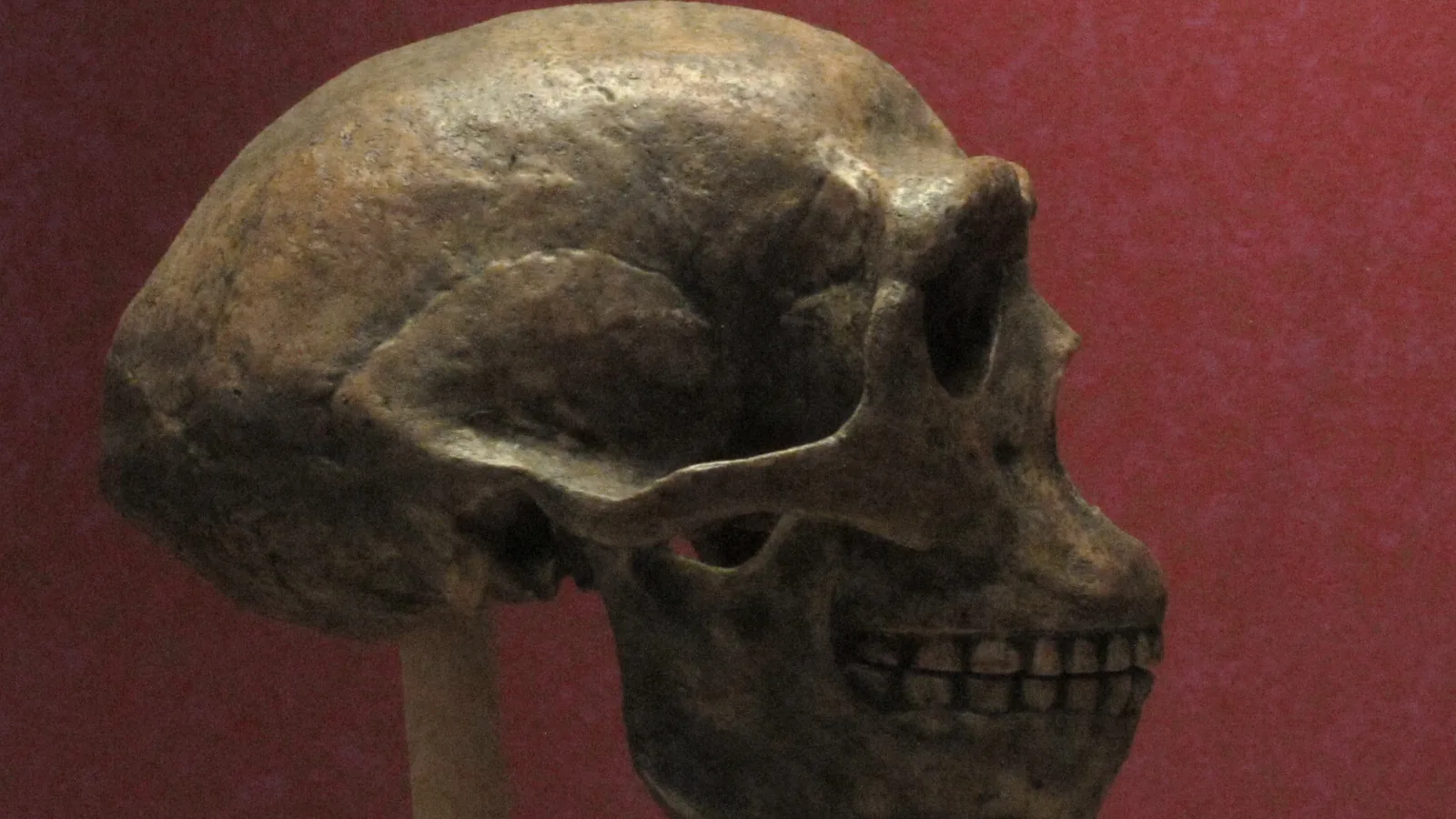

TL;DR — Pei Wenchung found the first Peking Man skull at Zhoukoudian, near Beijing, on December 2, 1929; the original fossils were lost in 1941, and casts and published descriptions remain.
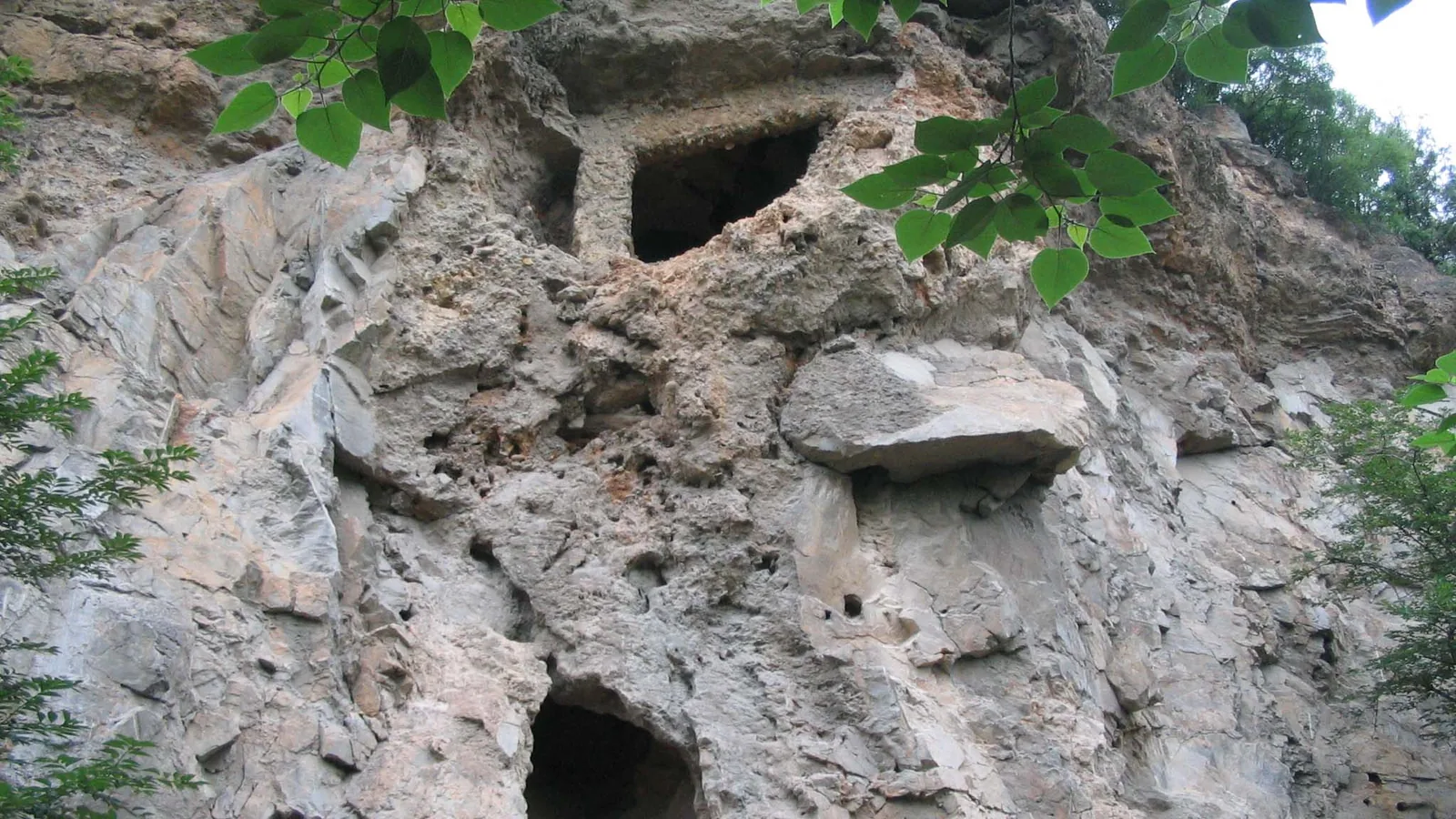
The Institute of Vertebrate Paleontology and Paleoanthropology in Beijing, which grew out of the laboratory that ran the dig, records the find in one sentence: “On December 2, 1929, Pei Wenchung discovered the first skull of Peking Man at Zhoukoudian, establishing Homo erectus as a defined stage of human evolution.” The same page counts what followed: “By 1937, the site had yielded remains of about 40 individual specimens, including five complete skulls, along with abundant animal fossils.” Zhoukoudian is a cave site in the southwestern suburb of Beijing. The fossils, first named Sinanthropus pekinensis, were lost in 1941 while being shipped to the United States and have not been found; casts and the descriptions printed in the 1930s and 1940s survive. In 2009 a burial-dating study put the lower layers of the cave at 0.77 ± 0.08 million years.
Quick facts
- When
- First skull found December 2, 1929; about 40 individuals and five complete skulls by 1937; original fossils lost in 1941; sixth skull found 1966; lower layers dated 0.77 ± 0.08 million years in 2009
- Where
- Zhoukoudian Locality 1, a cave site in the southwestern suburb of Beijing, China; the hill is called Longgushan, "dragon-bone hill"
- Who
- Pei Wenchung, who found the first skull; Davidson Black, who reported it in 1930; Franz Weidenreich, who described the 1936 skulls and the limb bones; Guanjun Shen and colleagues, who dated the site in 2009
- Outcome
- Homo erectus in northern China known from casts and published descriptions after the originals vanished in 1941; fire use argued both ways (Weiner 1998, Zhong 2014)
Dragon bones before the dig
“Before scientific excavation began in the 1920s, people dug up fossilized bones from ancient cave deposits near the village of Zhoukoudian in eastern China,” the American Museum of Natural History says on the page for its Peking Man display, and the diggers “thought they had discovered dragon bones.” The hill still carries the name: Nature’s editor’s summary of the 2009 dating paper calls the locality Longgushan, “dragon-bone hill.”
The dig got an institution on April 19, 1929, when the Geological Survey of the Ministry of Agriculture and Commerce set up its Cenozoic Research Laboratory in Beijing, “primarily tasked with excavating and studying fossils from the Zhoukoudian Peking Man site,” in the institute’s words. Seven and a half months later Pei found the skull. Davidson Black’s interim report on it “was presented at a session of the annual meeting of the Geological Society of China held on Mar. 29 last,” Nature reported in 1930, and was printed in the society’s Bulletin with six plates of photographs of the skull.
Five skulls by 1937, measured in cubic centimeters
Franz Weidenreich, visiting professor of anatomy at Peiping Union Medical College and honorary director of the Cenozoic Research Laboratory, reported the 1936 season in Nature on February 13, 1937. Spring had produced “several fragments of a very small adult skull” from Locus I of Locality 1. In the fall the team had “the good fortune . . . to unearth three additional more or less well-preserved skulls, two of which were recovered on one day.” All three were adults. Skull I of Locus L was the largest, “with a cranial capacity of approximately 1,200 c.c.”; Skull II was the smallest, “not higher than 1,050 c.c.”; Skull III came to “approximately 1,100 c.c.” Parts of the face survived on all three, and Skull II kept ten teeth in place in the upper jaw.
News traveled by rail. A short item in Nature in January 1937 passed on word, received “via the trans-Siberian mail,” that “the fifth skull of Peking man, lately discovered, is the most complete specimen ever found at Choukoutien, near Peking.” Choukoutien and Chou Kou Tien were the spellings then in use for Zhoukoudian. When the war with Japan broke out, the institute’s history says, excavations were halted, while Pei and Teilhard de Chardin continued their research in Beijing.
Broken limb bones: cannibal feasts or hyenas
Weidenreich’s 1941 monograph on the limb bones, The Extremity Bones of Sinanthropus Pekinensis, published by the Geological Survey of China in Paleontologia Sinica, reversed his earlier reading of the breakage. An unsigned review in Nature that October recorded that he had decided the breaking of certain limb bones in the caves “has been due to the activities of the hyaena rather than, as he formerly postulated, to a series of cannibal feasts on the part of Peking man.” He kept one assumption, the reviewer added, “that Carnivores and man competed in the breaking of bones both human and animal.” The reviewer asked whether carnivores might account for the broken skulls too.
The same review passed on Weidenreich’s finding that the femur “is identical with the human femur in size, form, proportions, and character of the muscular markings,” that the humerus matched modern man, and that Sinanthropus “walked as upright as the best of us.”
Lost in 1941, known from casts
The Smithsonian states the loss in one line: “The original fossils vanished while being shipped to the United States for safety during World War II, but scientists still have high-quality casts and descriptions to work with.” They have not been found. What visitors see is a composite; the Smithsonian’s skull “combines several skulls from the same site, first named Sinanthropus pekingensis but later attributed to Homo erectus.” The American Museum of Natural History describes the bones as “a record of up to 40 members” of a species that lived in China “for at least several hundred thousand years.” The species is now described from the casts and from the measurements printed before 1941.
Fire in the layers, then a date of 770,000 years
Whether Peking Man kept fires in the cave has been tested twice, with opposite results. S. Weiner of the Weizmann Institute of Science and four co-authors, two of them at the Beijing institute, reexamined Layer 10, the site’s earliest archaeological horizon, in Science in 1998. Burned and unburned bones lay “in the same layer with stone tools,” they wrote. “However, no ash or charcoal remnants could be detected. Hence, although indirect evidence for burning is present, there is no direct evidence for in situ burning.” In 2014 Maohua Zhong and seven co-authors, among them Xing Gao and John W. Olsen, analyzed four soil samples from Layers 4 and 6 in the Chinese Science Bulletin. “All four specimens contain siliceous aggregates as well as elemental carbon,” their abstract says, with potassium in the insoluble residues between 1.21 percent and 2.94 percent, which they read as “strong evidence of the in situ use of fire by Homo erectus pekinensis.” The two teams sampled different layers and used different tests.
The age came last. Guanjun Shen and three co-authors, X. Gao, B. Gao and D. E. Granger, applied cosmogenic aluminum-26 and beryllium-10 burial dating to quartz sediments and artifacts from the lower strata of Locality 1, and reported in Nature in 2009: “The weighted mean of six meaningful age measurements, 0.77 ± 0.08 million years (Myr, mean ± s.e.m.), provides the best age estimate for lower cultural layers 7–10.” Those layers, they added, may correlate to marine isotope stages 17 to 19, “in the range of ∼0.68 to 0.78 Myr ago.” Nature’s news report by Rex Dalton put it as “more than 700,000 years old”; the Smithsonian’s fossil page gives the site’s fossils as “Between 780,000 and 400,000 years old.” The digging did not end in 1937. The Beijing institute’s history adds one more line to the count: “In 1966, the sixth Peking Man skull was discovered at Zhoukoudian.”

Key facts
- Pei Wenchung found the first Peking Man skull at Zhoukoudian on December 2, 1929, according to the Institute of Vertebrate Paleontology and Paleoanthropology, Chinese Academy of Sciences.
- The Cenozoic Research Laboratory of the Geological Survey, set up in Beijing on April 19, 1929, was tasked with excavating and studying the Zhoukoudian fossils.
- Davidson Black’s interim report on the skull was presented to the Geological Society of China on March 29, 1930, and published in its Bulletin with six plates.
- By 1937 the site had yielded about 40 individuals, including five complete skulls (IVPP); the American Museum of Natural History gives “up to 40 members.”
- Franz Weidenreich’s 1937 report gave cranial capacities of approximately 1,200 c.c. (Skull I), not higher than 1,050 c.c. (Skull II) and approximately 1,100 c.c. (Skull III) for the fall 1936 skulls.
- Weidenreich’s 1941 monograph attributed the broken limb bones to hyenas rather than to cannibal feasts, as an unsigned Nature review recorded.
- The original fossils vanished in 1941 while being shipped to the United States and have not been found; casts and descriptions survive (Smithsonian).
- Weiner and colleagues (1998) found no ash or charcoal in Layer 10; Zhong and colleagues (2014) reported siliceous aggregates and elemental carbon in Layers 4 and 6.
FAQ
How old are the Peking Man fossils?
Shen and colleagues dated the lower cultural layers 7 to 10 of Locality 1 to 0.77 ± 0.08 million years by aluminum-26 and beryllium-10 burial dating in 2009. The Smithsonian's fossil page gives a range of 780,000 to 400,000 years for the site's fossils.
What happened to the original Peking Man fossils?
They vanished in 1941 while being shipped to the United States for safety during World War II, as the Smithsonian's Human Origins Program states, and have not been found. Casts and the published descriptions from the 1930s and 1940s survive.
Did Peking Man use fire?
Two studies of the cave sediments disagree. Weiner and colleagues (Science, 1998) found burned bones with stone tools in Layer 10 but no ash or charcoal, and so no direct evidence of burning in place. Zhong and colleagues (Chinese Science Bulletin, 2014) found siliceous aggregates and elemental carbon in Layers 4 and 6 and called that strong evidence of fire used in place.
Sources
- Institute of Vertebrate Paleontology and Paleoanthropology, Chinese Academy of Sciences — "History."
- Nature — "The Skull of Peking Man," news item on Davidson Black's interim report, Nature 126, 187 (1930).
- Franz Weidenreich — "The New Discovery of Three Skulls of Sinanthropus pekinensis," Nature 139, 269 (February 13, 1937), abstract.
- Nature — "The Fifth Skull of Peking Man," Nature 139, 109 (1937), abstract.
- Nature — "Conditions of the Peking Man Bones," review of Franz Weidenreich, The Extremity Bones of Sinanthropus Pekinensis (Paleontologia Sinica, New Series D, No. 5), Nature 148, 499 (1941).
- Guanjun Shen, X. Gao, B. Gao and D. E. Granger — "Age of Zhoukoudian Homo erectus determined with 26Al/10Be burial dating," Nature 458, 198–200 (2009), abstract and editor's summary.
- Rex Dalton — "Peking Man older than thought," Nature news (March 11, 2009).
- S. Weiner, Q. Xu, P. Goldberg, J. Liu and O. Bar-Yosef — "Evidence for the use of fire at Zhoukoudian, China," Science 281, 251–253 (July 10, 1998), abstract, PubMed PMID 9657718.
- Maohua Zhong, Congling Shi, Xing Gao, Xinzhi Wu, Fuyou Chen, Shuangquan Zhang, Xingkai Zhang and John W. Olsen — "On the possible use of fire by Homo erectus at Zhoukoudian, China," Chinese Science Bulletin 59, 335–343 (2014), abstract.
- Smithsonian National Museum of Natural History, Human Origins Program — "Zhoukoudian," fossil record page.
- American Museum of Natural History — "Peking Man," Anne and Bernard Spitzer Hall of Human Origins.
Cite this article
- APA
- Our Earth's History. (2026, September 22). December 2, 1929: the first Peking Man skull and the casts that remain. Our Earth's History. https://ourearthshistory.com/east-asia/prehistory/peking-man-zhoukoudian-1929-skullcap-lost-fossils/
- Chicago
- Our Earth's History. “December 2, 1929: the first Peking Man skull and the casts that remain.” Our Earth's History, September 22, 2026. https://ourearthshistory.com/east-asia/prehistory/peking-man-zhoukoudian-1929-skullcap-lost-fossils/.
- MLA
- “December 2, 1929: the first Peking Man skull and the casts that remain.” Our Earth's History, 22 Sep. 2026, https://ourearthshistory.com/east-asia/prehistory/peking-man-zhoukoudian-1929-skullcap-lost-fossils/.
Text licensed CC BY-NC-ND 4.0. Found an error? Tell us.