Why did Japan's Jōmon foragers make pots and villages without farming?

TL;DR — Jōmon foragers in Japan fired plain pots about 13,000 BC and cooked fish in them; by 3900 BC they lived in villages fed by chestnuts and fishing, not farms.
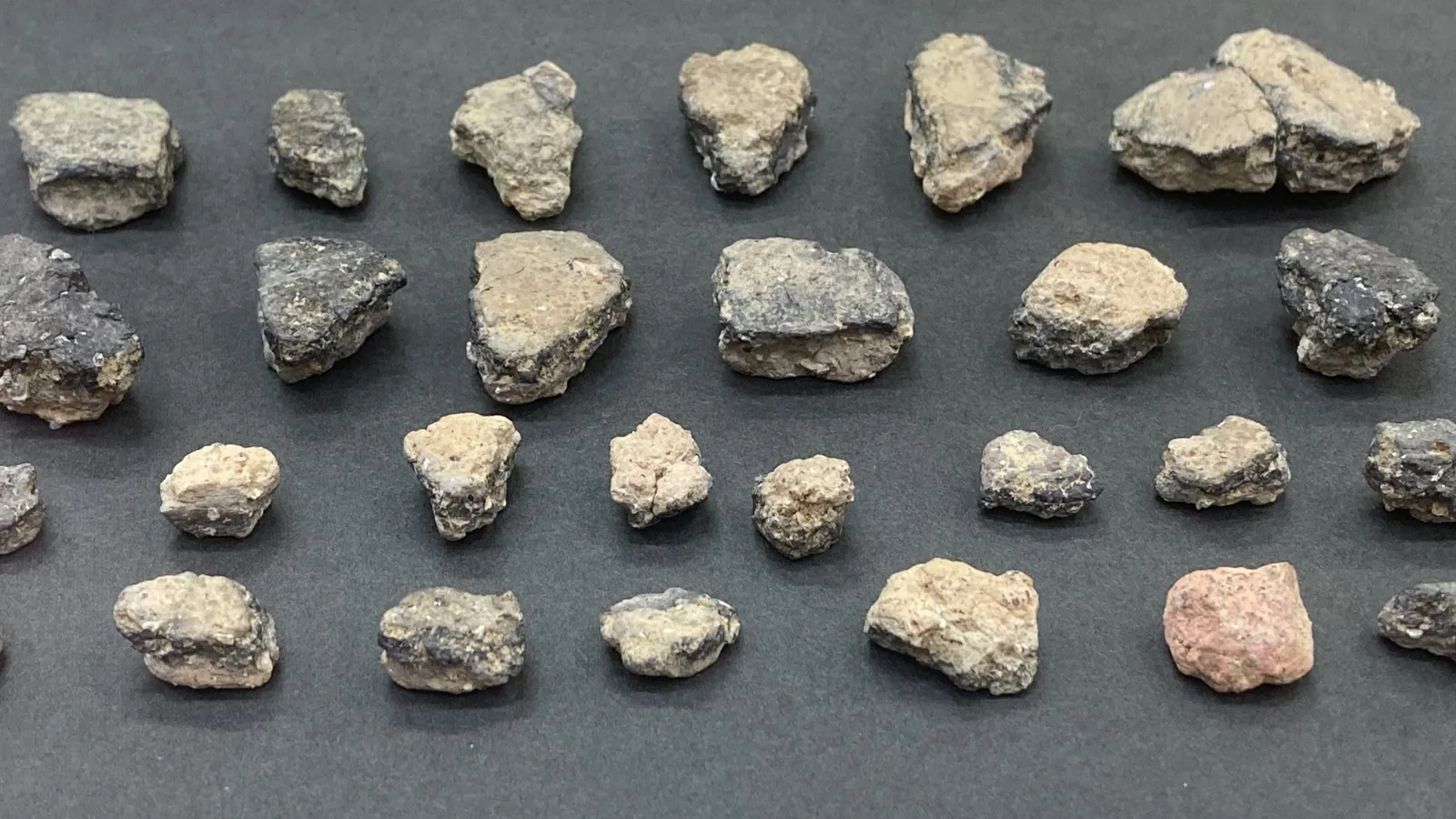
Foragers in northern Japan made clay pots about 13,000 BC and, thousands of years later, built villages fed by chestnuts and fish, with no farming. The oldest sherds come from the Odai Yamamoto site in Aomori Prefecture, which the official World Heritage website for the Jōmon sites dates by radiocarbon to about 13,000 BC and calls the earliest known pottery in Northeast Asia. Chemical tests on burnt crusts from pots of that age, reported in Nature in 2013, found fats from freshwater and marine animals. At Sannai-Maruyama, occupied from about 3900 to 2200 BC, the same tradition produced pit houses, a building on chestnut posts a meter thick, more than 2,000 clay figurines and about 900 child burials in jars. The Jōmon period ran about 10,000 years until rice farming began with the Yayoi, about 400 BC. The sources say what the pots cooked and what the villages ate; why people first fired clay stays open.
Quick facts
- When
- Plain potsherds at Odai Yamamoto radiocarbon-dated to about 13,000 BC (official Jōmon World Heritage website); Incipient Jōmon pottery 15,000 to 11,800 calibrated years before the present (Craig et al., 2013); Sannai-Maruyama occupied about 3900 to 2200 BC; Jōmon period ended with the Yayoi about 400 BC; UNESCO inscription July 27, 2021
- Where
- Odai Yamamoto site, Sotogahama Town, Tsugaru Peninsula, and Sannai-Maruyama, Aomori City, both in Aomori Prefecture at the northern tip of Honshu, Japan
- Who
- Jōmon hunter-fisher-gatherers; Oliver Craig of the University of York and colleagues (residue study, Nature, 2013); the Sannai Maruyama Jomon Culture Center, Aomori Prefecture (excavation and reconstruction)
- Outcome
- The oldest known pottery in Northeast Asia, by the official site's wording, held fats from freshwater and marine animals; the villages that followed ran on chestnuts, nuts and fishing for about 10,000 years without adopting farming
A plain sherd on the Kanita River
The Odai Yamamoto site sits on a river terrace 26 meters up along the Kanita River in Sotogahama, a town on the Tsugaru Peninsula in Aomori Prefecture, where the river runs into Mutsu Bay. Salmon and trout run upstream in season. Potsherds and stone arrowheads came out with stone tools of late Paleolithic type, and radiocarbon dating of carbonized material on the sherds put them at about 13,000 BC, according to the site’s page on the official World Heritage website run by Aomori, Iwate, Akita and Hokkaido. The same website’s map page lists the site as “approx. 15,000 years ago,” and UNESCO’s inscription text says the Jōmon began a settled life “about 15,000 years ago, as indicated tentatively at first by the use of pottery.”
The earliest sherds are plain: no cord marks, no strips of clay, no decoration at all. The period takes its name from cord-marked pottery, jōmon in Japanese, and the first pots had none. Nor did the site have houses. No post holes or pits were found, and the official page reads this as a camp of portable tents. Heavy, breakable pots, the page adds, are a sign that people had begun to stay in one place.
What the first pots cooked
What went into them was tested in 2013. The abstract of a study in Nature by Oliver Craig of the University of York and colleagues reports that pottery first appeared in East Asia between 20,000 and 12,000 calibrated years before the present, as a hunter-gatherer invention, and that the reasons for it were poorly understood. The team scraped charred deposits from Jōmon sherds dated about 15,000 to 11,800 calibrated years before the present, the Incipient Jōmon, and recovered lipids, the fats that survive cooking. In most cases, the abstract states, these compounds came from processing freshwater and marine organisms. Isotope readings on the 101 deposits, from across Japan’s main islands, pointed to food from high in the aquatic food chain.
The abstract offers its own reading: late glacial foragers heavily used productive shorelines and river mouths, and that may have given the first push toward clay containers. The authors present that as a suggestion; the Odai Yamamoto site itself stands on a river, though the study’s samples do not include it. The official Jōmon website adds the practical side: boiling softened tough foods and took the bitterness out of plants, and the making of pottery stabilized the diet.
Sannai-Maruyama: a village of 1,700 years
Among the 17 inscribed sites, the one the official website calls a large hub settlement is Sannai-Maruyama, in Aomori City, on a coastal terrace about 20 meters up along the Okidate River, between an inland bay and broadleaf forest. Japan designated it a Special Historic Site on November 24, 2000, with a date range of about 3900 to 2200 BC, so the village stood for some 1,700 years. The official page lists pit dwellings in a planned layout, buildings on posts, pit graves in rows, artificial mounds, storage pits and roads. Chestnuts and walnuts came out of the ground with the bones of fish and animals, and with jade, obsidian and asphalt carried in from far away.
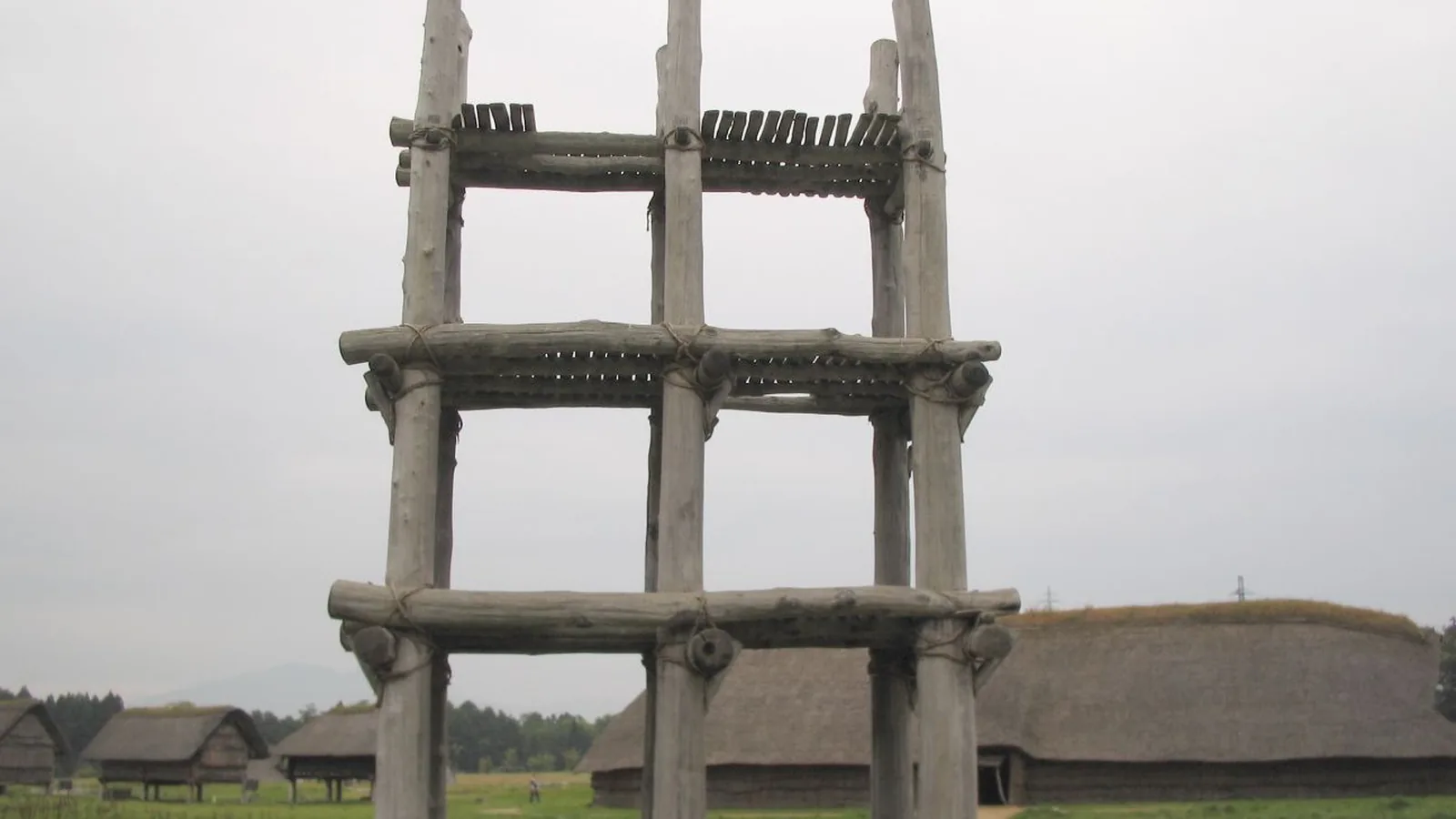
The Sannai Maruyama Jomon Culture Center, run by Aomori Prefecture, rebuilt one building at full height on six posts. It describes two rows of three post holes, each about 2 meters across and 2 meters deep, set about 4.2 meters apart, with chestnut columns about a meter across still in them. The center dates the columns to the end of the middle Jōmon, about 4,600 years before the present, and rebuilt the building as a three-story frame with 4.2-meter floors and no roof, because several theories of its shape compete. Chestnuts, the official page on the period records, need no soaking and store well, and chestnut wood went into posts, containers, digging sticks and fuel. Roads 7 to 12 meters wide ran about 420 meters east and 370 meters south from the settlement.

Figurines, mounds and graves
More than 2,000 clay figurines, called dogū, came out of the site’s mounds, the largest number recorded at any site in Japan, according to the official page, which reads them as proof of rituals held over a long time. Most are flat, like a plate, and shaped like a cross. The mounds are heaps of soil, charcoal, stone tools and broken pots piled up over generations; the North Mound is shown as excavated, carpeted with sherds from about 5,000 years before the present.
The dead were sorted by age. Adults went into pit graves lined up on both sides of a road, facing each other, some with stone tools and jade pendants; on the slope to the south, stone circles about 4 meters across held more adult burials. Children were placed in pots. About 900 such jar burials have been found, in vessels with a hole in the bottom or a broken rim to set them apart from cooking pots. In one, the excavators found a fist-sized stone.
What the record leaves open
The sherds at Odai Yamamoto show that pots came before houses, and Craig’s team showed what pots of that age held. The villages came later and ran on a forest and a bay. The official page states that Jōmon people kept dogs and cultivated some plants, and lists seeds of cultivated plants among the finds at Sannai-Maruyama, but names gathering, fishing and hunting as the main sources of food. Rice arrived with the Yayoi period, about 2,400 years before the present in the website’s figure, or 400 BC in UNESCO’s.
Two things the sources read here do not settle. The official website calls Odai Yamamoto the earliest known pottery in Northeast Asia, and the word “Northeast” is its own qualifier; the Nature abstract’s window of 20,000 years before the present for East Asia as a whole points to older claims elsewhere, not examined here. And no source read for this article says why a band of foragers on the Kanita River first pressed clay into a pot. The evidence says what they cooked in it.
Key facts
- Odai Yamamoto, Sotogahama Town, Aomori Prefecture: plain potsherds radiocarbon-dated to about 13,000 BC, the earliest known pottery in Northeast Asia by the official website’s wording; designated a Historic Site on March 27, 2013.
- The same website’s map page gives the site as about 15,000 years before the present; no houses, post holes or pits were found there.
- Craig et al., Nature, 2013 (abstract): pottery appeared in East Asia 20,000 to 12,000 calibrated years before the present; 101 charred deposits on Incipient Jōmon sherds (15,000 to 11,800 calibrated years before the present) mostly came from freshwater and marine organisms.
- The Jōmon period began about 13,000 BC and ran about 10,000 years until the Yayoi period; UNESCO gives its span as about 13,000 BC to 400 BC.
- Sannai-Maruyama, Aomori City: Special Historic Site since November 24, 2000, dated about 3900 to 2200 BC; six chestnut columns about 1 meter across in post holes 4.2 meters apart, dated about 4,600 years before the present.
- More than 2,000 clay figurines from the mounds, the most at any site in Japan; about 900 child burials in pots; roads 7 to 12 meters wide.
- UNESCO inscribed the Jomon Prehistoric Sites in Northern Japan on July 27, 2021: 17 sites, criteria (iii) and (v), 141.9 hectares.
FAQ
How old is Jōmon pottery?
The official World Heritage website dates the plain sherds from Odai Yamamoto, in Aomori Prefecture, by radiocarbon to about 13,000 BC, and elsewhere gives the site as about 15,000 years before the present. The abstract of a 2013 study in Nature by Oliver Craig and colleagues dates Incipient Jōmon pottery to 15,000 to 11,800 calibrated years before the present.
Did the Jōmon people farm?
Not as their main way of living. The official website records that they kept dogs and cultivated some plants, but names gathering, fishing and hunting as the main sources of food. UNESCO describes them as a sedentary hunter-fisher-gatherer society that kept that way of life for more than 10,000 years. Full-scale rice farming began with the Yayoi period, about 400 BC.
What is Sannai-Maruyama?
A Jōmon settlement in Aomori City, occupied from about 3900 to 2200 BC, with pit dwellings, storage pits, roads, rows of graves, mounds that yielded more than 2,000 clay figurines and a large building on six chestnut posts. Japan designated it a Special Historic Site in 2000, and it is one of the 17 sites UNESCO inscribed in 2021.
Sources
- UNESCO World Heritage Centre — "Jomon Prehistoric Sites in Northern Japan."
- World Heritage Jomon Prehistoric Sites in Northern Japan, official website (Aomori, Iwate, Akita and Hokkaido) — home page.
- World Heritage Jomon Prehistoric Sites in Northern Japan, official website — "Odai Yamamoto Site."
- World Heritage Jomon Prehistoric Sites in Northern Japan, official website — "Sannai Maruyama Site."
- World Heritage Jomon Prehistoric Sites in Northern Japan, official website — "About the Jomon period."
- Sannai Maruyama Jomon Culture Center, Aomori Prefecture — "Remains and reconstructed models of large pillar-supported buildings."
- Sannai Maruyama Jomon Culture Center, Aomori Prefecture — "Burial jars for children."
- Sannai Maruyama Jomon Culture Center, Aomori Prefecture — "Burial area."
- Sannai Maruyama Jomon Culture Center, Aomori Prefecture — "Mounds."
- Sannai Maruyama Jomon Culture Center, Aomori Prefecture — "Remains of roads."
- National Library of Medicine, PubMed — abstract of Oliver E. Craig et al., "Earliest evidence for the use of pottery," Nature 496 (April 18, 2013), 351–354.
- Aomori Prefectural Government, Sannai Maruyama Site Center — "Aomori's Jomon sites" (in Japanese).
Cite this article
- APA
- Our Earth's History. (2026, September 21). Why did Japan's Jōmon foragers make pots and villages without farming? Our Earth's History. https://ourearthshistory.com/east-asia/prehistory/jomon-pottery-villages-without-farming/
- Chicago
- Our Earth's History. “Why did Japan's Jōmon foragers make pots and villages without farming?” Our Earth's History, September 21, 2026. https://ourearthshistory.com/east-asia/prehistory/jomon-pottery-villages-without-farming/.
- MLA
- “Why did Japan's Jōmon foragers make pots and villages without farming?” Our Earth's History, 21 Sep. 2026, https://ourearthshistory.com/east-asia/prehistory/jomon-pottery-villages-without-farming/.
Text licensed CC BY-NC-ND 4.0. Found an error? Tell us.