Coprolites in an Oregon cave: Paisley and the 14,300-year question
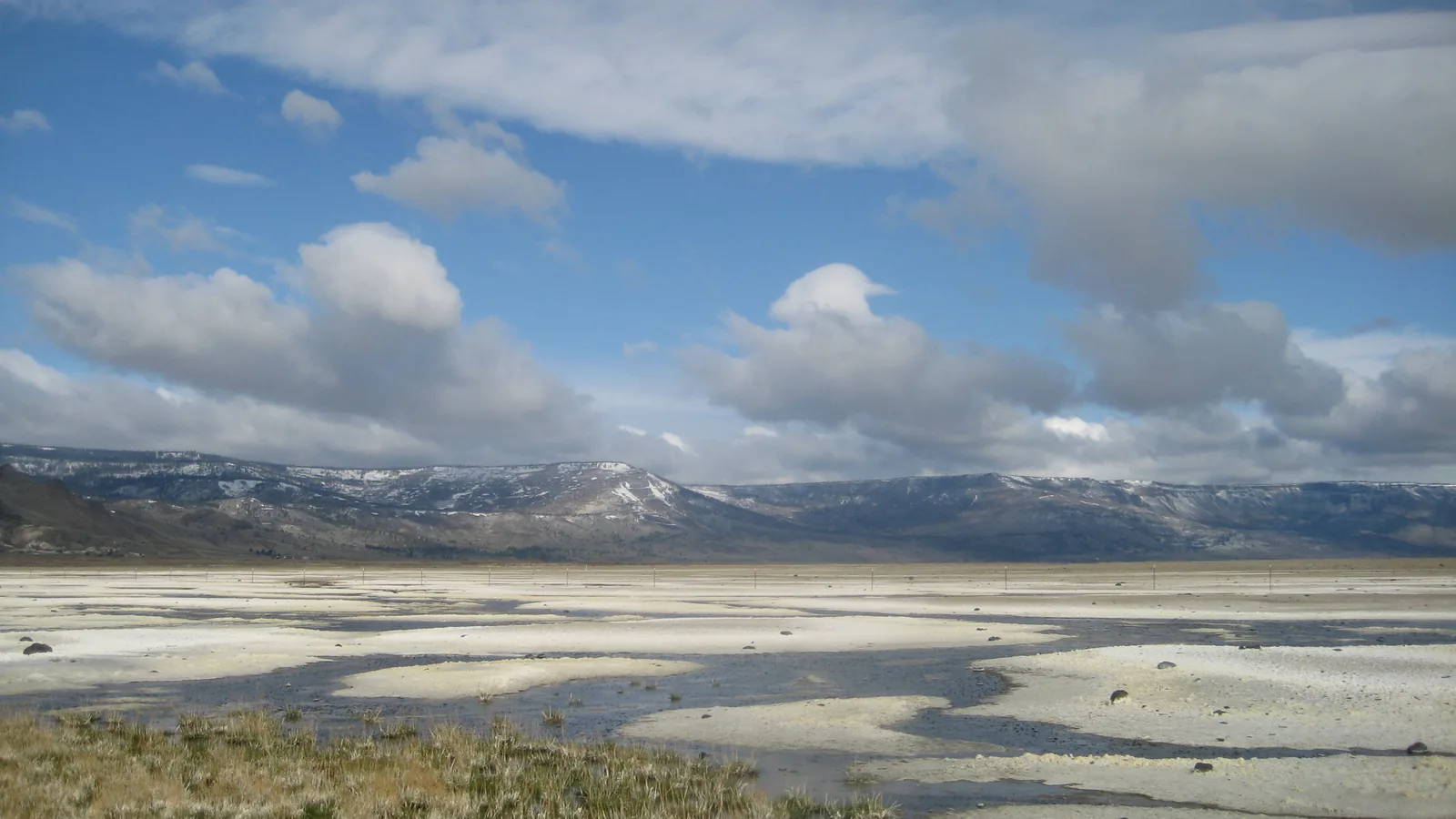
.jpg)
TL;DR — Coprolites at Oregon’s Paisley Caves carried human DNA a 2008 paper dated to 12,300 radiocarbon years. Two 2009 comments disputed it; a 2020 lipid study confirmed part of the result but not all of it.
Dried human feces recovered from a cave in south-central Oregon carried mitochondrial DNA that a team led by M. Thomas P. Gilbert dated by accelerator mass spectrometry to 12,300 radiocarbon years before present. The team’s 2008 paper in Science stated it directly: “We establish that humans were present at Paisley 5 Mile Point Caves, in south-central Oregon, by 12,300 14C years B.P., through the recovery of human mitochondrial DNA (mtDNA) from coprolites, directly dated by accelerator mass spectrometry.” The coprolites came from excavations that Dennis Jenkins, of the University of Oregon’s Museum of Natural and Cultural History, had resumed at the caves in 2002.
Quick facts
- When
- 1938 to 1940 (Luther Cressman's first dig); 2002 (Dennis Jenkins resumes excavation); 2008 (Gilbert et al. publish coprolite DNA dated to 12,300 14C years B.P.); 2009 (Poinar et al. and Goldberg et al. publish rebuttal comments); 2012 (Jenkins et al. report Western Stemmed points and a blind DNA test); 2014 (site listed on the National Register of Historic Places); 2020 (Shillito et al. publish lipid biomarker results)
- Where
- Paisley Five Mile Point Caves, Summer Lake basin, Lake County, Oregon, on land managed by the federal Bureau of Land Management
- Who
- Luther Cressman; Dennis Jenkins (University of Oregon Museum of Natural and Cultural History); Eske Willerslev (University of Copenhagen); M. Thomas P. Gilbert; Hendrik Poinar (McMaster Ancient DNA Centre); Paul Goldberg (Boston University); Lisa-Marie Shillito
- Outcome
- A 2008 paper reported human mitochondrial DNA in coprolites dated to 12,300 radiocarbon years before present, about 14,300 calibrated years ago. Two 2009 comments challenged the dating and the DNA result. A 2012 paper added Western Stemmed points from a slightly younger layer and reported a blind DNA test. A 2020 lipid biomarker study confirmed three of six pre-Clovis coprolites as human by a second method, without closing the contamination question
Luther Cressman dug there first, and was not believed
The University of Oregon anthropologist Luther Cressman excavated the Paisley caves from 1938 to 1940 and found artifacts he took as evidence of Pleistocene human occupation. A 2012 University of Oregon press release recounts what followed: “That claim, based on technologies at the time, was not readily accepted. He died in April 1994, still claiming that he had proven his case.” The museum housing the collection had been established decades earlier, in 1936, by the Oregon Legislative Assembly as the state repository for anthropological materials. Jenkins’s field school returned to the caves in 2002 specifically “to test conclusions made by UO anthropologist Luther Cressman,” according to the same release.
2002 to 2004: coprolites travel to Copenhagen
Word of Jenkins’s finds spread among archaeologists, and in 2004 Eske Willerslev of the University of Copenhagen visited Oregon to collect samples for DNA analysis. A Danish team led by Willerslev examined 14 coprolites that Jenkins and colleagues had recovered during the 2002 and 2003 field seasons, according to the University of Oregon’s 2008 statement carried by ScienceDaily. To rule out modern contamination, the researchers collected DNA samples “from 55 UO students, supervisors, and site visitors and 12 Danish DNA researchers” for comparison. Six coprolites containing ancient DNA were then radiocarbon dated and calendar calibrated “to between 1,300 and 14,300 years ago,” and Jenkins noted that “of these, half date from the early arrival time.” The 2008 paper reported that the mtDNA corresponded to Native American founding haplogroups A2 and B2, and that the coprolite dates were more than 1,000 radiocarbon years earlier than the dates then accepted for the Clovis complex. Willerslev called the material “the oldest human DNA obtained from the Americas.”
Two comments, both published in 2009
The 2008 result drew two separate rebuttals in the same journal a year later. Hendrik Poinar of the McMaster Ancient DNA Centre and coauthors wrote that “we question the authenticity of their DNA results and argue that in the absence of intact stratigraphy and diagnostic artifacts, and in view of carbon isotope anomalies, the radiocarbon dates of the oldest specimens are unreliable.” Separately, Paul Goldberg of Boston University and coauthors reported that their own micromorphological and infrared spectroscopy analysis of one coprolite was “difficult to reconcile with the DNA results identifying the coprolite as human.”
"No evidence of diagnostic Clovis technology," 2012
Jenkins continued excavating the caves from 2009 through 2011 and added 121 new accelerator mass spectrometry dates to the site’s record, bringing the total to 190. The resulting 2012 paper in Science reported that “more than 100 high-precision radiocarbon dates show that deposits containing artifacts and coprolites ranging in age from 12,450 to 2295 (14)C years ago are well stratified,” and that Western Stemmed projectile points came from deposits dated to between 11,070 and 11,340 radiocarbon years ago, “a time contemporaneous with or preceding the Clovis technology.” The paper stated that “there is no evidence of diagnostic Clovis technology at the site,” and that a “blind testing” analysis by an independent laboratory had confirmed human DNA in coprolites of pre-Clovis age. One inconsistency turned up in the retesting: a single camelid coprolite dated to about 14,150 years old through its solid contents but 13,200 years old through its water-soluble extract, the only significant mismatch among twelve such comparisons. Jenkins concluded that “it appears to be impossible to derive Western Stemmed points from a proto-Clovis tradition.” Michael Hofreiter of the University of York said the replicated results confirmed “the oldest direct evidence for humans in the Americas.” The site was added to the National Register of Historic Places in October 2014; BLM Oregon archaeologist Stan McDonald called the federal agency “proud to be the caretaker of this site that captures more than a dozen millennia of human activity in a single place in Oregon.”
Ten of eighteen coprolites confirmed by a second method
In 2020 Lisa-Marie Shillito and coauthors applied a different technique, fecal lipid biomarkers, to recheck the DNA-based identifications. Their paper in Science Advances stated that they used the method “to demonstrate unequivocally that three coprolites dated to pre-Clovis are human, raise questions over the reliance on DNA methods, and present a new radiocarbon date on basketry further supporting pre-Clovis human occupation.” Of the 18 coprolites that Gilbert and coworkers had identified as containing human mtDNA, the lipid analysis classified 10 as human, 6 as carnivore in origin and one as mixed; of the six pre-Clovis coprolites originally identified as human by mtDNA, three were confirmed as human by lipids. For the mixed specimen, the authors proposed “coprophagy of human feces by carnivores” as one explanation, rather than humans eating carnivores as Gilbert’s team had suggested. A bulrush stem fragment found just above one of the confirmed coprolites, apparently part of an S-twist basket or mat, returned a new radiocarbon date of 12,273 plus or minus 56 radiocarbon years, which the authors wrote “confirms the pre-Clovis age and stratigraphic integrity of the deposit.” By 2020 the site had produced 285 radiocarbon dates in total, with DNA analysis completed on 65 coprolites.
Key facts
- Luther Cressman excavated the Paisley caves from 1938 to 1940 and claimed Pleistocene occupation, a claim not accepted in his lifetime; he died in 1994 (University of Oregon, 2012 press release).
- Dennis Jenkins resumed excavation in 2002, and Eske Willerslev’s Copenhagen team examined 14 coprolites recovered in 2002 and 2003 (ScienceDaily, 2008).
- Gilbert et al. (2008) dated human mtDNA in coprolites to 12,300 radiocarbon years B.P., with haplogroups A2 and B2 (PubMed abstract).
- Poinar et al. (2009) and Goldberg et al. (2009) each published comments in Science disputing the dating or the identification of the coprolites (PubMed abstracts).
- Jenkins et al. (2012) reported Western Stemmed points at 11,070 to 11,340 radiocarbon years B.P. and “no evidence of diagnostic Clovis technology” (PubMed abstract).
- A camelid coprolite showed the only major dating mismatch among twelve retested specimens: 14,150 years by its contents versus 13,200 years by its water-soluble extract (University of Oregon, 2012).
- The Paisley caves were listed on the National Register of Historic Places in October 2014 (University of Oregon, OregonNews).
- Shillito et al. (2020) confirmed 10 of 18 mtDNA-identified coprolites as human by lipid biomarkers, including 3 of 6 pre-Clovis specimens (Science Advances).
FAQ
What did the 2008 Paisley Caves study find?
A team led by M. Thomas P. Gilbert reported human mitochondrial DNA, haplogroups A2 and B2, in coprolites from the caves, directly dated by accelerator mass spectrometry to 12,300 radiocarbon years before present, calibrated to about 14,300 years ago.
Was the 2008 DNA result accepted without dispute?
No. In 2009, Hendrik Poinar's team questioned the authenticity of the DNA results and the reliability of the radiocarbon dates, and Paul Goldberg's team reported microscopic and spectroscopic findings hard to reconcile with a human identification for one coprolite.
Did later research settle the question?
Partly. Jenkins et al. (2012) added Western Stemmed points and more dates without finding Clovis technology at the site. Shillito et al. (2020) confirmed three of six pre-Clovis coprolites as human using lipid biomarkers, a different method from DNA, but classified others as carnivore or mixed in origin.
Sources
- M. T. P. Gilbert et al., "DNA from pre-Clovis human coprolites in Oregon, North America," Science 320(5877):786-789 (May 9, 2008), PubMed abstract.
- Hendrik Poinar et al., "Comment on 'DNA from pre-Clovis human coprolites in Oregon, North America'," Science 325(5937):148 (July 10, 2009), PubMed abstract.
- Paul Goldberg, Francesco Berna and Richard I. Macphail, "Comment on 'DNA from pre-Clovis human coprolites in Oregon, North America'," Science 325(5937):148 (July 10, 2009), PubMed abstract.
- Dennis L. Jenkins et al., "Clovis age Western Stemmed projectile points and human coprolites at the Paisley Caves," Science 337(6091):223-228 (July 13, 2012), PubMed abstract.
- Lisa-Marie Shillito, Helen L. Whelton et al., "Pre-Clovis occupation of the Americas identified by human fecal biomarkers in coprolites from Paisley Caves, Oregon," Science Advances 6(29):eaba6404 (July 15, 2020), full text.
- University of Oregon, OregonNews, "Paisley Caves added to National Register of Historic Places" (October 3, 2014).
- University of Oregon press release, "Paisley Caves yield 13,000-year old Western Stemmed points, more human DNA" (July 12, 2012).
- University of Oregon (source), ScienceDaily, "Pre-Clovis Human DNA Found In 14,300-year-old Feces In Oregon Cave Is Oldest In New World" (April 3, 2008).
- U.S. Bureau of Land Management, press release, "Evidence of One of the Oldest Human Occupations in Western United States Discovered on BLM Land in Southeast Oregon" (March 5, 2015).
Cite this article
- APA
- LETTER. (2026, September 28). Coprolites in an Oregon cave: Paisley and the 14,300-year question. Our Earth's History. https://ourearthshistory.com/americas/prehistory/paisley-caves-oregon-coprolites-14300-years-jenkins-2008/
- Chicago
- LETTER. “Coprolites in an Oregon cave: Paisley and the 14,300-year question.” Our Earth's History, September 28, 2026. https://ourearthshistory.com/americas/prehistory/paisley-caves-oregon-coprolites-14300-years-jenkins-2008/.
- MLA
- LETTER. “Coprolites in an Oregon cave: Paisley and the 14,300-year question.” Our Earth's History, 28 Sep. 2026, https://ourearthshistory.com/americas/prehistory/paisley-caves-oregon-coprolites-14300-years-jenkins-2008/.
Text licensed CC BY-NC-ND 4.0. Found an error? Tell us.