How did Monte Verde in Chile end the "Clovis first" story?

TL;DR — People camped at Monte Verde in southern Chile about 14,500 years ago, before the Clovis hunters of North America; later sites push the date back further.
People were living beside a creek at Monte Verde in southern Chile about 14,500 years ago, more than a thousand years before the Clovis spear points of North America. Tom Dillehay’s excavations there, published in 1989 and 1997, found the timber base of a long tent, hearths, wild potatoes, mastodon bones and human footprints sealed under a bog. Clovis points date to about 13,000 years ago, and for over five decades the idea that Clovis hunters were the first Americans framed the whole question. Later sites have been offered as older still, and each has drawn critics. The descendants of the first arrivals are the Native peoples of the Americas; how their ancestors came in, by an inland corridor or along the Pacific coast, is the open question.
Quick facts
- When
- Monte Verde II camp about 14,500 years ago (radiocarbon, confirmed by luminescence in 2015); Clovis about 13,000 years ago; Cooper's Ferry about 16,000; White Sands footprints 21,000 to 23,000; Bluefish Caves 24,000 (disputed); Chiquihuite up to 33,000 (authors' own hedge)
- Where
- Monte Verde, on Chinchihuapi Creek in the low mountains of southern Chile; Gault in central Texas; Cooper's Ferry on the Salmon River, Idaho; Bluefish Caves, Yukon; White Sands, New Mexico; Chiquihuite Cave, central-northern Mexico
- Who
- Tom Dillehay (Vanderbilt, Universidad Austral de Chile) at Monte Verde; Michael B. Collins at Gault; Loren Davis at Cooper's Ferry; Lauriane Bourgeon at Bluefish; M. R. Bennett and J. S. Pigati at White Sands; Ciprian Ardelean at Chiquihuite; critics Fiedel, Potter, Morrow, Faught, Haynes, Chatters, Krasinski and Blong
- Outcome
- The Clovis-first model, which put the first Americans at about 13,000 years ago, was dropped; people were in Chile by about 14,500 years ago, and the entry date and route remain open
A camp under a bog in southern Chile
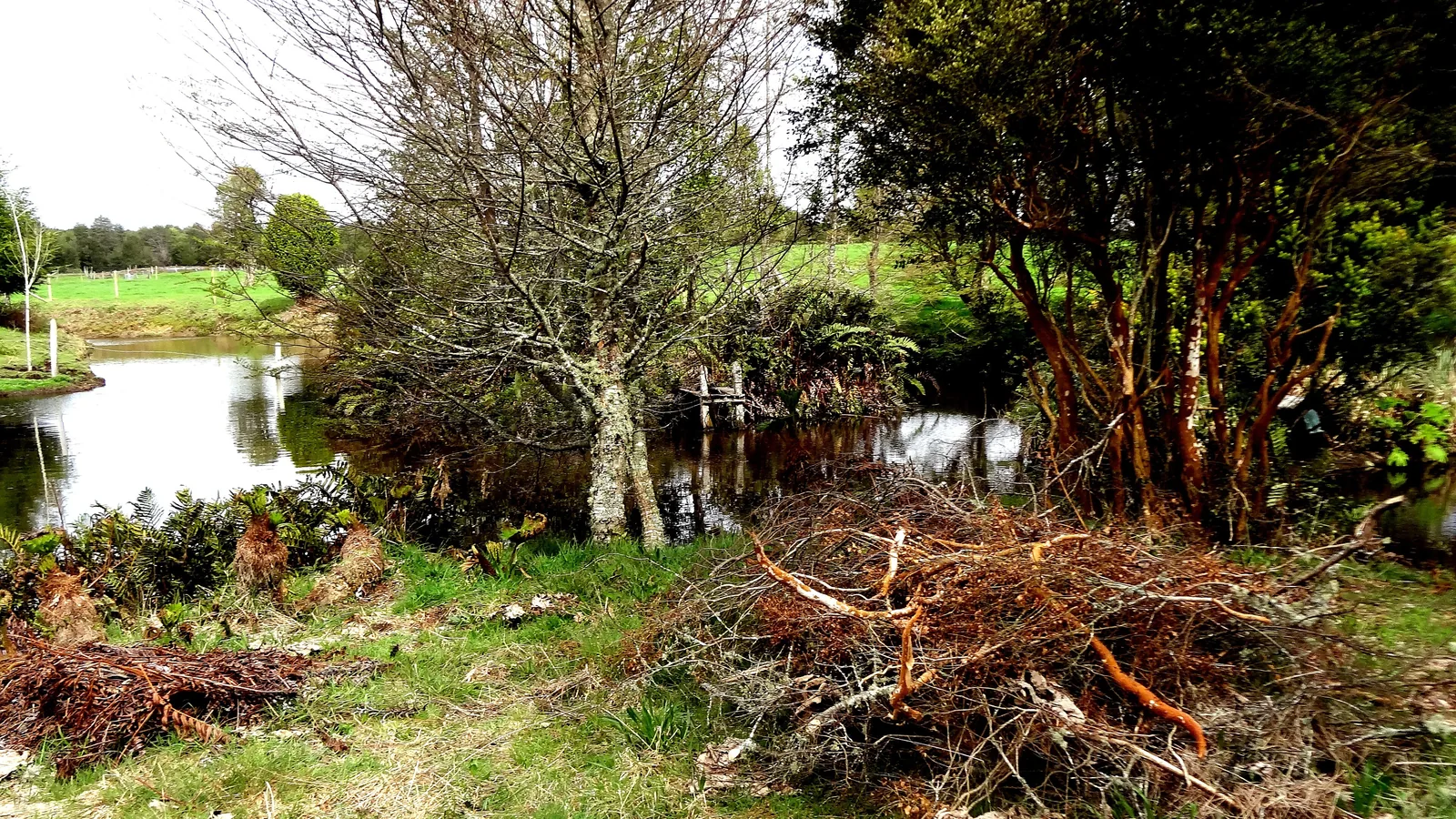
Monte Verde lies in the low mountains of southern Chile, on the north terrace of a small stream called Chinchihuapi Creek. According to a 2015 PLoS ONE paper by Dillehay, Carlos Ocampo, José Saavedra and colleagues, the camp known as Monte Verde II was buried in that terrace after the creek cut its channel around 15,000 years ago. Chile’s 2004 submission to UNESCO’s tentative World Heritage list described what happened next: a turf coating formed by a swamp covered the entire site.
Dillehay, now a senior research professor at Vanderbilt University, first dug there in the late 1970s; larger blocks opened in the 1980s exposed the dense, structured camp, and the Smithsonian Institution Press published the results in two volumes, in 1989 and 1997.
Clovis and the model it replaced
The Clovis point is a fluted spear tip found across North America. Texas Beyond History, a site run by the University of Texas at Austin, wrote in 2001 that for over five decades the Clovis-first hypothesis, “the idea that Clovis hunters were the first people to explore the New World,” had been the standard story: mobile hunters who walked in over the Bering Land Bridge and spread across the continent killing mammoths. At the Gault site in central Texas, where Michael B. Collins led a major excavation from 1998, luminescence dates gave about 13,000 years ago for the Clovis layers.
The same page recorded that the hypothesis had “come under attack from many directions” in the previous decade. By 2015 Dillehay’s team could write of general agreement that “the old Clovis-first model of human entry around 13,000 years ago no longer explains the peopling of the New World.” Lorena Becerra-Valdivia and Thomas Higham, modeling dates from 42 sites in Nature in 2020, wrote that the model “has been effectively refuted.”
What the bog preserved
The 2015 paper described the camp as a long tent-like dwelling with hearths, human footprints, food plants and tools of wood, reed, bone and stone. Small trunks and rough planks, held with stakes, formed the base of a rectangular tent whose 12 rooms, each 3 to 4.5 meters a side, stood in two parallel rows, and animal hide on fallen timbers suggested leather walls. Inside were shallow clay-lined fire pits. At the west end stood a separate U-shaped structure, with medicinal plants, burnt seeds and most of the bones of the five or six mastodons found at the site around it.
The food remains included wild potatoes, nuts, berries, mushrooms and algae from the Pacific shore. The camp is a single occupation layer, radiocarbon dated to about 14,500 years ago; the UNESCO text gives about 14,800. In 2015 the team added optically stimulated luminescence dates that confirmed the radiocarbon age, and reported scattered artifacts and burned areas in the surrounding plain dated between at least 18,500 and 14,500 years ago, which they read as traces of earlier, short-lived visits.
The sites that came after
Cooper’s Ferry sits on a terrace of the lower Salmon River in western Idaho. In Science Advances in December 2022, Loren Davis of Oregon State University and colleagues reported 14 stemmed projectile points from pits and a hearth dated to about 15,785 years ago, with a modeled start of occupation near 16,000 years. S. J. Fiedel, B. A. Potter, J. E. Morrow, M. K. Faught, C. Vance Haynes Jr. and J. C. Chatters had published a critical evaluation of the site in PaleoAmerica in 2020, and Davis’s team acknowledged speculation that the lowest artifacts had sunk there through mixing of the layers.
Bluefish Caves in the northern Yukon, dug by Jacques Cinq-Mars from 1977 to 1987, hold the oldest claim in Canada. In 2017 Lauriane Bourgeon, Ariane Burke and Higham reported radiocarbon dates on cut-marked bones, including a horse jaw dated to about 24,000 years ago, and wrote that humans occupied the site during the Last Glacial Maximum. K. E. Krasinski and J. C. Blong answered in Arctic Anthropology in 2020 with what they called unresolved questions about how the bones reached the caves, and John Hoffecker’s 2023 review in Proceedings of the Royal Society B called the interpretation disputed.
White Sands National Park in New Mexico holds human footprints in the bed of a vanished ice-age lake. M. R. Bennett and colleagues reported in Science in September 2021 that seed layers above and below the prints gave radiocarbon ages of about 23,000 and 21,000 years; the Park Service page gives 22,860 and 21,130. The ages were questioned because aquatic seeds can carry an old carbon reservoir effect; in October 2023 J. S. Pigati and colleagues dated pollen from the same layers and the sediment itself, and reported that the original ages held. The oldest claim comes from Chiquihuite Cave in central-northern Mexico, where Ciprian Ardelean and colleagues reported in Nature in 2020 about 1,900 stone artifacts and wrote that human dispersal to the region was “possibly” as early as 33,000 to 31,000 years ago. The same paper called the timing of first arrival unknown.
Corridor or coast
The starting point, according to Hoffecker’s review, is settled: paleogenomics has confirmed that the Indigenous peoples of the Western Hemisphere descend from a population in northern Asia that crossed through the Bering Strait region when low seas exposed the shelf. The argument is over the road south. Ice sheets blocked both the interior corridor and the Pacific coast during the glacial maximum, the review states, and the corridor reopened less than 14,000 years ago. Hoffecker and his co-authors concluded that the primary ancestors of living First Peoples, who had already spread widely through the Americas by then, probably came down the Pacific coast. Davis’s team made the same point about Cooper’s Ferry: at 16,000 years the interior route was still shut.
What stays open
The 2015 Monte Verde paper listed the questions that replaced Clovis first: whether there were several migrations, whether they came by land, along coastlines or both, and whether the first inhabitants were the same people whose descendants met the Europeans in the 1500s.
What Monte Verde settled is narrower and firmer. A tent with hide walls and clay-lined hearths lay under a Chilean bog about 14,500 years ago, dated by two methods, and the people who built it were living near the southern end of the Americas before the first Clovis point was made.
Key facts
- Monte Verde II, on Chinchihuapi Creek in southern Chile, is a single occupation layer radiocarbon dated to about 14,500 years ago; luminescence dates published in 2015 confirmed the age (Dillehay et al., PLoS ONE).
- Dillehay’s site reports appeared from the Smithsonian Institution Press in two volumes, 1989 and 1997; Chile placed the site on UNESCO’s tentative list in 2004.
- The bog preserved a tent base of logs and planks with 12 rooms in two rows, a U-shaped structure, hearths, wild potatoes, algae and the bones of five or six mastodons (UNESCO tentative list).
- Clovis layers at the Gault site in Texas date to about 13,000 years ago; Texas Beyond History wrote in 2001 that the Clovis-first hypothesis had held for over five decades.
- Cooper’s Ferry, Idaho: 14 stemmed points dated to about 15,785 years ago (Davis et al., 2022); critique by Fiedel, Potter, Morrow, Faught, Haynes and Chatters (2020).
- Bluefish Caves, Yukon: cut-marked horse jaw dated to about 24,000 years ago (Bourgeon, Burke and Higham, 2017); disputed by Krasinski and Blong (2020).
- White Sands, New Mexico: footprints bracketed by seeds dated 22,860 and 21,130 years ago (Bennett et al., 2021); pollen and luminescence ages in 2023 supported them (Pigati et al.).
- Hoffecker et al. (2023) date the reopening of the ice-free corridor to less than 14,000 years ago and favor a Pacific coastal route for the main ancestral population.
FAQ
How old is Monte Verde?
The main camp, Monte Verde II, dates to about 14,500 years ago by radiocarbon, an age that optically stimulated luminescence confirmed in 2015. Chile's UNESCO submission gives about 14,800 years. Older scattered traces nearby, back to at least 18,500 years, are described by the excavators as short-lived visits.
What was the Clovis-first model?
The view that hunters who made fluted Clovis points, dated to about 13,000 years ago, were the first people in the Americas. Texas Beyond History described it in 2001 as the standard story for over five decades; Dillehay's team wrote in 2015 that it no longer explained the peopling of the New World, and Becerra-Valdivia and Higham wrote in 2020 that it had been refuted.
Are the White Sands footprints really 23,000 years old?
Bennett and colleagues reported seed dates of about 23,000 to 21,000 years in 2021. The ages were questioned because aquatic seeds can carry an old carbon reservoir effect. In 2023 Pigati and colleagues dated pollen and sediment from the same layers and reported that the original ages held.
Sources
- Tom D. Dillehay et al. — "New Archaeological Evidence for an Early Human Presence at Monte Verde, Chile," PLoS ONE 10(11), November 18, 2015.
- UNESCO World Heritage Centre, Tentative Lists — "Monte Verde Archaeological Site" (Chile, submitted 2004).
- Texas Beyond History (University of Texas at Austin) — "The Gault Site."
- Texas Beyond History (University of Texas at Austin) — "Clovis Reconsidered" (2001).
- Loren G. Davis et al. — "Dating of a large tool assemblage at the Cooper's Ferry site (Idaho, USA) to ~15,785 cal yr B.P. extends the age of stemmed points in the Americas," Science Advances 8(51), December 23, 2022, PubMed Central copy.
- Lauriane Bourgeon, Ariane Burke and Thomas Higham — "Earliest Human Presence in North America Dated to the Last Glacial Maximum: New Radiocarbon Dates from Bluefish Caves, Canada," PLoS ONE 12(1), January 6, 2017.
- John F. Hoffecker et al. — "Beringia and the peopling of the Western Hemisphere," Proceedings of the Royal Society B 290 (2023), PubMed Central copy.
- U.S. National Park Service, White Sands National Park — "Fossilized Footprints."
- Ciprian F. Ardelean et al. — "Evidence of human occupation in Mexico around the Last Glacial Maximum," Nature 584 (July 22, 2020), abstract.
- Europe PMC record — Matthew R. Bennett et al., "Evidence of humans in North America during the Last Glacial Maximum," Science 373 (September 23, 2021).
- Europe PMC record — Jeffrey S. Pigati et al., "Independent age estimates resolve the controversy of ancient human footprints at White Sands," Science 382 (October 5, 2023).
- Europe PMC record — Lorena Becerra-Valdivia and Thomas Higham, "The timing and effect of the earliest human arrivals in North America," Nature 584 (July 22, 2020).
- Vanderbilt University, Department of Anthropology — faculty page for Tom Dillehay.
Cite this article
- APA
- Our Earth's History. (2026, September 21). How did Monte Verde in Chile end the "Clovis first" story? Our Earth's History. https://ourearthshistory.com/americas/prehistory/monte-verde-first-americans-before-clovis/
- Chicago
- Our Earth's History. “How did Monte Verde in Chile end the "Clovis first" story?” Our Earth's History, September 21, 2026. https://ourearthshistory.com/americas/prehistory/monte-verde-first-americans-before-clovis/.
- MLA
- “How did Monte Verde in Chile end the "Clovis first" story?” Our Earth's History, 21 Sep. 2026, https://ourearthshistory.com/americas/prehistory/monte-verde-first-americans-before-clovis/.
Text licensed CC BY-NC-ND 4.0. Found an error? Tell us.