Cooper's Ferry: 16,560 years in one model, after 15,000 in another
.jpg)
TL;DR — A 2019 model put the first people at Cooper’s Ferry, Idaho, about 16,000 years ago; a 2020 comment and a 2022 reanalysis read the evidence differently.
On August 30, 2019, Loren G. Davis of Oregon State University and 16 co-authors reported in Science that radiocarbon dating at the Cooper’s Ferry site in western Idaho showed people “repeatedly occupied the Columbia River basin, starting between 16,560 and 15,280 calibrated years before the present.” That range falls in the 15th and 14th millennia BC, and it rests on a statistical model as much as on the dated samples themselves. Within a year a researcher at Cornell University’s Tree Ring Laboratory had challenged the model. In 2022 a team from the University of Wyoming measured how the artifacts were spread through the soil and read the pattern as mixing. The Oregon State team answered both, in 2020 and 2022, and returned to the site’s age in a review of October 2025.
Quick facts
- When
- 1997 (University of Alberta excavation); 2009 to 2018 (Oregon State University field seasons); August 30, 2019 (Davis et al. in Science); April 10, 2020 (Manning's comment and the authors' reply); April 20, 2022 (Surovell et al. in PLOS ONE, corrected July 24, 2024); December 23, 2022 (Area B paper in Science Advances); October 22, 2025 (review in Science Advances)
- Where
- Cooper's Ferry, written Cooper's Ferry/Nipéhe in the 2025 paper, on a terrace of the lower Salmon River in western Idaho
- Who
- Loren G. Davis (Oregon State University) and co-authors including David B. Madsen, Lorena Becerra-Valdivia, Thomas Higham and David A. Sisson (Bureau of Land Management); Sturt W. Manning (Cornell University); Todd A. Surovell (University of Wyoming) and 11 co-authors; the Nez Perce Tribe
- Outcome
- Davis and colleagues modeled the first occupation at 16,560 to 15,280 calibrated years before present and later narrowed it to 16,045 to 15,725 in a second excavation area. Manning argued for a start more likely after about 15,000 years ago; Surovell and colleagues found artifact profiles consistent with mixed deposits
August 30, 2019: a start date drawn from a model
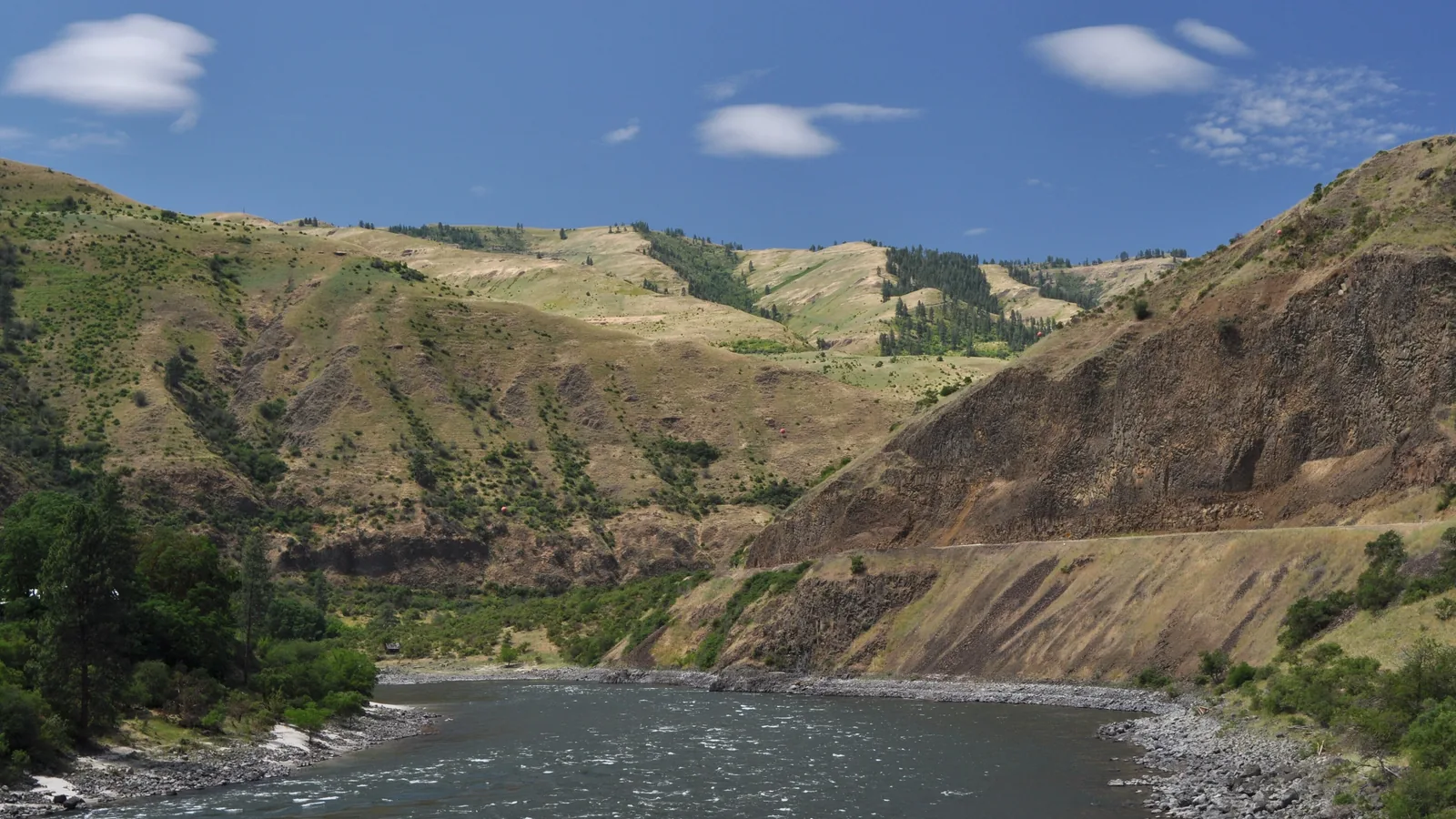
The site lies on a terrace of the lower Salmon River, in a lower layer of loess that the excavators labeled LU3. One co-author, David A. Sisson, listed his address as the Bureau of Land Management’s Cottonwood Field Office in Idaho, and the Oxford Radiocarbon Accelerator Unit supplied two more. The 2019 abstract made three claims. The earliest artifacts showed “unfluted stemmed projectile point technologies” older than the Clovis tradition. Those tools pointed to early cultural links with the Upper Paleolithic of northeastern Asia. And because the first occupation predated the opening of an ice-free corridor through the continental glaciers, which the authors put at 14,800 calibrated years before present or later, the site supported the hypothesis that the first migrants came down the Pacific coast.
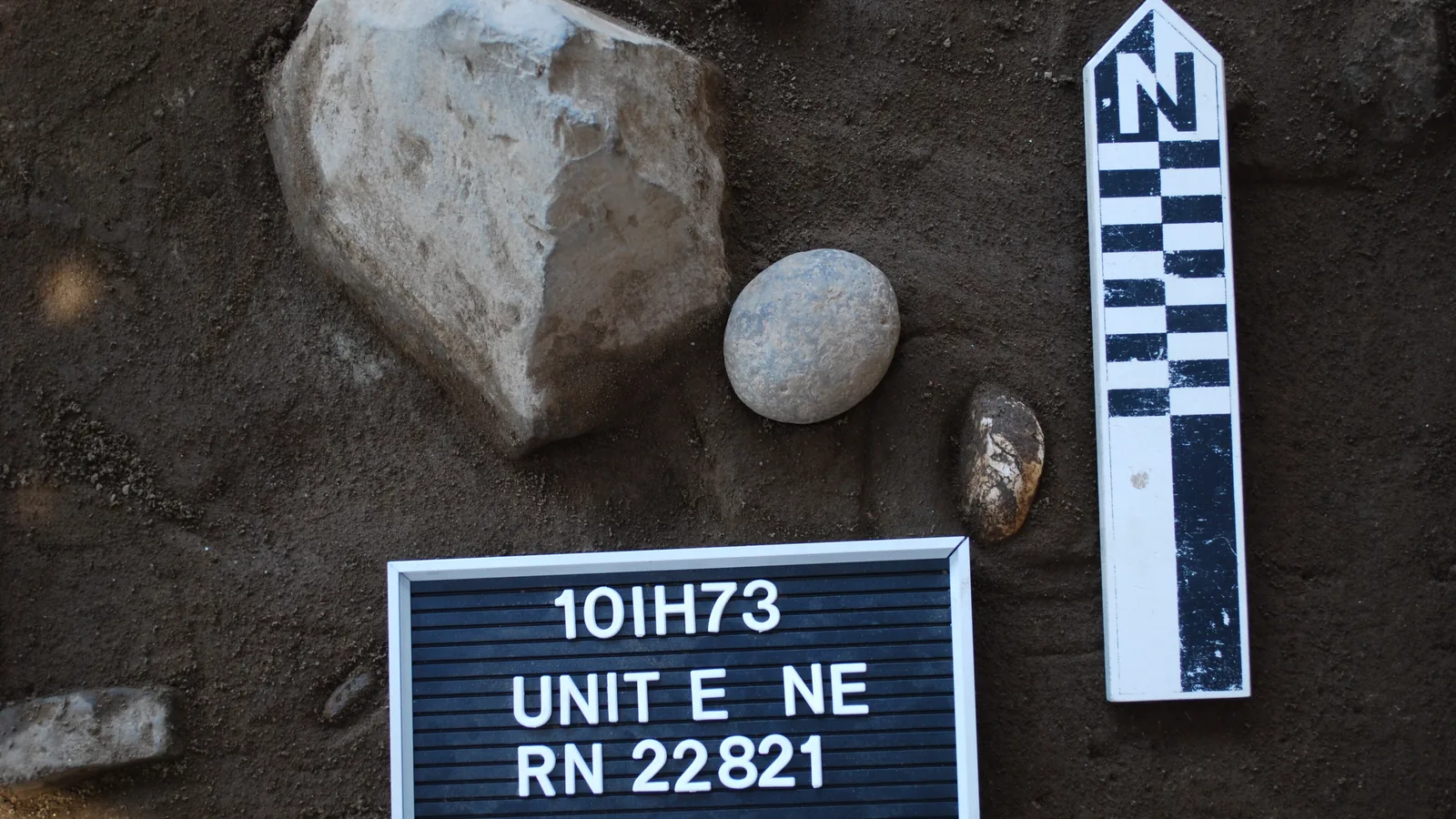
The team’s later paper of December 2022 laid out how the start date was reached. Three pits in the middle of LU3 held a tooth fragment from an extinct horse, Equus, along with bone fragments and flake tools. Animal bone and charcoal from that middle portion returned radiocarbon ages between about 15,660 and 14,650 calibrated years, and a hearth nearby dated to about 14,660. Flake tools, debitage, burned rock and bone also lay lower down, below the pits. That deeper part of LU3 produced no formal stone tools and nothing that could be dated. The start of occupation at 16,560 to 15,280 years ago, a 95.4 percent confidence interval, came from Bayesian modeling of when LU3 began to accumulate and when people first arrived. In the authors’ words, the absence of dated material in the deeper sediments was “forcing us to rely on Bayesian modeling to estimate that the initial occupation at the site began sometime ~16,000 cal yr B.P.”
Manning and Davis in Science, April 10, 2020
Sturt W. Manning, of the Cornell Tree Ring Laboratory, published a comment on the 2019 paper. His abstract described the reported occupation as “well before Greenland Interstadial 1 (GI-1)” and stated: “Critical review suggests that this early date is not supported by the evidence.” Occupation might have begun in the middle of the 16th millennium before present, in his reading, but “would have been more likely after ~15,000 years ago, coeval with GI-1.”
Davis replied in the same issue with Lorena Becerra-Valdivia, David B. Madsen and Thomas Higham. Their abstract stated that Manning “builds an inappropriate Bayesian age model” giving a start between about 15,935 ± 75 and 15,130 ± 20 calibrated years before present, and rejected it on two grounds: his analysis “ignores evidence of human occupation from the earliest undated cultural deposits and reflects a misapplication of Bayesian age-modeling techniques.” They called his results “unreliable.” The reply’s abstract placed the disagreement in two things: the age model itself, and the earliest cultural deposits, which carry artifacts but no dates.
Artifact counts in 5-centimeter levels
Todd A. Surovell of the University of Wyoming and 11 co-authors took a different measurement in PLOS ONE on April 20, 2022. Instead of the dates, they looked at how artifacts were distributed with depth. They simulated mixing in sites with several occupation layers, built a statistic they called the Apparent Stratigraphic Integrity Index, or ASI, and applied it to sites older and younger than 13,000 years, north and south of the ice sheets. For Cooper’s Ferry they used artifact and bone counts by 5-centimeter level from LU3 in Area A.
Five Beringian sites near the Tanana River valley in eastern Alaska, whose oldest layers are argued to date between about 13,000 and 14,200 years ago, scored between 0.367 at Broken Mammoth and 0.546 at Owl Ridge. Cooper’s Ferry scored 0.186, the Debra L. Friedkin site in Texas 0.045. Of Cooper’s Ferry and Friedkin the authors wrote: “Both sites exhibit traits expected of vertically mixed deposits with smoothed and homogenized distributions slowly tailing off with depth.” Their abstract stated that clear signs of discrete, minimally disturbed layers do not appear south of the ice sheets until the Clovis period, and ended: “These results provide support for a relatively late date of human arrival to the Americas.” PLOS ONE published a correction to the paper on July 24, 2024.
.jpg)
"An older as yet undated human occupation": Area B and the 2025 paper
The Oregon State team had been digging a second spot, Area B, from 2012 to 2018. Its December 23, 2022 paper in Science Advances acknowledged “some speculation,” citing S. J. Fiedel and colleagues’ 2020 critique and the Surovell study, that the lowest artifacts had arrived through stratigraphic mixing. A backhoe trench from the 1960s had cut into part of Area B; the authors wrote that the darker trench fill was easy to recognize in the brown loess and was discarded before excavation. Three pits, F78, F108 and F151, were dated to between 15,955 and 15,625 calibrated years before present. Modeling of the Area B dates found no major outliers and put the start of the layer at 16,045 to 15,725. The authors wrote that this range was statistically comparable to the Area A estimate “but is much more tightly constrained.”
Crews from Oregon State University and, in 2016 and 2017, from the Nez Perce Tribe excavated Area B, and the Bureau of Land Management’s Cottonwood Field Office funded the work in part through cost-share agreements with the university. A review by David B. Madsen, Davis and three colleagues writes the site’s name as Cooper’s Ferry/Nipéhe throughout and thanks the Nez Perce Tribe and Nakia Williamson Cloud. Published in Science Advances on October 22, 2025, it cites 18 radiocarbon age estimates for the lower layer and a modeled start of occupation between about 16,045 and 15,725 years ago, and states that debitage and stemmed points found outside and below the dated pits “indicate an older as yet undated human occupation.”
Key facts
- Davis et al. (Science, August 30, 2019) modeled the first occupation at Cooper’s Ferry at 16,560 to 15,280 calibrated years before present.
- The 2019 abstract set the opening of the ice-free corridor at 14,800 calibrated years or later and read the site as support for a Pacific coastal route.
- Dated bone and charcoal in the middle of LU3 returned about 15,660 to 14,650 calibrated years; the lowest artifacts had no dates (Davis et al., 2022).
- Manning (Science, April 10, 2020) wrote that occupation “would have been more likely after ~15,000 years ago”; Davis and colleagues replied that his model was a “misapplication” of the technique.
- Surovell et al. (PLOS ONE, 2022) gave Cooper’s Ferry an ASI of 0.186, against 0.367 to 0.546 for five Alaskan sites; the paper was corrected in July 2024.
- Area B pits F78, F108 and F151 dated to 15,955 to 15,625 calibrated years; the 2025 review gives a modeled start of about 16,045 to 15,725 from 18 radiocarbon ages.
FAQ
How old is the Cooper's Ferry site in Idaho?
Its excavators modeled the first occupation at 16,560 to 15,280 calibrated years before present in 2019, and at about 16,045 to 15,725 for a second excavation area in 2022 and in a 2025 review. Sturt Manning's 2020 comment argued a start after about 15,000 years ago was more likely.
Why do some archaeologists doubt the earliest date at Cooper's Ferry?
The lowest artifacts were not dated directly, so the start date comes from a Bayesian model. Manning disputed that model, and Surovell and colleagues found that the artifact counts by depth looked like those of a mixed deposit.
What is Nipéhe?
The 2025 Science Advances review by Madsen, Davis and colleagues writes the site's name as Cooper's Ferry/Nipéhe. The same paper thanks the Nez Perce Tribe, whose crews took part in the 2016 and 2017 excavations.
Sources
- Loren G. Davis et al., "Late Upper Paleolithic occupation at Cooper's Ferry, Idaho, USA, ~16,000 years ago," Science 365(6456):891-897 (August 30, 2019), PubMed abstract and author list.
- Sturt W. Manning, "Comment on 'Late Upper Paleolithic occupation at Cooper's Ferry, Idaho, USA, ~16,000 years ago'," Science 368(6487):eaaz4695 (April 10, 2020), PubMed abstract.
- Loren G. Davis, Lorena Becerra-Valdivia, David B. Madsen and Thomas Higham, "Response to Comment on 'Late Upper Paleolithic occupation at Cooper's Ferry, Idaho, USA, ~16,000 years ago'," Science 368(6487):eaaz6626 (April 10, 2020), PubMed abstract.
- Todd A. Surovell et al., "Late date of human arrival to North America: Continental scale differences in stratigraphic integrity of pre-13,000 BP archaeological sites," PLOS ONE 17(4):e0264092 (April 20, 2022; correction July 24, 2024), full text.
- Loren G. Davis et al., "Dating of a large tool assemblage at the Cooper's Ferry site (Idaho, USA) to ~15,785 cal yr B.P. extends the age of stemmed points in the Americas," Science Advances 8(51):eade1248 (December 23, 2022), full text.
- David B. Madsen, Loren G. Davis, Thomas J. Williams, Masami Izuho and Fumie Iizuka, "Characterizing the American Upper Paleolithic," Science Advances 11(43):eady9545 (October 22, 2025), full text.
Cite this article
- APA
- LETTER. (2026, September 28). Cooper's Ferry: 16,560 years in one model, after 15,000 in another. Our Earth's History. https://ourearthshistory.com/americas/prehistory/coopers-ferry-idaho-16000-years-bayesian-model-dispute/
- Chicago
- LETTER. “Cooper's Ferry: 16,560 years in one model, after 15,000 in another.” Our Earth's History, September 28, 2026. https://ourearthshistory.com/americas/prehistory/coopers-ferry-idaho-16000-years-bayesian-model-dispute/.
- MLA
- LETTER. “Cooper's Ferry: 16,560 years in one model, after 15,000 in another.” Our Earth's History, 28 Sep. 2026, https://ourearthshistory.com/americas/prehistory/coopers-ferry-idaho-16000-years-bayesian-model-dispute/.
Text licensed CC BY-NC-ND 4.0. Found an error? Tell us.