Two caves, two dates: earliest pottery at Xianrendong and Yuchanyan
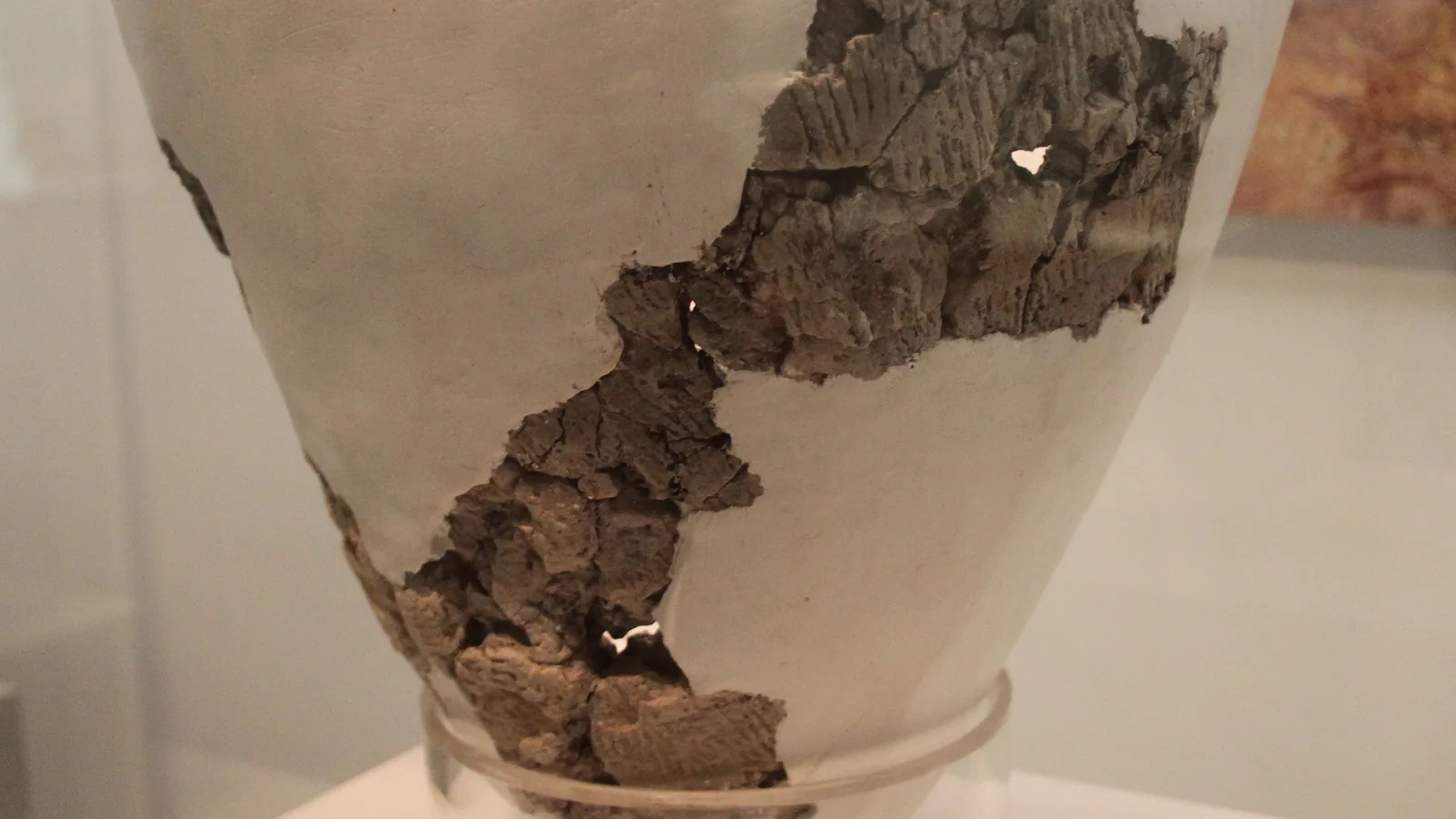

TL;DR — Xianrendong’s sherds lie in layers dated 20,000 to 19,000 cal BP; Yuchanyan’s pottery dates 18,300 to 15,430 cal BP — foragers made both before farming.
“The radiocarbon ages of the archaeological contexts of the earliest sherds are 20,000 to 19,000 calendar years before the present, 2000 to 3000 years older than other pottery found in East Asia and elsewhere.” The sentence comes from the abstract of a paper by Xiaohong Wu of Peking University and six coauthors, published in Science in 2012, on Xianrendong Cave in Wannian County, Jiangxi Province, China; only the abstract is open to read. Three years earlier, in the Proceedings of the National Academy of Sciences, Elisabetta Boaretto and 12 coauthors had dated the pottery of Yuchanyan Cave, in Hunan Province, to “between 18,300 and 15,430 cal BP,” calibrated years before present, with the present fixed at 1950. Five names appear on both papers. Between them the two caves hold the oldest dated pottery known, by the 2012 abstract’s own comparison, made by hunters and gatherers during the last glacial period and, in its words, “10 millennia or more before the emergence of agriculture.”
Quick facts
- When
- Yuchanyan Cave excavated 1993, 1995 and 2004–2005; its pottery dated 18,300 to 15,430 cal BP and the cave occupied about 21,000 to 13,800 cal BP (Boaretto et al., PNAS, 2009) · Xianrendong Cave's earliest sherds in contexts dated 20,000 to 19,000 cal BP (Wu et al., Science, 2012) · Odai Yamamoto sherds about 13,000 BC (official Jōmon World Heritage website) · Incipient Jōmon pottery 15,000 to 11,800 cal BP (Craig et al., Nature, 2013)
- Where
- Yuchanyan Cave, Daoxian County, Hunan Province, about 450 km south of the Yangzi; Xianrendong Cave, Wannian County, Jiangxi Province, both in southern China; Odai Yamamoto site, Sotogahama Town, Aomori Prefecture, Japan
- Who
- Elisabetta Boaretto (Weizmann Institute of Science), Xiaohong Wu (Peking University), Jiarong Yuan (Hunan Institute of Archaeology), Ofer Bar-Yosef (Harvard), Paul Goldberg, David Cohen and coauthors; Oliver E. Craig (University of York) and colleagues
- Outcome
- Two caves in southern China hold the oldest dated pottery known, made by mobile foragers during the last glacial period; the same research group set Yuchanyan first in 2009 and Xianrendong first in 2012, and Japan's earliest sherds are younger by the figures both papers cite
1993 and 1995: two vessels in a cave in Daoxian County
Yuchanyan Cave lies in Daoxian County, about 450 kilometers south of the main course of the Yangzi River. Jiarong Yuan of the Hunan Institute of Archaeology dug it first, in 1993 and 1995, opening 46 square meters and finding “2 clusters of potsherds indicating the presence of 2 vessels.”
The team returned in 2004 and 2005, cut the large square T1 into meter squares and added four new ones, T10 to T13. In 2004 a sherd came out of sublayer 3E of T1, 255 centimeters below datum and 40 to 50 centimeters from the original cluster. Another sat embedded in the ash and clay lenses of square T11. The pottery from the cave amounts to two vessels from the 1990s and two loose sherds from the 2000s.
A cauldron 29 centimeters tall, fired at 400 to 500 degrees
Only one pot could be put back together, because the sherds crumble. It has a round rim 31 centimeters across, a pointed base and a height of 29 centimeters, a shape the Chinese literature calls a fu cauldron. The walls are uneven and up to 2 centimeters thick. Infrared spectra put the firing temperature between 400 and 500 degrees Celsius, with kaolinite a major component of the clay, and both the inside and the outside carry impressions, “possibly with cordage.”
Sixty-four bones, 75 pieces of charcoal, 40 dates
The problem in a limestone cave is calcite, which the paper names as the likely cause of poor charcoal preservation, so the team prescreened its samples. Of 64 bone samples, 26 held collagen pure enough to date; of 75 charcoal samples, 33 passed. Twenty-seven new samples were run, and with three from the 1990s the paper’s Table 3 lists 40 radiocarbon dates, all calibrated with the OxCal 3.10 program. They run from about 21,000 to 13,800 cal BP.
Around the T11 sherd, five bone and charcoal samples above and below it bracket 18,600 to 17,150 cal BP at two standard deviations. On that one fragment rests the paper’s claim that the pottery dates “as early as 18,300 to 17,500 cal BP (1 SD).” The lower limit, from the disturbed 10-centimeter sequence around the T1 cluster, the authors set at about 15,000 cal BP.
"Could not be confirmed": Xianrendong in 2009 and in 2012
The 2009 paper had a line on the rival cave. Dates “as early as 17,000 to 16,000 cal BP” had been conjectured for Xianrendong and nearby Diaotonghuan, it said, “but these could not be confirmed due to ambiguities in the stratigraphic sequences of these sites.” In 2012 Wu, Chi Zhang, Paul Goldberg, David Cohen, Yan Pan, T. Arpin and Ofer Bar-Yosef answered that objection with micromorphology, the study of sediment layers under the microscope, matching the layers of the sherds to the layers of the radiocarbon samples. Their abstract reads the occupations as those of “mobile foragers who hunted and gathered during the Late Glacial Maximum,” adds that the vessels “may have served as cooking devices,” and gives no count of sherds. Wu, Bar-Yosef, Goldberg, Cohen and Pan had signed the 2009 paper as well; the same group had reversed its own ordering of the two caves within three years.
Later papers carry the figure. Briana L. Gross and Zhijun Zhao repeated it in a 2014 review of rice domestication, and Rocco Rotunno and Enrico R. Crema opened a 2025 study of African ceramics in Nature Communications with the line that pottery “first appeared between 20,000 and 12,000 calibrated years before present (cal BP) in East Asia, as evidenced by dated sequences at Xianrendong Cave.” Rice at the cave is a separate and later record. Phytoliths, the silica bodies left by plant cells, identified as Oryza at Xianrendong and Diaotonghuan date “about 12,000–9,000 calibrated years before the present,” according to Xinxin Zuo, Houyuan Lu and coauthors in 2017.

Odai Yamamoto, 101 charred crusts and one misplaced citation
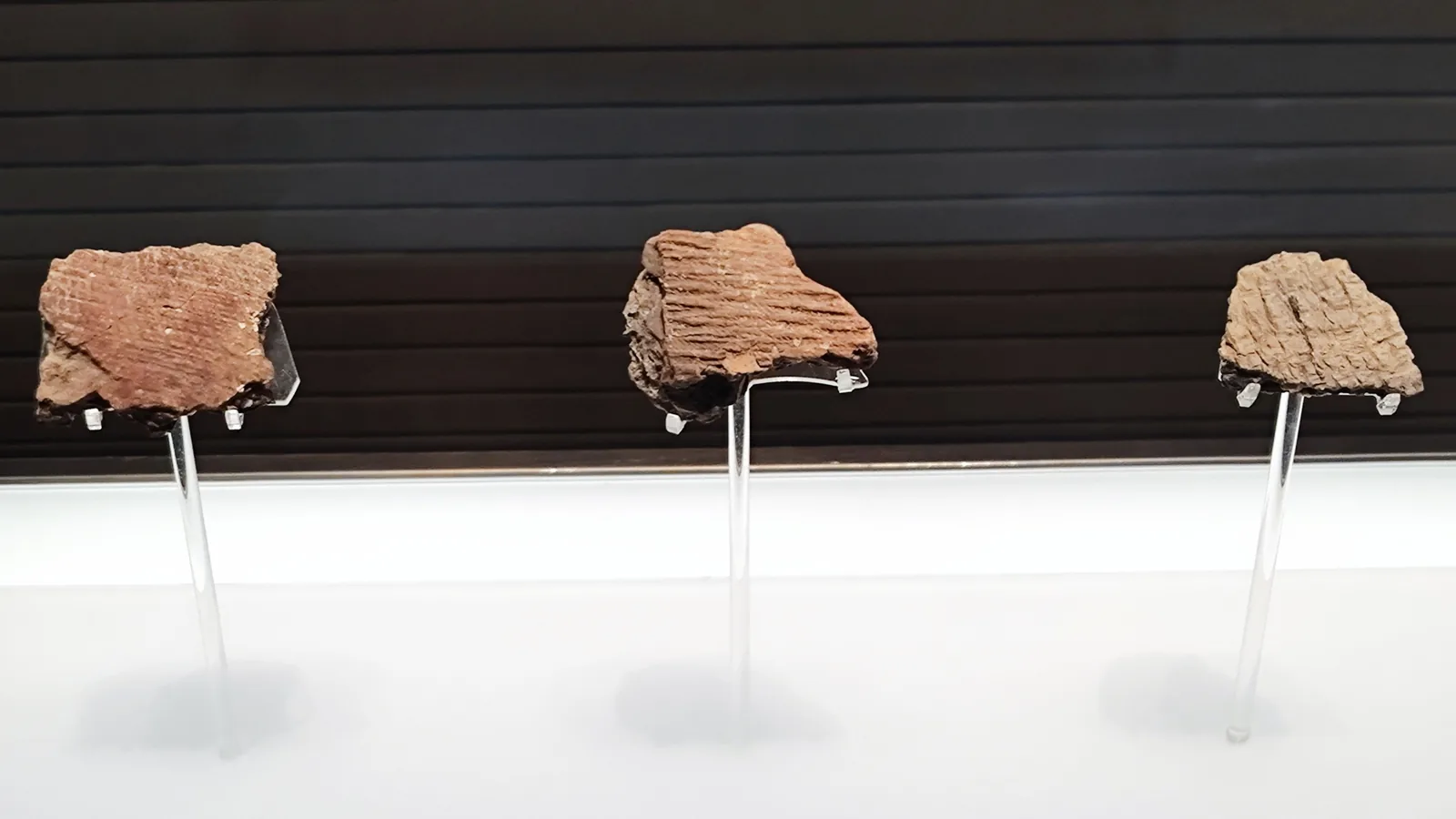
Japan’s oldest pottery came later. The official website of the World Heritage Jōmon sites, run by Aomori and three other prefectures, dates the sherds of the Odai Yamamoto site in Sotogahama Town by radiocarbon to about 13,000 BC on the site page and, in its note on the Aomori Prefectural Museum, to “c. 15,000 years ago”; both figures stand on the same website. The earliest sherds are plain, and no post holes were found. The Boaretto paper set its Yuchanyan dates a thousand radiocarbon years before the earliest Incipient Jōmon date, sample NUTA-6510, at 17,050 to 15,850 cal BP at two standard deviations, without naming the site the sample came from.
What Japanese pots of that age held is known from Oliver E. Craig of the University of York and 13 coauthors, whose Nature paper of 2013 analyzed 101 charred deposits on Jōmon sherds of about 15,000 to 11,800 cal BP and found lipids from “freshwater and marine organisms.” A 2020 review in Microbial Biotechnology by Cristina Vilanova and Manuel Porcar credits Craig’s lipids to “pottery elements from Xianrendong Cave (China), dated about 20 000–19 000 years BP”; Craig’s abstract names no Chinese cave. Japan designated Odai Yamamoto a Historic Site on March 27, 2013. By then the Science paper was a year old, and the sentence of 2009, that the Xianrendong dates “could not be confirmed due to ambiguities in the stratigraphic sequences,” had been answered by five of the people who wrote it.
Key facts
- Yuchanyan Cave, Daoxian County, Hunan Province, about 450 km south of the Yangzi, was dug in 1993 and 1995 by Jiarong Yuan, who found “2 clusters of potsherds indicating the presence of 2 vessels”; single sherds followed in squares T1 and T11 in 2004–2005 (Boaretto et al., 2009).
- The one reconstructed pot is a fu cauldron with a 31 cm rim, a pointed base, a height of 29 cm and walls up to 2 cm thick, fired at 400 to 500 degrees Celsius and impressed on both surfaces.
- Prescreening passed 26 of 64 bone samples and 33 of 75 charcoal samples; Table 3 lists 40 radiocarbon dates, calibrated with OxCal 3.10.
- Dates at Yuchanyan run from about 21,000 to 13,800 cal BP; the pottery “ranges between 18,300 and 15,430 cal BP,” with the T11 sherd bracketed at 18,600 to 17,150 cal BP (2 SD).
- The 2009 paper wrote that earlier dates for Xianrendong “could not be confirmed due to ambiguities in the stratigraphic sequences.”
- Wu et al., Science, 2012 (abstract): the contexts of Xianrendong’s earliest sherds date 20,000 to 19,000 calendar years before the present, made by “mobile foragers who hunted and gathered during the Late Glacial Maximum.”
- Rice phytoliths at Xianrendong and Diaotonghuan date about 12,000 to 9,000 cal BP (Zuo et al., 2017), a later record than the pottery.
- Odai Yamamoto, Aomori Prefecture: plain sherds dated about 13,000 BC on the official website, Historic Site since March 27, 2013; Craig et al., Nature, 2013, found aquatic lipids on 101 Incipient Jōmon deposits of 15,000 to 11,800 cal BP.
FAQ
Which cave has the oldest pottery, Xianrendong or Yuchanyan?
By the published dates, Xianrendong. The 2012 Science paper by Wu and coauthors dates the contexts of its earliest sherds to 20,000 to 19,000 calendar years before the present. The 2009 PNAS paper by Boaretto and coauthors dates Yuchanyan's pottery to between 18,300 and 15,430 cal BP. Four authors appear on both papers.
What does cal BP mean?
Calibrated years before present, where "present" is fixed at 1950 by convention. Raw radiocarbon years are converted, or calibrated, to calendar years; the Yuchanyan team used the OxCal 3.10 program for every date in its tables.
Was the earliest pottery used for cooking?
The Xianrendong abstract says the vessels "may have served as cooking devices." The one residue study cited here, the 2013 Nature paper by Craig and coauthors, found lipids from freshwater and marine animals on 101 Jōmon sherds from Japan dated 15,000 to 11,800 cal BP; the Chinese sherds were not part of it.
Sources
- Elisabetta Boaretto, Xiaohong Wu, Jiarong Yuan, Ofer Bar-Yosef and nine coauthors, "Radiocarbon dating of charcoal and bone collagen associated with early pottery at Yuchanyan Cave, Hunan Province, China," Proceedings of the National Academy of Sciences 106, no. 24 (2009): 9595–9600; full text at PubMed Central, National Library of Medicine.
- Xiaohong Wu, Chi Zhang, Paul Goldberg, David Cohen, Yan Pan, T. Arpin and Ofer Bar-Yosef, "Early pottery at 20,000 years ago in Xianrendong Cave, China," Science 336, no. 6089 (2012): 1696–1700; abstract only, as served by Europe PMC (PMID 22745428).
- Xinxin Zuo, Houyuan Lu and coauthors, "Dating rice remains through phytolith carbon-14 study reveals domestication at the beginning of the Holocene," Proceedings of the National Academy of Sciences 114, no. 25 (2017): 6486–6491; full text at PubMed Central.
- Briana L. Gross and Zhijun Zhao, "Archaeological and genetic insights into the origins of domesticated rice," Proceedings of the National Academy of Sciences 111, no. 17 (2014): 6190–6197; full text at PubMed Central.
- World Heritage Jomon Prehistoric Sites in Northern Japan, official website (Aomori, Iwate, Akita and Hokkaido), "Odai Yamamoto Site."
- Oliver E. Craig and 13 coauthors, "Earliest evidence for the use of pottery," Nature 496, no. 7445 (2013): 351–354; abstract only, as served by Europe PMC (PMID 23575637).
- Cristina Vilanova and Manuel Porcar, "Art-omics: multi-omics meet archaeology and art conservation," Microbial Biotechnology 13, no. 2 (2020): 435–441; full text at PubMed Central.
- Rocco Rotunno and Enrico R. Crema, "Bayesian analyses of radiocarbon dates suggest multiple origins of ceramic technology in Early Holocene Africa," Nature Communications 16 (2025): 8819; full text at PubMed Central.
Cite this article
- APA
- Our Earth's History. (2026, September 22). Two caves, two dates: earliest pottery at Xianrendong and Yuchanyan. Our Earth's History. https://ourearthshistory.com/east-asia/prehistory/yuchanyan-xianrendong-earliest-pottery-20000-years/
- Chicago
- Our Earth's History. “Two caves, two dates: earliest pottery at Xianrendong and Yuchanyan.” Our Earth's History, September 22, 2026. https://ourearthshistory.com/east-asia/prehistory/yuchanyan-xianrendong-earliest-pottery-20000-years/.
- MLA
- “Two caves, two dates: earliest pottery at Xianrendong and Yuchanyan.” Our Earth's History, 22 Sep. 2026, https://ourearthshistory.com/east-asia/prehistory/yuchanyan-xianrendong-earliest-pottery-20000-years/.
Text licensed CC BY-NC-ND 4.0. Found an error? Tell us.