Crane-bone flutes from Jiahu, Henan, played again after 9,000 years
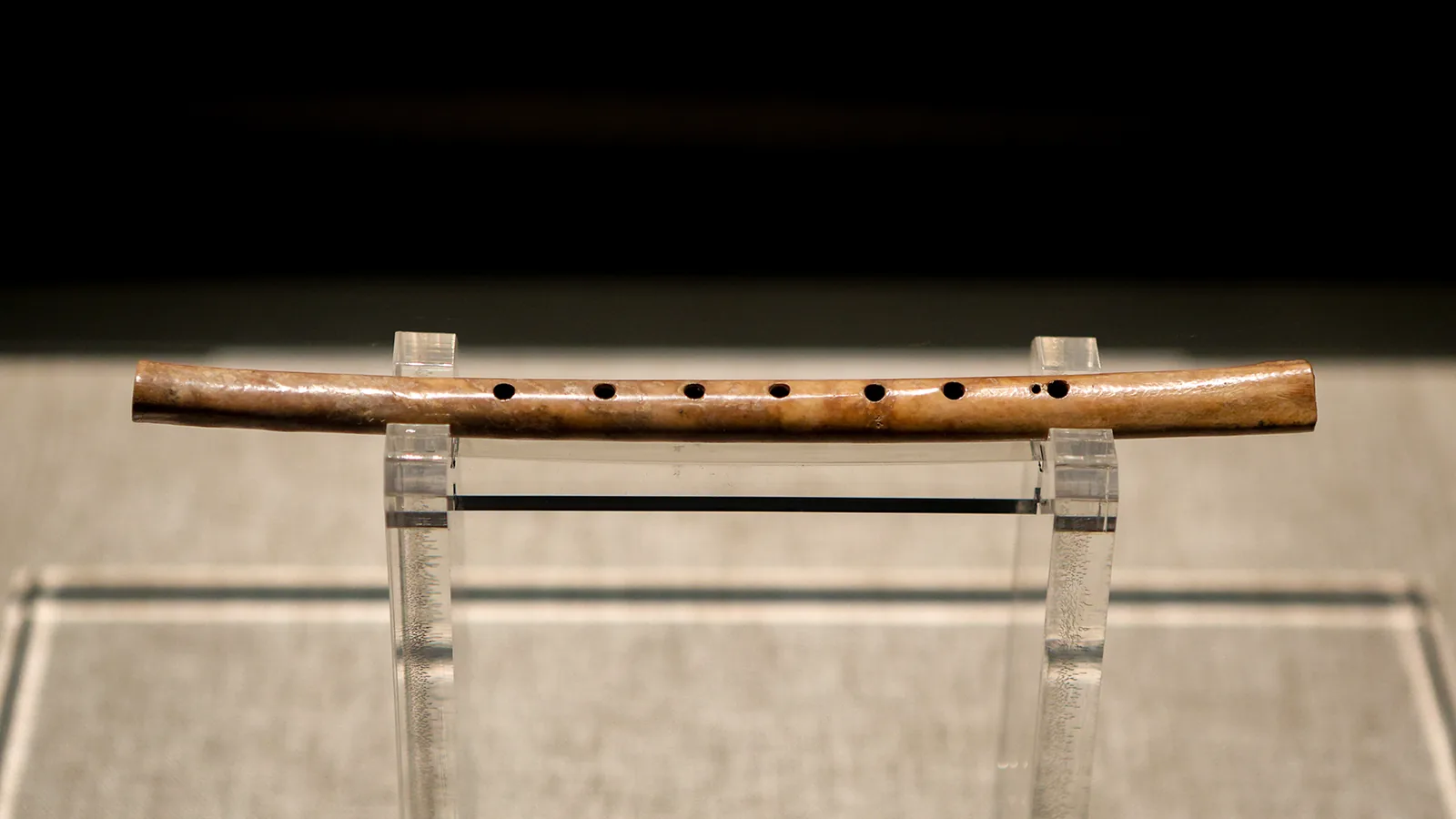

TL;DR — Nature called six crane-bone flutes from Jiahu, China, the earliest playable multinote instruments. Tortoise-shell signs and residues of a rice, honey and fruit drink come from the same site.
Excavations at Jiahu, an early Neolithic site in Henan Province, China, produced what Nature’s 1999 report called “the earliest complete, playable, tightly-dated multinote musical instruments.” The team, led by Juzhong Zhang with Garman Harbottle, Changsui Wang and Zhaochen Kong, described six intact flutes recovered from radiocarbon-dated layers, along with fragments of perhaps 30 more. Jiahu itself, the same paper stated, “was occupied from 7000 BC to 5700 BC, considerably antedating the well known Peiligang culture.”
Quick facts
- When
- Jiahu occupied 7000 to 5700 BC (Nature, 1999); pottery residues dated to three subperiods, 7000-6600 BC, 6600-6200 BC and 6200-5500 BC (PNAS, 2004); silk peptides from tombs dated by radiocarbon to 9,000-7,500 BP (PLoS ONE, 2016)
- Where
- Jiahu site, Wuyang County, Henan Province, China
- Who
- Juzhong Zhang, Garman Harbottle, Changsui Wang and Zhaochen Kong (Nature, 1999); Patrick E. McGovern and coauthors (PNAS, 2004); Xueqiang Li, Harbottle, Zhang and Wang (Antiquity, 2003); Yimin Gong and coauthors (PLoS ONE, 2016)
- Outcome
- Six complete crane-bone flutes with five to eight holes, tortoise-shell signs the excavating team's own paper declined to call writing, and chemical traces of a mixed rice, honey and fruit drink
Six flutes and a wing bone
The intact flutes were “made from the ulnae of the red-crowned crane (Grus japonensis Millen)” and carried five, six, seven or eight holes, Zhang and coauthors wrote. The best-preserved of the six, the paper reported, “has been played and tonally analysed.” Nature received the manuscript on February 15, 1999, accepted it on July 30, and published it on September 23 of that year, in issue 401, pages 366 to 368.
A drink of rice, honey and fruit
A separate team led by Patrick E. McGovern of the University of Pennsylvania Museum analyzed organic residues absorbed into Jiahu pottery jars and reported the results in the Proceedings of the National Academy of Sciences in 2004. Sherds “from 16 vessels were extracted and analyzed from domestic contexts at Jiahu,” radiocarbon-dated and calibrated to three subperiods the paper numbered in reverse chronological order: III, about 7000 to 6600 BC; II, about 6600 to 6200 BC; and I, about 6200 to 5500 BC. Thirteen of the 16 samples matched each other closely across five analytical methods, including gas chromatography-mass spectrometry and Feigl spot tests for tartaric acid, which came back positive in all 13.
Stable isotope ratios in the residue, averaging about -25.1 per mil for carbon-13, matched C3 plants such as rice and grape rather than C4 plants such as millet, and low nitrogen ratios argued against an animal source. McGovern’s team wrote that “rice is the only cereal that has been recovered by archaeobotanical methods at Jiahu, and it is predominant in the corpus.” Long-chain n-alkanes typical of beeswax pointed to honey. For the tartaric acid, the paper set two fruits side by side without choosing between them: wild-type grape seeds, “the primary ancient fruit remains found at Jiahu,” and hawthorn, which “contains four times the amount of tartaric acid in grape” and grows widely across northern China. The paper’s own phrase for the mixture was “a mixed fermented beverage of rice, honey, and fruit (hawthorn fruit and/or grape).” No alcohol molecule itself survived to be measured. “Direct chemical evidence of alcohol is lacking, because this compound is volatile and susceptible to microbial attack,” the authors wrote, inferring fermentation instead from the presence of wine yeast, Saccharomyces cerevisiae, on honey and fruit skins. Domesticated Eurasian grapevine, the paper noted, only reached China from Central Asia in the second century BC.
Signs on a tortoise shell, not called writing
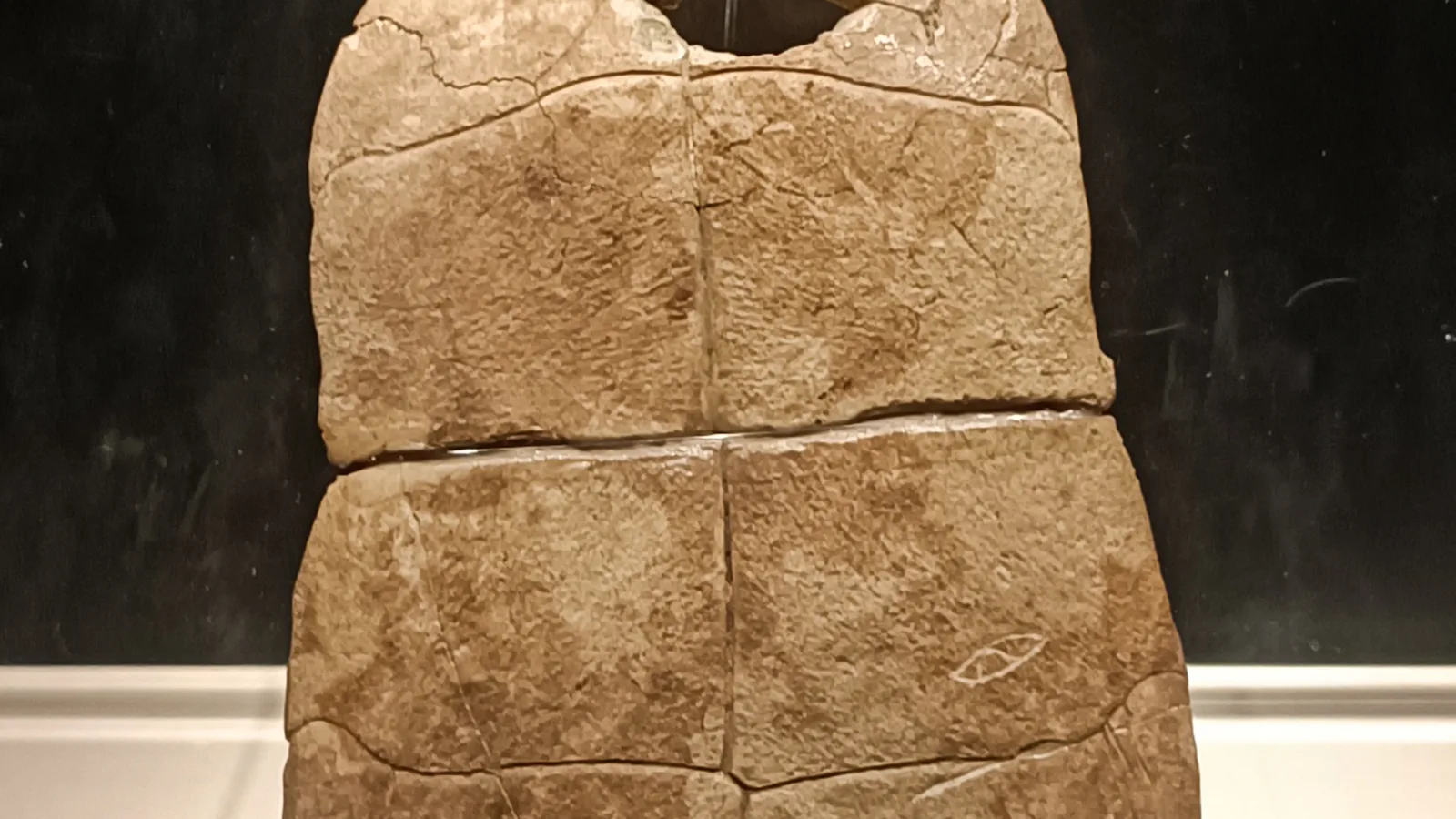
Early Neolithic graves at Jiahu also held tortoise shells incised with signs, some of which anticipate later Chinese characters. Xueqiang Li, Harbottle, Zhang and Wang published the find in Antiquity in 2003 under a title that posed the question directly: “The earliest writing?” Their abstract answered it themselves: “The authors decide rather that the signs in this very early period performed as symbols connected with ritual practice, but they presage a long period of sign use which led eventually to a writing system.” The 2004 PNAS paper, whose authors included Juzhong Zhang, described Jiahu as a site that had produced “possibly the earliest Chinese pictographic writing.”

Silk peptides in three graves
Yimin Gong and coauthors, reporting in PLoS ONE in 2016, extracted soil samples from three Jiahu tombs, designated M436, M451 and M466, and ran them through mass spectrometry and proteomics. Peptides from silk fibroin, the structural protein of silk fiber, turned up in the samples from M436 and M451, including a repeating sequence, GAGAGAGY, characteristic of the fibroin heavy chain. M466 and a control sample carried none. Twenty radiocarbon dates, the paper stated, placed the settlement’s development across three subperiods: “9,000 BP to 8,500 BP, 8,500 BP to 8,000 BP, and 8,000 BP to 7,500 BP,” a span that converts to roughly 7050 to 5550 BC. M436 held a woman with few grave goods; M451 held a double burial, richer in goods, with a single bone needle; M466 held a man with only two objects. “Rough weaving tools and bone needles were also excavated,” the paper noted, “indicating the possibility that the Jiahu residents may possess the basic weaving and sewing skills in making textile.” A separate 2019 paper in Nature Ecology and Evolution, by Nakajima, Hudson, Uchiyama, Makibayashi and Zhang, reported managed aquaculture of common carp at Jiahu by around 6000 BC, based on age-mortality and species-selection profiles of fish bones recovered from the site.
Key facts
- Nature, 1999, described six complete crane-bone flutes with five to eight holes from Jiahu, plus fragments of about 30 more, and called them “the earliest complete, playable, tightly-dated multinote musical instruments.”
- The flutes were made from the ulnae of the red-crowned crane, Grus japonensis.
- Nature dated Jiahu’s occupation to 7000-5700 BC, earlier than the Peiligang culture.
- PNAS, 2004, found tartaric acid, rice-consistent isotope signatures and beeswax markers in 13 of 16 Jiahu pottery samples, indicating a mixed rice, honey and fruit drink.
- The PNAS authors left the fruit source open as “hawthorn fruit and/or grape” and did not detect alcohol directly.
- Antiquity, 2003, reported incised signs on tortoise shells in Jiahu graves and concluded they functioned as ritual symbols, not writing.
- PLoS ONE, 2016, detected silk fibroin peptides in two of three sampled Jiahu tombs, radiocarbon-dated across a span of roughly 7050 to 5550 BC.
- Nature Ecology and Evolution, 2019, reported managed carp aquaculture at Jiahu by about 6000 BC, based on fish-bone age profiles.
FAQ
What were the Jiahu flutes made from?
The ulnae, or lower wing bones, of the red-crowned crane, Grus japonensis. Nature's 1999 paper described six complete flutes with five, six, seven or eight holes, recovered from radiocarbon-dated layers alongside fragments of roughly 30 more.
Did the Jiahu signs count as the earliest Chinese writing?
The excavating team that published the signs in Antiquity in 2003 said no. Their own abstract concluded the incised tortoise-shell marks "performed as symbols connected with ritual practice" rather than writing, while foreshadowing a longer sequence of sign use that eventually led to a writing system.
What was in the Jiahu fermented drink?
Chemical analysis of pottery residues, published in PNAS in 2004, found tartaric acid, rice-consistent carbon isotope ratios and beeswax markers in 13 of 16 samples. The authors described the mixture as rice, honey and fruit, leaving the fruit as "hawthorn fruit and/or grape" without choosing between them.
Sources
- Zhang, J., Harbottle, G., Wang, C. & Kong, Z., "Oldest playable musical instruments found at Jiahu early Neolithic site in China," Nature 401, 366-368 (1999).
- McGovern, P.E. et al., "Fermented beverages of pre- and proto-historic China," Proceedings of the National Academy of Sciences 101(51), 17593-17598 (2004), via PMC.
- Li, X., Harbottle, G., Zhang, J. & Wang, C., "The earliest writing? Sign use in the seventh millennium BC at Jiahu, Henan Province, China," Antiquity 77(295), 31-44 (2003).
- Gong, Y., Li, L., Gong, D., Yin, H. & Zhang, J., "Biomolecular Evidence of Silk from 8,500 Years Ago," PLoS ONE 11(12): e0168042 (2016).
- Nakajima, T., Hudson, M.J., Uchiyama, J., Makibayashi, K. & Zhang, J., "Common carp aquaculture in Neolithic China dates back 8,000 years," Nature Ecology & Evolution 3, 1415-1418 (2019).
Cite this article
- APA
- LETTER. (2026, September 28). Crane-bone flutes from Jiahu, Henan, played again after 9,000 years. Our Earth's History. https://ourearthshistory.com/east-asia/prehistory/jiahu-bone-flutes-henan-7000-bc-rice-fermented-drink-signs/
- Chicago
- LETTER. “Crane-bone flutes from Jiahu, Henan, played again after 9,000 years.” Our Earth's History, September 28, 2026. https://ourearthshistory.com/east-asia/prehistory/jiahu-bone-flutes-henan-7000-bc-rice-fermented-drink-signs/.
- MLA
- LETTER. “Crane-bone flutes from Jiahu, Henan, played again after 9,000 years.” Our Earth's History, 28 Sep. 2026, https://ourearthshistory.com/east-asia/prehistory/jiahu-bone-flutes-henan-7000-bc-rice-fermented-drink-signs/.
Text licensed CC BY-NC-ND 4.0. Found an error? Tell us.