What was the child found in layer 16 at Obi-Rakhmat in 2003?

TL;DR — OR-1, a child found at Obi-Rakhmat in 2003, had Neanderthal-like teeth and an ambiguous skull; a 2025 paper dated its layer, 16, to about 70,000 years.
In 2003, excavators in layer 16 of Obi-Rakhmat Grotto, a rock shelter near Tashkent, recovered six left upper teeth and 121 skull fragments from one juvenile, OR-1. Michelle Glantz of Colorado State University and eight coauthors described the child in 2008 as a subadult with “a relatively Neandertal-like dentition coupled with more ambiguous cranial anatomy.” A companion study that year judged the teeth “essentially Neandertal.” A dental growth study published in 2011 put the age at death at 6.7 to 7.4 years if the child grew at Neanderthal rates. In August 2025 a team led by Hugues Plisson placed layer 16 at about 70,000 years and wrote that, without genomic or proteomic analysis, the question of who lived at the site remained open.
Quick facts
- When
- 1962 (site discovered) · 1998 (joint Russian-Uzbek excavations renewed) · 2003 (OR-1 recovered from layer 16) · 2008 (first descriptions in the Journal of Human Evolution) · 2011 (dental development study) · August 11, 2025 (Plisson and colleagues, PLOS ONE)
- Where
- Obi-Rakhmat Grotto, Paltau River valley, western Tian Shan, 100 km northeast of Tashkent, Uzbekistan, 1,250 m above sea level
- Who
- Michelle (Mica) Glantz and coauthors (2008); Shara Bailey, Michelle Glantz, Timothy D. Weaver and Bence Viola (2008); Tanya M. Smith and coauthors (2011); Hugues Plisson and coauthors (2025); A. P. Derevianko and A. I. Krivoshapkin (excavations)
- Outcome
- The teeth of OR-1 were judged "essentially Neandertal," while the cranial fragments stayed ambiguous; a 2011 study put the age at death at 6.7 to 7.4 years on Neanderthal growth rates or about 8 to 9 on modern European standards; in 2025 layer 16 was given as about 70,000 years old and the child's identity was left open
Layer 16 in a niche above the Paltau River
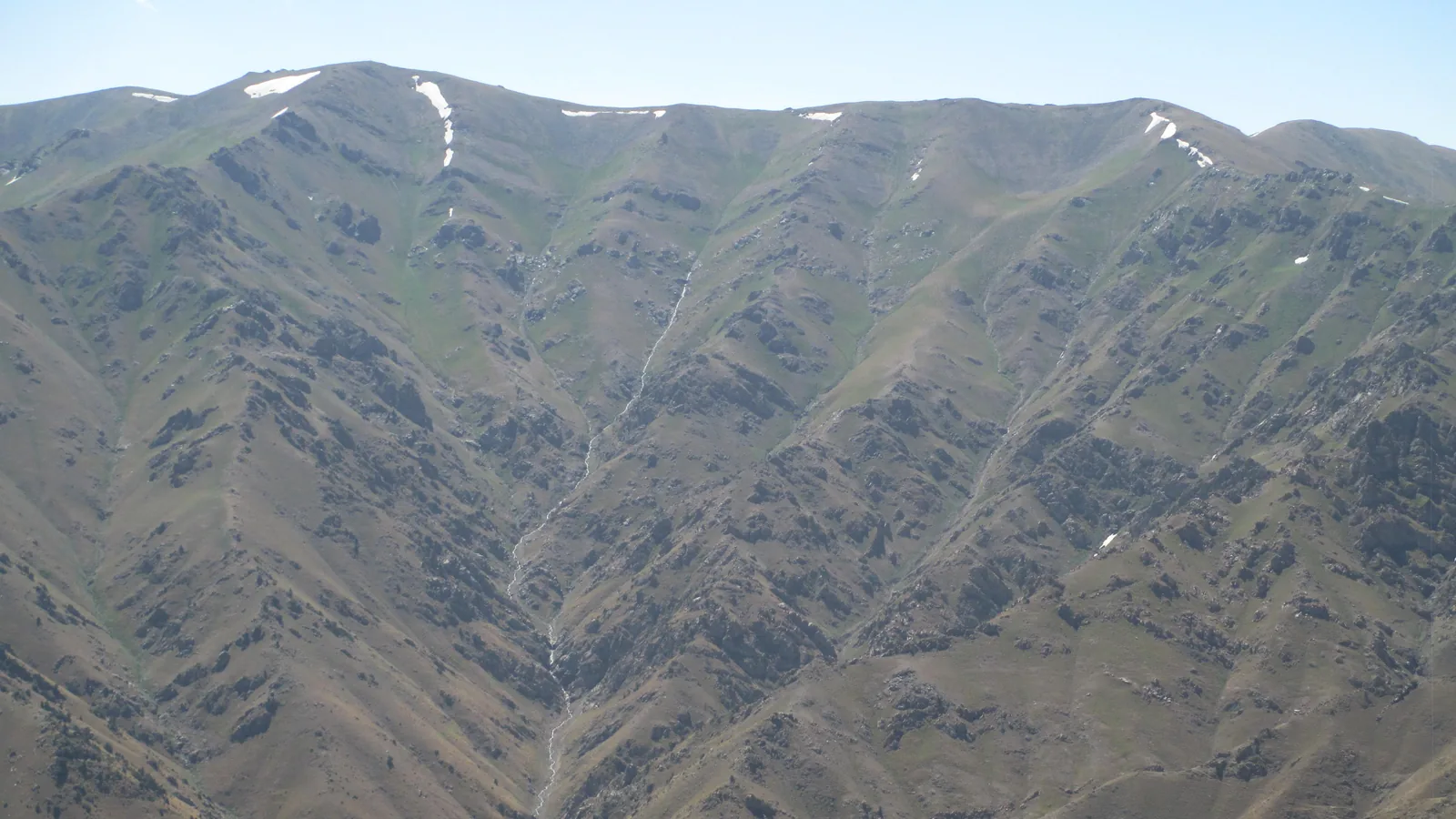
The grotto, 100 km northeast of Tashkent, is a south-facing niche 20 m wide at the entrance, cut into a limestone cliff at 1,250 m above sea level in the western Tian Shan, in the valley of the Paltau River. A team from the Institute of History and Archaeology of the Uzbekistan Academy of Sciences found the site in 1962, according to the 2006 account by A. I. Krivoshapkin, A. A. Anoikin and P. J. Brantingham. M. M. Gerasimov and H. K. Nasretdinov led the first digs, R. H. Suleimanov directed work in 1964 and 1965, and T. Omanzhulov and K. A. Krakhmal dug sporadically from 1966 to 1986. In 1998 a joint team from the Institute of Archaeology and Ethnography in Novosibirsk and the Uzbek Institute of Archaeology reopened the site under A. P. Derevianko.
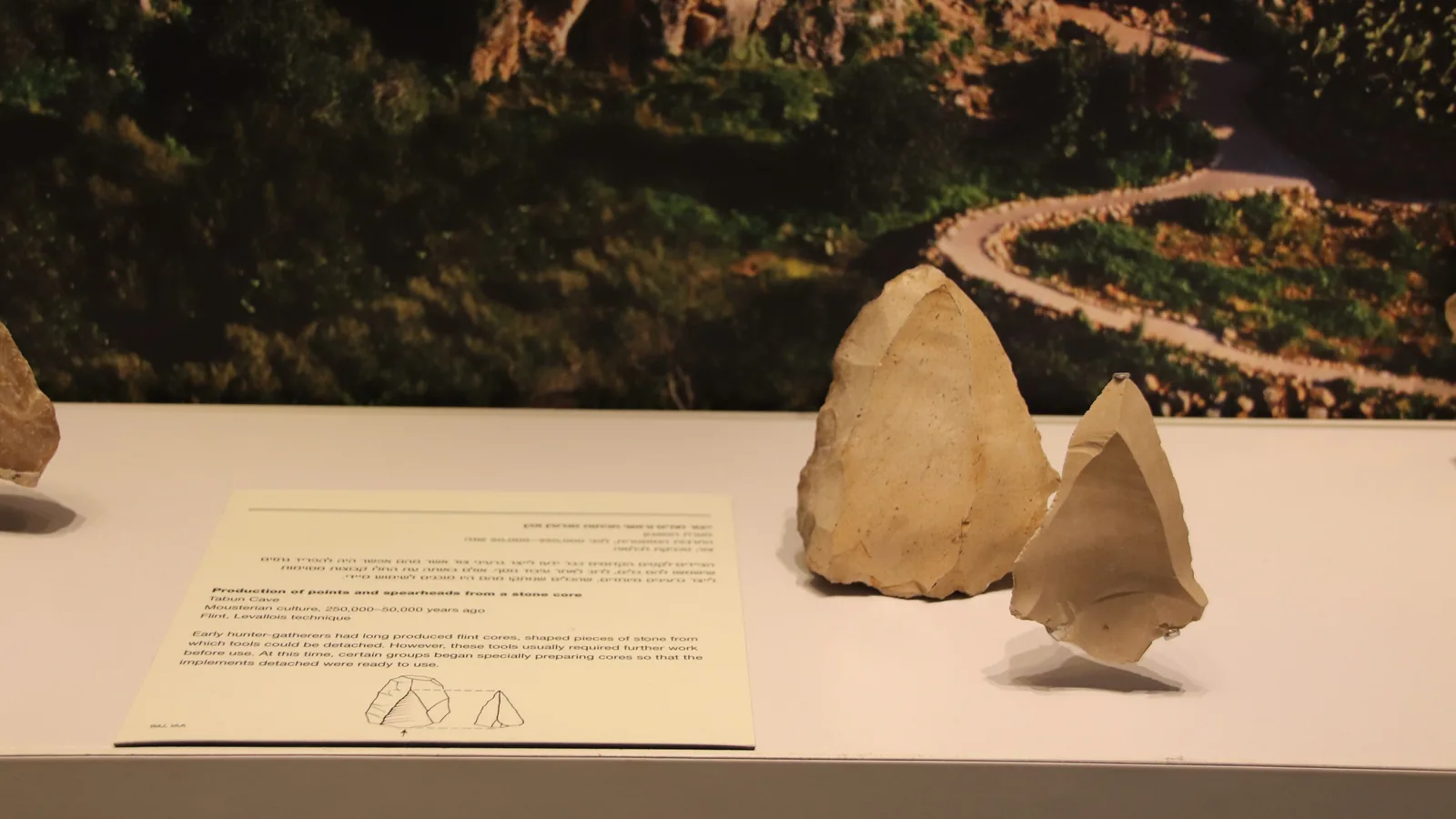
The deposits yielded Middle Paleolithic tools, from the middle stage of the Old Stone Age. The 2006 authors described an industry “based on Levallois technology,” a way of preparing a stone core so that a blank of planned shape comes off with one blow, and argued from it that a gradual transition toward the Upper Paleolithic, the later stage, took place in western Central Asia “prior to 50,000 years ago.” Stratum 14.1, higher in the sequence, gave an accelerator mass spectrometry (AMS) radiocarbon date of 48,800±2400 BP. Below it, stratum 16 was made of dense cemented deposits with a sharp drop in limestone debris.
The child came out of that layer. Derevianko, Krivoshapkin and six coauthors published an analysis of the stone industry and anthropological finds from layer 16 in a Novosibirsk volume the same year, 2003. Glantz’s 2008 paper put the find in context: “almost no hominin fossil material has been discovered in the area since Teshik-Tash 1 in 1938.”
Twenty-eight dental traits, one molar and a growth clock
Shara Bailey, Glantz, Timothy D. Weaver and Bence Viola tested the teeth two ways in 2008. The first analysis scored 28 non-metric dental traits, features of tooth shape judged by eye rather than measured, in Neanderthals and in Middle and Upper Paleolithic modern humans, and asked which group OR-1 most probably belonged to. The second measured the shape of the first upper molar. “The results of both analyses suggest the dentition of OR-1 is essentially Neandertal,” they wrote. They described the individual as a mosaic: “the dentition appears archaic, while certain morphological aspects of the cranial fragments may be more ambiguous.”
Tanya M. Smith and colleagues counted growth lines on the same teeth in a 2011 chapter. They identified one odd upper molar as a left second molar with “a rare developmental condition (gemination).” The number of perikymata, fine growth lines on the crown surface, matched modern southern African averages but fell below the means for modern northern Europeans and Neanderthals. Assuming a Neanderthal growth rhythm, they wrote, “the maximum age at death of OR-1 is estimated at 8.1 years, but is more likely to have been 6.7–7.4 years.” Modern European standards “would suggest an age at death of approximately 8–9 years.”
In 2025, points in the lower layers and a date for the child
Plisson and his coauthors returned to the sequence in PLOS ONE. They counted 21 sedimentary levels across 10 m of deposit and wrote that dating attempts using radiocarbon, uranium-series and electron spin resonance “have yielded heterogeneous results,” yet fixed, in thousands of years (ka), “a chronological range from 90 ka for the deepest strata to 40 ka for the uppermost levels.” Their microscope study of 20 impacted pieces from layers 20 and 21 identified three types of weapon tip, including small triangular micropoints they judged “too narrow for having been fitted to anything other than arrow-like shafts.”
The paper then turned to OR-1. Its authors wrote that “the mosaic of cranial morphological features prevents a definitive attribution, leaving open a classification as an archaic Homo sapiens,” and that the most immediate assumption would be a hybrid of Homo sapiens with Neanderthals or with Denisovans. “For now, the absence of genomic or proteomic analysis at Obi-Rakhmat leaves the question open,” they wrote. In that paper, published on August 11, 2025, layer 16 was given an age of about 70,000 years and the arrow-like points in layers 20 and 21 an age of about 80,000.

Key facts
- Obi-Rakhmat Grotto, 100 km northeast of Tashkent at 1,250 m above sea level, was found in 1962; excavations resumed under A. P. Derevianko in 1998.
- In 2003 layer 16 yielded OR-1: six left upper teeth and 121 skull fragments from one juvenile (Plisson and colleagues, 2025).
- Bailey, Glantz, Weaver and Viola judged the teeth “essentially Neandertal” in 2008, from 28 non-metric traits and the shape of the first upper molar.
- Smith and colleagues estimated in 2011 an age at death of 6.7 to 7.4 years on Neanderthal growth rates (maximum 8.1), or about 8 to 9 on modern European standards.
- On August 11, 2025, Plisson and colleagues gave layer 16 an age of about 70,000 years and reported arrow-like micropoints from layers 20 and 21, about 80,000 years old.
FAQ
Was the Obi-Rakhmat child a Neanderthal?
The teeth point that way: Bailey and colleagues concluded in 2008 that the dentition "is essentially Neandertal." The skull fragments did not settle it, and Plisson and colleagues wrote in 2025 that they leave open a classification as an archaic Homo sapiens. They added that no genomic or proteomic analysis had been done at Obi-Rakhmat.
How old was OR-1 at death?
Smith and colleagues' 2011 study of growth lines on the teeth gave 6.7 to 7.4 years if the child grew at Neanderthal rates, with a maximum of 8.1, and about 8 to 9 years on modern European standards.
How old is layer 16 at Obi-Rakhmat?
Plisson and colleagues gave it as about 70,000 years old in 2025. The site as a whole spans roughly 90,000 years at the base to 40,000 at the top, from radiocarbon, uranium-series and electron spin resonance dates that do not fully agree.
What did the 2025 PLOS ONE paper find at Obi-Rakhmat?
It reported three types of weapon tip among 20 impacted pieces from layers 20 and 21, about 80,000 years old, including micropoints the authors judged too narrow for anything but arrow-like shafts.
Sources
- A. I. Krivoshapkin, A. A. Anoikin and P. J. Brantingham, "The lithic industry of Obi-Rakhmat Grotto, Uzbekistan," Bulletin of the Indo-Pacific Prehistory Association 26 (2006): 5-19.
- Hugues Plisson, Alena V. Kharevich, Vladimir M. Kharevich et al., "Arrow heads at Obi-Rakhmat (Uzbekistan) 80 ka ago?," PLOS ONE 20(8) (2025): e0328390, published August 11, 2025.
- Michelle Glantz, Bence Viola, Patrick Wrinn et al., "New hominin remains from Uzbekistan," Journal of Human Evolution 55(2) (2008): 223-237, abstract via Europe PMC.
- Shara Bailey, Michelle Glantz, Timothy D. Weaver and Bence Viola, "The affinity of the dental remains from Obi-Rakhmat Grotto, Uzbekistan," Journal of Human Evolution 55(2) (2008): 238-248, abstract via Europe PMC.
- Tanya M. Smith, Donald J. Reid, Anthony J. Olejniczak et al., "Dental Development and Age at Death of a Middle Paleolithic Juvenile Hominin from Obi-Rakhmat Grotto, Uzbekistan," in S. Condemi and G.-C. Weniger (eds.), Continuity and Discontinuity in the Peopling of Europe (Springer, 2011): 155-163, abstract.
- Institute of Archaeology and Ethnography, Siberian Branch of the Russian Academy of Sciences, bibliography of A. I. Krivoshapkin.
- Colorado State University, College of Liberal Arts, faculty profile of Mica Glantz.
Cite this article
- APA
- LETTER. (2026, September 28). What was the child found in layer 16 at Obi-Rakhmat in 2003? Our Earth's History. https://ourearthshistory.com/central-asia/prehistory/obi-rakhmat-2003-or1-child-teeth-layer-16-uzbekistan/
- Chicago
- LETTER. “What was the child found in layer 16 at Obi-Rakhmat in 2003?” Our Earth's History, September 28, 2026. https://ourearthshistory.com/central-asia/prehistory/obi-rakhmat-2003-or1-child-teeth-layer-16-uzbekistan/.
- MLA
- LETTER. “What was the child found in layer 16 at Obi-Rakhmat in 2003?” Our Earth's History, 28 Sep. 2026, https://ourearthshistory.com/central-asia/prehistory/obi-rakhmat-2003-or1-child-teeth-layer-16-uzbekistan/.
Text licensed CC BY-NC-ND 4.0. Found an error? Tell us.