The Denisovans: a human population known first from a finger bone

TL;DR — A fingertip bone dug up in 2008 at Denisova Cave in the Altai carried DNA unlike any Neanderthal or modern human; its population was named the Denisovans in 2010.
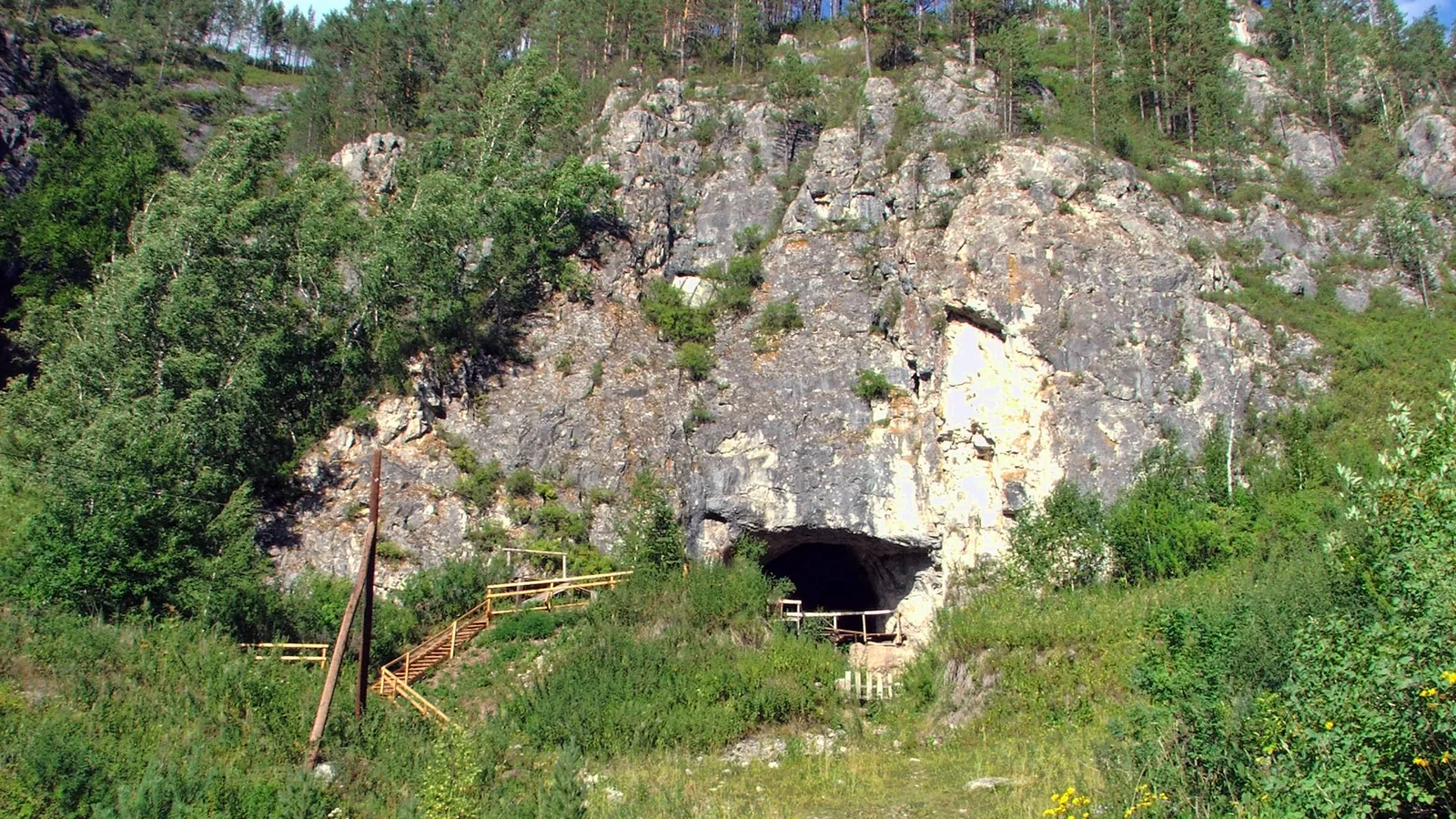
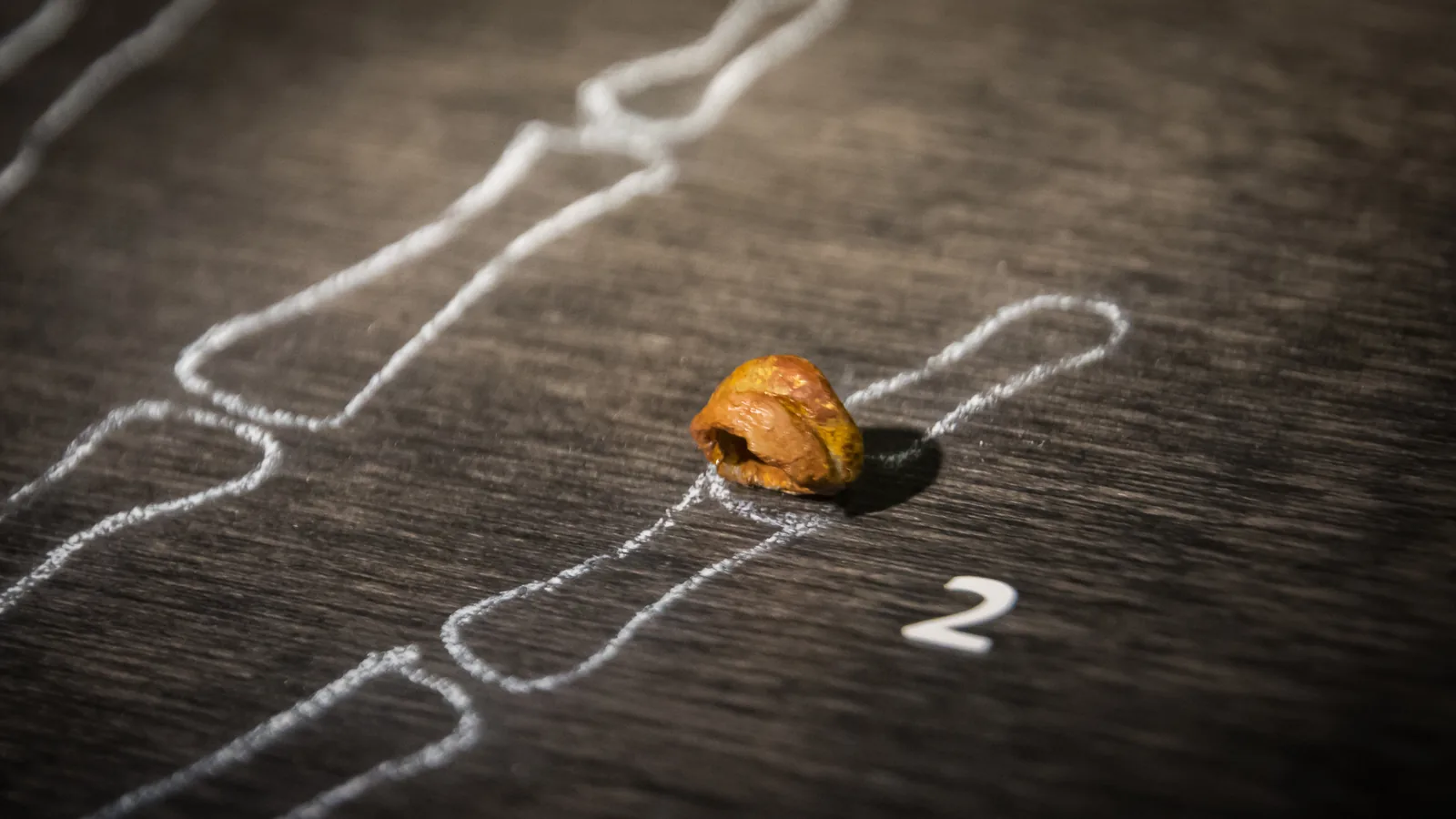
A piece of a little finger, dug from Denisova Cave in the Altai Mountains in 2008, was the first trace of a human population with no name and no face. The cave lies in southern Siberia, in Russia, and the dig was run by the Institute of Archaeology and Ethnography in Novosibirsk under Anatoly Derevianko and Michael Shunkov. In April 2010 Johannes Krause, Svante Pääbo and colleagues at the Max Planck Institute for Evolutionary Anthropology in Leipzig published the bone’s mitochondrial DNA in Nature; in December David Reich and a larger team published its nuclear genome and named the population “Denisovans.” Later finds, a mixed-parentage child in the same cave and a jawbone on the Tibetan Plateau, were tied to that population. In 2022 the Nobel Assembly cited the discovery when it gave Pääbo the prize in physiology or medicine.
Quick facts
- When
- Finger bone excavated 2008; mitochondrial DNA published April 2010, nuclear genome December 2010; cave deposits dated 300,000 to 20,000 years old (2019); Nobel Prize October 3, 2022
- Where
- Denisova Cave, Altai Mountains, southern Siberia, Russia; Baishiya Karst Cave at Xiahe on the Tibetan Plateau, Gansu, China
- Who
- Johannes Krause, David Reich and Svante Pääbo (DNA); Anatoly Derevianko and Michael Shunkov (excavation, Novosibirsk); Viviane Slon (Denisova 11); Zenobia Jacobs and Katerina Douka (dating); Fahu Chen (Xiahe)
- Outcome
- A third human population named the Denisovans, known by genome before anatomy; their DNA survives in Tibetans (EPAS1) and at 4 to 6 percent in Melanesians; Pääbo won the 2022 Nobel Prize in Physiology or Medicine
The bone and the two papers of 2010
The 2010 abstract by Krause and colleagues describes the fossil as “part of the fifth ‘little finger’ digit,” excavated in 2008 from a layer whose stratigraphy put the individual “close in time and space with Neanderthals as well as with modern humans.” Its mitochondrial DNA, the small genome passed down the maternal line, shared a common ancestor with the mitochondrial DNA of modern humans and Neanderthals “about 1.0 million years ago.” That was older than the split between the other two groups, so the authors wrote that it came from a separate migration out of Africa.
The December paper by Reich and colleagues read the nuclear genome from the same bone at about 1.9-fold coverage. The abstract states that the individual, a female, belonged to a group that “shares a common origin with Neanderthals” and that its DNA “contributed 4–6% of its genetic material to the genomes of present-day Melanesians.” A tooth from the cave carried a near-identical mitochondrial genome and, the abstract states, “shares no derived morphological features with Neanderthals or modern humans.” On that basis the authors coined the name. In 2012 Matthias Meyer and colleagues raised the coverage to about 30-fold from the same fragment, according to the Leipzig institute’s project page.

What the cave held, and how old its layers are
Two dating papers in Nature in January 2019 gave the cave a timescale. Zenobia Jacobs, Bo Li and a team that included Shunkov and Derevianko dated the sediments by optical methods and reconstructed hominin occupation “from around 300,000 to 20,000 years ago.” Katerina Douka and colleagues combined 50 radiocarbon dates, three direct dates on hominin fragments and a Bayesian model. Their oldest Denisovan fossil came out at up to 195,000 years, the youngest at 52,000 to 76,000 years, and all Neanderthal fossils at 80,000 to 140,000 years.
Douka’s team also dated tooth pendants and bone points from the cave’s Upper Paleolithic layers to between 43,000 and 49,000 calibrated years, the earliest such ornaments known in northern Eurasia. A chloritolite bracelet appears in the Jacobs paper’s list of Initial Upper Paleolithic finds, alongside a marble ring, ivory pendants and a bone needle. Who made these things is unsettled. The Douka abstract allows that the ornaments may belong to the Denisovan population, then adds that whether “anatomically modern humans were involved in their production” cannot be determined, since no modern-human fossil or DNA of that age has been found in the Altai.
A child with a Neanderthal mother and a Denisovan father
Among the bone scraps from the cave was a fragment cataloged as Denisova 11. In September 2018 Viviane Slon and colleagues published its genome and reported that it belonged to a first-generation child of a Neanderthal mother and a Denisovan father. The father’s own genome carried traces of Neanderthal ancestry. Douka’s model placed Denisova 11 between 80,000 and 140,000 years old. The two groups had separated “more than 390,000 years ago,” the Slon abstract states, yet a mixed child turned up among the handful of archaic genomes sequenced. The authors took that as a sign that mixing was common when the groups met.
Where Denisovan DNA lives now: the Tibetan Plateau and New Guinea
For nine years every Denisovan fossil came from one cave. Then in May 2019 Fahu Chen and colleagues reported a lower jaw from Baishiya Karst Cave at Xiahe, in Gansu, China, on the Tibetan Plateau. Ancient proteins in it identified it as Denisovan, and uranium-series dating of a carbonate crust put it at “at least 160 thousand years old.” The abstract calls it “direct evidence of the Denisovans outside the Altai Mountains” and concludes that archaic hominins lived at high altitude “long before the regional arrival of modern Homo sapiens.”
That fits a genetic result published five years earlier. In 2014 Emilia Huerta-Sánchez and colleagues sequenced the region around the gene EPAS1, part of the body’s response to low oxygen, in 40 Tibetans and 40 Han Chinese. The Tibetan version of the gene had a haplotype structure that, the abstract states, “can only be convincingly explained by introgression of DNA from Denisovan or Denisovan-related individuals,” and the same haplotype was found in Denisovans and Tibetans and at very low frequency among Han Chinese. The Nobel press release of October 3, 2022, which awarded Pääbo the prize “for his discoveries concerning the genomes of extinct hominins and human evolution,” named this gene as one physiological trace of the ancient mixing, and said that Denisovan ancestry was first seen in Melanesia and other parts of Southeast Asia, where people carry up to 6 percent Denisovan DNA. The Smithsonian’s Human Origins Program puts the highest concentration in Papua New Guinea and Oceania. The bone that started it was a fingertip; the population it belonged to is now read in the genomes of people living on the plateau and the islands.
Key facts
- The first Denisovan fossil was part of a fifth-finger bone excavated in 2008 at Denisova Cave in the Altai Mountains, southern Siberia, by the Institute of Archaeology and Ethnography, Novosibirsk.
- Krause and colleagues published its mitochondrial DNA in April 2010; Reich and colleagues published the nuclear genome and the name “Denisovans” in December 2010, with a 4 to 6 percent contribution to Melanesian genomes.
- Optical dating by Jacobs and Li in 2019 put hominin occupation of the cave at about 300,000 to 20,000 years ago; Douka’s model put the oldest Denisovan fossil at up to 195,000 years.
- Denisova 11, sequenced by Slon in 2018, was a first-generation child of a Neanderthal mother and a Denisovan father, dated to 80,000 to 140,000 years.
- The Xiahe mandible from Baishiya Karst Cave, Gansu, reported by Chen in 2019, is at least 160,000 years old and the first Denisovan fossil found outside the Altai.
- Svante Pääbo received the 2022 Nobel Prize in Physiology or Medicine “for his discoveries concerning the genomes of extinct hominins and human evolution.”
FAQ
Who were the Denisovans?
A population of archaic humans in eastern Eurasia, closer to Neanderthals than to modern humans, known first from the DNA of a finger bone found in Denisova Cave in 2008. They have no formal species name because too few fossils exist to describe one.
Do people alive now carry Denisovan DNA?
Yes. Reich's 2010 genome paper found a 4 to 6 percent contribution in present-day Melanesians, and the 2014 EPAS1 study found a Denisovan-derived haplotype in Tibetans that helps the body cope with low oxygen.
Did the Denisovans make the ornaments found in the cave?
No published study has settled it. Douka and colleagues dated tooth pendants and bone points to 43,000 to 49,000 years and wrote that modern-human involvement could not be ruled out, since no modern-human fossil of that age is known from the Altai.
Sources
- Johannes Krause et al. — "The complete mitochondrial DNA genome of an unknown hominin from southern Siberia," Nature 464 (April 2010), abstract.
- David Reich et al. — "Genetic history of an archaic hominin group from Denisova Cave in Siberia," Nature 468 (December 2010), abstract.
- Viviane Slon et al. — "The genome of the offspring of a Neanderthal mother and a Denisovan father," Nature 561 (September 2018), abstract.
- Zenobia Jacobs, Bo Li et al. — "Timing of archaic hominin occupation of Denisova Cave in southern Siberia," Nature 565 (January 2019), abstract.
- Katerina Douka et al. — "Age estimates for hominin fossils and the onset of the Upper Palaeolithic at Denisova Cave," Nature 565 (January 2019), abstract.
- Fahu Chen et al. — "A late Middle Pleistocene Denisovan mandible from the Tibetan Plateau," Nature 569 (May 2019), abstract.
- Emilia Huerta-Sánchez et al. — "Altitude adaptation in Tibetans caused by introgression of Denisovan-like DNA," Nature 512 (August 2014), abstract.
- Max Planck Institute for Evolutionary Anthropology — "Denisovan Genome," genome project page citing Meyer et al., Science 338 (2012).
- The Nobel Assembly at Karolinska Institutet — press release, "The Nobel Prize in Physiology or Medicine 2022" (October 3, 2022).
- Smithsonian National Museum of Natural History, Human Origins Program — "Ancient DNA and Neanderthals," section "Another Lost Relative: Identifying the Denisovans."
Cite this article
- APA
- Our Earth's History. (2026, September 21). The Denisovans: a human population known first from a finger bone. Our Earth's History. https://ourearthshistory.com/central-asia/prehistory/denisovans-finger-bone-altai-cave/
- Chicago
- Our Earth's History. “The Denisovans: a human population known first from a finger bone.” Our Earth's History, September 21, 2026. https://ourearthshistory.com/central-asia/prehistory/denisovans-finger-bone-altai-cave/.
- MLA
- “The Denisovans: a human population known first from a finger bone.” Our Earth's History, 21 Sep. 2026, https://ourearthshistory.com/central-asia/prehistory/denisovans-finger-bone-altai-cave/.
Text licensed CC BY-NC-ND 4.0. Found an error? Tell us.