Hathnora, 1982: the Narmada skull cap and its changing names

TL;DR — The Narmada calvaria, found at Hathnora in 1982, was named Homo erectus narmadensis, then Homo sapiens in 1991; ESR dates on nearby teeth ran from 49 to 407 ka.
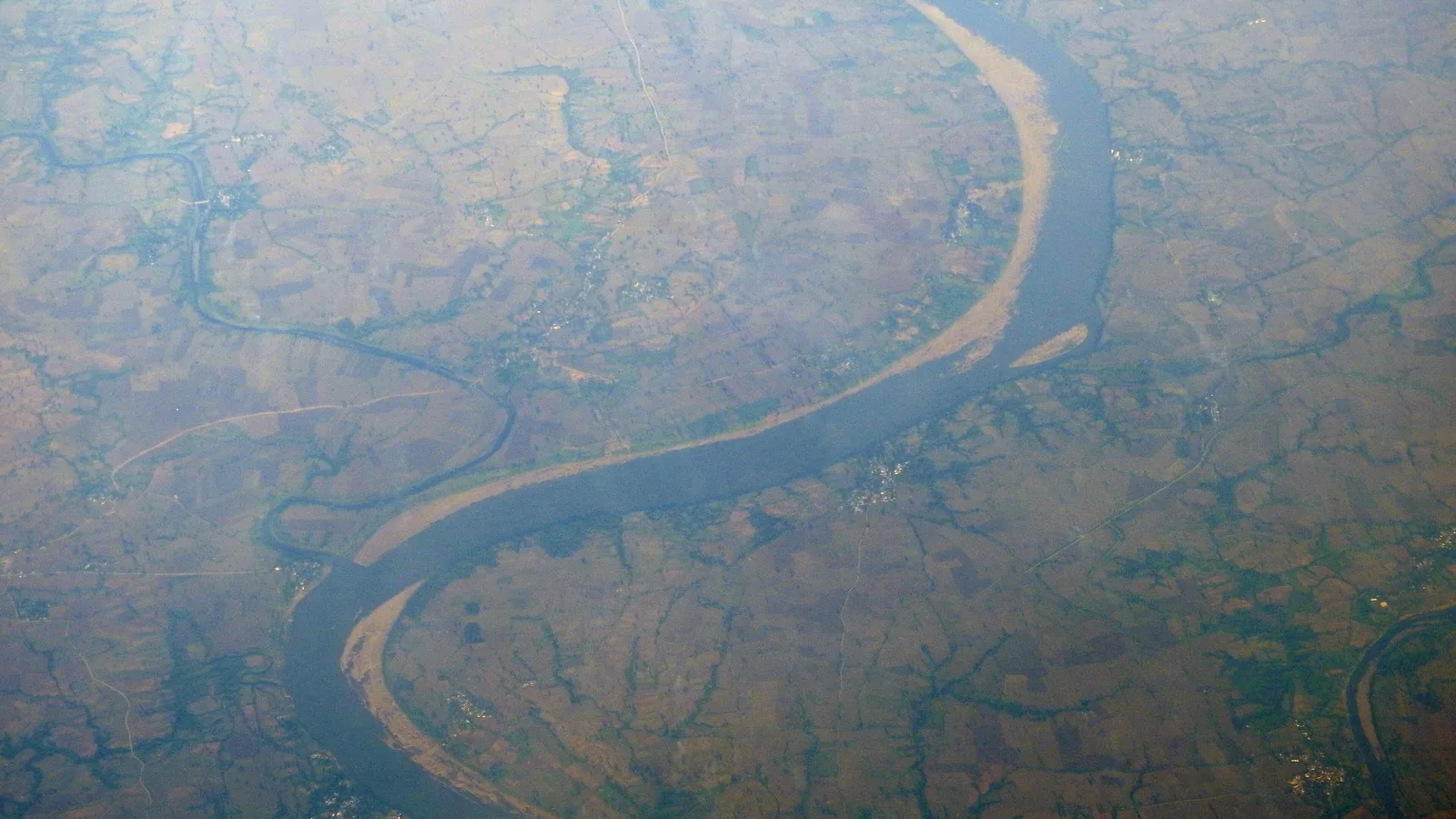
“In 1982 a fossil hominid calvaria was found in a middle Pleistocene deposit in the central Narmada valley of Madhya Pradesh, India.” So begins a 1991 paper by Kenneth A. R. Kennedy of Cornell University, Arun Sonakia, J. Chiment and K. K. Verma. The skull cap came from Hathnora, near Hoshangabad. It was first assigned to a new taxon, Homo erectus narmadensis; the 1991 paper, with Sonakia among its authors, called it Homo sapiens. A clavicle from the same gravels followed in 1997. In 2009 a Panjab University team dated teeth tied to the calvaria and found the fossils moved and mixed. A review in December 2022 still counted the Narmada cranium among Asian fossils under discussion.
Quick facts
- When
- 1982 (calvaria found); September 1985 (Sonakia's paper in American Anthropologist); December 1991 (Kennedy and colleagues call it Homo sapiens); January 1997 (clavicle reported); February 2009 (ESR dates published); December 2022 (Harvati and Reyes-Centeno review)
- Where
- Hathnora, near Hoshangabad, in the central Narmada valley of Madhya Pradesh, India; the fossil came from the Boulder Conglomerate at the base of the Narmada alluvium
- Who
- Arun Sonakia; Kenneth A. R. Kennedy of Cornell University, with J. Chiment and K. K. Verma; Anek R. Sankhyan of the Anthropological Survey of India; R. Patnaik and colleagues at Panjab University; Katerina Harvati and Hugo Reyes-Centeno
- Outcome
- First assigned to the new taxon Homo erectus narmadensis, the calvaria was identified as Homo sapiens in 1991 and called Homo erectus/archaic Homo sapiens in 1997; ESR dates on three associated teeth ran from 49 ± 1 ka to 407 ± 21 ka, and the 2009 team found the fossils reworked and temporally mixed
Hathnora, near Hoshangabad: a bed of boulders under the silt
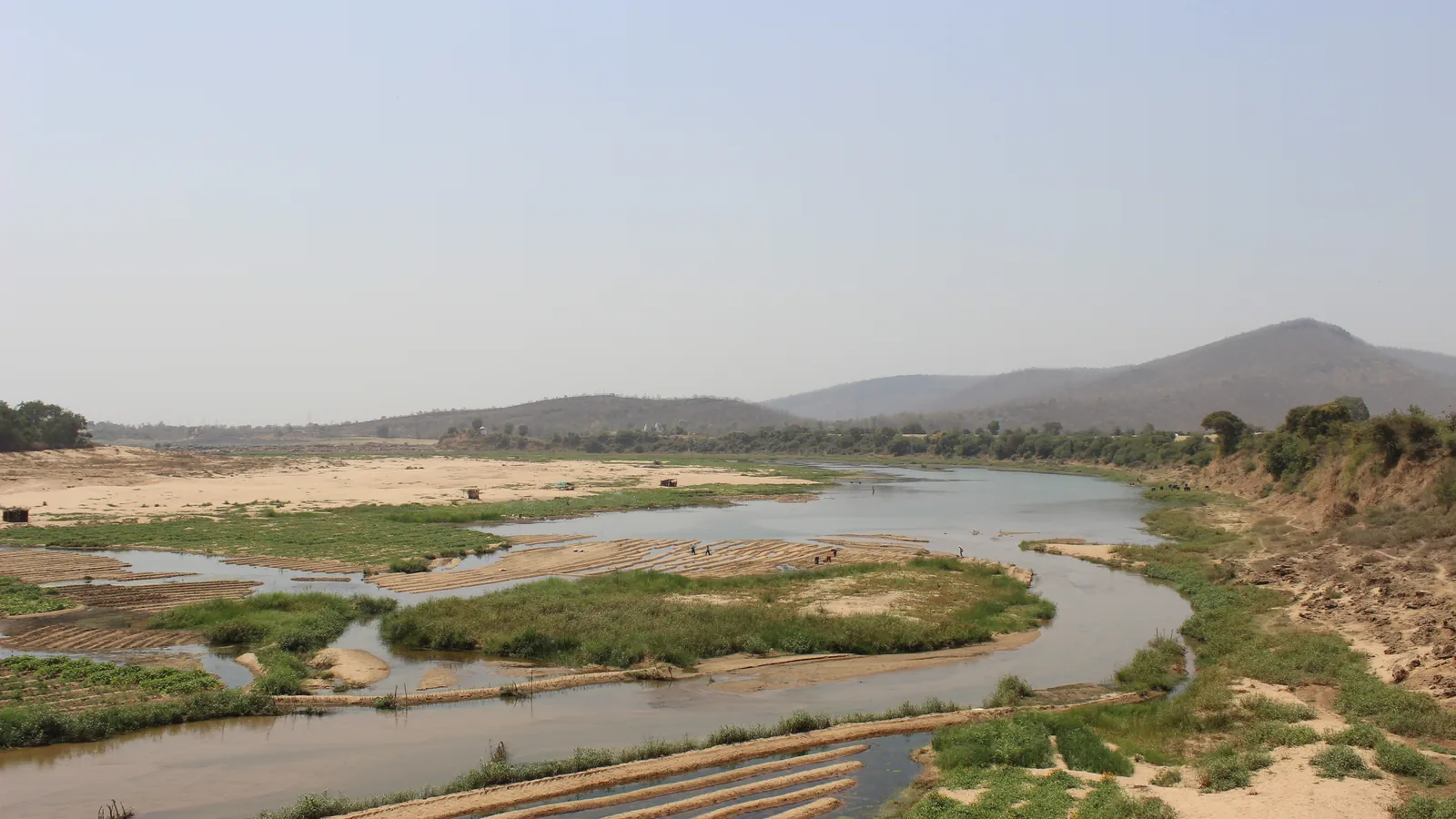
The bone lay in the Boulder Conglomerate, the lowest unit of the Narmada alluvium. A. A. Khan and A. Sonakia described that alluvium in the Journal of the Geological Society of India in February 1992. The upper 70 m to 90 m, they wrote, had been laid down in a single episode of building up, with minor pauses when the alluvium was cut into two terraces. Three units made up the pile: the Boulder conglomerate at the base, then the Sohagpur and Shahganj Formations. They wrote that the fossil-bearing conglomerate “is considered to be of middle Pleistocene age.”
Sonakia had published the find in American Anthropologist in September 1985, under the title “Skull Cap of an Early Man from the Narmada Valley Alluvium (Pleistocene) of Central India.” Crossref lists Kennedy as second author. The 2009 fieldwork placed the fossil-bearing conglomerate within the Surajkund Formation, where it forms a relict terrace, and found stone tools of mixed styles and animal bones of mixed ages in the same layer.
"The oldest known fossil hominin in southern Asia": dates from 1997 to 2009
That phrase opens the abstract of the 2009 paper by R. Patnaik of Panjab University, Chandigarh, and seven coauthors in the Journal of Human Evolution. Dates had been proposed before. In 1997 Anek R. Sankhyan of the Anthropological Survey of India, Calcutta, wrote that the cranium had been dated to between 0.2 and 0.7 ma (million years ago). Patnaik’s team gave the estimates in use as a maximum age of more than 236 ka (thousand years), probably no older than the early middle Pleistocene, and added that the calvaria “could be considerably younger.”
They dated three mammal teeth from the same layers as the calvaria by electron spin resonance (ESR). Each result depends on the model assumed for uranium uptake by the tooth. Two teeth from the reworked surface deposit averaged 49 ± 1 ka under an early-uptake model, 83 ± 2 ka under linear uptake and 196 ± 7 ka under recent uptake. A third, from freshly exposed crossbedded gravels, gave 93 ± 5 ka, 162 ± 8 ka and 407 ± 21 ka.
Linear-uptake ages, the authors wrote, “usually provide the most accurate ages for this environment and time range,” while early-uptake ages give the minimum. The fossils, they concluded, were reworked and temporally mixed. The team set the minimum possible age of the calvaria at 49 ± 1 ka and allowed that it could have entered the Hathnora deposit any time after 160 ka, or earlier under the recent-uptake ages.

1985 to 1997: from Homo erectus narmadensis to Homo sapiens
After the first description, two research teams, one from France and one from the United States, each working with Indian colleagues, measured the skull cap. The 1991 paper reported the more recent study. The calvaria, its authors wrote, shared some features with Asian Homo erectus but showed a broader set of traits suggesting affinities with early Homo sapiens fossils from Asia, Europe and Africa. They concluded that “Narmada Man” was “appropriately identified as Homo sapiens,” and traced its unique features “perhaps” to “the incoherent classificatory condition of the genus Homo.” Sonakia, who had described the skull cap in 1985, was a coauthor of the reclassification.
Six years later Sankhyan reported a clavicle from the Boulder Conglomerate horizon at Hathnora. He wrote that “clavicles are hitherto unrepresented in the fossil record of Asia,” and his abstract called the skull a “Homo erectus/archaic Homo sapiens partial cranium.” He described the collarbone as very short and robust, “far shorter than even the early African Homo erectus clavicles,” and “about the size that would be expected in an adult human pygmy.” Sankhyan wrote that the bone reopened the debate on where the Narmada hominid belonged.
Table 1 of the 2022 review: a name without an asterisk
Katerina Harvati of the University of Tübingen and Hugo Reyes-Centeno surveyed the genus Homo in the Middle and Late Pleistocene for the Journal of Human Evolution. Discussing which fossils might belong to the Denisovans, a genetic lineage close to Neanderthals, they named new finds from China and then “well-studied specimens, such as e.g., the Narmada cranium, India,” citing Sonakia, Sankhyan, Sheela Athreya and Kennedy. The next sentence turned to another name: “In this tangle of proposed hominin species, no taxon is more contentious than Homo heidelbergensis.”
The review’s Table 1 lists species attributed to Middle to Late Pleistocene Homo. One row reads Homo narmadensis, with the holotype given as U2-Hathnora, the holotype elements as clavicles and the reference as Sankhyan, 2020. The name belongs to the collarbones, not to the skull cap. An asterisk in the table marks species inscribed in ZooBank, the official register of the International Commission on Zoological Nomenclature. Homo heidelbergensis and Homo longi carry one; six other names, among them Homo helmei and Homo steinheimensis, do not. When the review appeared in the journal’s December 2022 issue, Homo narmadensis had none.
Key facts
- In 1982 a hominid calvaria was found in a middle Pleistocene deposit in the central Narmada valley of Madhya Pradesh, India, and assigned to the new taxon Homo erectus narmadensis (Kennedy and colleagues, 1991).
- Arun Sonakia described it in American Anthropologist in September 1985 as the “Skull Cap of an Early Man from the Narmada Valley Alluvium (Pleistocene) of Central India” (Crossref record).
- Kennedy, Sonakia, Chiment and Verma concluded in December 1991 that “Narmada Man” was “appropriately identified as Homo sapiens” (American Journal of Physical Anthropology).
- In 1997 Anek R. Sankhyan reported a clavicle from the same Boulder Conglomerate at Hathnora, shorter than early African Homo erectus clavicles (Journal of Human Evolution).
- ESR dates on three teeth tied to the calvaria ranged from 49 ± 1 ka to 407 ± 21 ka depending on the uptake model; the 2009 team set 49 ± 1 ka as the minimum age and found the fossils reworked and temporally mixed (Patnaik and colleagues).
- The 2022 review by Harvati and Reyes-Centeno cited the Narmada cranium among well-studied Asian specimens and listed Homo narmadensis, based on the Hathnora clavicles, without the ZooBank asterisk.
FAQ
When and where was the Narmada skull cap found?
In 1982, at Hathnora near Hoshangabad in the central Narmada valley of Madhya Pradesh, India. It came from the Boulder Conglomerate, the basal unit of the Narmada alluvium, which Khan and Sonakia in 1992 considered middle Pleistocene in age.
How old is the Narmada skull cap?
No single figure is settled. In 1997 Sankhyan cited a date of 0.2 to 0.7 million years. The 2009 ESR study by Patnaik and colleagues put the minimum possible age at 49 ± 1 ka and said the calvaria could have entered the deposit any time after 160 ka, or earlier, because the fossils had been reworked.
What is Homo narmadensis?
A species name listed in Table 1 of the 2022 review by Harvati and Reyes-Centeno, with U2-Hathnora as holotype, clavicles as the holotype elements and Sankhyan, 2020, as the reference. It is based on the collarbones, not the skull cap, and the table does not mark it as inscribed in ZooBank.
Sources
- Kenneth A. R. Kennedy, Arun Sonakia, J. Chiment and K. K. Verma, "Is the Narmada hominid an Indian Homo erectus?" American Journal of Physical Anthropology 86(4):475-496 (December 1991), abstract in PubMed (U.S. National Library of Medicine), PMID 1776655.
- Arun Sonakia and Kenneth A. R. Kennedy, "Skull Cap of an Early Man from the Narmada Valley Alluvium (Pleistocene) of Central India," American Anthropologist 87(3):612-616 (September 1985), bibliographic record in Crossref.
- A. A. Khan and A. Sonakia, "Quaternary Deposits of Narmada with Special Reference to the Hominid Fossils," Journal of the Geological Society of India 39(2):147-154 (February 1992), abstract in the Crossref record.
- Anek R. Sankhyan, "Fossil clavicle of a middle Pleistocene hominid from the Central Narmada Valley, India," Journal of Human Evolution 32(1):3-16 (January 1997), abstract in PubMed, PMID 9034953.
- R. Patnaik, P. R. Chauhan, M. R. Rao, B. A. Blackwell, A. R. Skinner, A. Sahni, M. S. Chauhan and H. S. Khan, "New geochronological, paleoclimatological, and archaeological data from the Narmada Valley hominin locality, central India," Journal of Human Evolution 56(2):114-133 (February 2009), abstract in PubMed, PMID 19118867.
- Katerina Harvati and Hugo Reyes-Centeno, "Evolution of Homo in the Middle and Late Pleistocene," Journal of Human Evolution 173:103279 (December 2022), full text in PubMed Central.
Cite this article
- APA
- LETTER. (2026, September 28). Hathnora, 1982: the Narmada skull cap and its changing names. Our Earth's History. https://ourearthshistory.com/south-asia/prehistory/hathnora-1982-narmada-skull-cap-homo-erectus-narmadensis/
- Chicago
- LETTER. “Hathnora, 1982: the Narmada skull cap and its changing names.” Our Earth's History, September 28, 2026. https://ourearthshistory.com/south-asia/prehistory/hathnora-1982-narmada-skull-cap-homo-erectus-narmadensis/.
- MLA
- LETTER. “Hathnora, 1982: the Narmada skull cap and its changing names.” Our Earth's History, 28 Sep. 2026, https://ourearthshistory.com/south-asia/prehistory/hathnora-1982-narmada-skull-cap-homo-erectus-narmadensis/.
Text licensed CC BY-NC-ND 4.0. Found an error? Tell us.