Copper, tin and glass off Uluburun: a Bronze Age cargo, 1982

TL;DR — A sponge diver’s report of “metal biscuits with ears” off Kas in 1982 led the Institute of Nautical Archaeology to excavate a Late Bronze Age cargo through 1994.
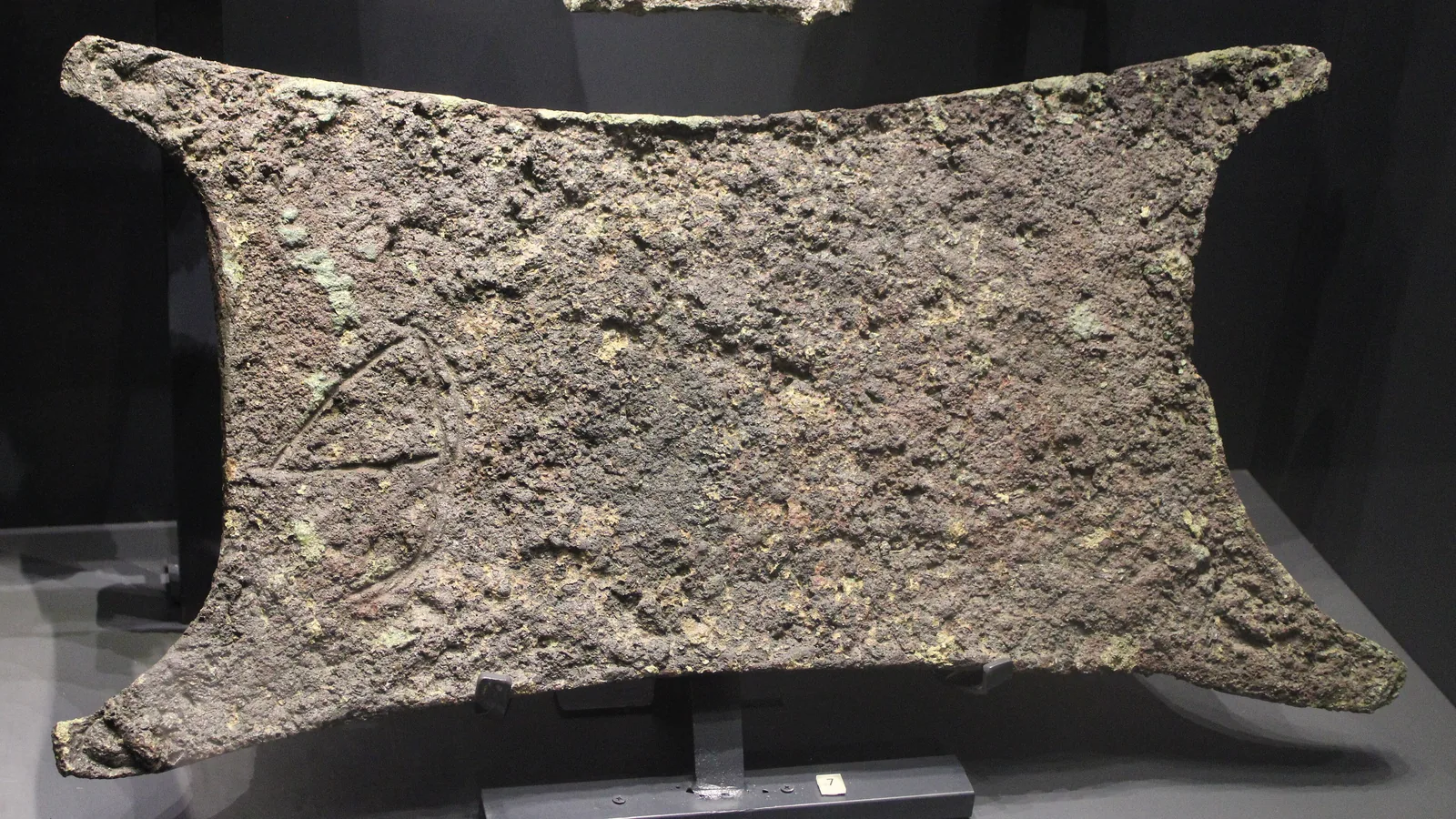
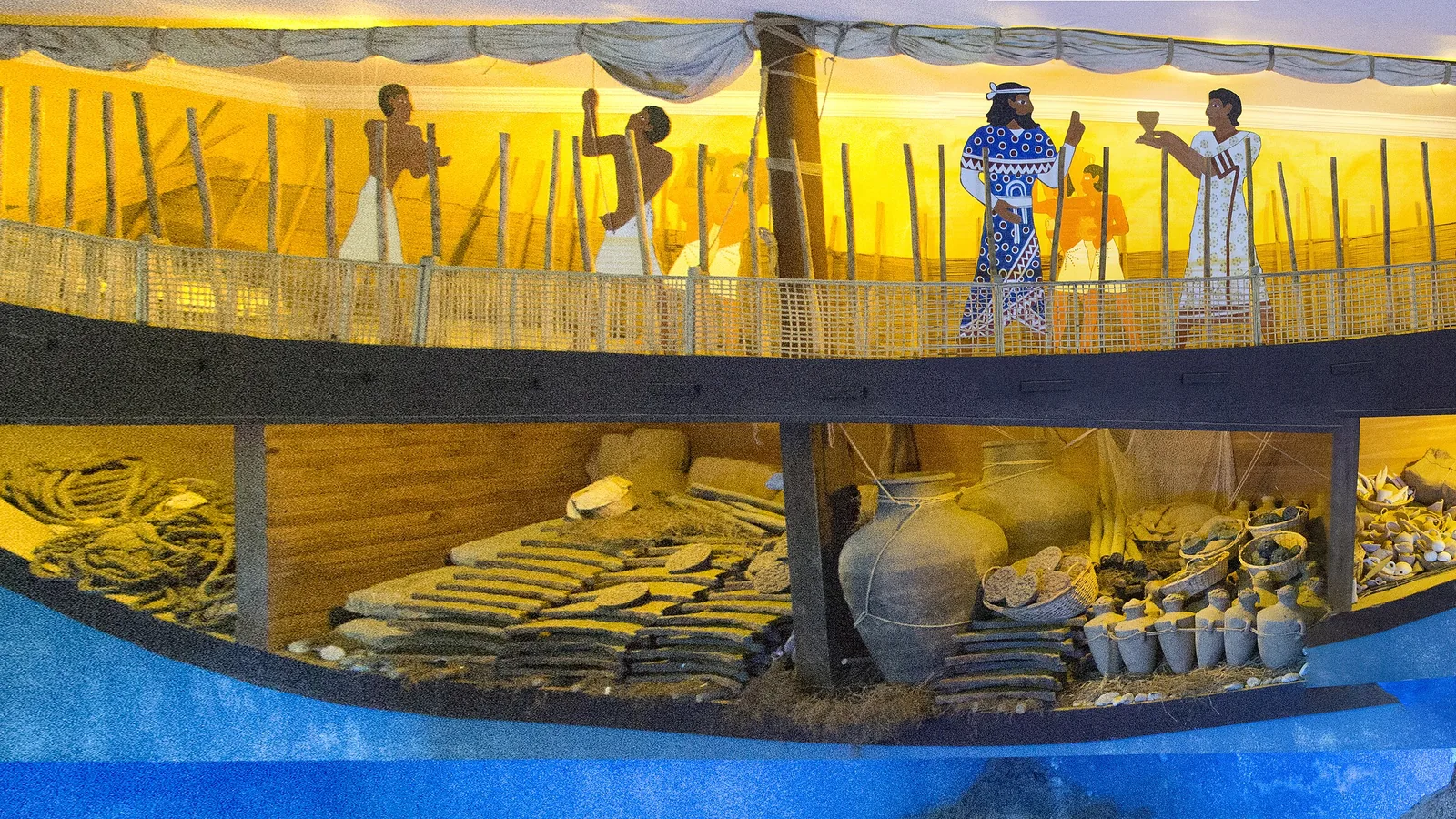
“The first hint of a wreck at Uluburun came in the summer of 1982,” the Stellenbosch University journal Akroterion reported in 2001. “A young sponge diver called Mehmet Cakir told his captain that he had seen strange ‘metal biscuits with ears’ on the sea-bed while working at a depth of about 45 metres.” The captain had attended briefings by the Institute of Nautical Archaeology (INA) in Bodrum and recognized the shape as a Bronze Age copper ingot; he reported the find to the museum at Bodrum. The Institute of Nautical Archaeology, based at Texas A&M University, states that its own dig ran “over 11 seasons between 1984 and 1994, with more than 22,000 dives logged to depths in excess of 150 feet.” The ship’s hold held copper and tin ingots, glass ingots, Canaanite storage jars, ebony and ivory, and a gold scarab naming the Egyptian queen Nefertiti.
Quick facts
- When
- summer 1982 (the sponge diver's report) · 1984 to 1994 (the INA excavation) · about 1320 BC, plus or minus 15 years (INA's date for the wreck)
- Where
- the Uluburun headland near Kas, on the southern coast of Turkey
- Who
- sponge diver Mehmet Cakir; George Bass and Cemal Pulak of the Institute of Nautical Archaeology; team member Tufan Turanli
- Outcome
- eleven excavation seasons raised more than 18,000 artifacts, including copper and tin ingots, glass ingots, Canaanite jars, a gold scarab naming Nefertiti and a wooden writing diptych; the finds went on public display in Bodrum in July 2000
Mehmet Cakir's report and the confirmation dive
Fawcett and Zietsman wrote that a team including INA archaeologists hastened to the site once the museum was notified, and found the wreck on a slope between 44 and 51 meters deep. One copper ingot was raised from among dozens visible on the surface, and a full inspection then showed 84 copper ingots exposed in rows, with many more buried beneath the seabed. That first look, in 1982, came two years before the excavation itself began.
1984 to 1994: eleven seasons under Bass and Pulak
INA directed the dig from 1984 to 1994, logging more than 22,000 dives, according to its own project page. George Bass led the work at the start, but the University of Pennsylvania Museum’s Expedition magazine recorded that “by 1985, George Bass had come to realize that… he simply could not continue to direct all the research going on around Uluburun.” He had already trained “a . . . gifted Turkish student, Cemal Pulak,” the magazine continued, and Pulak “continues to be in charge of all the work involving the final publication of this shipwreck.” Texas A&M’s own profile of Pulak states that he “is also the Vice-President for the Institute of Nautical Archaeology (INA) in Turkey” and “has been directing INA’s annual shipwreck surveys in Turkey since 1982.” Akroterion put the total finds at more than 18,000 complete and fragmentary artifacts by 1994, with three months of diving each season requiring two years of conservation work afterward.
Oxhide copper ingots and two estimates of the metal cargo
INA’s project page records 354 copper ingots of oxhide shape from the wreck, only half of them cleaned and conserved by the time the page was written, and at least 149 Canaanite jars, most holding an average of 6.7 liters and filled with terebinth resin. The two studies that weighed the metal cargo disagree on its size. Science Advances, in a 2022 paper by B. J. Cassell, W. Powell, M. Frachetti and coauthors, counts “10 metric tons (MT) of Cypriot copper ingots and a staggering 1 MT of tin ingots.” Fawcett and Zietsman, writing in 2001 and citing George Bass’s 1987 account, give “the estimated six tons of copper on the Uluburun ship.” No final glass ingot tally appears in either account; Akroterion counted more than a hundred glass ingots by the end of the 1992 season, including a pair of cobalt-blue disks,. The same journal noted that such ingots were called “mekku-stone” in the Amarna letters, in which Abi-Milki, prince of Tyre, wrote to the Egyptian pharaoh Akhenaten about a hundred units of the material already sent.

"A solid gold scarab": Nefertiti and a wax writing tablet
Akroterion credited the find of the scarab to a Turkish team member: “Tufan Turanli, a Turkish member of the team, made an even more exciting find: a solid gold scarab… The hieroglyphic inscription on the base of the golden beetle reads ‘Nefertiti.’” Egyptologists, the journal reported, confirmed it as the first object naming either Akhenaten or Nefertiti found in that part of the ancient world, and one of the few late eighteenth-dynasty Egyptian objects excavated in western Asia Minor or the Aegean. Divers also recovered a hinged wooden writing board in 25 fragments from inside a large storage jar. Reassembled, it proved to be a diptych of two wooden leaves joined by three ivory hinges, with recessed interior faces meant to hold wax. Akroterion called the discovery a candidate for the “world’s oldest book,” though the wax, and any text written on it, had not survived.
Tracing the tin: two studies, two sets of conclusions
Berger, Soles, Giumlia-Mair and coauthors, publishing in PLOS ONE in 2019, examined 27 tin ingots from eastern Mediterranean sites including Uluburun and Mochlos on Crete, and reported that their data pointed to “a different provenance” for the Uluburun and Mochlos tin than for tin from contemporary sites in Israel. Cassell, Powell, Frachetti and coauthors took a separate set of samples for their 2022 Science Advances paper, analyzing 105 tin ingots from the Uluburun wreck, 91 percent of the ship’s tin cargo. Two-thirds of those ingots matched ore from the Taurus Mountains of Turkey, the paper found, while the remaining third, 35 ingots, matched deposits in Tajikistan and Uzbekistan, more than 3,000 kilometers from where the ship went down. Using the common Late Bronze Age ratio of nine parts copper to one part tin, the authors calculated that the ship’s tin cargo alone could have produced 11 metric tons of bronze, enough for close to 5,000 swords. The paper described the ship’s tin as “easily the largest and most securely dated collection of ancient tin metal known worldwide.”
Key facts
- In the summer of 1982, sponge diver Mehmet Cakir reported “metal biscuits with ears” on the sea floor near Kas at a depth of about 45 meters (Akroterion, 2001).
- Divers who confirmed the find saw 84 copper ingots exposed in rows on a slope between 44 and 51 meters deep (Akroterion, 2001).
- The Institute of Nautical Archaeology excavated the wreck over 11 seasons between 1984 and 1994, logging more than 22,000 dives (INA project page).
- INA dates the wreck to about 1320 BC, plus or minus 15 years; Fawcett and Zietsman’s tree-ring analysis of firewood aboard points to about 1300 BC (INA; Akroterion, 2001).
- Science Advances (2022) counts 10 metric tons of copper and 1 metric ton of tin ingots; Fawcett and Zietsman (2001), citing George Bass (1987), give an estimated six tons of copper.
- Analysis of 105 tin ingots, 91 percent of the tin cargo, found two-thirds consistent with Taurus Mountains ore and one-third with deposits in Tajikistan and Uzbekistan (Science Advances, 2022).
- Team member Tufan Turanli found a gold scarab naming Nefertiti, which Egyptologists confirmed as the first object naming Akhenaten or Nefertiti found in that region (Akroterion, 2001, citing Weinstein 1989).
- Cemal Pulak, trained by George Bass, has led the Uluburun research and final publication since 1985 and has directed INA’s annual shipwreck surveys in Turkey since 1982 (Expedition, 2014; Texas A&M profile).
FAQ
What did the sponge diver who found the Uluburun wreck report seeing?
Mehmet Cakir told his captain he had seen "metal biscuits with ears" on the sea floor near Kas in the summer of 1982, at a depth of about 45 meters, according to Akroterion (2001). The captain recognized the description as a Bronze Age copper ingot.
How much copper and tin did the Uluburun ship carry?
Sources disagree. Science Advances (2022) gives 10 metric tons of copper ingots and 1 metric ton of tin ingots. Fawcett and Zietsman (2001), citing George Bass's 1987 account, give an estimated six tons of copper.
Where did the tin on the Uluburun ship come from?
Two separate studies give different findings. Berger and coauthors (PLOS ONE, 2019) reported that Uluburun's tin pointed to a different source than tin from contemporary sites in Israel. Cassell and coauthors (Science Advances, 2022) traced two-thirds of 105 analyzed ingots to the Taurus Mountains of Turkey and one-third to Tajikistan and Uzbekistan.
Sources
- N. Fawcett and J. C. Zietsman, "Uluburun: The Discovery and Excavation of the World's Oldest Known Shipwreck," Akroterion 46 (2001), Stellenbosch University, full PDF.
- Institute of Nautical Archaeology (Texas A&M University), "Uluburun Late Bronze Age Shipwreck Excavation," project page.
- B. J. Cassell, W. Powell, M. Frachetti and others, "Tin from Uluburun Shipwreck Shows Small-Scale Commodity Exchange Fueled Continental Tin Supply Across Late Bronze Age Eurasia," Science Advances 8, no. 48 (2022), PMC copy.
- D. Berger, J. S. Soles, A. R. Giumlia-Mair and others, "Isotope Systematics and Chemical Composition of Tin Ingots from Mochlos (Crete) and Other Late Bronze Age Sites in the Eastern Mediterranean Sea," PLOS ONE 14, no. 6 (2019): e0218326.
- University of Pennsylvania Museum of Archaeology and Anthropology, "Views from Land and Sea," Expedition magazine.
- James D. Muhly, "Looking Back at Fifty Years of Nautical Archaeology," Expedition 56, no. 2 (2014), University of Pennsylvania Museum.
- Nautical Archaeology Program, Texas A&M University, "Cemal Pulak" faculty profile.
Cite this article
- APA
- Our Earth's History. (2026, September 27). Copper, tin and glass off Uluburun: a Bronze Age cargo, 1982. Our Earth's History. https://ourearthshistory.com/europe/ancient/uluburun-shipwreck-1982-sponge-diver-copper-ingots-late-bronze-age-cargo/
- Chicago
- Our Earth's History. “Copper, tin and glass off Uluburun: a Bronze Age cargo, 1982.” Our Earth's History, September 27, 2026. https://ourearthshistory.com/europe/ancient/uluburun-shipwreck-1982-sponge-diver-copper-ingots-late-bronze-age-cargo/.
- MLA
- “Copper, tin and glass off Uluburun: a Bronze Age cargo, 1982.” Our Earth's History, 27 Sep. 2026, https://ourearthshistory.com/europe/ancient/uluburun-shipwreck-1982-sponge-diver-copper-ingots-late-bronze-age-cargo/.
Text licensed CC BY-NC-ND 4.0. Found an error? Tell us.