A real godsend, and controversial: Evans's concrete at Knossos
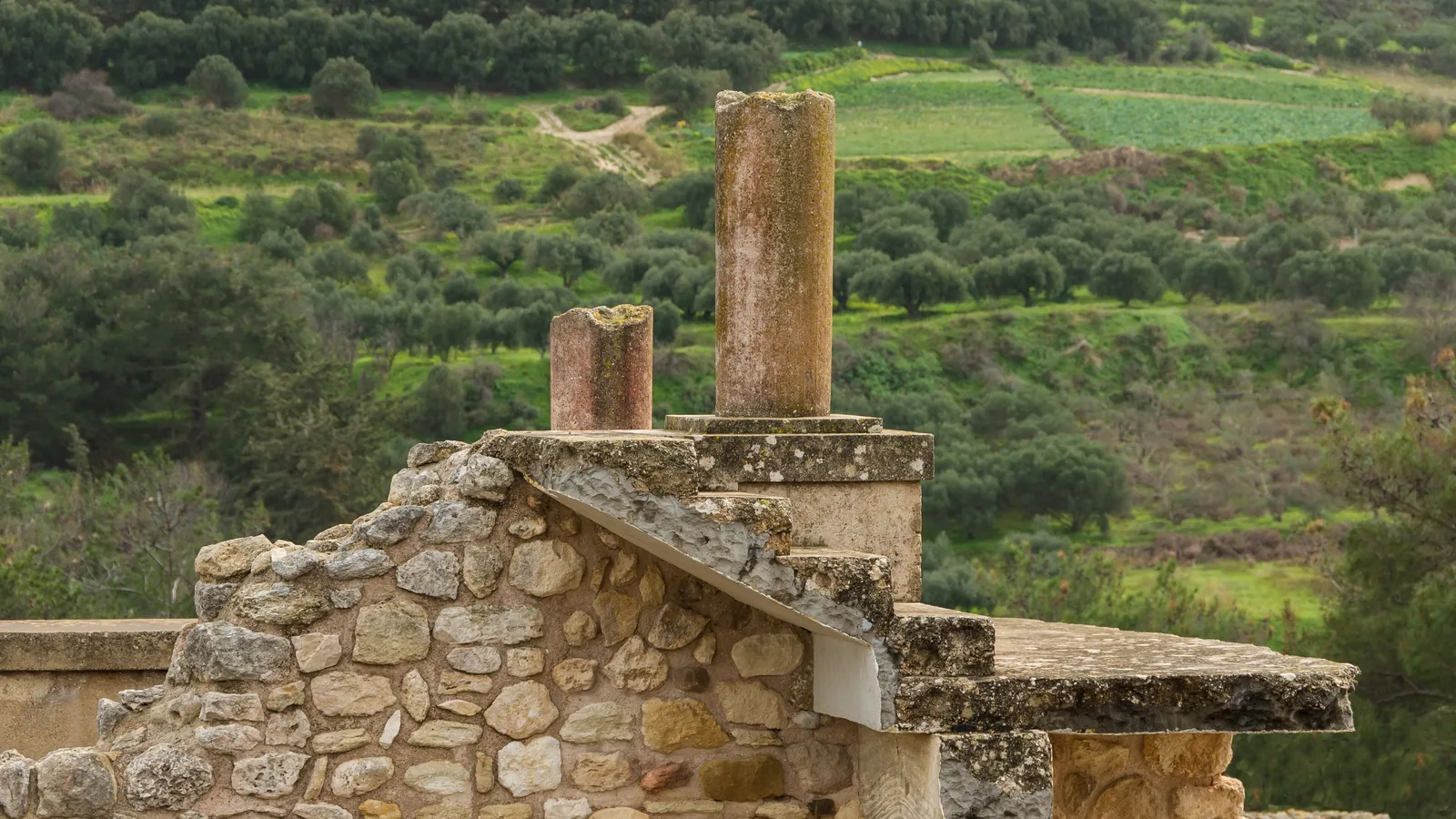

TL;DR — Evans dug at Knossos from 1900 to 1931 and rebuilt parts of the palace in reinforced concrete he called “a real godsend”; the Ashmolean calls the restorations “controversial.”
“The work of excavation on the Palace site at Knossos was re-opened on February 27, 1901, and continued till June 17.” Arthur Evans wrote that sentence at the head of his second report from Crete, printed in the Annual of the British School at Athens for 1901. The Ashmolean Museum in Oxford, where he had been Keeper since 1884, states that from 1900 until 1931 he conducted excavations at Knossos, after travels through Crete from 1894 to 1899 “in search of evidence for pre-alphabetic writing in the Aegean.” Over 31 years at the site he uncovered a Bronze Age palace and rebuilt parts of it in reinforced concrete, a material he described in the last volume of The Palace of Minos as “a real godsend.” The same museum sums up the result as “extensive and controversial restorations.” Both verdicts survive in writing: two season reports, the six-volume Palace of Minos and 92 notebooks that have never been put online.
Quick facts
- When
- 1884 (Evans appointed Keeper of the Ashmolean) · 1894–1899 (travels in Crete) · 1900–1931 (excavations at Knossos) · February 27 to June 17, 1901 (second season; Throne Room roofed by early July) · June 26, 1926 and February 1930 (earthquakes) · 1930 (season given to "reconstitution") · 1941 (Evans's will) · 1985 (gift of the remaining papers)
- Where
- The hill of Kephala near the village of Makryteichos, about four miles inland from Candia, Crete; the Ashmolean Museum, Oxford; the British School at Athens and its Knossos Research Centre beside the Villa Ariadne
- Who
- Sir Arthur Evans; Duncan Mackenzie, his chief field archaeologist 1900–1929; the architects Theodore Fyfe, Christian Doll and Piet de Jong; Dame Joan Evans and Arthur L. Evans, who sorted and returned the papers
- Outcome
- A Bronze Age palace dated by the Greek Ministry of Culture to 2000–1350 BC, its upper structures rebuilt in reinforced concrete; a six-volume Palace of Minos (1921–1930s); 92 notebooks in the Ashmolean, not digitized; restorations the museum calls "extensive and controversial"
Kephala, 1900: a report that opens with a hill
The first report, in volume 6 of the Annual for 1900, begins with the ground. “The site of ancient Knossos, which lies near the present village of Makryteichos, about four miles inland from Candia, is shut in by higher hills in three directions,” Evans wrote; “the ground gradually rises into a rounded hill generally known as Kephala.” The published extract of that report gives no opening date for the digging, and the excavation notebooks that would give one, the Ashmolean states, “have not been digitized.” The Greek Ministry of Culture’s record of the site labels him “The Knosos excavator, Sir Arthur Evans” and dates the palace “2000-1350 B.C.”; the British School at Athens calls him “the site’s first British excavator from 1900.”
February 27, 1901: a second season and a roof over the Throne Room
The 1901 report names the team. Evans had “Dr. Duncan Mackenzie as my assistant in directing the works, and Mr. D. T. Fyfe, formerly architect of the British School, in preparing architectural plans and drawings.” Digging stopped on June 17; work ran into early July, including “the completion of the roofing-in of the Throne Room.”
Mackenzie was, in the Ashmolean’s words, “Evans’s chief field archaeologist at Knossos between 1900 and 1929.” Fyfe’s notebooks in the archive run from 1901 to 1903; those of Christian Doll, another architect, date from 1906 and 1907. Piet de Jong was “one of Evans’s architects and artists at Knossos from 1922 to 1931,” and he returned as Knossos curator from 1947 to 1952.
Timber that rotted, and girders at the bottom of the harbor
In the final volume of The Palace of Minos, Evans explained why concrete replaced the earlier props. The timber and iron supports “in the Cretan climate of violent changes showed a rapid tendency to rot,” and of the iron beams, “two of the largest girders shipped from England lie at the bottom of the old harbour.” Then: “Under these circumstances the introduction of the use of reinforced concrete was a real godsend, besides ensuring the additional advantage that the new work is at once distinguishable by the spectator.” His own word for the work was “reconstitution.”
He offered the earthquakes as the test. “The work of reconstitution already carried out . . . has been now tested by two earthquakes. The serious shock of June 26, 1926, that ruined houses in the neighbouring village and damaged the Museum in Candia, left even the upper structures of the Palace practically unscathed. That of February 1930 . . . put a severe strain on the more recent reconstructions, which, however, they successfully resisted.” The season of 1930, he wrote, was to be given “to a continuance of the general work of reconstitution,” a program that “included the restoration of the upper structures of the Throne Room itself and the roofing over of its antechamber.” The room roofed in 1901 received its concrete upper story 29 years later.

"Not a proper archaeological publication": six volumes and a verdict
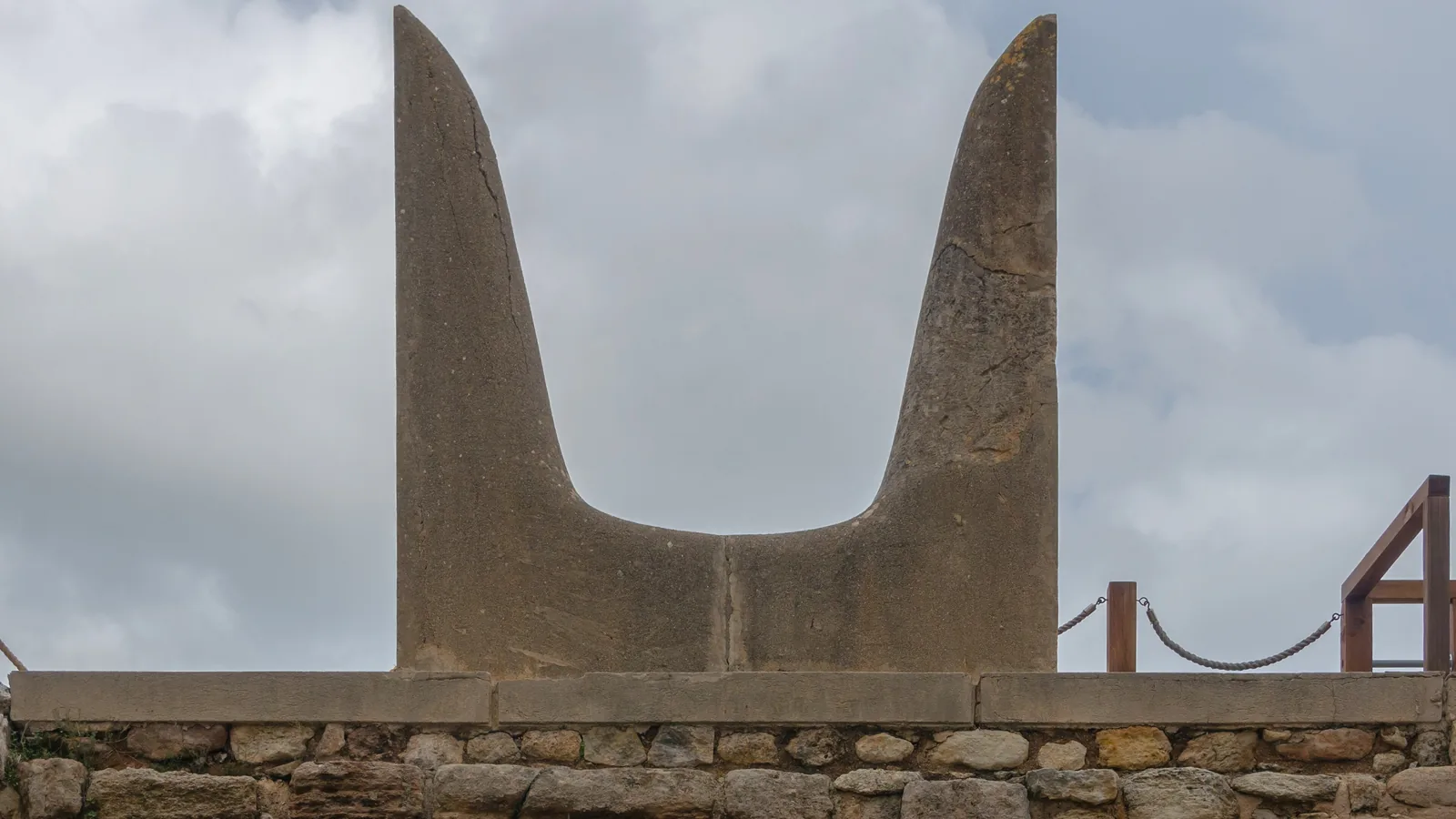
The Palace of Minos came out in parts; copies scanned by the Internet Archive are dated 1921, 1928 and 1930 in its catalog. The Ashmolean’s biography of Evans gives the totals and the judgment in a single sentence: “his legacy remains alive in the extensive and controversial restorations at the palace at Knossos and in the voluminous Palace of Minos, a compendium of Minoan archaeology encapsulating Evans’s vision of Bronze Age Crete (not a proper archaeological publication by modern standards; yet, a true publisher’s feat with six volumes and an index, 3108 pages and 2433 text images in total).” Both verdicts, “controversial” for the concrete and “not a proper archaeological publication by modern standards” for the book, come from the institution that received his collections under his will of 1941 and that, “representing the University of Oxford,” holds the copyright on the unpublished Knossos material.
Ninety-two notebooks, none of them online
The day-to-day record is in Oxford. “The archive holds 92 notebooks, diaries, pocketbooks and sketchbooks of Arthur Evans and members of his Knossos team (Duncan Mackenzie, Theodore Fyfe, Christian Doll),” the Ashmolean states, and “The Knossos notebooks take up about 65% of this section of the archive. They form the most important primary record for the day-to-day documentation of the Knossos excavations.” Mackenzie’s 26 notebooks, covering 1900 to 1925, run to “1,612 double page spreads and two loose pages or 3,226 pages in total.” The museum has transcribed “23 out of 26 (88%)” of them, but the transcriptions are not published, and “The notebooks have not been digitized.”
The British School at Athens took over the excavations but holds almost none of the paper. Its archive page reads: “Although the British School at Athens inherited the excavations of Knossos from Sir Arthur Evans, the Archive of the School do not hold material from his excavations EXCEPT six pottery notebooks of Duncan Mackenzie dated 1900-1904.” The School holds the ground instead: its Knossos Research Centre “is located on the former estate of Sir Arthur Evans, close to his residence – the Villa Ariadne,” on a site with “continuous occupation from the Neolithic through to the early Byzantine period.”
“Following Evans’s death, the remainder of his archaeological collections were bequeathed to the Ashmolean,” the museum states, and “The papers were originally sorted out by Dame Joan Evans.” Part of them later went to South Africa. The formal gift of all the remaining papers to the museum came from Arthur L. Evans in 1985.
Key facts
- Arthur Evans was appointed Keeper of the Ashmolean Museum in 1884 and moved its collections from Broad Street to Beaumont Street in 1894 (Ashmolean).
- He traveled Crete from 1894 to 1899 “in search of evidence for pre-alphabetic writing in the Aegean” and named three scripts: Cretan Hieroglyphic, Linear A and Linear B (Ashmolean).
- His first report, Annual of the British School at Athens vol. 6 (1900), pp. 3–70, opens with the site “about four miles inland from Candia” on the hill of Kephala (Cambridge Core extract).
- The second season ran from February 27 to June 17, 1901, with “the roofing-in of the Throne Room” completed by early July; Duncan Mackenzie and D. T. Fyfe assisted (Annual vol. 7, 1901).
- Evans wrote that timber and iron supports “showed a rapid tendency to rot” and that reinforced concrete “was a real godsend,” tested by the earthquakes of June 26, 1926 and February 1930 (The Palace of Minos, final volume).
- The 1930 season included “the restoration of the upper structures of the Throne Room itself and the roofing over of its antechamber” (same volume).
- The Ashmolean holds 92 notebooks of Evans and his team; Mackenzie’s 26 notebooks total 3,226 pages, 23 of them transcribed, none digitized. The British School at Athens holds only “six pottery notebooks of Duncan Mackenzie dated 1900-1904.”
- The Ashmolean describes the restorations as “extensive and controversial” and The Palace of Minos as “not a proper archaeological publication by modern standards”; Arthur L. Evans gave the remaining papers to the museum in 1985.
FAQ
When did Arthur Evans excavate Knossos?
From 1900 until 1931, according to the Ashmolean Museum. His own report gives the dates of the second season: reopened on February 27, 1901, and continued until June 17, with repair work into early July.
Why is the reconstruction of Knossos controversial?
Evans rebuilt upper structures of the palace in reinforced concrete after timber and iron supports rotted, and he defended the choice by the earthquakes of 1926 and 1930, which the new work survived. The Ashmolean, which holds his archive, calls the restorations "extensive and controversial," and his six-volume report "not a proper archaeological publication by modern standards."
Where are the Knossos excavation notebooks?
In the Ashmolean Museum, Oxford, which holds 92 notebooks, diaries, pocketbooks and sketchbooks of Evans and his team, none of them digitized. The British School at Athens holds only six pottery notebooks of Mackenzie dated 1900 to 1904.
Sources
- Ashmolean Museum, University of Oxford, Sir Arthur Evans archive site: Biography page (Keeper from 1884; travels in Crete 1894–1899; excavations 1900–1931; the three scripts; the Palace of Minos totals; the bequest, Dame Joan Evans and the 1985 gift; copyright).
- Ashmolean Museum, Sir Arthur Evans archive site: The Archive, Notebooks (92 notebooks; Mackenzie's 26 notebooks, 3,226 pages, 23 transcribed; "The notebooks have not been digitized").
- Ashmolean Museum, Sir Arthur Evans archive site: Other Knossos related Archives (Mackenzie as chief field archaeologist 1900–1929; Piet de Jong 1922–1931 and curator 1947–1952).
- Evans, Arthur J., "I. The Palace," Annual of the British School at Athens, vol. 6 (1900), pp. 3–70, DOI 10.1017/S0068245400001908 (Cambridge Core extract: the description of the site and the hill of Kephala).
- Evans, Arthur J., "The Palace of Knossos," Annual of the British School at Athens, vol. 7 (November 1901), pp. 1–120, DOI 10.1017/S0068245400001271 (Cambridge Core extract: the 1901 season dates, the roofing of the Throne Room, Mackenzie and Fyfe).
- British School at Athens, Archive: Excavation Records (the School holds only six pottery notebooks of Duncan Mackenzie, 1900–1904).
- British School at Athens, Knossos Research Centre (the former Evans estate, the Villa Ariadne, the Stratigraphical Museum, occupation from the Neolithic to the early Byzantine period).
- British School at Athens, History ("the site's first British excavator from 1900").
- Hellenic Ministry of Culture and Sports, Odysseus database, Knossos: description and history pages (the palace "Dated to 2000-1350 B.C."; "The Knosos excavator, Sir Arthur Evans").
- Evans, Arthur J., The Palace of Minos, final volume (Cornell University Library copy, Internet Archive identifier cu31924081667812), section "Ferro-concrete solves structural problem": timber and iron supports, the girders lost at sea, "a real godsend," the earthquakes of 1926 and 1930, the 1930 season; with the Internet Archive catalog dates 1921, 1928 and 1930 for the volumes.
Cite this article
- APA
- Our Earth's History. (2026, September 22). A real godsend, and controversial: Evans's concrete at Knossos. Our Earth's History. https://ourearthshistory.com/europe/ancient/knossos-evans-1900-1931-reinforced-concrete-godsend-controversial/
- Chicago
- Our Earth's History. “A real godsend, and controversial: Evans's concrete at Knossos.” Our Earth's History, September 22, 2026. https://ourearthshistory.com/europe/ancient/knossos-evans-1900-1931-reinforced-concrete-godsend-controversial/.
- MLA
- “A real godsend, and controversial: Evans's concrete at Knossos.” Our Earth's History, 22 Sep. 2026, https://ourearthshistory.com/europe/ancient/knossos-evans-1900-1931-reinforced-concrete-godsend-controversial/.
Text licensed CC BY-NC-ND 4.0. Found an error? Tell us.