A silver tablet in year 21: Ramesses II and Hattusili III make peace
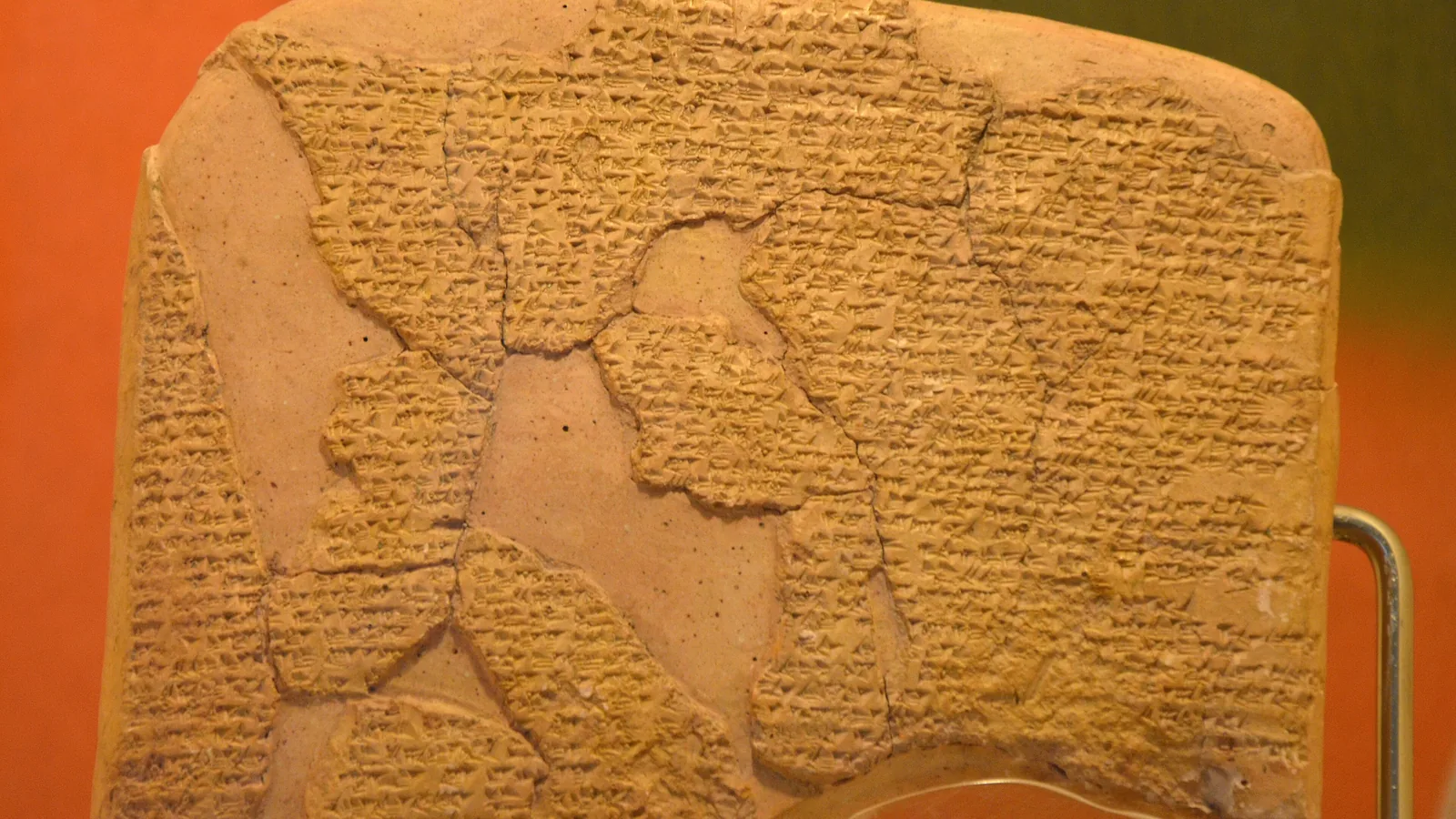
,_discovered_at_Boğazköy_(Turkey),_1258_BC,_Istanbul_Archeology_Museum_(46731345944).jpg)
TL;DR — Egypt’s text of the peace between Ramesses II and Hattusili III is dated year 21 of Ramesses; the UN gives 1269 BC, Livius.org about 1259 BC.
“Year 21, first month of the second season, twenty-first day” opens the Egyptian text of the treaty between Ramesses II and the Hittite king Hattusili III, in James Henry Breasted’s 1906 translation. The two kings promised peace, help against any other enemy and the return of each other’s fugitives. Their agreement survives as an Egyptian inscription at Karnak and as a cuneiform clay tablet found at Hattusa, the Hittite capital, in 1906. Converted to the modern calendar, the date differs by source. The United Nations, which keeps a copper replica of the tablet in New York, dates the original to 1269 BC; Jona Lendering’s Livius.org dates the same tablet to about 1259 BC.
Quick facts
- When
- Year 5 of Ramesses II (march to Kadesh begins) · year 21, first month of the second season, day 21 (date on the Egyptian text of the treaty) · 1269 BC in the United Nations catalog, about 1259 BC on Livius.org · 1906 (Hattusa tablet found; Breasted's translation published) · September 24, 1970 (replica given to the United Nations)
- Where
- Egypt (Karnak and the Ramesseum); Hattusa, the Hittite capital in central Anatolia, in what is now Turkey; the Archaeological Museum in Istanbul; United Nations Headquarters, New York
- Who
- Ramesses II, king of Egypt; Hattusili III, king of the Hittites; the envoys Terteseb and Ramose; James Henry Breasted (translator); Sadi Calik (maker of the replica); Ihsan Sabri Caglayangil; U Thant
- Outcome
- The two kings bound themselves and their descendants to peace, to send help against any other enemy and to return each other's fugitives. The Egyptian text survives on temple walls, a cuneiform tablet from Hattusa is in Istanbul, and a copper replica hangs near the Security Council Chamber
Year 5: the march to Kadesh
The treaty closed a long war fought in Syria. Its best-known battle took place near Kadesh, on the Orontes River, in the fifth year of Ramesses’ reign; Livius.org dates the reign 1279 to 1213 BC. The Egyptian official record, in Breasted’s translation, dates the start of the campaign: “Year 5, the second month of the third season (tenth month), on the ninth day, his majesty passed the fortress of Tharu.” Breasted’s footnote places that day about the end of April.
The Egyptian account of the battle survives in two forms, which Breasted called the poem and the official record. The record was carved beside the wall scenes of the battle. According to the Center for Online Judaic Studies (COJS), Ramesses had battle narratives and relief scenes cut on temple walls at Abydos, Karnak, Thebes, Luxor, Abu Simbel and el-Derr. Breasted wrote in a note: “Even the Poem makes no claim that Ramses captured Kadesh, as is so often stated in the histories.” He added that the conflict with the Hittites went on long after the battle.
Terteseb, Ramose and a silver tablet
The heading in Breasted’s translation describes a “Copy of the silver tablet” that the Hittite king, whom the translation calls Khetasar, great chief of Kheta, sent to Ramesses by the hand of his messengers Terteseb and Ramose, “to crave peace.” In a footnote Breasted placed their arrival at “somewhere around the first of February.”
The caption of the treaty names three generations on each side. Khetasar appears as the son of Merasar and grandson of Seplel; Ramesses as the son of Menmare, Seti I, and grandson of Menpehtire, Ramesses I. The document calls itself “the good treaty of peace and of brotherhood.” One clause extends it to later rulers: “The children of the children of the great chief of Kheta shall be in brotherhood and peace with the children of the children of Ramses-Meriamon.”
According to COJS, a version prepared by Hattusili on a silver tablet went to Egypt, and Ramesses had its text engraved at Karnak. The same page calls the result “an agreement between equals.” Breasted judged the Egyptian wording to be a translation from a foreign original, perhaps written in Babylonian.
"There shall be no hostilities between them, forever"
Breasted divided the treaty into eighteen paragraphs. The third is a pledge of non-aggression: “There shall be no hostilities between them, forever. The great chief of Kheta shall not pass over into the land of Egypt, forever, to take anything therefrom.” Ramesses made the same pledge.
The fifth paragraph is a defensive alliance. If another enemy attacked Egypt and Ramesses sent to the Hittite king “saying: ‘Come with me as reinforcement against him,’” then “the great chief of Kheta shall slay his enemy.” A king who did not wish to march in person was to send his infantry and his chariotry. The seventh paragraph gives Hattusili the same right.
Four paragraphs dealt with people who fled across the border. A great man of Egypt who came to the Hittite king was to be refused: “the great chief of Kheta shall not receive them.” He was to be returned to Ramesses, and the same held for unknown men who crossed in ones and twos, and in the other direction. An appendix protected those sent back: “let not his house be injured, nor his wives, nor his children.” A list of gods of both lands was named as witnesses, followed by a curse on anyone who broke the words and a blessing on anyone who kept them. The United Nations summarizes the whole as pledges of “eternal friendship, lasting peace, territorial integrity, nonaggression, extradition, and mutual help.”
Copies at Karnak, the Ramesseum and Hattusa
Breasted listed two Egyptian originals. One was cut on a wall at Karnak extending south of the great hypostyle hall. The other, at the Ramesseum, preserved “only fragments of the last 10 lines.” He translated from those walls; his volume appeared in 1906.
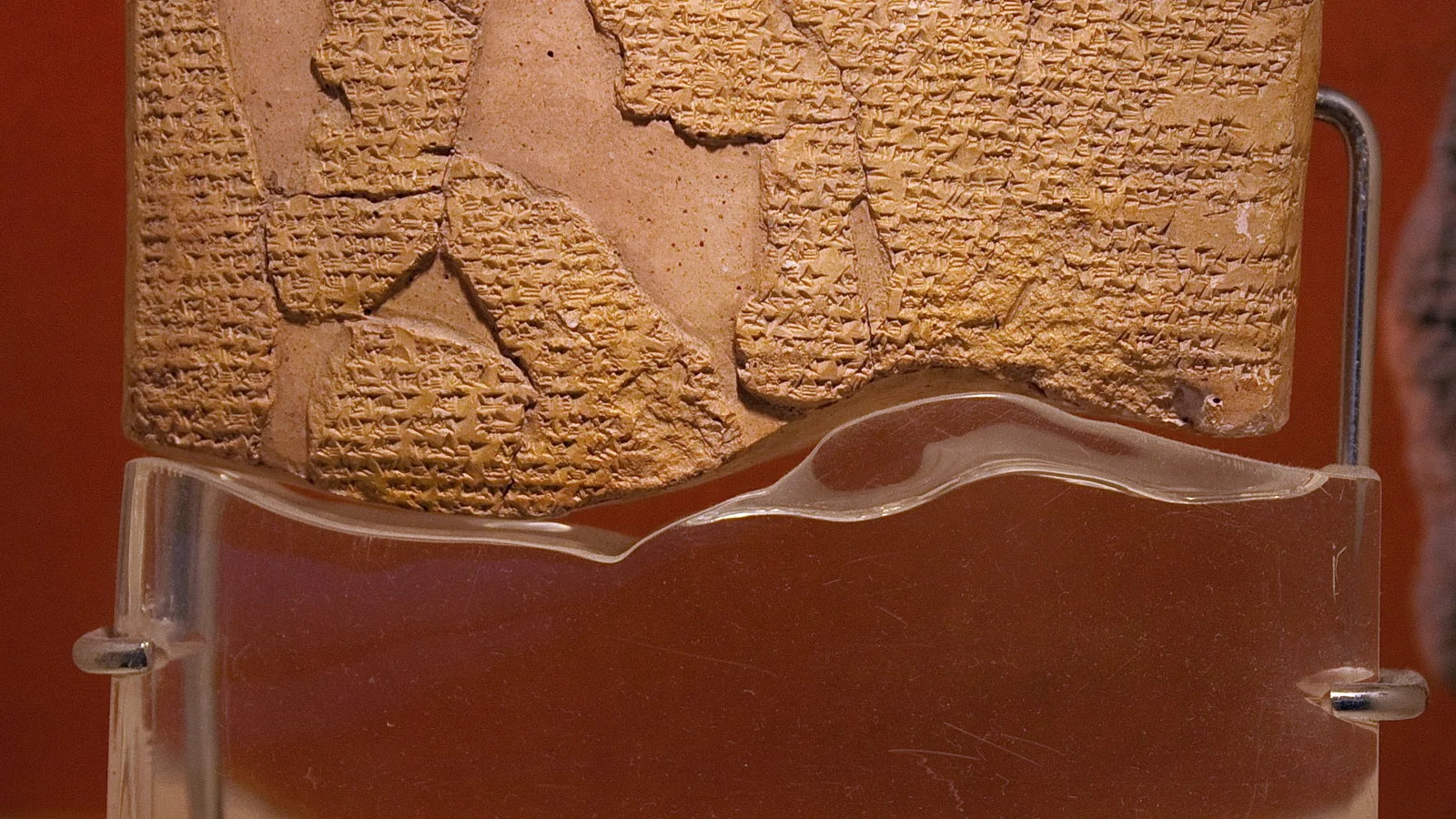
That same year the clay tablet came out of the ground at Hattusa, in central Anatolia, in what is now Turkey. The United Nations catalog records the find, on the site of the old Hittite capital, and its cuneiform script. Livius.org’s caption gives its language as Akkadian and its home as the Archaeological Museum in Istanbul. The Turkish Museums portal lists the Kadesh Peace Treaty in the collection of Istanbul’s Museum of Ancient Oriental Works, alongside the stele of the Akkadian king Naram-Sin and the Ishtar Gate of Babylon.
Which side drafted the Hattusa tablet is a separate question. COJS writes that the two states exchanged copies, each inscribing a tablet and sending it to the other, and that “The tablet found at Hattusa, is the Egyptian version of the treaty, written in Akkadian.” The United Nations and Livius.org do not say which version it is.

A copper replica at the United Nations
The United Nations catalog describes its piece as a copper bas-relief replica, 59 by 72½ by 12½ inches, made by Sadi Calik, a sculptor and lecturer at the Istanbul College of Fine Arts. The catalog calls the original “the oldest known peace treaty.” Ihsan Sabri Caglayangil, Turkey’s minister for foreign affairs, presented the replica on behalf of his country, and Secretary-General U Thant accepted it. It hangs in the second-floor delegates corridor of the Conference Building, near the entrance of the Security Council Chamber. COJS quotes an English passage from the treaty placed above that entrance: “Ramesses, Great King, King of Egypt, is in good peace and good brotherhood with Hattusili, great king of Hatti . . .” The catalog records the donation date as September 24, 1970.
Key facts
- The Egyptian text of the treaty is dated “Year 21, first month of the second season, twenty-first day” of Ramesses II (Breasted, §370).
- The United Nations dates the original tablet to 1269 BC; Livius.org dates it to about 1259 BC.
- The march that led to the Battle of Kadesh began in year 5 of Ramesses, on a day Breasted placed about the end of April (Breasted, §307).
- Two Hittite envoys, Terteseb and Ramose, brought a silver tablet to Ramesses “to crave peace” (Breasted, §§371–372).
- Breasted divided the treaty into eighteen paragraphs, among them non-aggression, a defensive alliance on each side and the return of fugitives (Breasted, §368).
- The Egyptian text was carved at Karnak and at the Ramesseum, where only fragments of the last 10 lines remain (Breasted, §368, note a).
- The Hattusa tablet, in Akkadian cuneiform, was found in 1906 and is in the Archaeological Museum in Istanbul (United Nations; Livius.org); COJS calls it the Egyptian version.
- A copper replica by Sadi Calik was given to the United Nations on September 24, 1970, and hangs near the Security Council Chamber (United Nations).
FAQ
When was the treaty between Ramesses II and Hattusili III made?
The Egyptian text gives year 21 of Ramesses II, first month of the second season, day 21. The United Nations converts this to 1269 BC, while Livius.org dates the tablet to about 1259 BC.
What did the treaty promise?
In Breasted's translation, the two kings renounced hostilities "forever," agreed to send help if another enemy attacked either land, and undertook to return each other's fugitives, who were to suffer no harm to house, wives or children.
Where can the treaty be seen?
The Egyptian text is on a temple wall at Karnak, with fragments at the Ramesseum. The cuneiform tablet from Hattusa is in the Archaeological Museum in Istanbul, and a copper replica hangs on the second floor of the Conference Building at United Nations Headquarters in New York.
Sources
- James Henry Breasted (ed. and tr.), Ancient Records of Egypt, vol. III: The Nineteenth Dynasty (Chicago: University of Chicago Press, 1906), §§305–316 (Battle of Kadesh) and §§366–391 (treaty with the Hittites); PDF hosted by ETANA (Electronic Tools and Ancient Near Eastern Archives).
- United Nations Gifts, "Replica of Peace Treaty between Hattusilis and Ramses II" (Gift ID UNNY067G).
- Center for Online Judaic Studies, "Ramesses the Great and the Hittite Treaty, 1258 BCE."
- Jona Lendering, Livius.org, "Hattusa, Kadesh Treaty" (photograph and caption).
- Jona Lendering, Livius.org, "19th Dynasty (Ramessids)."
- Turkish Museums, "İstanbul The Museum of Ancient Oriental Works."
Cite this article
- APA
- Song Letter. (2026, September 29). A silver tablet in year 21: Ramesses II and Hattusili III make peace. Our Earth's History. https://ourearthshistory.com/west-asia/ancient/kadesh-treaty-ramesses-ii-hattusili-iii-year-21/
- Chicago
- Song Letter. “A silver tablet in year 21: Ramesses II and Hattusili III make peace.” Our Earth's History, September 29, 2026. https://ourearthshistory.com/west-asia/ancient/kadesh-treaty-ramesses-ii-hattusili-iii-year-21/.
- MLA
- Song Letter. “A silver tablet in year 21: Ramesses II and Hattusili III make peace.” Our Earth's History, 29 Sep. 2026, https://ourearthshistory.com/west-asia/ancient/kadesh-treaty-ramesses-ii-hattusili-iii-year-21/.
Get the week in history
One email a week: the new articles, and what was happening elsewhere at the same moment. Free, no ads, unsubscribe any time. How we handle your email.
Text licensed CC BY-NC-ND 4.0. Found an error? Tell us.