A name on the bronzes: the unlooted tomb of Fu Hao, Anyang, 1976
,_Fuhao_Tomb.jpg)
TL;DR — Excavated at Yinxu in 1976, an unlooted Shang tomb held 1,928 objects and a name, “Fu Hao,” inscribed on 109 of its 190 lettered bronzes.
The Institute of Archaeology of the Chinese Academy of Social Sciences (CASS) records that Yinxu, the Shang-dynasty capital site near Anyang in Henan Province, “yielded a dazzling number of exquisite bronze, jade, bone and ivory artifacts” with the discovery of the tomb of Fu Hao in 1976. Zheng Zhenxiang, of the Institute of Archaeology in Peking, led the excavation. In a paper printed for a 1986 Shang-studies conference and published in the journal Early China, she wrote that “of the bronze vessels discovered in 1976 when the Fu Hao tomb at Anyang was excavated, 190 were inscribed.” Her original inscription counts had appeared in the journal Kaogu in 1983.
Quick facts
- When
- 1976 (excavation); 1983 (Zheng Zhenxiang's inscription count published in Kaogu); 1986 (Early China conference papers); February 25, 2023-April 28, 2024 (Smithsonian exhibition)
- Where
- Yinxu, southwest of the palace and temple area, Anyang, Henan Province; National Museum of China, Beijing; Smithsonian's National Museum of Asian Art, Washington, D.C.
- Who
- Zheng Zhenxiang, Institute of Archaeology, Peking; Virginia Kane, University of Michigan; Zhang Zhenglang, Institute of History, Peking; Kwang-Chih Chang, Harvard University
- Outcome
- Bronze inscriptions name the tomb's occupant "Fu Hao" or "Fu Zi" 109 times out of 190 inscribed vessels; whether the name records one Shang consort or a shared title remains disputed among the scholars who studied the finds.
Zheng Zhenxiang and the 1976 excavation
The Henan provincial government’s English-language site places the burial “in the southwest of the palace and temple area of Yinxu” and calls it “the only royal tomb in the history of Yinxu archaeology that remains intact and corroborates with contemporary written records on oracle bones.” Smithsonian’s National Museum of Asian Art dates Anyang’s occupation as the Shang capital to “ca. 1250 B.C.-ca. 1050 B.C.” and calls the site “the birthplace of Chinese archaeology.” The Henan site names Fu Hao as a consort of King Wu Ding, whose reign it gives as ending in 1192 BC. Zheng’s paper on the bronze inscriptions was later grouped, at the 1986 conference, under a session titled “Tomb Number Five at Anyang and Fu Zi,” using the alternative reading of the name.
Objects: 1,928 in one undisturbed tomb
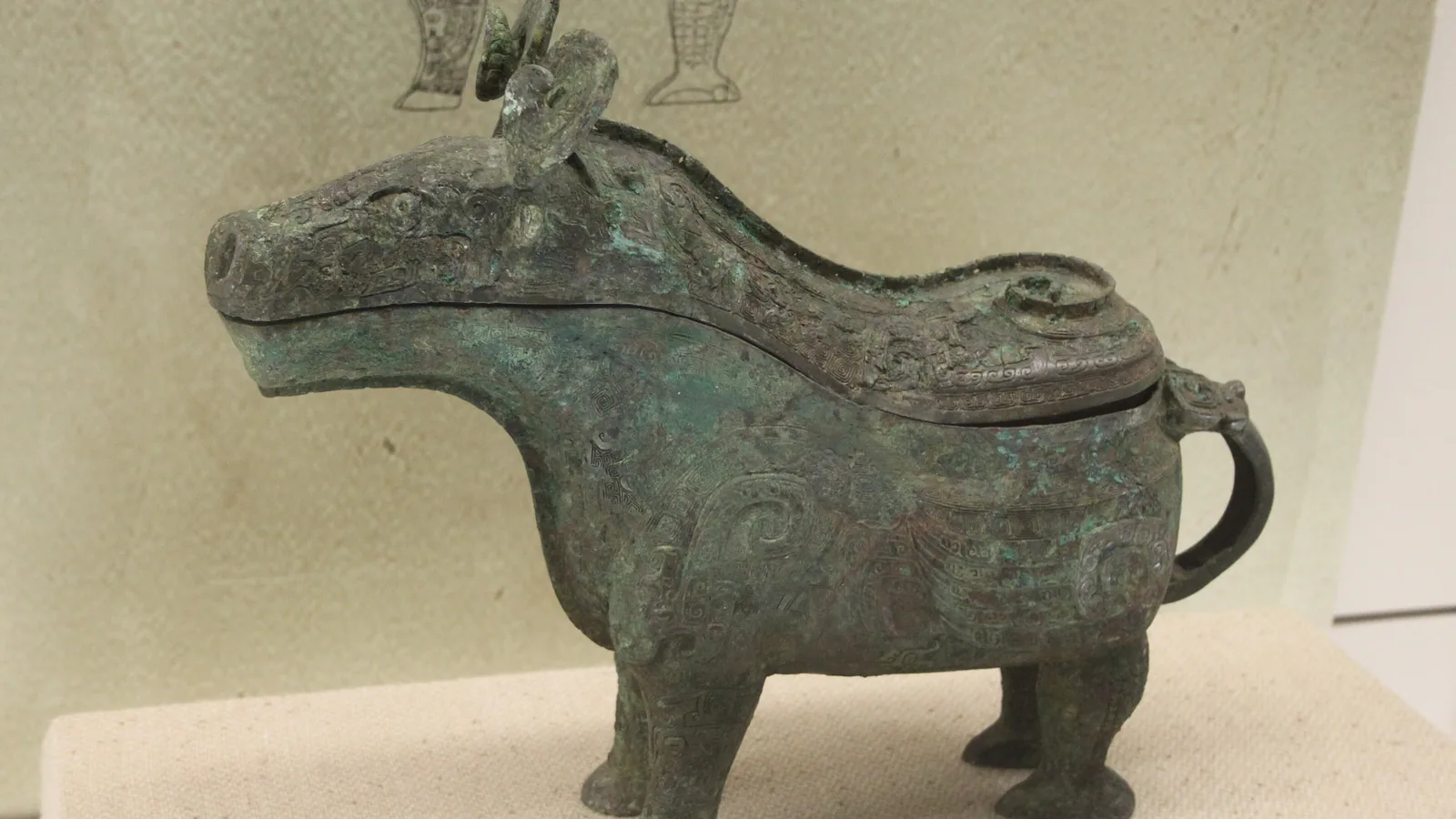
The Henan government site counts “1,928 burial objects, including more than 460 bronze vessels and over 750 jade objects,” along with “6,800 shellmoney” recovered from the burial. The National Museum of China’s collection page identifies one of these bronzes as the “Fu Hao” owl-shaped bronze zun, a wine vessel it dates to “the Shang Dynasty (c. 16th-11th centuries BC), King Wu Ding’s Reign,” recording that it was “unearthed from the tomb of Fu Hao at Yinxu, Anyang, Henan Province, 1976.” The same Henan site describes Fu Hao as “the first female general in the history of China who oversaw domestic activities and external military affairs,” a description that is the provincial site’s own.

'Fu Hao' on 109 bronzes, another name on 26
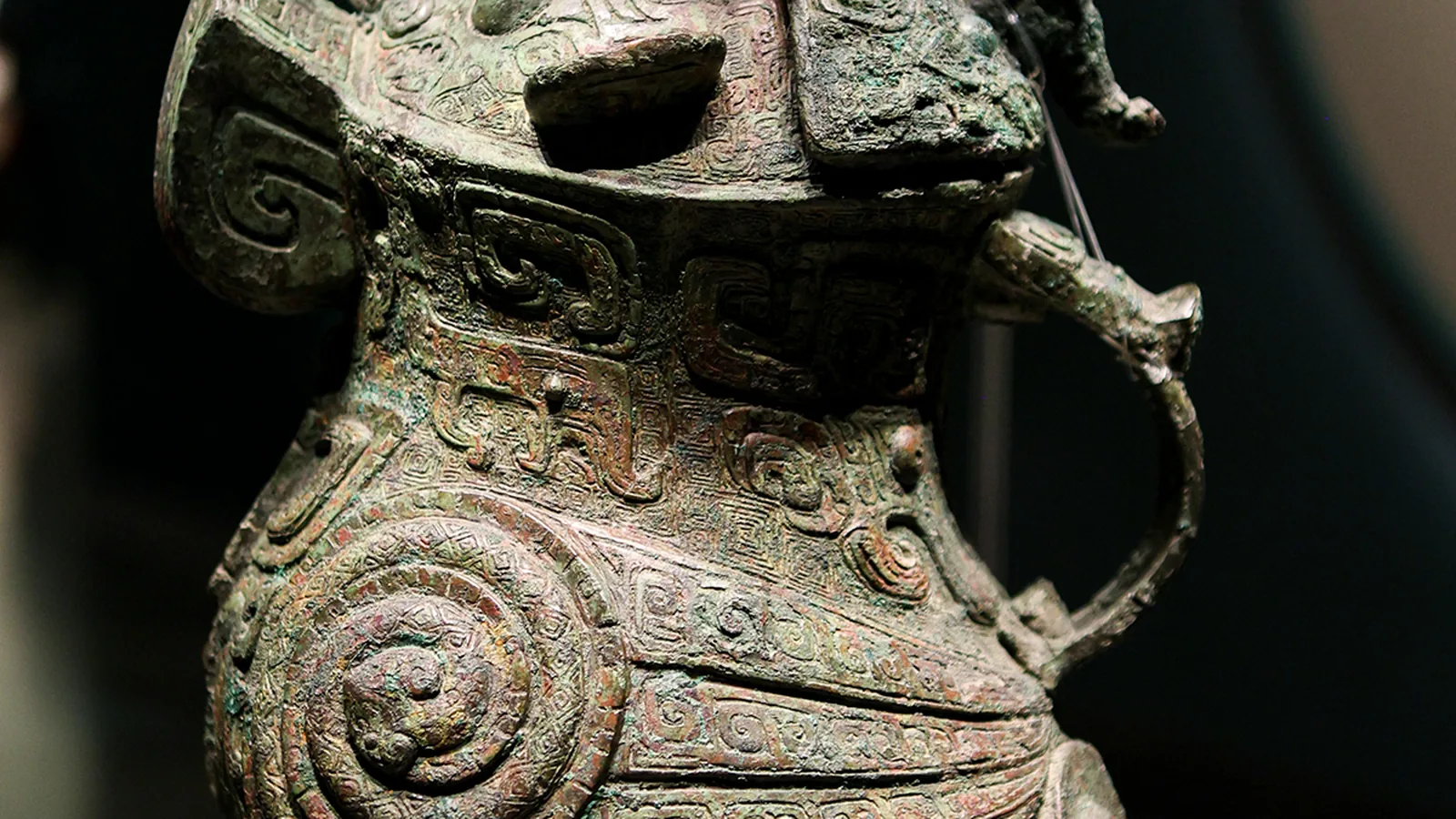
Zheng’s 1986 paper set out the inscription count. Of the 190 lettered bronzes, the writing fell into nine types: “the most common… was the inscription Fu Hao (or Zi), found on 109 vessels. The next most common was the inscription Si Tu Mu, occurring on 26 ritual bronzes.” She offered a reading for that second name: “assuming this hypothesis is correct, then objects belonging to consorts Bi Xin and Bi Gui of Wu Ding have already been discovered.” Her paper also reported a theory from unnamed colleagues that a separate large tripod, inscribed “Si Mu Wu,” names a third consort, Bi Wu.
A dispute over one name or several
Virginia Kane, of the University of Michigan, argued at the same 1986 conference that the tomb’s bronzes could not all belong to one dated moment. She wrote that the “advanced typological and stylistic qualities” of many of the vessels could not be reconciled with the usual “late Wu Ting” dating for the tomb, and concluded that reading the inscription as “the name of a single individual woman, the consort of Wu Ting, constitute[s] a methodology which must be rejected.” She proposed instead that the graph read “Fu Tzu,” with Tzu recognized as “the feminization of the Shang surname Tzu,” a title she said “a sizable number of royal women of various ages” could have held at once. Zhang Zhenglang, of the Institute of History in Peking, raised a related problem: oracle-bone inscriptions carry the name “Fu Hao” in Period I texts, from Wu Ding’s reign, and again “occasionally” in Period IV texts, from the reigns of Wu Yi and Wen Ding, separated from Period I by four kings and, Zhang wrote, “perhaps by as much as one hundred years.” He asked whether the two periods’ references were to the same person. Kwang-Chih Chang, of Harvard University, tied the tomb to a different dispute, over the site’s chronology: he wrote that a set of features “appear for the first time in association with Tomb 5, that of Fu Hao,” and suggested these changes “resulted from Pangeng’s move of his capital to this site,” which would place the reigns of Pangeng, Xiaoxin and Xiaoyi within the Tomb 5 period rather than an earlier pottery phase.
2023: an Anyang exhibition in Washington
Smithsonian’s National Museum of Asian Art opened the exhibition “Anyang: China’s Ancient City of Kings” on February 25, 2023, running through April 28, 2024. Its press release notes that the Smithsonian Channel made a feature-length program on Fu Hao in its Epic Warrior Women series, calling her a figure “described in early Anyang inscriptions as a royal consort, military leader and ritual celebrant.” The same release calls Anyang “the source of China’s earliest surviving written records.” The exhibition closed on April 28, 2024.
Key facts
- CASS’s Institute of Archaeology states that the 1976 tomb “yielded a dazzling number of exquisite bronze, jade, bone and ivory artifacts” at Yinxu, near Anyang.
- Zheng Zhenxiang, of the Institute of Archaeology in Peking, led the excavation and published her bronze-inscription counts in Kaogu in 1983.
- The Henan provincial government’s site counts 1,928 burial objects, including more than 460 bronze vessels, over 750 jade objects and 6,800 pieces of shell money.
- Of 190 inscribed bronzes, Zheng found nine inscription types; “Fu Hao (or Zi)” appears on 109 vessels and “Si Tu Mu” on 26.
- The National Museum of China dates its “Fu Hao” owl-shaped bronze zun to Wu Ding’s reign and records it was unearthed at Yinxu, Anyang, in 1976.
- Virginia Kane, of the University of Michigan, argued the inscription should be read “Fu Tzu,” a title possibly shared by several royal women, not the name of one consort.
- Zhang Zhenglang, of the Institute of History in Peking, noted the name “Fu Hao” also appears in oracle-bone texts from a period up to a hundred years after Wu Ding’s reign.
- The Smithsonian’s National Museum of Asian Art held “Anyang: China’s Ancient City of Kings” from February 25, 2023, to April 28, 2024.
FAQ
Who excavated the tomb of Fu Hao?
Zheng Zhenxiang, of the Institute of Archaeology in Peking, led the 1976 excavation at Yinxu, near Anyang in Henan Province. She published her count of the tomb's inscribed bronzes in Kaogu in 1983 and again at a 1986 Shang-studies conference recorded in Early China.
Was the name "Fu Hao" the name of one person?
Scholars disagree. The Henan provincial government's site presents Fu Hao as a consort of King Wu Ding. Virginia Kane argued the graph should be read "Fu Tzu," a title that could apply to several royal women, and Zhang Zhenglang noted the name recurs in oracle-bone texts up to a century after Wu Ding's reign, leaving open whether one person is meant.
Where are the tomb's bronzes now?
The National Museum of China's collection includes the "Fu Hao" owl-shaped bronze zun, recorded as unearthed from the tomb in 1976. The Smithsonian's National Museum of Asian Art in Washington, D.C., held "Anyang: China's Ancient City of Kings" from February 25, 2023, to April 28, 2024; its press release discusses Fu Hao.
Sources
- Institute of Archaeology, Chinese Academy of Social Sciences, "Yinxu slowly reveals its secrets," Chinese Archaeology (kaogu.cssn.cn), November 25, 2025.
- Zheng Zhenxiang, "10. The Si-Tu ('Qiao')-Mu Inscriptions Excavated from the Fu Hao Tomb," in International Conference on Shang Civilization: Abstracts of the Papers Presented and a Summary of the Discussions, Early China 9, Supplement S1 (1986), pp. 20-21.
- National Museum of China, "'Fu Hao' Owl-shaped Bronze Zun (wine vessel)," Collection Highlights, August 19, 2021.
- The People's Government of Henan Province, "Hello, Yinxu (6): Tomb of China's First Female General, Fu Hao," October 30, 2023.
- Virginia Kane, "8. Art Historical Issues Arising From the M5 Burial at Anyang," in International Conference on Shang Civilization: Abstracts of the Papers Presented and a Summary of the Discussions, Early China 9, Supplement S1 (1986), pp. 17-19.
- Kwang-Chih Chang, "5. Yinxu Tomb Number Five and the Question of the Pan Geng-Xiao Xin-Xiao Yi Period in Yinxu Archaeology," in International Conference on Shang Civilization: Abstracts of the Papers Presented and a Summary of the Discussions, Early China 9, Supplement S1 (1986).
- Zhang Zhenglang, "11. A Brief Discussion on Fu Hao," in International Conference on Shang Civilization: Abstracts of the Papers Presented and a Summary of the Discussions, Early China 9, Supplement S1 (1986), pp. 21-22.
- Smithsonian National Museum of Asian Art, press release on the exhibition "Anyang: China's Ancient City of Kings" (February 25, 2023-April 28, 2024).
Cite this article
- APA
- Our Earth's History. (2026, September 27). A name on the bronzes: the unlooted tomb of Fu Hao, Anyang, 1976. Our Earth's History. https://ourearthshistory.com/east-asia/ancient/fu-hao-tomb-1976-anyang-yinxu-unlooted-shang-bronzes-oracle-bones/
- Chicago
- Our Earth's History. “A name on the bronzes: the unlooted tomb of Fu Hao, Anyang, 1976.” Our Earth's History, September 27, 2026. https://ourearthshistory.com/east-asia/ancient/fu-hao-tomb-1976-anyang-yinxu-unlooted-shang-bronzes-oracle-bones/.
- MLA
- “A name on the bronzes: the unlooted tomb of Fu Hao, Anyang, 1976.” Our Earth's History, 27 Sep. 2026, https://ourearthshistory.com/east-asia/ancient/fu-hao-tomb-1976-anyang-yinxu-unlooted-shang-bronzes-oracle-bones/.
Text licensed CC BY-NC-ND 4.0. Found an error? Tell us.