Who were the Sea Peoples? The Medinet Habu year 8 text lists five

TL;DR — Egyptian kings named the Sea Peoples on temple walls; Sardinians, Philistines and the date 1177 BC came from modern scholars.
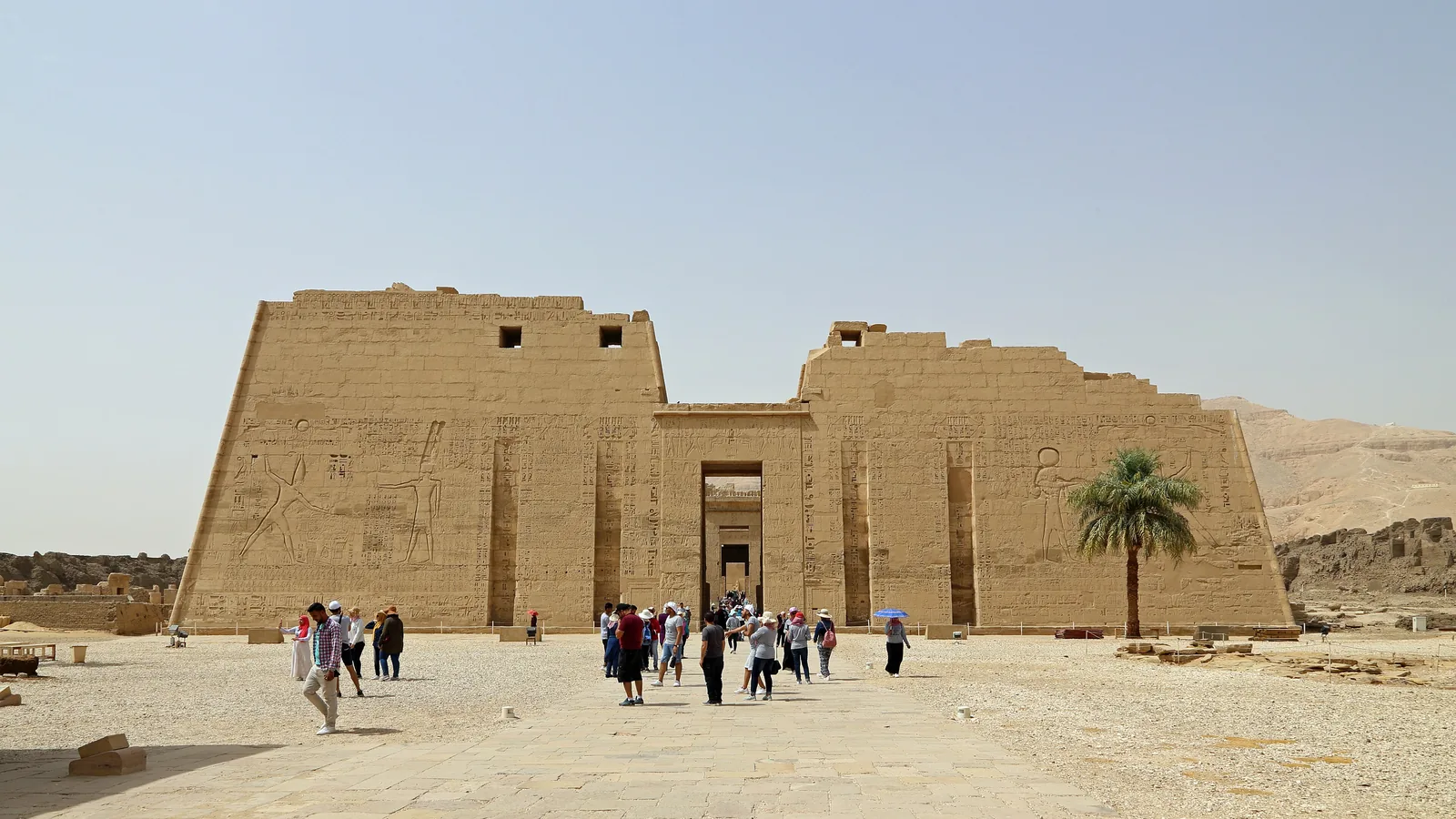
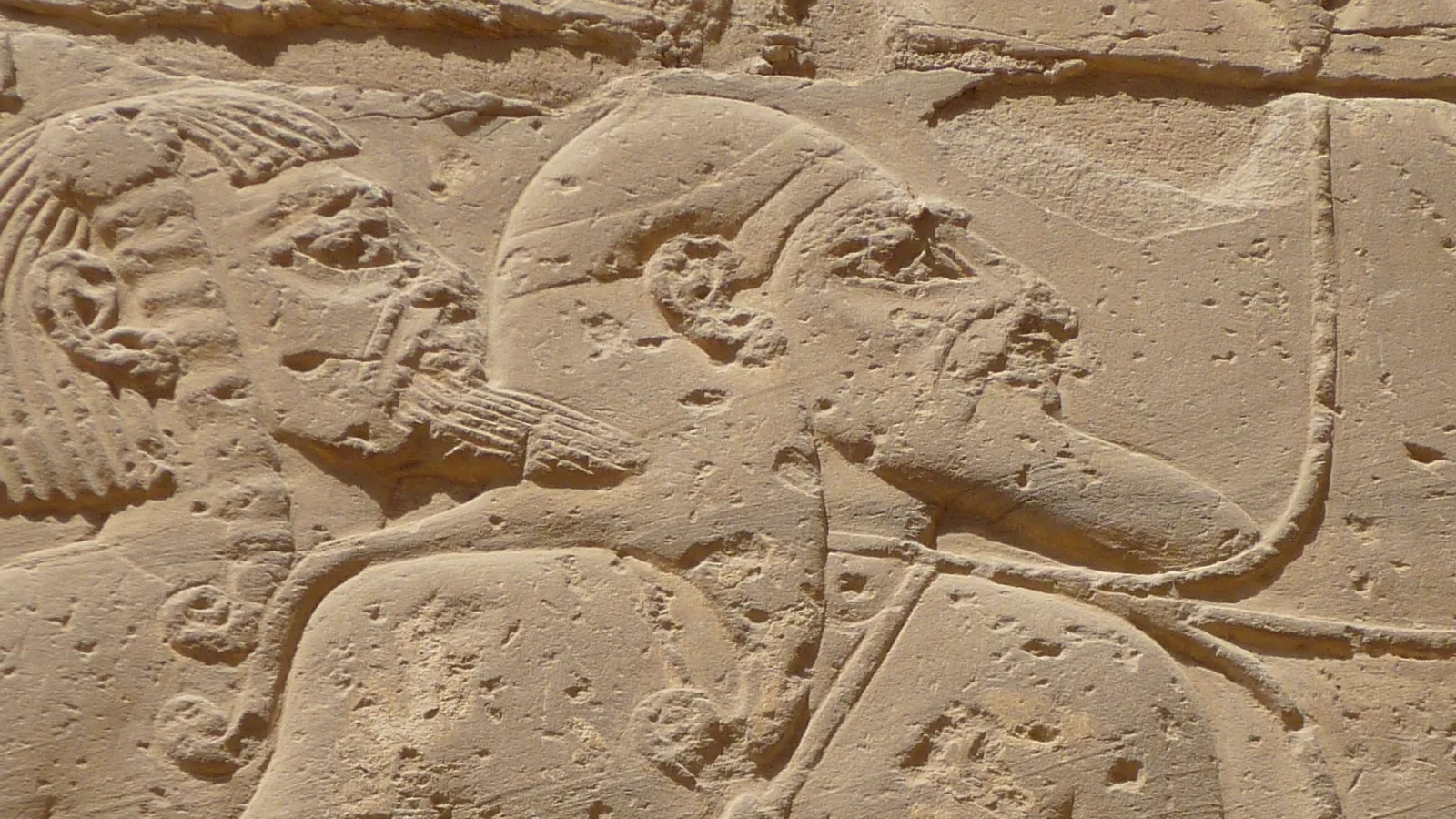
“Their confederation was the Peleset, Theker, Shekelesh, Denye(n), and Weshesh, lands united,” reads the year 8 inscription of Ramesses III at Medinet Habu. The Sea Peoples were the groups that Egyptian kings listed on such walls as enemies from the north. Merneptah’s Great Karnak Inscription names five beside the Libyans in his fifth year; Ramesses III’s year 8 text names five, and only the Shekelesh stand on both lists. Papyrus Harris I says Ramesses III settled captives “in strongholds.” Modern writers added the rest: identifications with Sardinians, Etruscans and Achaeans, the date 1177 BC, and in R. G. Roberts’s work a doubt that the invasion happened in the form usually told.
Quick facts
- When
- Year 5 of Merneptah (battle at Perire, about April 15 by Breasted's 1906 reckoning) · year 8 of Ramesses III (Northern War; 1177 BC by the conventional chronology, 1188 BC on the revised dates Knapp and Manning discussed in 2016) · 1906 (Breasted's translations) · 1936 (Edgerton and Wilson's Medinet Habu translation) · 2011 (Tell Tweini radiocarbon study) · 2016 (Knapp and Manning's review)
- Where
- Karnak and Medinet Habu in Egypt; the Nile mouths; Ugarit and its harbor town Gibala (Tell Tweini) on the Syrian coast; Alashiya (Cyprus)
- Who
- Merneptah; Ramesses III; the Libyan king Meryey; James Henry Breasted; William F. Edgerton and John A. Wilson; David Kaniewski; A. Bernard Knapp and Sturt W. Manning; Eric Cline; R. G. Roberts
- Outcome
- Egyptian texts name nine groups across two reigns, with only the Shekelesh on both royal lists. Their identification with European peoples, the 1177 BC date and the scale of any invasion were proposed by modern scholars and stayed in dispute
Year 5 of Merneptah: five names beside the Libyans
In Merneptah’s fifth year, by James Henry Breasted’s reckoning of 1906, a messenger reached the king late in March with news that the Libyan king Meryey had invaded the western Delta with allies. Merneptah met them at Perire on the third day of the eleventh month, about April 15, and “in six hours’ fighting routed their combined forces,” Breasted wrote.
The inscription itself opens: “Beginning of the victory which his majesty achieved in the land of Libya . . . Ekwesh, Teresh, Luka, Sherden, Shekelesh. Northerners coming from all lands.” Its tallies do not add up cleanly. The text counts 6,359 Libyans killed and at least 2,370 non-Libyans, and gives a total of 9,376. Breasted reached 8,729 from the two figures and allowed that, since the Athribis Stela gives at least 9,300 killed, the killed and captured together might exceed 18,000.
"No land could stand before their arms"
Medinet Habu holds two separate dated texts, and the 1936 translation by William F. Edgerton and John A. Wilson of the Oriental Institute in Chicago keeps them apart. A 75-line inscription on Plates 27–28 bears the date “year 5,” Ramesses III’s own fifth year, and covers what Egyptologists call his First Libyan War. Its lines 51–59 also tell of the Northern War, which the editors note is “traditionally dated by Egyptologists to the year 8.” The inscription on Plate 46 is dated year 8 and deals with that Northern War alone. Neither “year 5” belongs to Merneptah.
The year 8 text says the foreign lands were scattered “at one time” and that “No land could stand before their arms,” naming Hatti, Kode, Carchemish, Yereth and Yeres, with a camp set up in Amor. David Kaniewski and his co-authors, quoting the same line in 2011, gave the last two names as Arzawa and Alashiya. On defense, the king says he made the Nile mouth ready “like a strong wall with warships, galleys, and coasters.”
Papyrus Harris I and the strongholds
A third Egyptian text repeats the list with changes. In Papyrus Harris I, in Breasted’s 1906 translation, Ramesses III says he overthrew the Denyen “in their isles” and that “The Sherden and the Weshesh of the sea” were taken captive at one time and brought to Egypt “like the sand of the shore.” It continues: “I settled them in strongholds, bound in my name.” He taxed them, the papyrus says, in clothing and grain each year. The passage names the Denyen, Thekel, Peleset, Sherden and Weshesh; the Shekelesh, who appear on both temple lists, are absent from it.
The European identities came from scholars. Breasted, citing Müller and the study of Sardinian art by Perrot and Chipiez, wrote in 1906 that “we must accept the Sherden as Sardinians.” The Teresh might be Etruscans, he added, the Shekelesh the Sikeli, and the Ekwesh “not impossibly the Achaeans”; the Luka he placed in Asia Minor as Lycians. The mention of these peoples, he wrote, was “the earliest appearance of Europeans in literature.” The equation of the Peleset with the Philistines is a later identification of the same kind; Knapp and Manning used it in 2016, and reported that Guy Middleton’s 2015 critique of a Mycenaean origin for the Philistines treated the Sea Peoples narratives as “colourful stories,” historical myth.

Seven ships at Ugarit, and a basket
Letters from Ugarit, on the Syrian coast, describe raids by sea without naming the raiders. According to A. Bernard Knapp and Sturt W. Manning, writing in the American Journal of Archaeology in January 2016, the Akkadian letter RS 20.238 is from an unnamed king of Ugarit to an unnamed king of Alashiya, or Cyprus. With his army in Hatti and his ships in Lukka, he wrote, seven ships of “the enemy” had come and set fire to his towns.
The tablet was first said to have been found in a kiln, so it was dated to the city’s last days. A later reexamination, Knapp and Manning wrote, found the kiln to be a squatters’ oven and the tablets to have fallen in a basket from a second-story floor. “Our city is sacked. May you know it!” reads another letter, RS 19.11, which also lacks a secure date.
At Tell Tweini, ancient Gibala, a harbor town of the kingdom of Ugarit, Kaniewski’s team described an ash layer, Level 7A, with bronze arrowheads and Mycenaean and Cypriot pottery. They gave its destruction “an absolute age range of 1192–1190 BC.” Knapp and Manning wrote that the date had been fixed “precisely, if rather uncritically,” and that the excavators elsewhere suggested a date in the first quarter of the 12th century BC.
Roberts, Cline and the year 1177 BC
Eric Cline’s 2014 book 1177 B.C.: The Year Civilization Collapsed gave the collapse a single year. In the passage Knapp and Manning quoted, Cline allowed that the Sea Peoples “may well have been responsible for some of the destruction,” but judged it more likely that drought, earthquake storms, rebellions and “systems collapse” combined in a “perfect storm.”
Roberts went further. In 2009, Knapp and Manning wrote, he argued that the main purpose of the year 8 reliefs was “to record the actions of Ramesses III” in keeping with the Egyptian worldview. In 2014 he wrote: “I do not believe that critical analysis of the Egyptian evidence at Medinet Habu can establish the historicity of an invasion of the sort that is widely assumed.” Knapp and Manning said they inclined toward a complex, many-sided explanation. A fringe reading was dismissed earlier: in 1977 James D. Muhly, writing in the Penn Museum’s journal Expedition, called Immanuel Velikovsky’s claim that the Sea Peoples were Persians of the fourth century BC “quite unacceptable.”
The year itself rests on Egyptian regnal dating. The conventional accession of Ramesses II in 1279 BC puts year 8 of Ramesses III in 1177 BC. Knapp and Manning noted in 2016 that a recent reanalysis placed that accession about 11 years earlier, in 1290 BC, and on that reckoning year 8 of Ramesses III fell in 1188 BC.
Key facts
- Merneptah’s Great Karnak Inscription names the Ekwesh, Teresh, Luka, Sherden and Shekelesh as “Northerners coming from all lands” (Breasted, 1906).
- Breasted dated Merneptah’s battle at Perire to his fifth year, about April 15, after six hours of fighting.
- The inscription counts 6,359 Libyans and at least 2,370 non-Libyans killed and gives a total of 9,376; Breasted’s sum of the two is 8,729.
- Ramesses III’s year 8 inscription at Medinet Habu (Plate 46) names the Peleset, Theker, Shekelesh, Denyen and Weshesh as a “confederation” (Edgerton and Wilson, 1936).
- Ramesses III’s 75-line year 5 inscription (Plates 27–28) also covers the Northern War traditionally dated to his year 8; neither date belongs to Merneptah.
- Papyrus Harris I names the Denyen, Thekel, Peleset, Sherden and Weshesh and says the captives were settled “in strongholds”; the Shekelesh are not in that passage.
- RS 20.238 reports seven enemy ships off Ugarit; neither the sender nor the addressee is named in the letter (Knapp and Manning, 2016).
- Kaniewski’s team dated the Tell Tweini destruction to 1192–1190 BC in 2011; Knapp and Manning wrote in 2016 that it had been fixed “rather uncritically.”
FAQ
Who were the Sea Peoples?
They were groups named by Egyptian kings as northern enemies: the Ekwesh, Teresh, Luka, Sherden and Shekelesh under Merneptah, and the Peleset, Theker, Shekelesh, Denyen and Weshesh under Ramesses III. Links to Sardinians, Etruscans, Achaeans or Philistines are modern proposals; Breasted set out most of the European ones in 1906, several of them as possibilities.
Did the Sea Peoples destroy Ugarit?
Letters from Ugarit report enemy ships burning towns, but they do not name the enemy, and Knapp and Manning wrote in 2016 that several of them cannot be securely dated to the city's last years.
Why is 1177 BC given for the Sea Peoples?
It is the conventional date for year 8 of Ramesses III, used by Eric Cline in his 2014 book. Knapp and Manning noted that a revised Egyptian chronology would move year 8 to 1188 BC.
Sources
- James Henry Breasted, Ancient Records of Egypt, vol. III: The Nineteenth Dynasty (University of Chicago Press, 1906), §§569–592, the Libyan and Mediterranean invasion under Merneptah and the Great Karnak Inscription (ETANA, Vanderbilt University).
- William F. Edgerton and John A. Wilson, Historical Records of Ramses III: The Texts in Medinet Habu Volumes I and II, Studies in Ancient Oriental Civilization 12 (Oriental Institute, University of Chicago, 1936), Plates 27–28 and 46.
- James Henry Breasted, Ancient Records of Egypt, vol. IV: The Twentieth Dynasty (University of Chicago Press, 1906), Papyrus Harris, §403 (ETANA, Vanderbilt University).
- David Kaniewski and others, "The Sea Peoples, from Cuneiform Tablets to Carbon Dating," PLoS ONE 6, no. 6 (2011): e20232 (PubMed Central).
- A. Bernard Knapp and Sturt W. Manning, "Crisis in Context: The End of the Late Bronze Age in the Eastern Mediterranean," American Journal of Archaeology 120, no. 1 (January 2016): 99–149 (Archaeological Institute of America, open access).
- James D. Muhly, "Editorial," Expedition 19, no. 4 (1977), Penn Museum, University of Pennsylvania.
Cite this article
- APA
- Song Letter. (2026, October 12). Who were the Sea Peoples? The Medinet Habu year 8 text lists five. Our Earth's History. https://ourearthshistory.com/west-asia/ancient/who-were-the-sea-peoples-medinet-habu-year-8/
- Chicago
- Song Letter. “Who were the Sea Peoples? The Medinet Habu year 8 text lists five.” Our Earth's History, October 12, 2026. https://ourearthshistory.com/west-asia/ancient/who-were-the-sea-peoples-medinet-habu-year-8/.
- MLA
- Song Letter. “Who were the Sea Peoples? The Medinet Habu year 8 text lists five.” Our Earth's History, 12 Oct. 2026, https://ourearthshistory.com/west-asia/ancient/who-were-the-sea-peoples-medinet-habu-year-8/.
Get the week in history
One email a week: the new articles, and what was happening elsewhere at the same moment. Free, no ads, unsubscribe any time. How we handle your email.
Text licensed CC BY-NC-ND 4.0. Found an error? Tell us.