Thirteen pillars and a lacquer stick at Taosi, read as a sun calendar

TL;DR — Excavators read 13 rammed-earth pillars at Taosi, Shanxi, as a sunrise calendar of the 21st century BC. Astronomers agreed in 2005; a 2025 paper queries it.
In 2003 excavators at Taosi (陶寺), in Xiangfen (襄汾) county, Shanxi, found the footings of 13 rammed-earth pillars in a semicircle, which they read as a sunrise observatory. The ICOMOS–IAU Thematic Study on Astronomical Heritage dates the structure to the 21st century BC. The Shanxi team of the Institute of Archaeology of the Chinese Academy of Social Sciences (CASS) tested the reading by watching the sun rise through the gaps, and visiting astronomers endorsed it on October 23, 2005. The team also read a lacquer stick from a royal tomb as a gnomon template. A paper published in June 2025 queries the observatory reading in its title.
Quick facts
- When
- Middle Taosi Period, 21st century BC (construction and use) · 20th century BC (demolition) · 2003 (first found) · 2004 (fully uncovered) · 2005 (archaeoastronomical surveys; meeting of October 23) · 2009 (lacquer stick paper) · June 2025 (Kejia Huang's paper) · November 2024 (Taosi Site Museum opens)
- Where
- Taosi, Xiangfen county, Linfen, Shanxi province, in what is now northern China; the smaller walled town of the Middle Period
- Who
- He Nu and Xu Fengxian (ICOMOS–IAU case study); the Shanxi team of the Institute of Archaeology, Chinese Academy of Social Sciences; Wu Jiabi, Chen Meidong and Liu Ciyuan (2009 astronomical analysis); Kejia Huang (2025); Gao Jiangtao
- Outcome
- The excavators and a group of astronomers read the structure as a device for fixing the solstices and equinoxes by sunrise. A 2025 paper queries that reading. The link to the legendary Yao remains an interpretation made by Chinese archaeologists
Pillars, slots and a skyline 7 to 10 km east
Xu Fengxian and the excavation leader He Nu (何驽) described the remains in their case study for ICOMOS, the International Council on Monuments and Sites, and the International Astronomical Union. The platform was a semicircle of about 1,000 m2, 40 m across from east to west. Its innermost terrace had a rammed-earth wall 22.5 m long and 2.7 m high, into whose foundation ten U- or V-shaped slots had been cut, leaving 11 pillars. A block on the next terrace had been cut into two more.
Slightly west of the platform’s center lay a round foundation pit ringed by three rammed-earth circles. Seen from that spot, the pillars lined up as one arc of 13 pillars and 12 slots against Taer Hill, a chain of peaks up to 1,493 m high some 7 to 10 km east. The authors wrote that a structure at the point where the slots’ centerlines converge “implies that the twelve slots and the observation point must have been designed carefully and formed an integrated observation system.”
The platform stood in the smaller of two walled towns of the Middle Taosi Period; the larger covered 2.8 km2. The case study dates the platform’s construction and use to the 21st century BC and records that it was deliberately demolished in the 20th century BC. Its footings lay about 1 m underground until 2003 and were fully uncovered in 2004.
October 23, 2005: astronomers on the platform
He Nu first came to Taosi in September 2001 and the next year became the third leader of the CASS excavation there, the Guangming Daily (光明日报) reported in 2018. His team returned day after day and year after year with cameras and video cameras, the paper wrote, until they had fixed three observation points. The ICOMOS–IAU case study adds that a temporary building went up on the site “with brick structures imitating the ancient pillars and slots,” its aim “to simulate observations and further research.”
The case study gives the result: “Calculations and experimental observations indicate that 4000 years ago the sun would have risen in the northernmost slot at the June solstice, and in the slot next to the southernmost at the December solstice.” Slot 7, counting from the south, may have marked the equinoxes; the sun rises in it on March 18 and September 25 in the modern era. The southernmost slot pointed to the southernmost moonrise.
Wu Jiabi, Chen Meidong and Liu Ciyuan checked the solstice slots in Science China in January 2009. Their abstract states that at present the sun comes close to slots E2 and E12 at the solstices but does not enter them. Allowing for the slow change in the tilt of the earth’s axis since about 2100 BC, the radiocarbon date they cite, they placed the summer solstice sun inside E12 and the winter solstice sun on the centerline of E2. “This result provides compelling proof that II FJT1 is an ancient observatory,” they wrote.
The public endorsement came first. On October 23, 2005, at a meeting on the function of the structure, a group of astronomers inspected the platform and agreed unanimously that it had been used for observation, according to the Guangming Daily, which recorded that He Nu wept in front of them. The paper did not name the astronomers.
IIM22 and a lacquer stick
The ICOMOS–IAU authors noted that the earliest recorded Chinese method of fixing the seasons was to measure the sun’s noon shadow. In 2009 He Nu and the Shanxi team published a paper in Studies in the History of Natural Sciences, 28(3), pages 261 to 276, whose English title the case study gives as “On the gnomon shadow template function of the lacquer stick from the royal tomb IIM22 at Taosi walled-town of Middle Period.”
Chinese Social Sciences Today, reporting in July 2022, called the stick a guichi (圭尺), a gnomon shadow scale. It recorded that He Nu took the stick’s 11th mark, with the nature of the capital and the state character of Taosi society, as the sign that the first concept of “China” formed at Taosi.
"The capital of King Yao" and a 2025 query
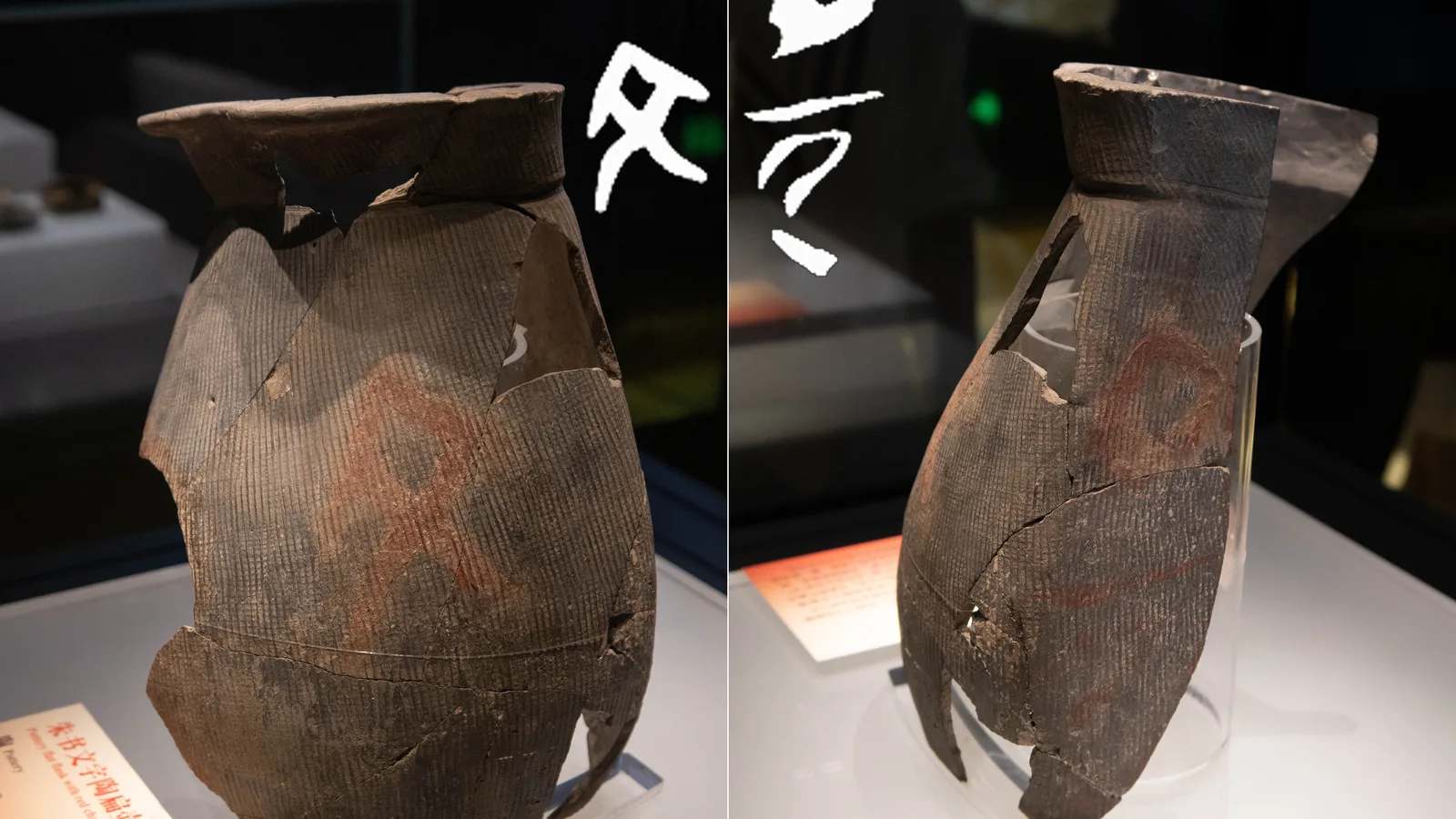
Xu and He wrote that the Taosi site “is believed to be the capital of King Yao, who ruled before the time of the Xia Dynasty.” The Canon of Yao, a classical text attributed to him, says he sent four officials to observe the culminating stars at the equinoxes and solstices. The Shanxi Daily reported in 2018 that Wang Wei (王巍), chief expert of the Chinese Civilization Origins Project, had said Taosi in Linfen (临汾) was Yao’s capital. The Guangming Daily recorded that He Nu read red-painted characters from the site as Wen Yao (文尧) and offered the reading as evidence for the tradition placing Yao’s capital at Pingyang.
Kejia Huang’s paper in Archaeological Research in Asia, volume 42, published in June 2025, is subtitled “Querying the present interpretation of the rammed earth structures excavated in IIFJT1 of the Taosi site excavation.” Its title sets it against the observatory reading.
Gao Jiangtao (高江涛), who has dug at Taosi since 2003, told China Daily that the site held the earliest observatory known in China. The Taosi Site Museum in Linfen shows 230 items or sets, among them a guibiao (圭表), a device with “a perpendicular bar that cast a shadow on a horizontal scale.” The museum opened to the public in November 2024, China Daily reported on November 13 of that year.
Key facts
- The platform at Taosi, Xiangfen county, Shanxi, covers about 1,000 m2, 40 m east to west and about 29 m north to south (ICOMOS–IAU case study).
- Seen from a round foundation pit near its center, 13 pillars and 12 slots line up against Taer Hill, 7 to 10 km east.
- The case study dates construction and use to the 21st century BC and deliberate demolition to the 20th century BC; the remains were found in 2003 and fully uncovered in 2004.
- Calculations and observations place the June solstice sunrise in the northernmost slot and the December solstice sunrise in the slot next to the southernmost, about 4,000 years ago; slot 7 from the south catches the sunrise on March 18 and September 25.
- In 2009 He Nu and the Shanxi team published a paper on a lacquer stick from royal tomb IIM22 as a gnomon shadow template.
- Kejia Huang’s paper of June 2025 in Archaeological Research in Asia queries the present interpretation of the structure, known as IIFJT1.
FAQ
Is Taosi the oldest observatory in China?
Gao Jiangtao of the CASS Institute of Archaeology told China Daily in 2024 that the site held the earliest observatory known in China. The observatory reading comes from the excavators and the astronomers who tested it, and a 2025 paper by Kejia Huang queries it.
How did the Taosi observatory work?
From a fixed point near the center of the platform, an observer looked east through 12 slots between 13 pillars toward Taer Hill. The ICOMOS–IAU case study places the June and December solstice sunrises in the slots at either end and the equinox sunrise in slot 7.
Was Taosi the capital of Yao?
Yao is a ruler of Chinese tradition, known from texts such as the Canon of Yao. The ICOMOS–IAU authors wrote that Taosi "is believed to be the capital of King Yao," and archaeologists including He Nu and Wang Wei have made the case for the identification.
Sources
- Xu Fengxian and He Nu, "Case Study 5.1: Taosi Observatory, China," ICOMOS–IAU Thematic Study on Astronomical Heritage (International Council on Monuments and Sites and International Astronomical Union), pp. 86–90, PDF.
- Wu Jiabi, Chen Meidong and Liu Ciyuan, "Astronomical function and date of the Taosi observatory," Science China Physics, Mechanics & Astronomy 52(1) (January 2009), abstract on Springer Nature Link.
- Guangming Daily (Yang Jue, Li Jianbin and Mi Yalu), "Taosi archaeology at 40: secrets opened layer by layer" (July 16, 2018), reprinted by the Institute of Archaeology, Chinese Academy of Social Sciences (in Chinese).
- Chinese Social Sciences Today (Zhang Qingli), "Exploring the Taosi model of the origin of Chinese civilization" (July 27, 2022), reprinted by the Institute of Archaeology, Chinese Academy of Social Sciences (in Chinese).
- Shanxi Daily (Liu Hexin), "The Taosi site in world view" (February 6, 2018), reprinted by the Institute of Archaeology, Chinese Academy of Social Sciences (in Chinese).
- Kejia Huang, "A discussion of the astronomical observation relic at the Taosi site: Querying the present interpretation of the rammed earth structures excavated in IIFJT1 of the Taosi site excavation, Shanxi Province, China," Archaeological Research in Asia 42 (June 2025), 100617, bibliographic record at Crossref.
- China Daily, "New museum highlights timekeeping Taosi culture" (November 13, 2024), reprinted by China Confucius Net (chinakongzi.org).
Cite this article
- APA
- LETTER. (2026, September 28). Thirteen pillars and a lacquer stick at Taosi, read as a sun calendar. Our Earth's History. https://ourearthshistory.com/east-asia/ancient/taosi-observatory-13-pillars-gnomon-shanxi/
- Chicago
- LETTER. “Thirteen pillars and a lacquer stick at Taosi, read as a sun calendar.” Our Earth's History, September 28, 2026. https://ourearthshistory.com/east-asia/ancient/taosi-observatory-13-pillars-gnomon-shanxi/.
- MLA
- LETTER. “Thirteen pillars and a lacquer stick at Taosi, read as a sun calendar.” Our Earth's History, 28 Sep. 2026, https://ourearthshistory.com/east-asia/ancient/taosi-observatory-13-pillars-gnomon-shanxi/.
Text licensed CC BY-NC-ND 4.0. Found an error? Tell us.