A reservoir that was never filled: Arkaim, southern Urals, 1987–1991
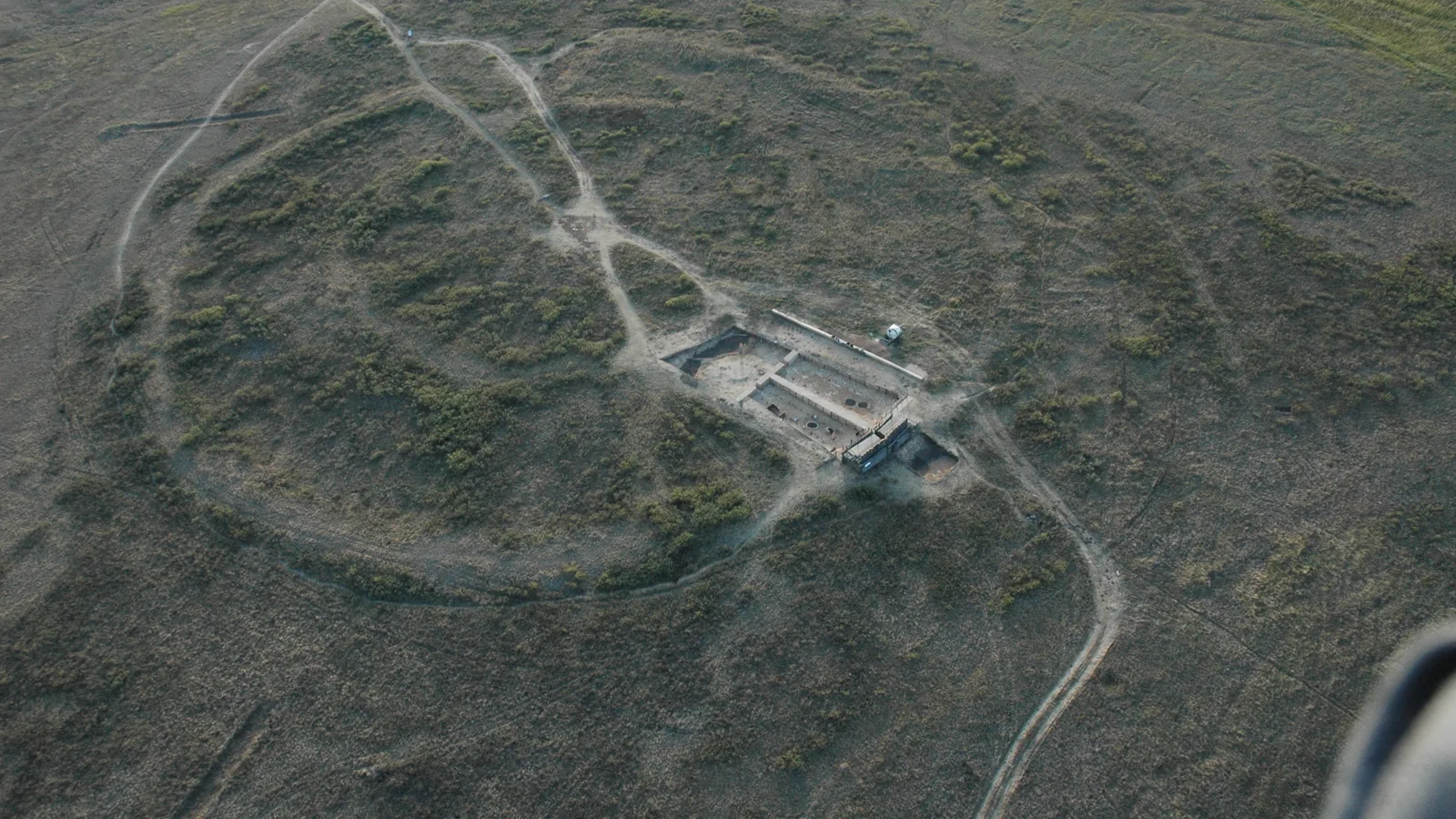

TL;DR — Arkaim’s own reserve says dam work began in November 1986; a 1987 survey found a Bronze Age ringed settlement, and the reservoir plan was canceled in 1991.
The Arkaim reserve’s own dam page states: “В ноябре 1986 г. было начато строительство Большекараганского водохранилища,” construction of the Bolshaya Karaganka reservoir began in November 1986. A mandatory survey preceded the project, and the reserve’s history page credits it to “археологи Челябинского госуниверситета С.Баталов и В.Мосин,” Chelyabinsk State University archaeologists S. Batalov and V. Mosin, working under Gennady Zdanovich. In 1987 that survey found a fortified circular settlement in the Bolshaya Karaganka valley, in Chelyabinsk oblast in the southern Urals. Dam construction stopped in March 1988, and in April 1991 the RSFSR Council of Ministers canceled the reservoir and created a 3,700-hectare reserve on the site.
Quick facts
- When
- November 1986 (dam construction begins) · 1987 (survey finds the settlement; excavation starts in August) · March 1988 (dam construction stops) · April 1991 (RSFSR Council of Ministers creates the reserve)
- Where
- the Bolshaya Karaganka river valley, Chelyabinsk oblast, southern Urals
- Who
- Chelyabinsk State University archaeologists S. Batalov and V. Mosin, led by Gennady Zdanovich; aerial-photograph reader Iya Batanina; Hermitage Museum director Boris Piotrovsky
- Outcome
- the reservoir plan was canceled and a 3,700-hectare historical-landscape reserve was created on the site, starting as a branch of the Ilmen State Reserve
Iya Batanina reads a photograph from the 1970s
Iya Mikhailovna Batanina, an aerial-photograph reader attached to the survey, examined a photograph taken in the 1970s during the 1987 fieldwork. The reserve’s history page describes what she found as “очень чёткое изображение некоего округлого объекта с внутренним вписанным кругом и поперечными линиями,” a very clear image of a round object with an inner inscribed circle and transverse lines. That reading identified the settlement later named Arkaim. The same survey, run by Batalov and Mosin under Zdanovich, found several dozen sites in the valley that year. Excavation began in August 1987 and ran for five seasons, ending in 1995, with Zdanovich as director; the history page puts the result at 28 excavated house floors and a collection of 10,120 objects.
April 1991: a council decision ends the reservoir plan
In August 1987, soon after excavation began, Zdanovich traveled to Leningrad and met Boris Piotrovsky, director of the Hermitage Museum and a member of the Academy of Sciences. Piotrovsky wrote to Alexander Yakovlev, a secretary of the Communist Party Central Committee: “Я не знаю, что следует предпринять… но уверен, что в случае непринятия мер по скорейшему исследованию этого уникального памятника мы нанесём непоправимый вред советской археологии.” He did not know what should be done to stop the site from being flooded, he wrote, but was certain that without prompt measures to study the monument, Soviet archaeology would suffer irreparable harm. The history page names Academy members Boris Rybakov and Gennady Mesyats among the scholars who backed the campaign. Dam construction stopped in March 1988. In April 1991 the RSFSR Council of Ministers decided “о создании на месте несостоявшегося водохранилища историко-ландшафтного заповедника «Аркаим»,” to create, on the site of the reservoir that never was, the Arkaim historical-landscape reserve. It took 3,700 hectares from the Izmailovsky and Amursky state farms and began as “филиалом Ильменского государственного заповедника,” a branch of the Ilmen State Reserve, under the Academy of Sciences.
A settlement built only from wood and earth
The settlement’s own page states that it “было заранее спланировано: в его центре располагается площадь, вокруг нее создано два круга жилищ, один внутри другого, каждый из которых окружен оборонительной стеной и рвом,” planned in advance, with a square at the center and two rings of dwellings, one inside the other, each ringed by a wall and a ditch. A third ring, the page adds, “предназначался для содержания скота и был сформирован изгородью из жердей и земли,” was meant for keeping livestock and formed by a fence of poles and earth. Four entrances led in, one on each side of the compass. The area inside the second wall covers 20,000 square meters, of which archaeologists have excavated 8,000. Every dwelling, the page adds, was built “только с использованием дерева и грунта,” using only wood and earth. The settlement page dates the site to the twenty-first through eighteenth centuries BC; a history essay on the same reserve site instead describes it as built in the first half of the second millennium BC, and Viktor Shnirelman’s 1999 article in Inner Asia dates it to the seventeenth and sixteenth centuries BC. Radiocarbon work by Andrey Epimakhov, Elya Zazovskaya and Irina Alaeva, published in Radiocarbon in 2024, refined the chronology of a related Sintashta-culture settlement, Sintashta II, to 2004–1852 calibrated BC; a 2007 Antiquity article by B. K. Hanks, A. V. Epimakhov and A. C. Renfrew had already offered 40 new radiocarbon dates across the southern Urals Bronze Age.
Twenty-five chariots from Sintashta cemeteries
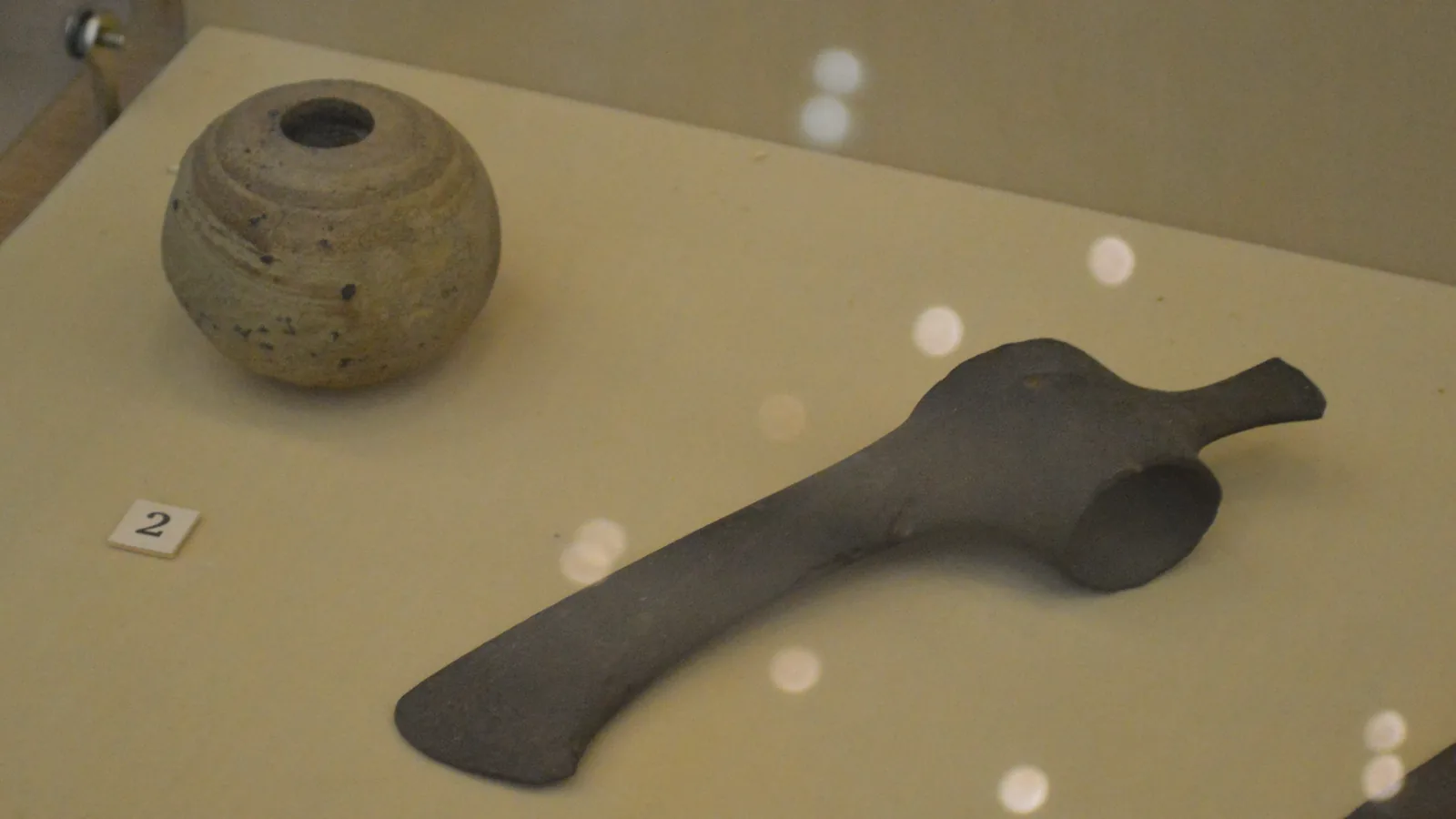
A booklet published by the reserve, written by A. M. Kislenko and I. A. Valiakhmetov, records the first chariot find in the region: “В 70-е гг. ХХ века на юге Челябинской области в погребениях синташтинско-аркаимского времени В.Ф.Генинг сделал первые находки остатков колесниц.” In the 1970s, in burials of Sintashta-Arkaim time in southern Chelyabinsk oblast, V. F. Gening made the first finds of chariot remains, in grave 30 of the Sintashta cemetery. The booklet dates the earliest known chariot to a burial excavated by N. B. Vinogradov at Krivoe Ozero: “Остатки самой ранней колесницы… относятся по данным радиоуглеродного анализа к 2026 г. до н.э.,” the remains, by radiocarbon analysis, date to 2026 BC. The chariots survive mainly as paired wheel pits cut into grave floors, with rims, spokes, hubs and leather tires sometimes traceable in the soil, along with horse skulls and cheekpieces. The booklet counts “не менее 25 колесниц,” at least 25 chariots, known from the region. These burials come from Sintashta-culture cemeteries elsewhere in the region, including the Sintashta cemetery and Krivoe Ozero.

"Passions about Arkaim": a name reused
Viktor Shnirelman, of the Russian Academy of Sciences’ Institute of Ethnology and Anthropology, titled his 1999 article in Inner Asia “Passions about Arkaim: Russian Nationalism, the Aryans, and the Politics of Archaeology.” Shnirelman wrote that the site “became the focus for an extraordinary conglomeration of ideas . . . in particular those of Russian nationalists,” and that theories soon held Arkaim to be a sacred place and the home of proto-Slavs, “the city not only of proto Slavs but of Zarathustra and the Aryans too.” Such claims, he wrote, grew out of local politics and ethnic tensions as well as wider Russian nationalism. The reserve’s own history page, on the site’s reception after 1991, records astrologers and esoteric writers publishing claims about the settlement’s healing energy from the late 1990s onward. Excavation of the settlement had already ended in 1995, after five seasons that produced 28 house floors and 10,120 objects.
Key facts
- The Arkaim reserve’s dam page states that construction of the Bolshekaragan reservoir began in November 1986.
- Chelyabinsk State University archaeologists S. Batalov and V. Mosin, led by Gennady Zdanovich, surveyed the Bolshaya Karaganka valley in 1987 ahead of the dam.
- Aerial-photograph reader Iya Batanina identified the ringed settlement from a photograph taken in the 1970s.
- Dam construction stopped in March 1988; excavation of the settlement ran from August 1987 to 1995, producing 28 house floors and 10,120 objects.
- Hermitage Museum director Boris Piotrovsky wrote to Central Committee secretary Alexander Yakovlev in August 1987 urging measures to save the site.
- In April 1991 the RSFSR Council of Ministers created a 3,700-hectare reserve, starting as a branch of the Ilmen State Reserve.
- A reserve booklet records at least 25 known chariot burials in the wider region, the earliest at Krivoe Ozero dated to 2026 BC; none is confirmed at Arkaim’s own cemetery.
- Viktor Shnirelman’s 1999 Inner Asia article documents Russian nationalist claims that Arkaim was the home of proto-Slavs and Aryans.
FAQ
When was Arkaim discovered?
In 1987, during an archaeological survey required before construction of the Bolshaya Karaganka reservoir. Chelyabinsk State University archaeologists S. Batalov and V. Mosin carried out the survey under Gennady Zdanovich, and aerial-photograph reader Iya Batanina identified the ringed settlement from a 1970s photograph.
Why was the Bolshaya Karaganka reservoir canceled?
Dam construction, begun in November 1986, stopped in March 1988 after a campaign backed by Academy of Sciences members including Hermitage Museum director Boris Piotrovsky. In April 1991 the RSFSR Council of Ministers formally canceled the reservoir and created a historical-landscape reserve on the site instead.
Were chariots found at Arkaim?
The chariot burials described in the reserve's own booklet, including the earliest known example at Krivoe Ozero, come from other Sintashta-culture cemeteries in the region. The pages the reserve publishes do not state that a chariot burial was found in Arkaim's own cemetery.
Sources
- Zapovednik "Arkaim" (official reserve site), "Arkaim: istoriya, dostizheniya, problemy" (history essay)
- Zapovednik "Arkaim", "Plotina" (dam) map page
- Zapovednik "Arkaim", "Poselenie Arkaim" (Arkaim settlement) map page
- A. M. Kislenko and I. A. Valiakhmetov, "Drevneishie kolesnitsy stepei Evrazii" (The Oldest Chariots of the Eurasian Steppes), Arkaim reserve booklet, 2018
- Andrey Epimakhov, Elya Zazovskaya and Irina Alaeva, "Migrations and Cultural Evolution in the Light of Radiocarbon Dating of Bronze Age Sites in the Southern Urals," Radiocarbon 66(6), 2024
- B. K. Hanks, A. V. Epimakhov and A. C. Renfrew, "Towards a refined chronology for the Bronze Age of the southern Urals, Russia," Antiquity 81(312), 2007 (abstract)
- Victor A. Shnirelman, "Passions about Arkaim: Russian Nationalism, the Aryans, and the Politics of Archaeology," Inner Asia 1(2), 1999
Cite this article
- APA
- Our Earth's History. (2026, September 25). A reservoir that was never filled: Arkaim, southern Urals, 1987–1991. Our Earth's History. https://ourearthshistory.com/central-asia/ancient/arkaim-1987-bolshaya-karaganka-reservoir-stopped-sintashta-ring-settlement/
- Chicago
- Our Earth's History. “A reservoir that was never filled: Arkaim, southern Urals, 1987–1991.” Our Earth's History, September 25, 2026. https://ourearthshistory.com/central-asia/ancient/arkaim-1987-bolshaya-karaganka-reservoir-stopped-sintashta-ring-settlement/.
- MLA
- “A reservoir that was never filled: Arkaim, southern Urals, 1987–1991.” Our Earth's History, 25 Sep. 2026, https://ourearthshistory.com/central-asia/ancient/arkaim-1987-bolshaya-karaganka-reservoir-stopped-sintashta-ring-settlement/.
Text licensed CC BY-NC-ND 4.0. Found an error? Tell us.