Two crossed-hands reliefs at Kotosh: University of Tokyo digs, 1960
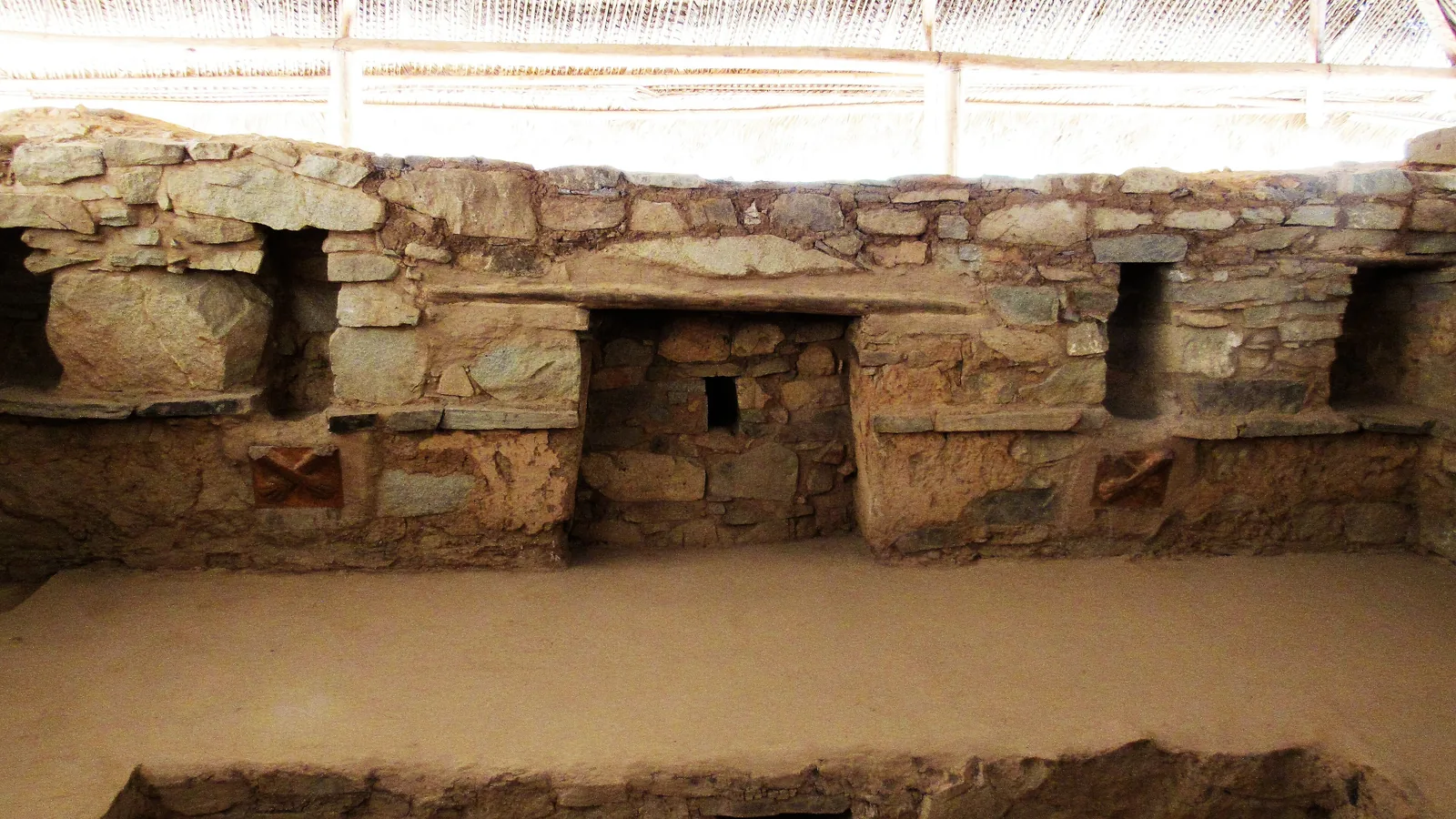

TL;DR — The University of Tokyo found two crossed-hands reliefs at Kotosh, Peru, in 1960 and 1963; MNAAHP dates them to about 2200-1500 BC, UMUT to 2500-1800 BC.
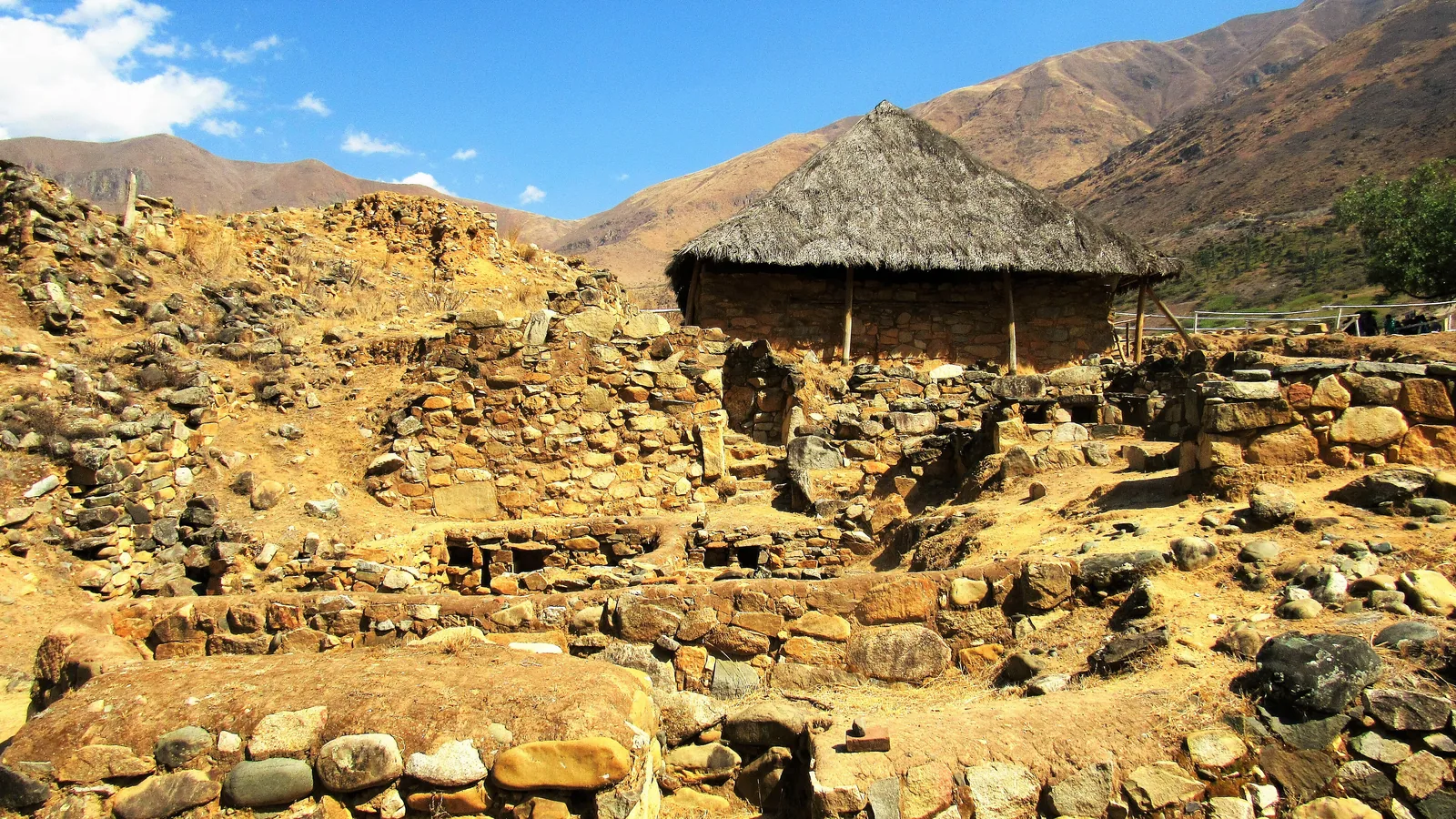
The University of Tokyo Museum’s own account of the dig states that its team was “directed by Seiichi Izumi (professor of the Department of Cultural Anthropology, 1915-1970)” through field seasons that began in 1960 at Kotosh, a site in the upper Huallaga river basin near Huánuco, Peru. Peru’s National Museum of Archaeology, Anthropology and History, known by its Spanish initials MNAAHP, gives the same starting year, writing that Izumi’s team found temples built one over another and that in one of them “se encontraron dos esculturas dispuesta en las paredes que darán el nombre al templo ‘Manos cruzadas’” (two sculptures were found set into the walls, which gave the temple its name, “crossed hands”). Peru’s Ministry of Culture, in a press release dated March 15, 2024, instead states that the site “fue investigada en 1958 por la misión arqueológica de la Universidad de Tokio, a cargo del Dr. Seiichi Izumi” (was investigated starting in 1958 by the University of Tokyo’s archaeological mission, headed by Dr. Seiichi Izumi). The two crossed-hands reliefs the team found, one in 1960 and a second in 1963, no longer sit on their original walls, and the institutions that study them still give different centuries for their age.
Quick facts
- When
- 1960, the first excavation season (MNAAHP, UMUT and Onuki 2014 agree); Peru's Ministry of Culture's 2024 release instead gives 1958; further seasons followed in 1963 and 1966 (UMUT) and, Onuki 2014 adds, in 1969
- Where
- the Kotosh archaeological site, in the upper Huallaga river basin near Huánuco, Peru
- Who
- Seiichi Izumi (director of the University of Tokyo mission, 1915-1970); Yoshio Onuki; Tsugio Matsuzawa
- Outcome
- two crossed-hands clay reliefs were uncovered, in 1960 and 1963; the first was damaged by visitors and the second moved to Lima for conservation. Institutions give different ages for the reliefs and the temples that held them, from about 2700 BC to 1500 BC
Seiichi Izumi's mission opens the site, 1960
MNAAHP’s page on Kotosh writes that the site’s construction “se relacionan con actividades de carácter religioso” (relate to activities of a religious character). The University of Tokyo Museum, in its own public account, counts “three field seasons” of work there in the 1960s. Yoshio Onuki, who took part in the excavations, lists a fourth season the museum’s page omits: “Las excavaciones realizadas en los años 1960, 1963, 1966 y 1969 por la Misión Japonesa sacaron a la luz los templos de la fase Kotosh Mito” (the excavations carried out in 1960, 1963, 1966 and 1969 by the Japanese mission brought to light the temples of the Kotosh Mito phase), he wrote in 2014.
1963: a second relief and a move to Lima
UMUT’s account states that “the first was discovered in 1960” and that it “was destroyed by some thoughtless visitors.” A second relief, found in 1963, fared differently: it was “transferred from the wall to Lima City for conservation,” leaving no original relief in place at the site. Both were clay reliefs of crossed hands set into a temple wall. UMUT holds “a pair of plaster replicas of Manos Cruzadas originated from plaster molds” cast at the time of the dig, and later made “a new pair of clay replicas” for its traveling Mobile Museum exhibit. Of the molds, the museum calls the one taken from the male-side hand shape “the only material showing the original form after collapse,” since the wall it was cast from no longer stands. UMUT describes the pair of reliefs as a “representative piece of the earliest Andean art.”

Enterramiento or Renovación: two names for the same layers
Onuki credits a colleague with naming the pattern the team found each time a Kotosh temple was covered over. “Fue Tsugio Matsuzawa (1972: 176) quien nombró a este fenómeno como el ‘Enterramiento del Templo’” (it was Tsugio Matsuzawa who named this phenomenon “the Burial of the Temple”), Onuki wrote, an idea Matsuzawa and Izumi formed together after noting two things during the excavation of the Temple of the Crossed Hands: the whole structure had been filled with stone and earth, and the reliefs themselves had first been covered in sand and soft soil that shielded them from the weight of that fill. Onuki, writing in 2014, argued for dropping the word “burial.” “Los templos y edificios fueron enterrados sin ninguna connotación relacionada al funeral o a la muerte” (the temples and buildings were buried with no connotation related to funerals or death), he wrote, proposing “Renovación,” or renovation, instead. He pointed to one recurring detail as his evidence: whenever a temple was pulled down to build a new one above it, “siempre se dejaba sin dañar el piso inferior y su fogón” (the lower floor and its hearth were always left undamaged).
Four institutions, four different date ranges
The reliefs themselves carry no single agreed date. MNAAHP puts them at roughly 2200 to 1500 BC. UMUT assigns the Mito-phase temples that held them to 2500 to 1800 BC. Gordon Willey, writing in 1971 and quoted by Onuki, placed the late developments of the phase “just prior to 1800 B.C.” Onuki offered his own account of why the estimates spread so widely: “Las mediciones de Carbono 14 en la década de 1960 no eran muy buenas y no se ha podido obtener buenos fechados para la fase Kotosh Mito” (radiocarbon measurements in the 1960s were not very good, and it has not been possible to obtain good dates for the Kotosh Mito phase), he wrote in 2014.
2025: a wider radiocarbon chronology
Christian Mesía-Montenegro, of the Universidad Privada del Norte in Lima, published a broader answer in Archaeological and Anthropological Sciences on December 2, 2025. “We model 170 radiocarbon dates from 16 Late Archaic and Formative sites to build a multi-scalar chronology for the Kotosh Religious Tradition,” the abstract states. The study splits that tradition into a stricter Mito Tradition and a broader Kotosh Broad Tradition and sets a three-phase timeline for both. The abstract dates Phase 2, the span in which the Mito Tradition and the Kotosh Broad Tradition overlap and expand, from about 2700 to 1200 BC.
Key facts
- Seiichi Izumi directed the University of Tokyo mission to Kotosh, which UMUT records as three field seasons in the 1960s and which Onuki (2014) lists as four: 1960, 1963, 1966 and 1969.
- Peru’s Ministry of Culture, in a press release dated March 15, 2024, states the site “fue investigada en 1958” (was investigated starting in 1958), two years earlier than the date given by MNAAHP, UMUT and Onuki (2014).
- MNAAHP writes that in 1960 the team found two sculptures set into a temple’s walls that gave it the name “Manos cruzadas” (crossed hands).
- UMUT states the first crossed-hands relief, found in 1960, “was destroyed by some thoughtless visitors,” while a second, found in 1963, was “transferred from the wall to Lima City for conservation.”
- MNAAHP dates the reliefs to about 2200-1500 BC; UMUT dates the Mito-phase temples that held them to 2500-1800 BC.
- Tsugio Matsuzawa named the pattern of filled-in temples “Enterramiento del Templo” (Burial of the Temple); Onuki (2014) argued for “Renovación” (Renovation) instead.
- Onuki (2014) wrote that “las mediciones de Carbono 14 en la década de 1960 no eran muy buenas” (radiocarbon measurements in the 1960s were not very good) for dating the Kotosh Mito phase.
- Christian Mesía-Montenegro’s 2025 study modeled 170 radiocarbon dates from 16 sites and dated its “Phase 2,” when the Mito Tradition and the Kotosh Broad Tradition overlap, to about 2700 to 1200 BC.
FAQ
When did the University of Tokyo excavate Kotosh?
MNAAHP, UMUT and Onuki's 2014 paper all give 1960 as the first season, with further seasons in 1963 and 1966 (UMUT) and 1969 (Onuki). Peru's Ministry of Culture's 2024 release instead states the site was investigated beginning in 1958.
What happened to the two crossed-hands reliefs?
UMUT states that the first relief, found in 1960, "was destroyed by some thoughtless visitors," and that the second, found in 1963, was moved from the wall to Lima for conservation. UMUT's account leaves no original relief at the site today.
How old are the Kotosh crossed-hands reliefs?
Estimates differ by institution: MNAAHP gives about 2200-1500 BC, UMUT gives 2500-1800 BC for the Mito-phase temples, and Christian Mesía-Montenegro's 2025 radiocarbon study dates its Phase 2, when the Mito Tradition overlaps with the Kotosh Broad Tradition, to roughly 2700 to 1200 BC.
Sources
- Ministerio de Cultura del Perú, "Huánuco: Ministerio de Cultura concluye el saneamiento físico-legal de la Zona Arqueológica Monumental Kotosh," press release, March 15, 2024.
- Museo Nacional de Arqueología, Antropología e Historia del Perú (MNAAHP), "Galería Orígenes."
- The University Museum, The University of Tokyo (UMUT), Mobile Museum, "Huánuco, Peru."
- Yoshio Onuki, "Una reconsideración de la fase Kotosh Mito," in Yuji Seki, ed., El Centro Ceremonial Andino, Senri Ethnological Studies 89 (Osaka: National Museum of Ethnology, 2014), pp. 105-122.
- Christian Mesía-Montenegro, "Time, ritual, and bayesian reasoning: charting the Andean Kotosh religious tradition," Archaeological and Anthropological Sciences (Springer, 2025).
Cite this article
- APA
- Our Earth's History. (2026, September 27). Two crossed-hands reliefs at Kotosh: University of Tokyo digs, 1960. Our Earth's History. https://ourearthshistory.com/americas/ancient/kotosh-temple-of-the-crossed-hands-1960-izumi-university-of-tokyo-huanuco/
- Chicago
- Our Earth's History. “Two crossed-hands reliefs at Kotosh: University of Tokyo digs, 1960.” Our Earth's History, September 27, 2026. https://ourearthshistory.com/americas/ancient/kotosh-temple-of-the-crossed-hands-1960-izumi-university-of-tokyo-huanuco/.
- MLA
- “Two crossed-hands reliefs at Kotosh: University of Tokyo digs, 1960.” Our Earth's History, 27 Sep. 2026, https://ourearthshistory.com/americas/ancient/kotosh-temple-of-the-crossed-hands-1960-izumi-university-of-tokyo-huanuco/.
Text licensed CC BY-NC-ND 4.0. Found an error? Tell us.