Clay letters to the pharaoh: the Amarna tablets found in 1887
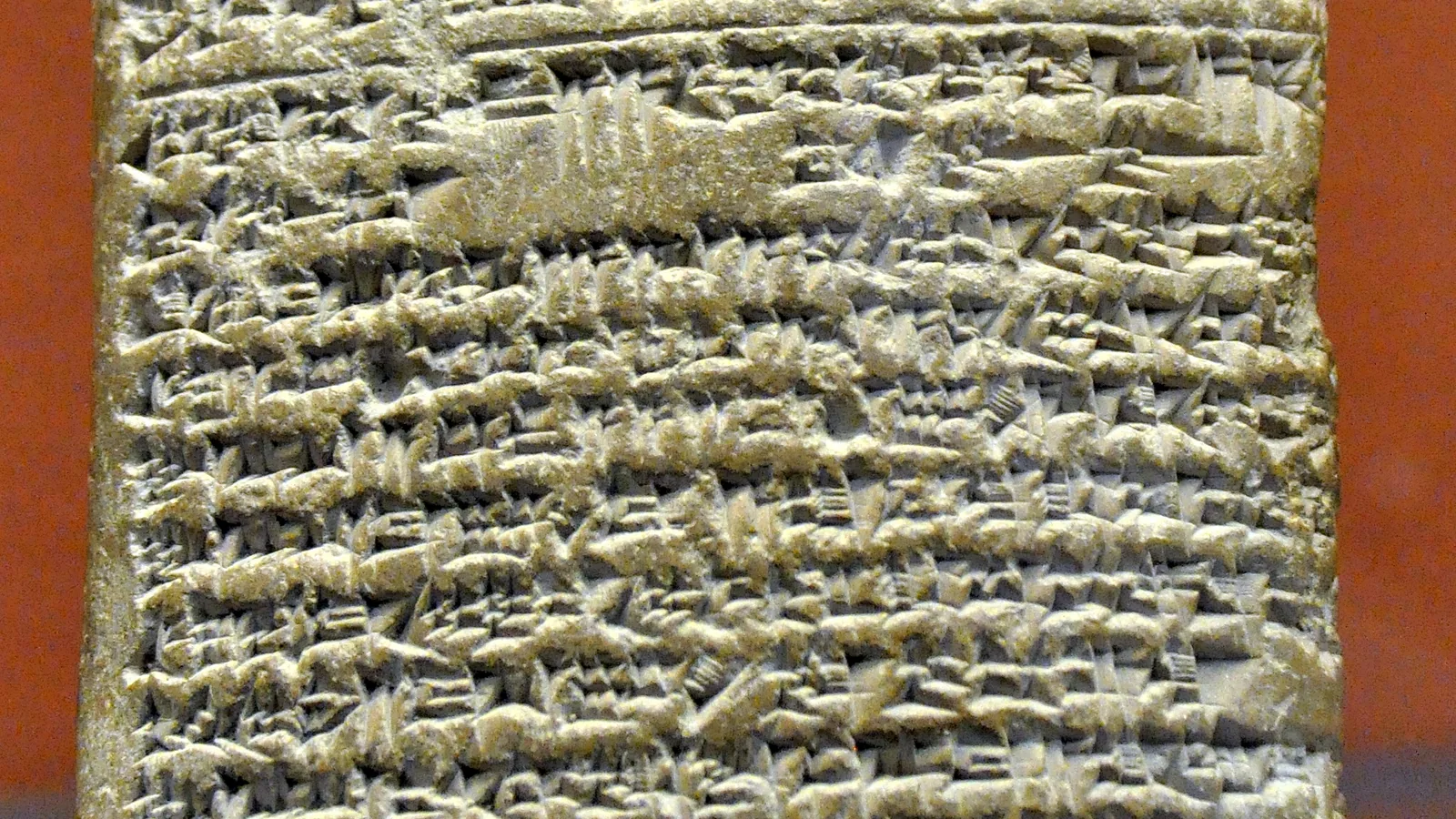
_to_the_Egyptian_Pharaoh_Amenhotep_III._From_Tell_El-Amarna,_Egypt._Circa_1350_BCE._British_Museum.jpg)
TL;DR — The Amarna letters are 382 clay tablets found around 1887, mostly Akkadian diplomatic mail to Egypt’s court; dealers scattered them, and Knudtzon’s EA numbers still order them.
“Say to the king, my lord, my Sun, my god,” begins a letter from a ruler named Zitriyara, in William Moran’s translation. It is one of the clay tablets found around 1887 at Tell el-Amarna, a site in Middle Egypt between Cairo and Luxor where the pharaoh Akhenaten had built his capital, Akhetaten. Most of the tablets are letters in Akkadian cuneiform, the diplomatic language of the day, sent to Egypt by the kings of Babylonia, Assyria, Mitanni, Hatti and Alashiya and by vassal rulers in Syria-Palestine. Local finders sold them and dealers divided them; the largest shares ended up in Berlin, London and Cairo. The order scholars use for them comes from J. A. Knudtzon’s edition, Die El-Amarna-Tafeln (Leipzig, 1907–1915), which gave each tablet an EA number.
Quick facts
- When
- Around 1887 (find at Tell el-Amarna) · end of 1887 (Theodor Graf offers tablets to Berlin) · January and February 1888 (purchases by the Bulaq museum) · 1891–92 (Petrie's excavation) · 1898 (Berlin and Cairo exchange six pieces each) · 1907–1915 (Knudtzon's edition)
- Where
- Tell el-Amarna in Middle Egypt, the site of Akhenaten's capital Akhetaten; the tablets are now in Berlin, Cairo, London, Oxford, Paris, New York and private collections
- Who
- Amenhotep III and Akhenaten and the kings of Babylonia, Assyria, Mitanni, Arzawa, Alashiya and Hatti; vassal rulers in Syria-Palestine such as Abdi-Heba of Jerusalem; the dealer Theodor Graf; Flinders Petrie; J. A. Knudtzon; William Moran
- Outcome
- The 382 tablets, most of them letters in Akkadian cuneiform, were divided among dealers and museums; Knudtzon's edition gave each an EA number, the numbering the UCL, USC and CSIC projects still use
1887: a Bulaq official, a Vienna dealer and 160 tablets for Berlin
Accounts of the find differ. University College London’s Digital Egypt site states that in 1887 “a woman from Amarna found nearly 400 cuneiform tablets.” The West Semitic Research Project at the University of Southern California writes that “local Egyptian peasants found a few tablets buried in the ruins of the Akhetaten palace complex and sold them to antiquities dealers.” The University of Cambridge’s Department of Archaeology says the letters were discovered around 1887 “by villagers in the Central City.” None of the three gives a name.
Knudtzon told what came next in his first volume, which a joint website of Spain’s Consejo Superior de Investigaciones Científicas (CSIC) and Berlin’s Vorderasiatisches Museum reprints in German. The whole collection, he wrote, should have gone to Budge in Cairo, but Budge’s men were waylaid on the way, and only a relatively small number reached the British Museum. The rest went to three dealers: Ali Abd el-Haj and Farag Ismaïn, both of Giza, and a Greek named Tano in Cairo.
Ali Abd el-Haj showed many tablets to an official of the museum at Bulaq, who told him they were “falsch,” false. He then sold them to Theodor Graf of Vienna. Graf offered his tablets to the museum in Berlin toward the end of 1887, and once the fragments were joined, Knudtzon reported on the word of the Egyptologist Erman, Berlin had about 160 tablets, some of a size never seen before. Bulaq took its share later: Farag had to hand over 17 whole tablets and 14 fragments, entered in January 1888, and in February the museum bought 15 more from a seller Knudtzon could not identify.
Bricks stamped "Bureau of Correspondence of Pharaoh"
The British archaeologist Flinders Petrie dug at Amarna in 1891–92, with a young Howard Carter assisting, according to Cambridge’s history of the site. UCL states that Petrie “located the building in which the tablets were found and finally uncovered some further tablets.” Twenty-two tablets found by Petrie are in the Ashmolean Museum in Oxford.
The building stood among rows of mud-brick offices behind the King’s House. The Amarna Project, the excavation that Barry Kemp began at the site in 1977, identifies it as the “Bureau of Correspondence of Pharaoh,” a name taken from its stamped bricks; its modern name is the Records Office.
Most of what survived is incoming mail; letters written in Egypt went abroad, though some drafts stayed behind, the USC project notes. The Cuneiform Digital Library Initiative (CDLI) adds that copies of some outgoing letters were archived, among them one from Akhenaten to Burnaburiash II, king of Babylon: “a long list of gifts sent from Egypt to Babylon.”
Knudtzon's EA numbers, from Babylonia to Alashiya
“EA stands for El Amarna,” the UCL site explains, and the numbers are those of Knudtzon’s edition. His sequence puts the letters between equals first. UCL counts over 40 of them: Babylonia, EA 1 to 14; Assyria, 15 and 16; Mitanni, 17 and 19 to 30; Arzawa, 31 and 32; Alashiya, 33 to 40; Hatti, 41 to 44. Vassal letters from Syria-Palestine follow.
The common language was Akkadian, the language of Babylonia. According to the USC project, two tablets are in Hittite and one in Hurrian, the language of Mitanni. Knudtzon wrote that a new edition of the cuneiform text would be desirable, but he could not take it on “Wegen Schwäche meines rechten Armes,” because of weakness in his right arm. Moran translated all the letters, in French in 1987 and in English in 1992. In 1950 Moran had recognized that the Akkadian of letters from Canaan was heavily mixed with Canaanite dialects, and he wondered whether it “should be called Babylonian at all.”

"Lost are the lands of the king"
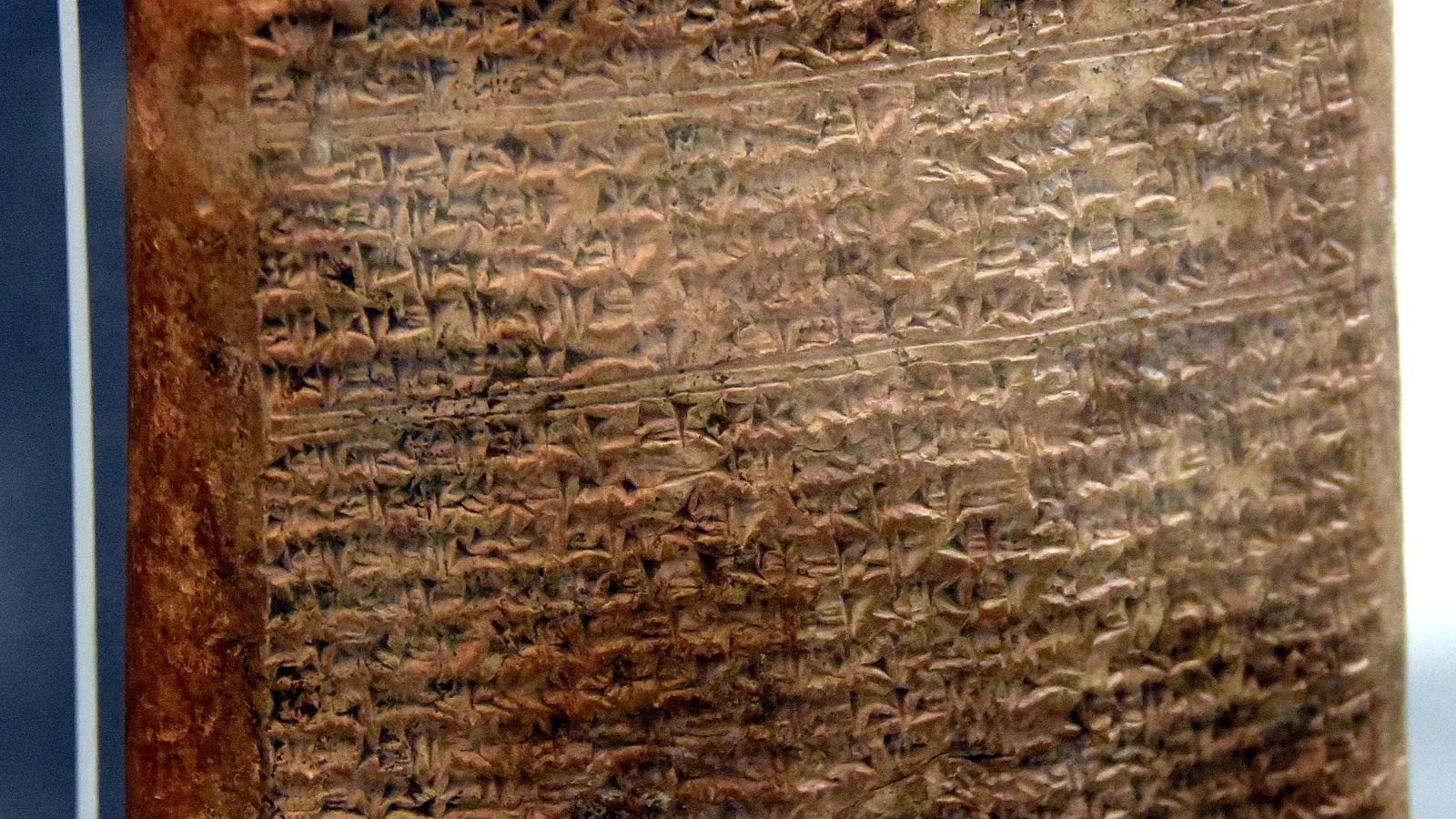
That phrase comes from the letters of Abdi-Heba, ruler of Jerusalem, numbered EA 285 to 290. The USC project describes them as full of news of invasions and of local mayors going over to the ‘Apiru, a term the project notes was used widely in the ancient Near East for foreign marauders or mercenaries. In EA 287 he wrote: “As the King (of Egypt) has placed his name in Jerusalem forever, he cannot abandon it!”
Zitriyara’s letter, EA 213 in the British Museum, shows the opening formula in full. After the opening he called himself “your servant, the dirt under your feet, and the mire you tread on,” and wrote that he fell at the king’s feet “7 times and 7 times, both on the stomach and on the back.” Only then came his message: he was making preparations as the king had ordered. Other letters asked for grain, lumber, ships or troops. The USC project puts the span of the whole correspondence at probably not much more than 25 years.
Two hundred and three in Berlin, 95 in London
UCL’s tally, dated 2002, puts 203 tablets in Berlin, “49 or 50” in the Cairo Museum, 95 in the British Museum, 22 in the Ashmolean, 7 in the Louvre, 9 in private collections and 2 in the Metropolitan Museum in New York. UCL and the USC project both give a total of 382 tablets, 350 of them letters. The CDLI entry also counts 382 but calls 349 of them letters.
Knudtzon’s own count for Berlin was 194 numbers complete and five others almost whole or in part, plus about 20 small fragments. He also recorded that in 1898 the museums in Berlin and Cairo exchanged six pieces each, so that both held more complete texts. The CSIC project put Berlin’s share at about 200 letters, more than half of the known corpus, and in November 2001 Juan-Pablo Vita photographed 186 of those texts in 760 pictures. Among the gaps in the Berlin set, EA 128 has been registered as missing since 1963 at the latest.
Key facts
- The tablets were found at Tell el-Amarna around 1887; UCL credits “a woman from Amarna,” the USC project “local Egyptian peasants,” Cambridge “villagers.” No finder’s name is recorded.
- According to Knudtzon, a Bulaq museum official called the first tablets he was shown false; the dealer then sold them to Theodor Graf, who offered them to Berlin at the end of 1887.
- Berlin received about 160 tablets through Graf; Knudtzon later counted 199 numbers in Berlin plus about 20 fragments.
- Petrie excavated at Amarna in 1891–92 and found the building where the tablets had been kept, named on its stamped bricks as the “Bureau of Correspondence of Pharaoh.”
- EA stands for El Amarna; the numbers come from Knudtzon’s Die El-Amarna-Tafeln (1907–1915).
- UCL lists EA 1 to 44, less EA 18, as letters from the courts of Babylonia, Assyria, Mitanni, Arzawa, Alashiya and Hatti; later numbers are vassal letters from Syria-Palestine.
- UCL and USC count 382 tablets with 350 letters; the CDLI counts 382 with 349 letters.
- UCL’s 2002 tally: Berlin 203, Cairo 49 or 50, British Museum 95, Ashmolean 22, Louvre 7, private collections 9, Metropolitan Museum 2.
FAQ
What language are the Amarna letters written in?
Mostly Akkadian, written in cuneiform on clay. The USC West Semitic Research Project counts two tablets in Hittite and one in Hurrian. Letters from Canaan mix Akkadian with Canaanite dialects, which Moran identified in 1950.
What does EA mean in the Amarna letters?
EA stands for El Amarna. The numbers follow J. A. Knudtzon's edition, Die El-Amarna-Tafeln, published in Leipzig between 1907 and 1915, which begins with the letters from Babylonia (EA 1 to 14).
Where are the Amarna letters kept?
In UCL's 2002 tally, 203 are in Berlin, 95 in the British Museum, 49 or 50 in Cairo, 22 in the Ashmolean in Oxford, 7 in the Louvre, 2 in the Metropolitan Museum and 9 in private collections.
Sources
- University College London, Digital Egypt for Universities, "Amarna: the cuneiform tablets" (2002).
- University of Southern California, Dornsife College, West Semitic Research Project, "El-Amarna Tablets."
- Cuneiform Digital Library Initiative, "Amarna Letters: Akhenaten," CDLI tablet entry by Robert K. Englund (May 2, 2024).
- Consejo Superior de Investigaciones Científicas (Madrid) and Vorderasiatisches Museum Berlin, J.-P. Vita and J. Marzahn, "Amarna-Briefe im Vorderasiatischen Museum" (updated November 2006), with extracts from J. A. Knudtzon, Die El-Amarna-Tafeln, vol. 1.
- University of Cambridge, Department of Archaeology, "History of Research at Amarna."
- The Amarna Project, "Central City."
Cite this article
- APA
- Song Letter. (2026, September 29). Clay letters to the pharaoh: the Amarna tablets found in 1887. Our Earth's History. https://ourearthshistory.com/africa/ancient/amarna-letters-1887-tell-el-amarna-tablets-knudtzon/
- Chicago
- Song Letter. “Clay letters to the pharaoh: the Amarna tablets found in 1887.” Our Earth's History, September 29, 2026. https://ourearthshistory.com/africa/ancient/amarna-letters-1887-tell-el-amarna-tablets-knudtzon/.
- MLA
- Song Letter. “Clay letters to the pharaoh: the Amarna tablets found in 1887.” Our Earth's History, 29 Sep. 2026, https://ourearthshistory.com/africa/ancient/amarna-letters-1887-tell-el-amarna-tablets-knudtzon/.
Get the week in history
One email a week: the new articles, and what was happening elsewhere at the same moment. Free, no ads, unsubscribe any time. How we handle your email.
Text licensed CC BY-NC-ND 4.0. Found an error? Tell us.