The Great Pyramid's six minutes of arc from true north
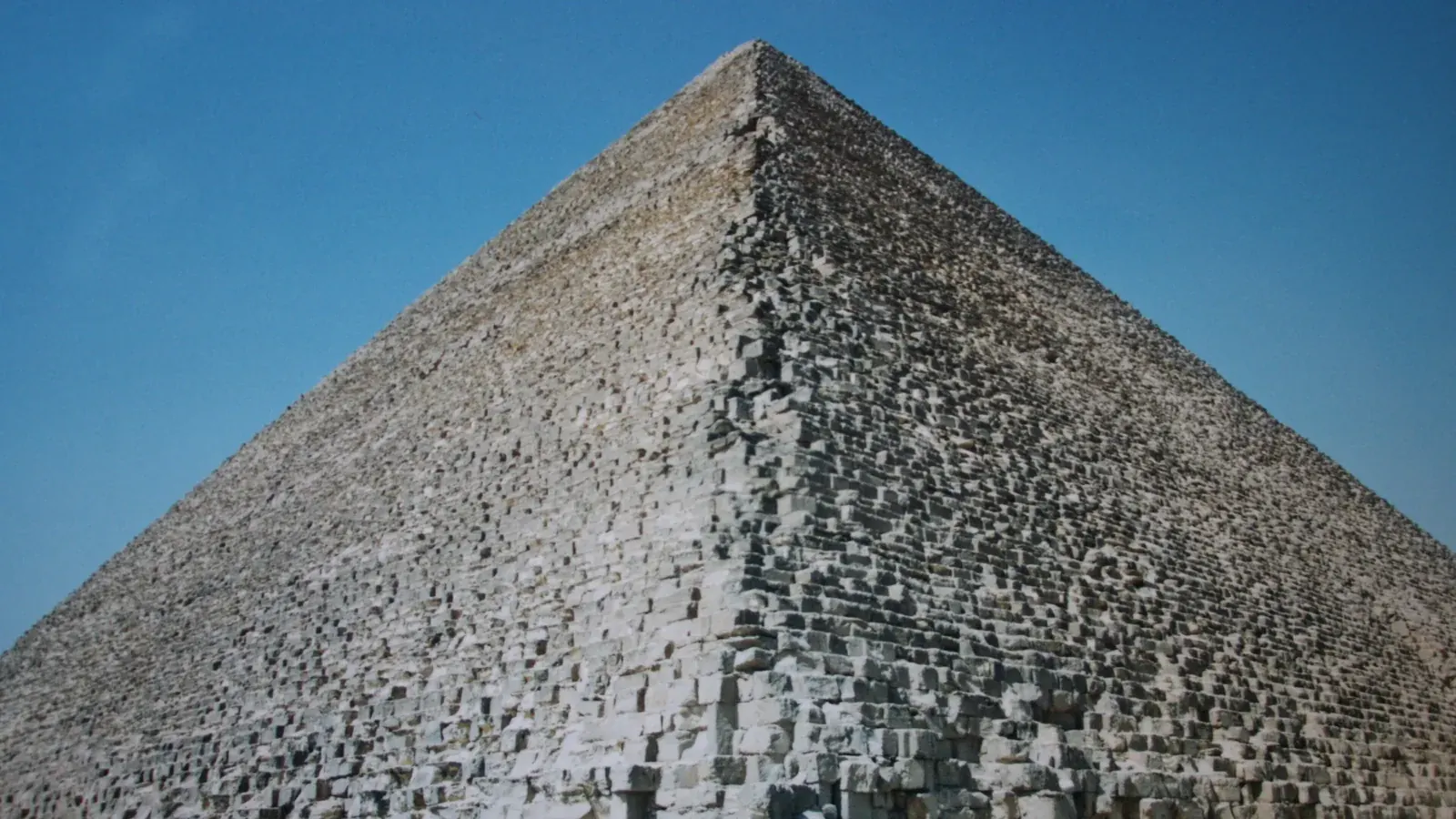

TL;DR — The Great Pyramid is aligned to true north within six minutes of arc; no Egyptian record says how, and surveyors still test four methods using shadows and stars.
The Great Pyramid of Khufu at Giza points north with an error of about a tenth of a degree. “The builders of the Great Pyramid of Khufu aligned the huge monument to true north to within six minutes of arc, or one tenth of a degree,” writes the surveyor Glen Dash in AERAGRAM, the journal of Ancient Egypt Research Associates. How they did it is not recorded. Dash quotes the Egyptologist I. E. S. Edwards: “Extant Egyptian records, whether written or pictorial, throw no light on the methods employed by the builders of the pyramids either in the planning or in constructing their monumental works.”
Quick facts
- When
- Fourth Dynasty, which Glen Dash dates to about 2575–2465 BC; Petrie's survey 1880–1882
- Where
- Giza, Egypt
- Who
- The builders of Khufu's pyramid; surveyors Flinders Petrie and Glen Dash; the scholars I. E. S. Edwards, Martin Isler and Kate Spence
- Outcome
- The pyramid is aligned within about six minutes of arc of true north; how the builders achieved it is still argued
What Petrie measured
The numbers come from surveys of the base. Flinders Petrie, who measured the pyramid from 1880 to 1882, found its four sides between 230.320 and 230.365 meters long, each turned slightly counterclockwise from the cardinal directions: 3′20″ on the north side, 3′57″ on the east, 3′41″ on the south and 3′54″ on the west. Later surveys agree closely. Dash notes that the Lehner-Goodman survey and Petrie’s “differ in the mean of all four sides by only 1.8 centimeters.” The pyramid stands, in the words of Harvard’s Digital Giza, “about 481 feet tall.”
Surveyors had to find the base first. When Napoleon invaded Egypt in 1798, his scholar Edme-François Jomard had debris cleared from the base and uncovered two “sockets” off the northern corners. In 1874 the astronomer David Gill set bronze survey markers just inside the socket corners, and “Petrie, and almost every surveyor since, would use Gill’s markers as control points.”
Why point at the north?
Part of the answer lies in Egyptian religion. The Pyramid Texts in the burial chamber of Unas, a later king, say the king will “go forth to the sky among the Imperishable Ones,” the circumpolar stars that never set. Many pyramids’ descending passageways point up at those stars “like a telescope,” Dash writes.
The reason for such precision is less clear. Dash quotes the Egyptologist Mark Lehner: “For the royal designers, such exactitude may have been imbued with symbolic and cultic significance that now eludes us.”
Edwards's circle and Isler's shadows
Dash sets out four theories and tests one. Edwards proposed an artificial horizon: a circular wall built around an observer, high enough to hide everything but the sky. An assistant would mark where a star rose over the wall and, hours later, where it set, and the line halfway between would point north. The wall, Dash notes, would have had to be almost perfectly round and level, a feat some scholars doubt the Egyptians could manage.
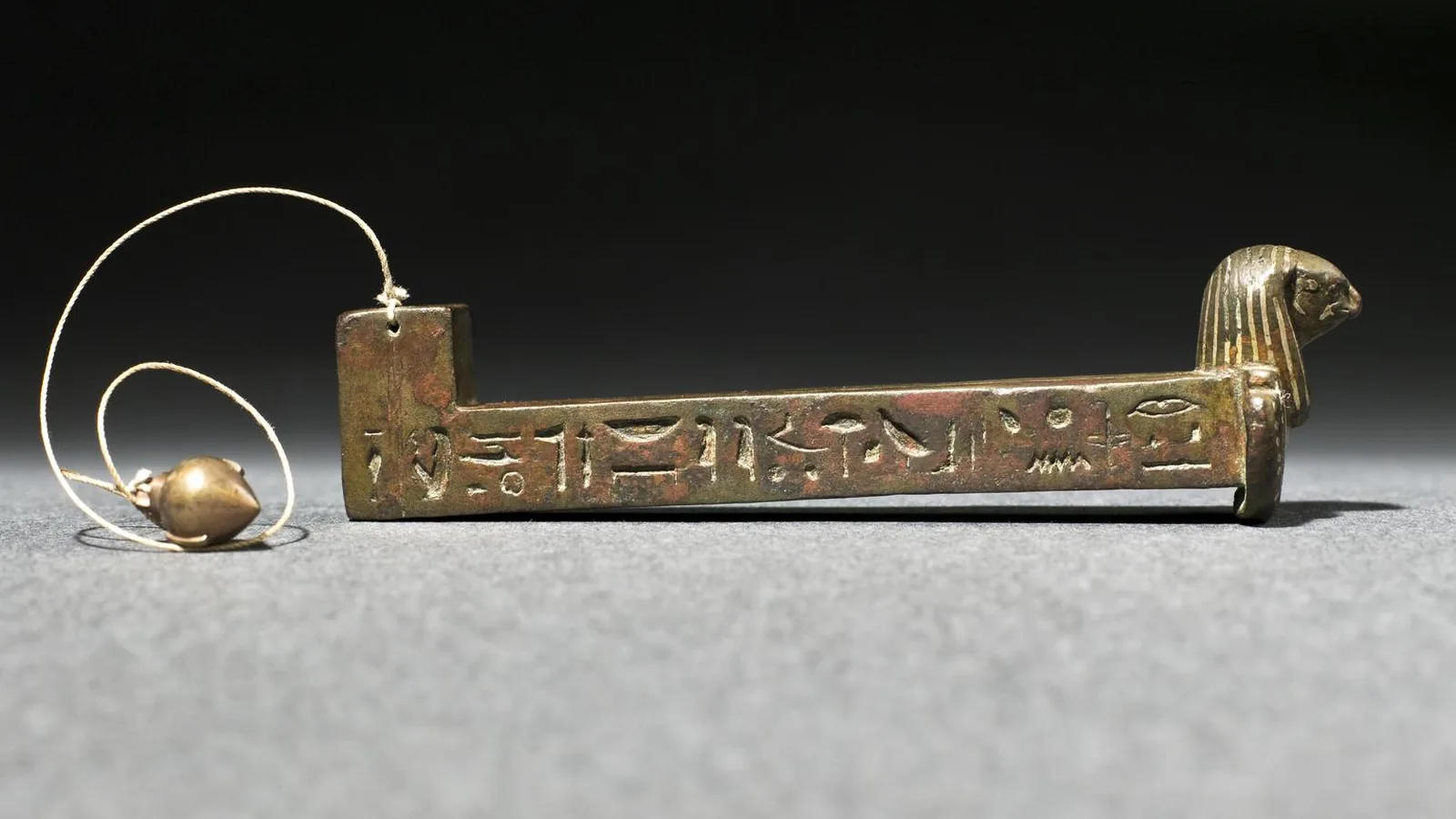
Martin Isler tested the sun instead. A vertical pole, a gnomon, casts a shadow whose tip can be marked through the day to find north. Isler sharpened the shadow with a wooden slit modeled on the bay, an Egyptian surveying tool, and in a test in Wilton, Connecticut, on September 7, 1988, achieved an accuracy of 19 minutes of arc with a gnomon 60 centimeters high, about three times the pyramid’s error.
Petrie's pole star
Petrie thought the builders used a star. In 1883 he suggested that a plumb line hung from a tall north–south wall would let an observer mark where the pole star crossed behind it at its farthest east and west positions, twelve hours apart; the midpoint would give due north.
Dash tried it himself in Connecticut, sighting Polaris at its eastern extreme on October 16, 2012, and its western extreme on November 4. His line was off by “just -0.14 minutes of arc,” a result he calls partly luck. The pyramid builders would have had to use Thuban, a dimmer star farther from the pole, but Dash believes “they could have used Petrie’s method to find due north to within 1 to 2 minutes of arc.”

Spence's two stars
Kate Spence of the University of Cambridge proposed a different sighting, published in Nature in 2000. Two bright stars, Kochab in the Little Dipper and Mizar in the Big Dipper, stood on either side of the celestial pole in the pyramid age; when one stood directly above the other behind a plumb line, the line would point north. Because the stars slowly shift, the method drifts over time, and Spence used the pyramids’ small errors to date them.
The dates are disputed. Her method puts the start of Khufu’s pyramid at 2476 BC, give or take five years, against 2552 BC in the chronology she compared it with; on average, Dash notes, “Spence’s dates are 74 years later than those of the currently accepted chronology.” Juan Antonio Belmonte proposed two other stars, Megrez and Phekda, which move the start of the Great Pyramid to about 2550 BC.
Key facts
- The Great Pyramid is aligned to true north within six minutes of arc, about a tenth of a degree (Dash 2013).
- Petrie’s sides measure 230.320 to 230.365 meters, each turned 3′20″ to 3′57″ counterclockwise from the cardinal directions (Dash 2012).
- No Egyptian record describes how pyramids were planned or aligned (Edwards, quoted by Dash).
- Isler’s shadow test in 1988 reached 19 minutes of arc (Dash 2013).
- Dash’s 2012 test of Petrie’s star method came within -0.14 minutes of arc (Dash 2013).
- Spence’s star method dates the start of Khufu’s pyramid to 2476 BC, 74 years later on average than the accepted chronology; Belmonte’s stars give about 2550 BC (Dash 2013).
FAQ
How accurately is the Great Pyramid aligned to north?
Within about six minutes of arc, a tenth of a degree. Petrie measured each side as turned between 3′20″ and 3′57″ counterclockwise from the cardinal directions.
How did the Egyptians find true north?
No Egyptian text says. The leading proposals use the stars: Petrie's pole-star sightings with a plumb line, or Kate Spence's simultaneous transit of Kochab and Mizar. Others proposed a circular artificial horizon or the shadow of a pole.
Could a shadow stick have done it?
Not as accurately, in Martin Isler's 1988 test: 19 minutes of arc, against the pyramid's six.
How tall is the Great Pyramid?
About 481 feet, according to Harvard's Digital Giza project.
Can the alignment date the pyramid?
Kate Spence argued it could, putting the start of Khufu's pyramid at 2476 BC. Her dates run 74 years later on average than the accepted chronology, and Juan Antonio Belmonte's alternative gives about 2550 BC.
Sources
Cite this article
- APA
- Song Letter. (2026, October 11). The Great Pyramid's six minutes of arc from true north. Our Earth's History. https://ourearthshistory.com/africa/ancient/great-pyramid-alignment-true-north-no-compass/
- Chicago
- Song Letter. “The Great Pyramid's six minutes of arc from true north.” Our Earth's History, October 11, 2026. https://ourearthshistory.com/africa/ancient/great-pyramid-alignment-true-north-no-compass/.
- MLA
- Song Letter. “The Great Pyramid's six minutes of arc from true north.” Our Earth's History, 11 Oct. 2026, https://ourearthshistory.com/africa/ancient/great-pyramid-alignment-true-north-no-compass/.
Get the week in history
One email a week: the new articles, and what was happening elsewhere at the same moment. Free, no ads, unsubscribe any time. How we handle your email.
Text licensed CC BY-NC-ND 4.0. Found an error? Tell us.