Ten Indus signs, one signboard: Dholavira and its excavator

TL;DR — India’s Ministry of Culture calls Dholavira’s ten-sign gypsum inscription the world’s oldest-known signboard; the ASI excavated the city under R. S. Bisht until 2005.
“One of the most remarkable discoveries from Dholavira, Gujarat, is this monumental Signboard, the largest known inscription from the Indus-Saraswati Civilisation and the world’s oldest-known Signboard,” India’s Ministry of Culture wrote in a social media post on July 12, 2026, quoted in full by Business Today. The inscription, the ministry said, “comprises 10 large gypsum signs, each measuring about 36 cm in height, with the entire signboard stretching nearly three metres.” It came from Dholavira, a Harappan city on Khadir island in Gujarat’s Rann of Kutch that the Archaeological Survey of India (ASI) excavated under Dr. Ravindra Singh Bisht, a project a Press Information Bureau (PIB) release of March 1, 2025 dates to “1990-2005.”
Quick facts
- When
- 1989 or 1990 to 2005 (ASI excavation, sources differ) · July 27, 2021 (World Heritage inscription) · March 1, 2025 (presidential visit) · July 12, 2026 (Ministry of Culture signboard post, reported by Business Today)
- Where
- Dholavira, on Khadir island in the Rann of Kutch, Gujarat, India
- Who
- Dr. Ravindra Singh Bisht, excavation director for the Archaeological Survey of India; Y. S. Rawat, Director General of the ASI in 2025; President Droupadi Murmu; Union Culture Minister G. Kishan Reddy in 2021
- Outcome
- Dholavira was inscribed as India's 40th UNESCO World Heritage Site in 2021, and in 2026 the Ministry of Culture called its ten-sign gypsum inscription the world's oldest-known signboard
Bisht's thirteen field seasons, 1989 or 1990 to 2005
The PIB release marking a presidential visit in 2025 states that Dholavira “was excavated by the Archaeological Survey of India during 1990-2005 under the supervision of Dr. Ravindra Singh Bisht and yielded habitation in seven cultural phases from 3000-1500 BC.” The Ministry of Culture’s own 2026 post, as Business Today quotes it, gives a different start year for the same dig: “13 field seasons between 1989 and 2005,” also under “archaeologist Dr Ravindra Singh Bisht,” also covering “seven cultural phases spanning 3000 BC to 1500 BC.” The two statements agree on the excavator, the seven phases and the closing year, 2005.
A walled city on an island of raw materials
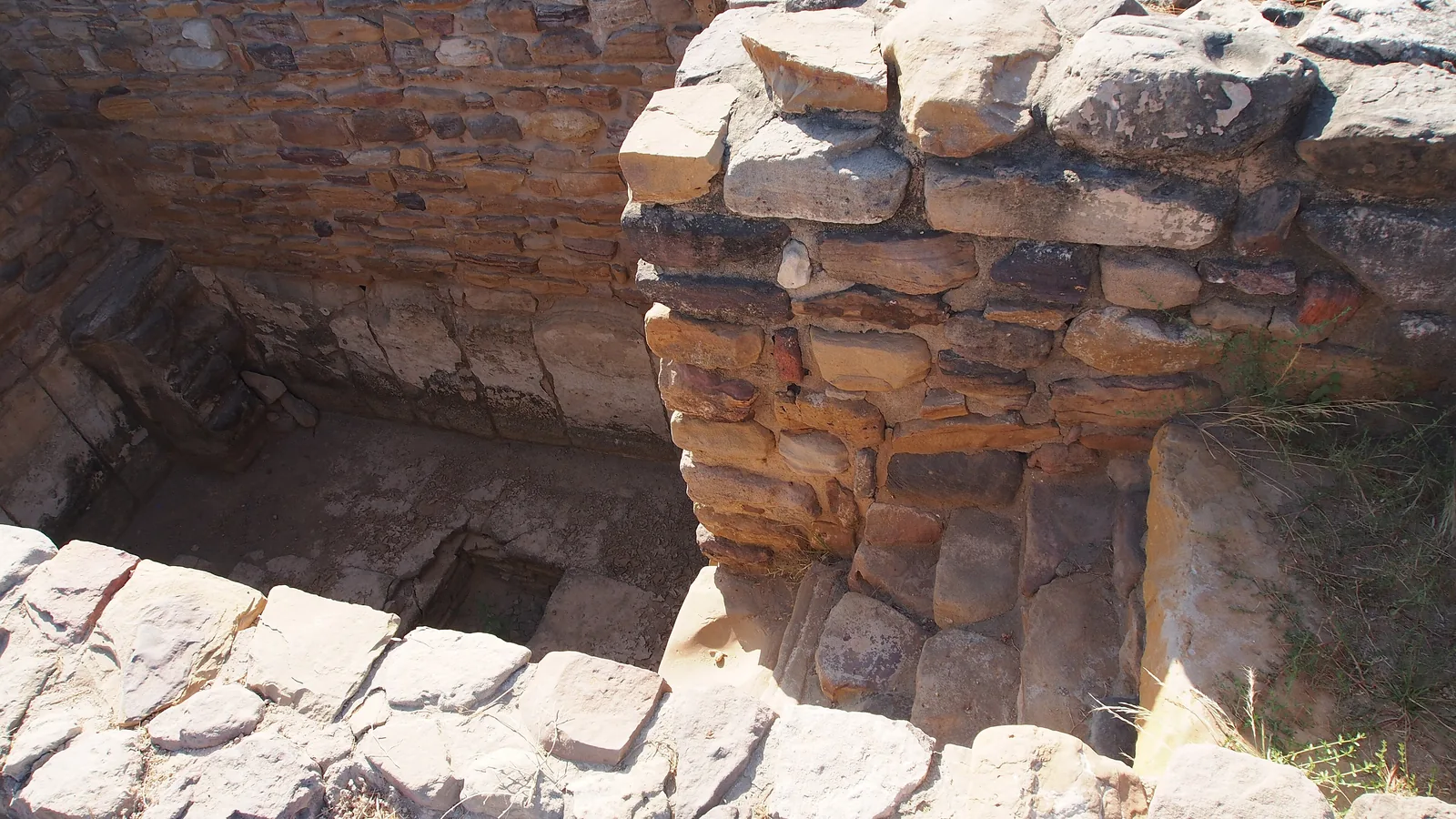
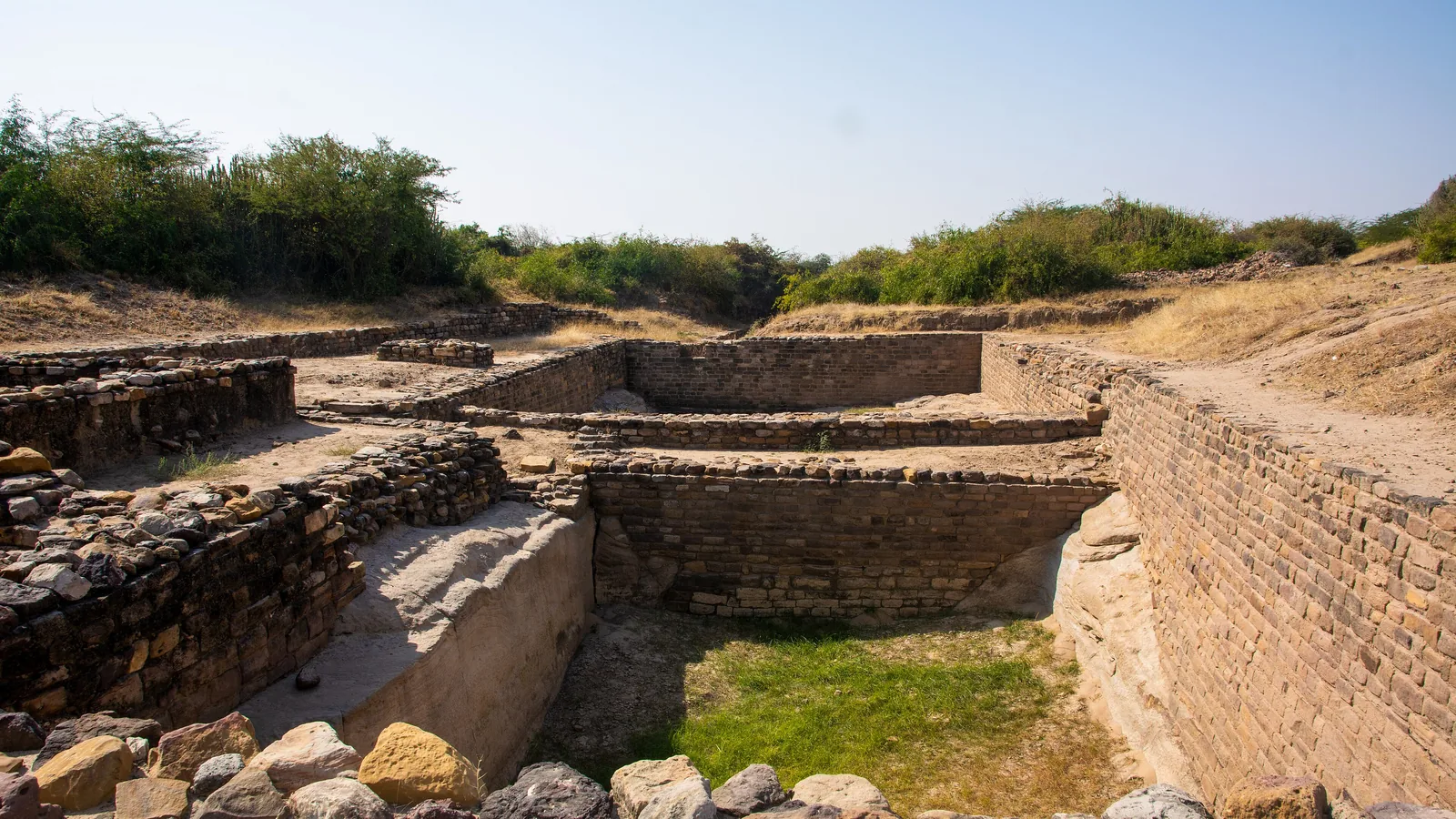
PIB’s 2021 release, issued for the World Heritage inscription, describes the property as “two parts: a walled city and a cemetery to the west of the city.” The walled city held “a fortified Castle with attached fortified Bailey and Ceremonial Ground, and a fortified Middle Town and a Lower Town,” and “a series of reservoirs are found to the east and south of the Citadel.” PIB calls Dholavira the “6th largest of more than 1,000 Harappan sites discovered so far,” occupied “for over 1,500 years,” with evidence reaching back to 3000 BC. Unlike river-side Harappan towns, PIB says, its location on Khadir was “strategic to harness different mineral and raw material sources (copper, shell, agate-carnelian, steatite, lead, banded limestone, among others)” and to trade with Magan, in modern Oman, and with Mesopotamia.
A 2018 paper in Current Science by Silky Agrawal, Mantu Majumder, Bisht and Amit Prashant puts the city’s area at “around 100 ha with 48 ha under fortification” and its life span at “about 3000 to 1700 BC,” an end date two centuries earlier than the 1500 BC that PIB gives. The same paper reports a February and March 2015 ground-penetrating radar survey east of the site’s East Reservoir, run with a GSSI SIR-3000 unit, that found linear reflections the authors read as possible walls or water-harvesting structures. The paper adds: “the existence of these structures can only be confirmed by careful archaeological excavations.”

Ten gypsum signs across three meters
The Ministry’s 2026 post describes ten large gypsum signs, each about 36 centimeters tall, running across a span of “nearly three metres.” It calls the piece “the largest known inscription from the Indus-Saraswati Civilisation.” The post, as Business Today quotes it, gives no findspot within the site and no description of how the signs were mounted.
'Classical formalism': Bisht compares Dholavira and Banawali
Bisht’s own paper, “Dholavira and Banawali: Two different paradigms of the Harappan Urbis forma,” ran in Puratattva, the bulletin of the Indian Archaeological Society, in its 1998-99 issue, pages 14 to 37. Its abstract states that “Dholavira and Banawali have revealed, of late, two altogether diverse models of the Harappan Urban planning,” each with “a provision of a ‘citadel’ and a ‘lower town,’ both secured by formidable defences with corner towers, salients and gateways,” and each with “a cognisant system of streets, lanes, residential sectors and minimally necessary arrangement for sanitation as well as surface water drainage.” The abstract continues: “There is a planner’s dream-come-true situation at Dholavira which has manifested an exquisite and fully advanced example of classical formalism, while at Banawali, there is a departure from conventional regimentation.” A contents listing published separately by the Indian Archaeological Society confirms the paper’s start page as 14 in Puratattva no. 29, 1998-99, the same issue that carried Amarendra Nath’s report on further excavation at Rakhigarhi.
July 27, 2021: Dholavira becomes India's 40th World Heritage Site
PIB’s release of that date states that India’s nomination of Dholavira was “inscribed on UNESCO’s World Heritage list,” after a dossier submitted in January 2020 for a site that had been on the tentative list “since 2014.” PIB names it India’s “40th World Heritage Site,” a few days after Telangana’s Rudreswara (Ramappa) Temple became the 39th, bringing the country’s total to “40 world heritage properties overall, which includes 32 cultural, 7 natural and one mixed property.” Union Culture Minister G. Kishan Reddy wrote at the time that “Dholavira is now the 40th treasure in India to be given @UNESCO World Heritage tag” and that “since 2014, India has added 10 new World Heritage sites - one fourth of our total sites.”
On March 1, 2025, President Droupadi Murmu visited the site. PIB’s release on the visit states that “the Director General of the ASI, Shri Y. S. Rawat, along with other senior officials, had the privilege of guiding the Hon’ble President through the site.”
Key facts
- India’s Ministry of Culture described Dholavira’s inscription, in a post quoted by Business Today on July 12, 2026, as “the world’s oldest-known Signboard.”
- The ministry gives the signboard as 10 gypsum signs, each about 36 cm tall, spanning nearly 3 meters.
- A PIB release of March 1, 2025 dates the ASI excavation to “1990-2005” under Dr. Ravindra Singh Bisht; the ministry’s 2026 post gives “1989 and 2005” for the same dig.
- PIB’s 2021 release describes the property as a walled city (Castle, Bailey, Ceremonial Ground, Middle Town, Lower Town) plus a cemetery, with reservoirs east and south of the Citadel.
- PIB calls Dholavira the 6th largest of more than 1,000 known Harappan sites, occupied for over 1,500 years from about 3000 BC.
- Current Science (2018), with Bisht as a co-author, puts the city at about 100 hectares (48 fortified) and its span as “about 3000 to 1700 BC.”
- Dholavira was inscribed as India’s 40th UNESCO World Heritage Site on July 27, 2021, after a January 2020 nomination.
- President Droupadi Murmu toured the site on March 1, 2025, guided by ASI Director General Y. S. Rawat.
FAQ
What does Dholavira's signboard say?
The Ministry of Culture's 2026 post describes the object's size and its ten gypsum signs; it offers no reading of them.
Who excavated Dholavira?
The Archaeological Survey of India, under Dr. Ravindra Singh Bisht. A 2025 PIB release dates the work to 1990-2005; a 2026 Ministry of Culture post gives 1989 to 2005 for the same excavation.
When was Dholavira made a World Heritage Site?
On July 27, 2021, when UNESCO inscribed it as India's 40th World Heritage property, following a nomination dossier submitted in January 2020.
Sources
- Press Information Bureau, Ministry of Culture, Government of India, "India gets its 40th World Heritage Site: Dholavira, the Harappan City in the Rann of Kutch, Gujarat inscribed on UNESCO's World Heritage List" (July 27, 2021, Release ID 1739513).
- Press Information Bureau, Ministry of Culture, Government of India, "President visits UNESCO World Heritage Site Dholavira" (March 1, 2025, Release ID 2107386).
- Business Today, "'World's oldest-known Signboard': Ministry of Culture shares 'remarkable' Indus discovery from Dholavira" (July 12, 2026).
- Silky Agrawal, Mantu Majumder, Ravindra Singh Bisht and Amit Prashant, "Archaeological studies at Dholavira using GPR," Current Science, vol. 114, no. 4 (February 25, 2018), pp. 879-887.
- R. S. Bisht, "Dholavira and Banawali: Two different paradigms of the Harappan Urbis forma," Puratattva, no. 29 (1998-99), pp. 14-37, abstract hosted by architexturez.net.
- Indian Archaeological Society, contents listing for Puratattva no. 29 (1998-99).
Cite this article
- APA
- Our Earth's History. (2026, September 27). Ten Indus signs, one signboard: Dholavira and its excavator. Our Earth's History. https://ourearthshistory.com/south-asia/ancient/dholavira-signboard-ten-indus-signs-north-gate-bisht-1990-2005/
- Chicago
- Our Earth's History. “Ten Indus signs, one signboard: Dholavira and its excavator.” Our Earth's History, September 27, 2026. https://ourearthshistory.com/south-asia/ancient/dholavira-signboard-ten-indus-signs-north-gate-bisht-1990-2005/.
- MLA
- “Ten Indus signs, one signboard: Dholavira and its excavator.” Our Earth's History, 27 Sep. 2026, https://ourearthshistory.com/south-asia/ancient/dholavira-signboard-ten-indus-signs-north-gate-bisht-1990-2005/.
Text licensed CC BY-NC-ND 4.0. Found an error? Tell us.