Boudica's revolt: what do Tacitus and Dio say? Two Roman accounts

TL;DR — Tacitus and Cassius Dio agree that Boudica raised Britain against Rome under Nero, but they differ on why, on how many died and on how she died.
“Two cities were sacked, eighty thousand of the Romans and of their allies perished,” Cassius Dio wrote of Boudica’s revolt in Britain. Tacitus, in Book 14 of the Annals, named three places, Camulodunum, London and Verulamium, and put the dead there at “close upon seventy thousand Roman citizens and allies.” Both writers say that Boudica, of the Icenian royal house, led the rising while the governor Suetonius Paulinus was away attacking the island of Mona, and that Paulinus defeated her army in a pitched battle. They part on the cause of the war, on the size of the armies and on her death: poison in Tacitus, illness in Dio. Neither names the battlefield. Tacitus gives the year only by its consuls, and the revolt falls in AD 60 or 61.
Quick facts
- When
- In the consulate of Caesennius Paetus and Petronius Turpilianus (AD 60 or 61)
- Where
- Camulodunum (Colchester), London and Verulamium (by St. Albans) in Roman Britain; the final battle at a site neither writer names
- Who
- Boudica (Boudicca in Tacitus, Buduica in Dio), widow of the Icenian king Prasutagus; the governor Suetonius Paulinus; the procurator Catus Decianus; Petilius Cerialis of the ninth legion; Petronius Turpilianus
- Outcome
- Paulinus defeated the Britons in one battle; Tacitus says Boudica took poison, Dio that she fell sick and died; Petronius Turpilianus later replaced Paulinus
"In the consulate of Caesennius Paetus"
Tacitus opened the story with the year’s consuls: “In the consulate of Caesennius Paetus and Petronius Turpilianus, a grave reverse was sustained in Britain.” The Annals give the year no other way; John Jackson’s Loeb edition of 1937 adds only that Turpilianus left office “about March.”
Paulinus, by the same editor’s reckoning, had held the province for two full years when he moved against Mona, which the note identifies as Anglesey. “While he was thus occupied, the sudden revolt of the province was announced to Suetonius,” Tacitus wrote. Dio, in Earnest Cary’s 1925 translation, also has Paulinus away “on an expedition to Mona.”
Prasutagus, a will and Seneca's loan
In Tacitus the war began with a will. Prasutagus, king of the Iceni, had named the emperor his heir together with his two daughters. The result, Tacitus wrote, was the reverse: centurions plundered the kingdom, his widow and daughters were abused, and the chief men of the Iceni lost their estates. The Iceni took up arms and drew in the Trinobantes, a people the Loeb note places in Suffolk and Essex. Tacitus added a second grievance: veterans settled at the colony of Camulodunum were driving Britons off their land and calling them “captives” and “slaves,” and the temple to the deified Claudius stood there “like the citadel of an eternal tyranny.”
Dio’s account of the causes was about money. The procurator, whom he calls Decianus Catus, held that sums Claudius had given to the leading Britons had to be paid back, and Seneca, he wrote, “had lent to the islanders 40,000,000 sesterces that they did not want,” then called the loan in all at once. The translator’s note records a proposed reading of that phrase: “at their request.” The Loeb editor of Tacitus connected the two stories through the same official, writing that Catus had revoked and was reclaiming the grants of Claudius.
The names differ as well. Tacitus’s editor printed Boudicca and wrote that the familiar “Boadicea” has “no warranty”; Dio’s translator wrote Buduica.

Three towns in Tacitus, two cities in Dio
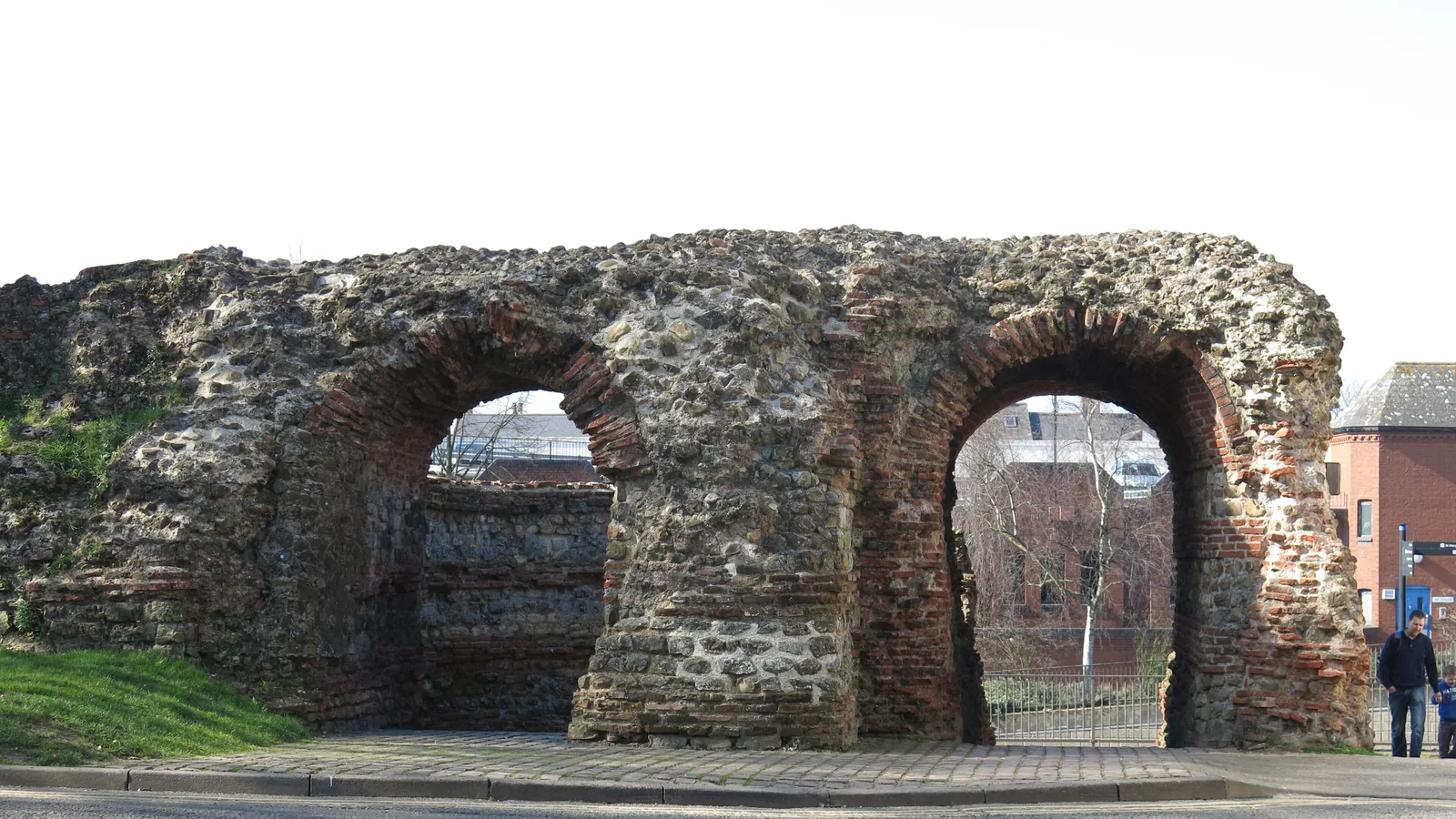
At Camulodunum, Tacitus wrote, Catus sent “not more than two hundred men, without their proper weapons.” The town had no walls. The troops gathered in the temple, which “stood a two days’ siege” before it was stormed. Petilius Cerialis, marching to help with the ninth legion, lost his infantry and escaped with the cavalry; where the Britons met him, the Loeb note says, “is uncertain: Wormingford, near Colchester, comes into consideration.” Catus crossed to Gaul.
Paulinus reached London, a busy trading town though “not distinguished by the title of colony,” judged his force too small to hold it, and “gave the signal for departure.” Verulamium, beside what is now St. Albans, met the same fate. Tacitus put nearly 70,000 dead across these places; the Loeb editor of 1937 answered in one line: “The estimate is probably valueless.”
Dio counted 80,000 dead in two cities and named neither. He also described atrocities against captives.
The temple itself left a trace. Colchester + Ipswich Museums take visitors into “the Roman Vaults, the foundations of the Temple of Claudius,” under Colchester Castle, and the museum service calls the town the “site of Boudica’s rebellion.” The Loeb note dates the temple to Claudius’s lifetime; Duncan Fishwick argued in the journal Britannia in 1997 that Tacitus’s phrase templum Divo Claudio constitutum means building “must have been begun in a.d. 54 or later.”
Battle lines: a defile, a wood and two sets of numbers
Tacitus gave Paulinus the fourteenth legion, part of the twentieth and auxiliaries, “altogether some ten thousand armed men.” He chose ground approached by a narrow defile with a wood behind. The Britons brought their wives to watch from wagons at the edge of the plain. Boudica, Tacitus wrote, rode “in a chariot with her daughters before her” from clan to clan.
Dio’s numbers are larger and change within his own text. He wrote that Boudica first assembled “some 120,000,” and that at the battle she led “about 230,000 men.” Paulinus could not match her line “even if the men had been drawn up only one deep,” so he “separated his army into three divisions.” The Romans prevailed late in the day, beside the wagons and the forest.
Tacitus closed the battle with a count he took from others: “by some accounts, little less than eighty thousand Britons fell, at a cost of some four hundred Romans killed.” The Loeb note reads: “The figures for both sides are equally incredible.”
Neither writer named the place. The Loeb editor placed it only “somewhere in the Midlands.”
After the battle: poison, sickness and "a milder rule"
The two accounts end Boudica’s life differently. Tacitus wrote that “Boudicca ended her days by poison.” In Dio, “not a few” Britons escaped and were preparing to fight again when “Buduica fell sick and died,” and her people “gave her a costly burial.” Tacitus’s Agricola, chapter 16, is silent on her death.
Tacitus told the story a second time, in chapter 16 of his Agricola. There the rising came “under the leadership of Boudicea, a woman of kingly descent (for they admit no distinction of sex in their royal successions).” Paulinus’s policy toward the defeated “was arrogant, and exhibited the cruelty of one who was avenging private wrongs.” Petronius Turpilianus was sent “to initiate a milder rule.” The Loeb editor called the Annals’ sneer at Turpilianus “totally unjustified.”
Gil Gambash, writing in Britannia in 2012, read the Roman response the same way, finding “a strong, persistent intention to allay local anger” after the revolt. In the Annals, Tacitus had written that Turpilianus avoided the enemy and “conferred on this spiritless inaction the honourable name of peace.”
Key facts
- Tacitus dated the revolt “In the consulate of Caesennius Paetus and Petronius Turpilianus,” which places it in AD 60 or 61 (Annals 14.29).
- The rising began while Suetonius Paulinus was attacking Mona, identified by the Loeb editor as Anglesey (Annals 14.29–30; Dio 62.7).
- Tacitus traced the war to the treatment of Prasutagus’s widow and daughters and the seizure of Icenian estates (Annals 14.31).
- Dio traced it to money: Claudius’s grants reclaimed by the procurator and a loan of 40,000,000 sesterces from Seneca called in (Dio 62.2).
- Tacitus gave nearly 70,000 dead in Camulodunum, London and Verulamium; Dio gave 80,000 in two cities; the Loeb editor called Tacitus’s figure “probably valueless.”
- Tacitus gave Paulinus some 10,000 men; Dio gave Boudica 120,000 at first and about 230,000 at the battle.
- Tacitus reported “by some accounts” about 80,000 Britons and some 400 Romans killed in the battle, figures the Loeb editor called “equally incredible.”
- Tacitus wrote that Boudica died by poison; Dio wrote that she fell sick and died and was given “a costly burial.”
FAQ
When was Boudica's revolt?
Tacitus dated it by the consuls Caesennius Paetus and Petronius Turpilianus, which places it in AD 60 or 61. Neither Tacitus nor Dio gives the year as a number.
How did Boudica die?
The two ancient accounts disagree. Tacitus wrote in the Annals that she "ended her days by poison." Cassius Dio wrote that she fell sick and died after the battle and that the Britons gave her a costly burial.
Where was Boudica's last battle fought?
Neither writer named the site. Tacitus described a narrow defile with a wood behind it and an open plain in front, and the 1937 Loeb editor placed it only "somewhere in the Midlands."
Sources
- Tacitus, Annals, Book XIV, chapters 29–39, translated by John Jackson, Loeb Classical Library, vol. V (1937), with the Loeb editor's notes, on LacusCurtius (University of Chicago).
- Cassius Dio, Roman History, Epitome of Book LXII, translated by Earnest Cary, Loeb Classical Library, vol. VIII (1925), with notes, on LacusCurtius (University of Chicago).
- Tacitus, Agricola, chapter 16, translated by Alfred John Church and William Jackson Brodribb (1876), Perseus Digital Library, Tufts University.
- Gil Gambash, "To Rule a Ferocious Province: Roman Policy and the Aftermath of the Boudican Revolt," Britannia 43 (2012), pp. 1–15, abstract (Cambridge Core).
- Duncan Fishwick, "The Provincial Centre at Camulodunum: Towards an Historical Context," Britannia 28 (1997), pp. 31–50, abstract (Cambridge Core).
- Colchester + Ipswich Museums, "Visit Colchester Castle."
- Colchester + Ipswich Museums, "Romans in Colchester" (school sessions).
Cite this article
- APA
- Song Letter. (2026, November 23). Boudica's revolt: what do Tacitus and Dio say? Two Roman accounts. Our Earth's History. https://ourearthshistory.com/europe/classical/boudica-revolt-ad-60-61-tacitus-cassius-dio/
- Chicago
- Song Letter. “Boudica's revolt: what do Tacitus and Dio say? Two Roman accounts.” Our Earth's History, November 23, 2026. https://ourearthshistory.com/europe/classical/boudica-revolt-ad-60-61-tacitus-cassius-dio/.
- MLA
- Song Letter. “Boudica's revolt: what do Tacitus and Dio say? Two Roman accounts.” Our Earth's History, 23 Nov. 2026, https://ourearthshistory.com/europe/classical/boudica-revolt-ad-60-61-tacitus-cassius-dio/.
Get the week in history
One email a week: the new articles, and what was happening elsewhere at the same moment. Free, no ads, unsubscribe any time. How we handle your email.
Text licensed CC BY-NC-ND 4.0. Found an error? Tell us.