A lacquer box from Mawangdui Tomb 3: silk texts sealed in 168 BC
.jpg)
TL;DR — A lacquer box buried in Mawangdui Tomb 3 in 168 BC held about 30 manuscripts, including two Laozi editions, medical texts and maps; the tomb’s occupant is disputed.
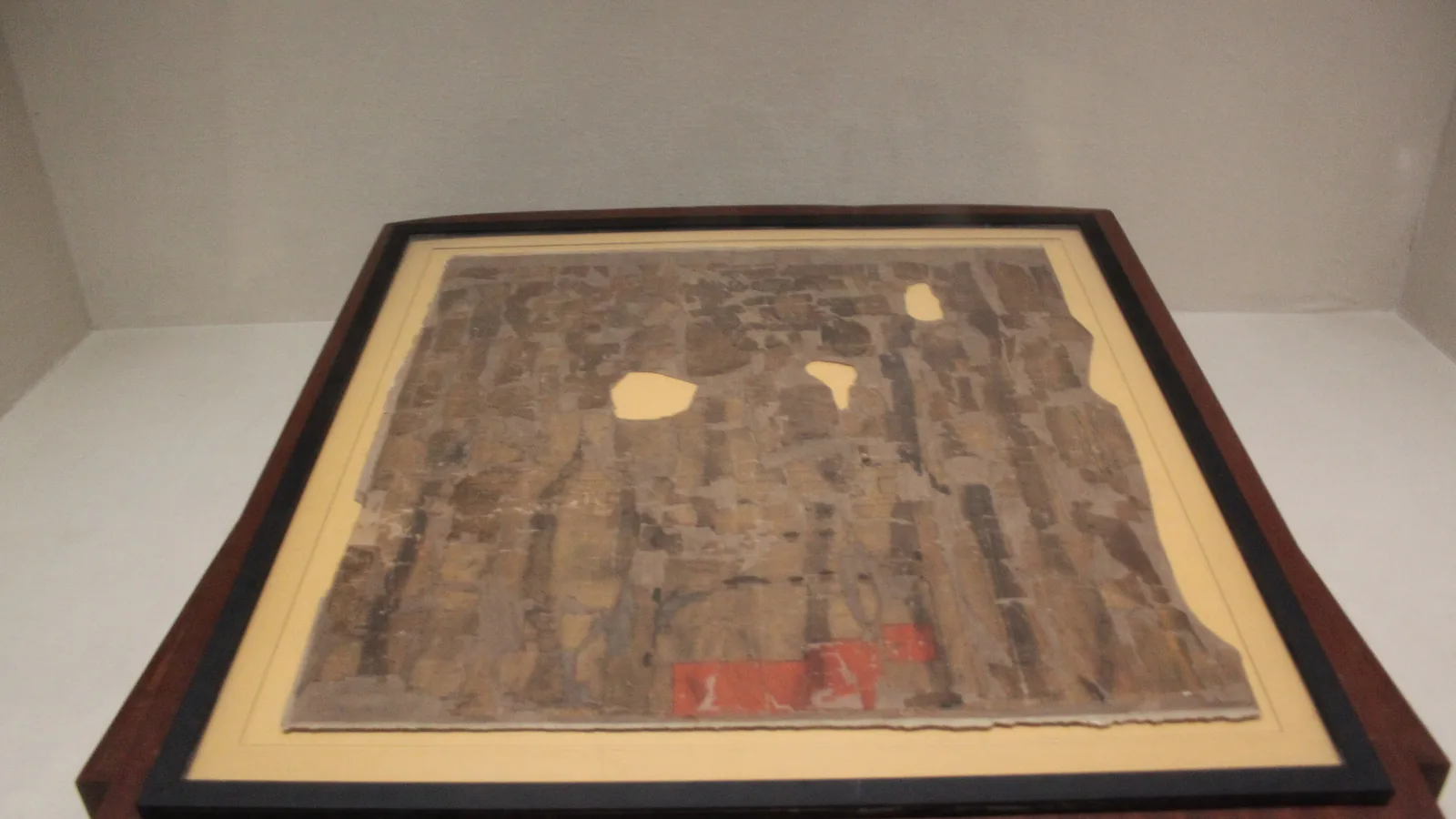
Excavation of Tomb 3 at Mawangdui, in Changsha in what is now Hunan province, formally began on November 19, 1973, and took 31 days. In the storage compartment on the east side of the coffin chamber lay a rectangular lacquer box with a roof-shaped lid, 60 centimeters long, 30 wide and 20 high. All of the tomb’s manuscripts were inside it. Donald Harper, in his edition of the Mawangdui medical manuscripts, counts 30 manuscripts and 45 texts, with maps, diagrams and pictures included in the count, and estimates the surviving characters at 125,000. Two editions of the Laozi were in the box, along with a text of the Yijing, seven medical manuscripts and three maps. Harper dates the burial to 168 BC. The name of the man buried in the tomb has been argued over since 1983.
Quick facts
- When
- 1972 to 1974 (excavation of the three tombs) · 168 BC (burial of Tomb 3) · November 19, 1973 (excavation of Tomb 3 begins; 31 days) · 1983 (Fu Juyou proposes Li Xi as the occupant) · 2008 to 2014 (seven-volume edition) · August 19, 2024 (Mawangdui Research Institute announced)
- Where
- Mawangdui, Changsha, in what is now Hunan province; in 168 BC the Kingdom of Changsha under the Western Han
- Who
- Li Cang, Lord of Dai and chancellor of Changsha (Tomb 2); his wife Xinzhui (Tomb 1); a son of the couple (Tomb 3); excavator Fu Juyou; scholars Donald Harper, Jeffrey K. Riegel, Guolong Lai, Luke Waring, Qiu Xigui and Liu Zhao
- Outcome
- A lacquer box in Tomb 3 held about 30 manuscripts and 45 texts by Donald Harper's count, including two editions of the Laozi, the Yijing, seven medical manuscripts and three maps. The originals are in the Hunan Museum; a full edition in seven volumes appeared in 2014. The identity of the man in Tomb 3 is still argued
November 1973, the east compartment
The Hunan Museum dates the excavation of the three Western Han tombs at Mawangdui to between 1972 and 1974. Fu Juyou, one of the excavators, told the story of Tomb 3 in a 2020 profile published by the Hunan Provincial Cultural Heritage Bureau. At the north end of the east compartment of the burial chamber the team found a large quantity of silk manuscripts and bamboo and wooden slips, which Fu called a “地下图书馆,” an underground library.
The three tombs held far more than texts. The museum’s exhibition page lists over 700 lacquer items, over 500 textile garments and “More than 50 bamboo slips and silk manuscripts.” A 2009 press release from China Institute Gallery in New York, reprinted on the museum’s website, speaks of more than 3,000 objects. In August 2024 Duan Xiaoming, director of the Hunan Museum, gave a larger count: 26,937 items in all, including 1,017 lacquer and wooden objects, more than 20,000 whole textiles and fragments, and 1,430 items of slips and silk manuscripts. His total counts textile fragments as items.
Li Cang, Lord of Dai, and a son in Tomb 3
Three seals from Tomb 2 name its occupant as Li Cang, who held the rank of Lord of Dai and was chancellor of the Kingdom of Changsha. Harper cites the Shiji and the Hanshu, the two Han histories, for the dates: Li Cang was installed as Lord of Dai in 193 BC and died in 186 BC. The China Institute press release names the woman in Tomb 1 as Xinzhui, Lady Dai, his wife. The man in Tomb 3, in Harper’s words, is “presumed” to have been their son.
Which son is the dispute. In 1983 Fu Juyou published an article in the monthly Kaogu, issue 2, on the question of the occupant of Mawangdui Han Tomb 3. He revised what the 1974 excavation report had said and proposed Li Xi, Li Cang’s successor as Lord of Dai. The 2020 profile states that the Li Xi theory set off a debate among archaeologists and historians that ran for some 30 years.
Harper does not settle it. “Opinion differs over whether the son was Li Xi,” he writes, “who succeeded Cang as the second Lord of Dai (the Shiji and Hanshu state that Xi died in 165 B.C.), or was another son who may have held a military position in the region of Changsha.” By the dates in those histories, Li Xi was still alive three years after Tomb 3 was closed.
Manuscripts copied between about 220 and 168 BC
Harper sorts the texts by handwriting. The oldest, in a script that mixes seal and clerical forms, “were probably copied ca. 220-190 B.C.” One group in Han clerical script he places around 175 BC: the second Laozi, the Yijing manuscript, a text on judging horses and two astrological manuscripts. The latest could not have been written after the burial.
Only three of the 45 texts were already known from books handed down over the centuries: the Laozi, the hexagram text of the Yijing and the “Xici zhuan,” the commentary on the hexagrams that forms part of the transmitted Yijing. The other texts had no counterpart in transmitted literature. The originals, Harper notes, are kept in the Hunan Museum in Changsha.
Some of the other texts were still little studied decades after the dig. Guolong Lai of the University of Florida wrote there in 2003 that a silk diagram of the mourning system from Tomb 3 was “the earliest precisely dated document of one of the most enduring social institutions in Chinese history,” yet had “received little scholarly attention.” Luke Waring of Stanford University wrote in 2020 that a silk manuscript called the Wu ze you xing tu, first catalogued in 2004, was “almost entirely absent from Western scholarship.”
Seven medical manuscripts
Harper’s book is a translation and study of the medical part of the find. By his count the medical manuscripts number seven and contain fourteen texts, one of them copied in two editions on separate pieces of silk. Together they hold roughly 22,000 surviving characters, about 18 percent of the whole corpus. Harper adds that the totals could still change, since work on some categories was continuing when he wrote.
Among these medical texts were books on the channels of the body. A 2024 article in the Journal of Acupuncture and Meridian Studies, comparing excavated medical slips from Tianhui, placed the Tianhui find later than the tombs of Mawangdui and Zhangjiashan, “where several meridian books with 11 meridians were discovered.”
"Three maps" and the seven volumes
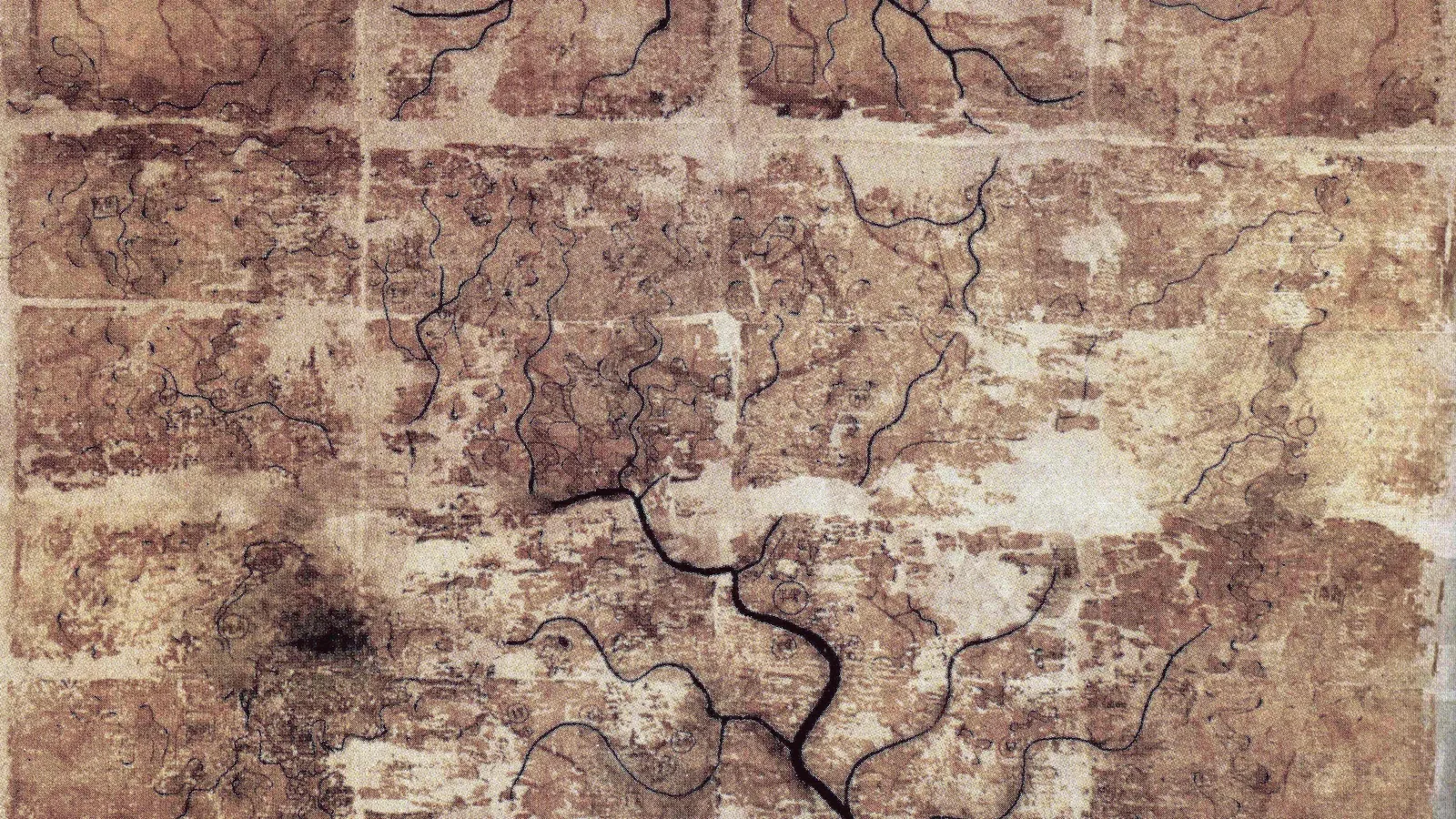
Jeffrey K. Riegel, writing in the second issue of Early China in 1976, recorded that “Among the other documents discovered in the lacquer box found at Mawangdui Tomb were three maps.” Six articles in the journal Wenwu had by then dealt with the discovery and restoration of two of them. Fu Juyou completed transcriptions of three silk texts from the tomb: the table attached to the Wuxing zhan (五星占) and two maps, the Dixing tu (地形图) and the Zhujun tu (驻军图).
A full edition took longer. In September 2008 the Hunan Museum, Fudan University and the Zhonghua Book Company began a joint compilation under the paleographer Qiu Xigui of Fudan as chief editor. It appeared in 2014 in seven volumes, with four museum curators, Yu Yanjiao, Zheng Shubin, Wang Shujin and Wang Hui, taking part. On August 19, 2024, the Hunan Provincial Cultural Heritage Bureau announced the founding of a Mawangdui Research Institute, with Liu Zhao, director of Fudan’s Center for Research on Chinese Excavated Classics and Palaeography, as its honorary head.

Key facts
- The three Han tombs at Mawangdui in Changsha were excavated between 1972 and 1974 (Hunan Museum).
- Excavation of Tomb 3 formally began on November 19, 1973, and took 31 days (Fu Juyou profile, 2020).
- Tomb 3 was buried in 168 BC; its manuscripts lay in one lacquer box 60 by 30 by 20 centimeters (Harper).
- Harper counts 30 manuscripts and 45 texts, with an estimated 125,000 surviving characters.
- Only the Laozi, the Yijing hexagram text and the “Xici zhuan” were known from transmitted books; the Laozi survives in two editions.
- Seven medical manuscripts hold fourteen texts and roughly 22,000 characters, about 18 percent of the corpus (Harper).
- Fu Juyou proposed in 1983 that Li Xi was the Tomb 3 occupant; Harper notes that the Shiji and Hanshu date Li Xi’s death to 165 BC.
- A seven-volume edition begun in 2008 under Qiu Xigui was published in 2014 (Hunan Museum).
FAQ
Who is buried in Mawangdui Tomb 3?
A son of Li Cang, Lord of Dai, and his wife Xinzhui. Fu Juyou argued in 1983 that he was Li Xi, the second Lord of Dai. Donald Harper records that opinion differs, since the Shiji and Hanshu date Li Xi's death to 165 BC, three years after the burial.
What texts were found in Mawangdui Tomb 3?
About 30 manuscripts and 45 texts by Harper's count, on silk and on bamboo and wooden slips. They include two editions of the Laozi, the Yijing with the "Xici zhuan," seven medical manuscripts, astrological texts, a diagram of the mourning system and three maps.
Where are the Mawangdui silk manuscripts kept?
The originals are in the Hunan Museum in Changsha. A seven-volume edition of all the silk and bamboo texts was published by the Zhonghua Book Company in 2014.
Sources
- Hunan Museum, "Changsha Mawangdui Han Dynasty Tombs Exhibition" (permanent exhibition page).
- Donald Harper, Early Chinese Medical Literature: The Mawangdui Medical Manuscripts (full text, Internet Archive).
- Hunan Provincial Cultural Heritage Bureau, "基层文博人|傅举有:一生情系马王堆" (profile of the excavator Fu Juyou), September 16, 2020, reprinted from the National Cultural Heritage Administration.
- Hunan Museum, reprint of a China Institute Gallery (New York) press release, "The Exhibition of 'Noble Tombs at Mawangdui' attracts interesting in New York," 2009.
- Jeffrey K. Riegel, "Mawangdui Tomb Three: Documents, II: The Maps," Early China 2 (1976), Cambridge Core extract.
- Guolong Lai, "The Diagram of the Mourning System from Mawangdui," Early China 28 (2003), pp. 43–99, Cambridge Core abstract.
- Luke Waring, "Introducing the Wu ze you xing tu Manuscript from Mawangdui," Early China 43 (2020), pp. 123–160, Cambridge Core abstract.
- Li YM et al., "An Unearthed Medical Slip Reveals a Rare Vascular Pathway or Meridian Described 2000 Years Ago," Journal of Acupuncture and Meridian Studies (2024), PMC11659449.
- Hunan Museum, "The New Book Launch: The Complete Works of the Bamboo and Silk Manuscripts from Mawangdui Han Tombs in Changsha," November 11, 2014.
- Hunan Museum, "A Compilation of Silk and Bamboo Books from the Mawangdui Han Tombs in Changsha," November 17, 2017.
- Hunan Provincial People's Government, "马王堆文物保护展示技术世界领先" (remarks of Hunan Museum director Duan Xiaoming), August 19, 2024, from Hunan Daily.
- Hunan Provincial Cultural Heritage Bureau, "快讯|马王堆研究院成立" (Mawangdui Research Institute founded), August 19, 2024.
Cite this article
- APA
- LETTER. (2026, September 29). A lacquer box from Mawangdui Tomb 3: silk texts sealed in 168 BC. Our Earth's History. https://ourearthshistory.com/east-asia/classical/mawangdui-168-bc-tomb-3-silk-manuscripts/
- Chicago
- LETTER. “A lacquer box from Mawangdui Tomb 3: silk texts sealed in 168 BC.” Our Earth's History, September 29, 2026. https://ourearthshistory.com/east-asia/classical/mawangdui-168-bc-tomb-3-silk-manuscripts/.
- MLA
- LETTER. “A lacquer box from Mawangdui Tomb 3: silk texts sealed in 168 BC.” Our Earth's History, 29 Sep. 2026, https://ourearthshistory.com/east-asia/classical/mawangdui-168-bc-tomb-3-silk-manuscripts/.
Text licensed CC BY-NC-ND 4.0. Found an error? Tell us.