Some 38,000 slips from a well in Liye: Qin rule in Qianling county
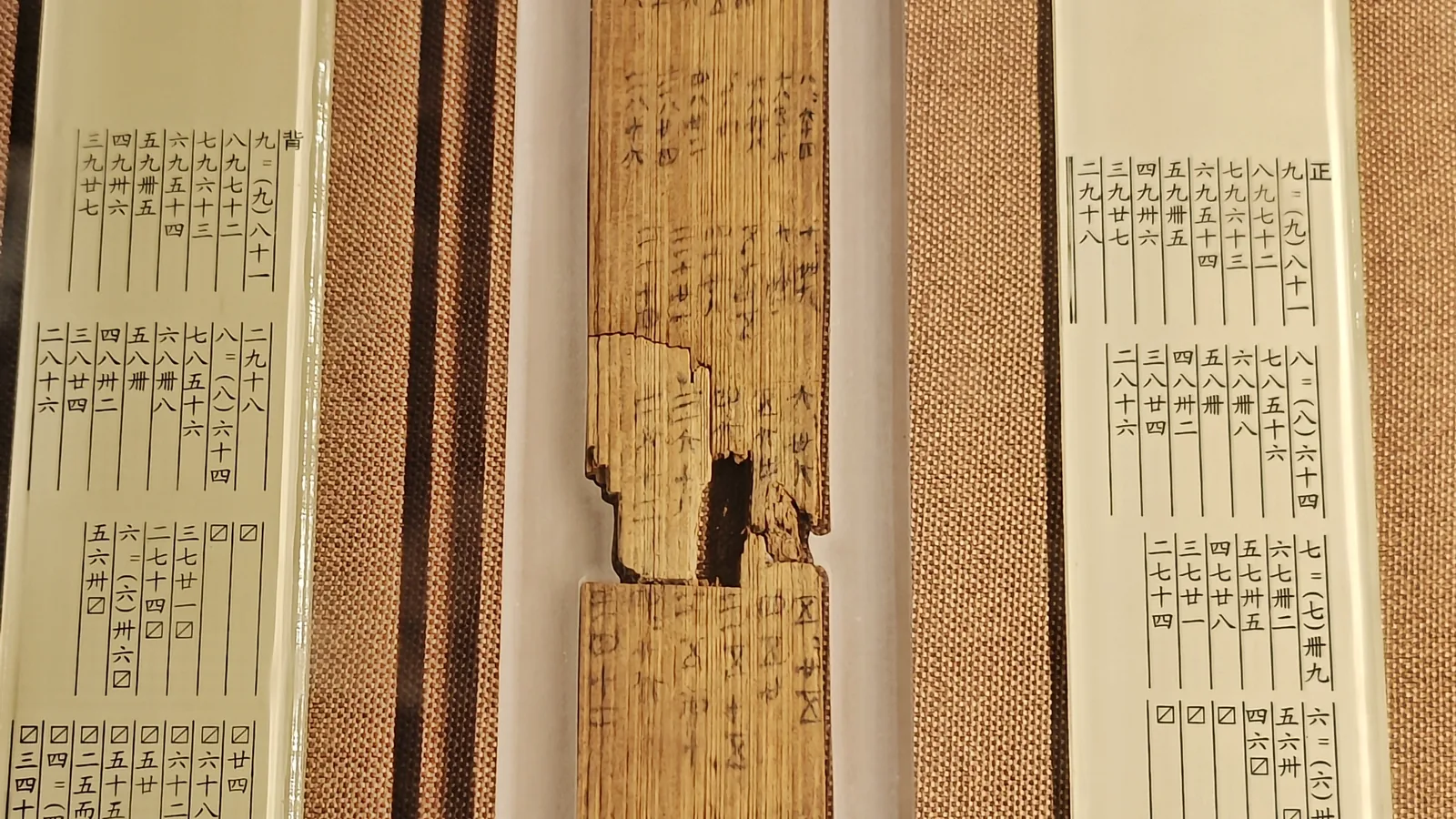

TL;DR — A well at Liye in Hunan yielded some 37,000 to 38,000 Qin slips in 2002: the files of Qianling county, 222 BC to 208 or 210 BC.
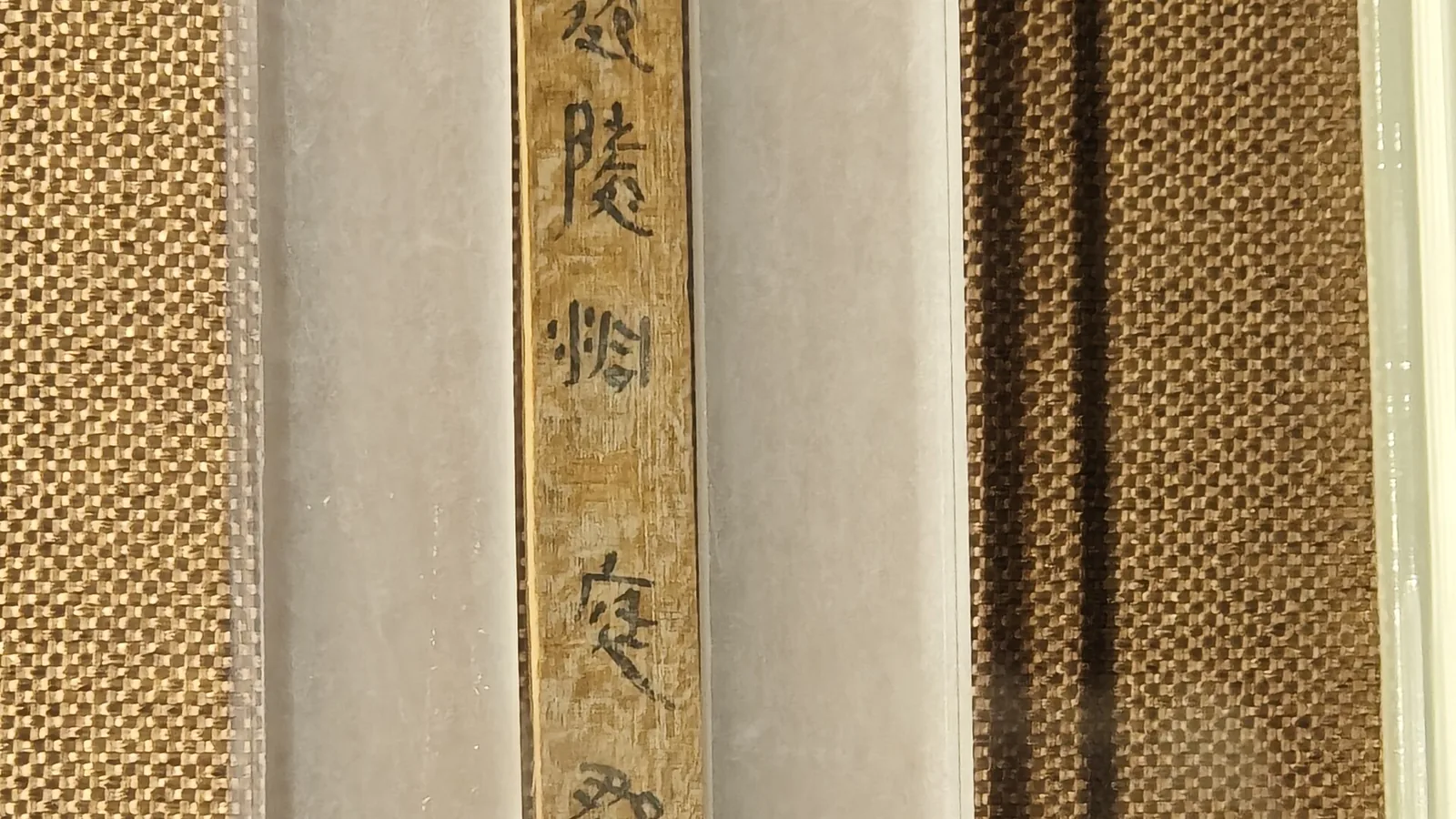
In June 2002 archaeologists working in Well No. 1 at Liye (里耶), in Longshan (龍山) county in western Hunan, found a bamboo slip with writing on it. It was the first piece of the Qin archive of Qianling (遷陵) county. The Hunan provincial government counts more than 37,000 slips from the well and dates them from the 25th year of King Zheng of Qin, 222 BC, to the second year of the Second Emperor, 208 BC. The slips record the commandery the county answered to, the households that paid tax in silk cocoons and the name changes its clerks were ordered to make. Some of them name Qin commanderies that earlier scholars had never counted among Qin’s.
Quick facts
- When
- April 2002 (rescue excavation begins) · June 2002 (slips found in Well No. 1) · documents dated 222 BC to 208 BC (Hunan provincial government) or 222 to 210 BC (Zheng Yifan, 2024) · 2010 (museum opens) · autumn 2025 (museum reopens; China Daily report of November 6, 2025)
- Where
- Well No. 1 of the ancient town site at Liye, Longshan county, western Hunan; in Qin times Qianling county of Dongting commandery
- Who
- Hunan Provincial Institute of Cultural Relics and Archaeology; archaeologist Long Jingsha; researcher Zhang Chunlong; scholars Robin D. S. Yates, Hu Pingsheng, Anthony Barbieri-Low, Chen Chao-jung and Zheng Yifan
- Outcome
- The well held the working files of a Qin county. They named Dongting and Cangwu as Qin commanderies founded in 222 BC, recorded taxes, labor and postal routes, and by 2025 more than 9,000 slips had been analyzed and published in three volumes
Well No. 1, April to June 2002
The Hunan Provincial Institute of Cultural Relics and Archaeology began a rescue excavation at the Liye town site in April 2002, according to a People’s Daily report of August 10, 2019. That report gives the well as square and 14.30 meters deep, lined with boards 30 centimeters thick joined by mortise and tenon, 42 timbers to a side. China Daily gave the depth as 16 meters in 2025, when Long Jingsha, one of the archaeologists who led the dig, described clearing the mud by hand. “But only with bare hands could we sensibly feel the fragile slips and hold them carefully,” he told the paper.
The provincial government and the 2019 report give more than 37,000 slips from the well, and the report adds 51 household-register slips from the moat north of the town. China Daily wrote of “nearly 38,000” in 2025. Zheng Yifan of the University of California, Berkeley, gave more than 38,000 in a 2024 paper. The end date differs too: the provincial government stops at 208 BC, while Zheng dates the documents between 222 and 210 BC and wrote that no document from the Liye archive later than 210 BC had yet been published. The fifth layer of the well held slips in the script of Chu, the kingdom Qin had conquered here, bearing the words “迁陵公” (lord of Qianling). The 2019 report read them as a sign that Chu may already have run a Qianling county.
Dongting, a commandery the Shiji left out
The Shiji records that Qin set up 36 commanderies after unification. The People’s Daily report counts 25 commandery names in the Liye texts, among them Dongting (洞庭), Cangwu (蒼梧) and Wu (巫), which earlier scholars had never identified as Qin commanderies. Two lines fix the date. One reads “今迁陵廿五年为县” (Qianling became a county in the 25th year). A slip of the 34th year reads “今苍梧为郡九岁” (Cangwu has now been a commandery for nine years). Both point to 222 BC, the year the general Wang Jian (王翦) “遂定江南地” (at last pacified the lands south of the Yangtze), and the report concludes that Dongting, Cangwu and the county were set up together. The provincial government says the Dongting slip “改写了秦代历史” (rewrote the history of the Qin).
The files also show how paper moved. One slip carries the words “迁陵以邮行洞庭” (Qianling, sent by post to Dongting), which the provincial government describes as the earliest object yet found in the history of the Chinese post. Board 16.52 lists distances, ending “臨沅到遷陵九百一十里” (Linyuan to Qianling, 910 li) and a total of 4,444 li. Robin D. S. Yates wrote in Early China that such a list might have been used “to calculate how long it would take” to carry an official document from one office to another, since delays were punished under Qin and Han law.

"见户廿八户": households, seed and labor
A register of the 34th year of King Zheng, 213 BC, reads “卅四年……当出户赋者志:见户廿八户,当出茧十斤八两” (Year 34 . . . record of those owing household tax: households present, 28; cocoons due, 10 jin 8 liang). Qianling households paid this tax in silk cocoons on top of the land tax. The 2019 report describes state land handed out in plots that farmers could use but not sell, and slips often note “贫无种” (poor, no seed), cases in which the county office stepped in. The county kept an orange office and a lacquer garden.
Labor was counted as closely. A slip dated to the first year of the Second Emperor, 209 BC, reads “元年遷陵隸臣妾積二百人” (First Year [of the Second Emperor]: The total of male and female bondservants in Qianling was two hundred persons), in Yates’s translation. Convict laborers built walls and roads, gathered firewood and lacquer, and served as jailers and messengers. Slip 8-988 records a man of Gao village whose name, Wuzu (惡租), Yates translated as “Hate Taxes.” He read it as a sign that some residents “were not too happy to be forced to pay taxes to the newly instituted Qin regime.”
Written for clerks: the nine-nines and tablet 8-461
The slips name the county’s staff: a magistrate, bureaus for military affairs, works, granaries and households, three townships, a doctor and an officer for the county school. The People’s Daily report suggests that the multiplication table found in the well was probably meant for pupils to learn by heart. A Xin Hunan article of February 15, 2023, counts 38 entries, running from “九九八十一” (nine nines, 81) down to “二半而一” (two halves make one). The provincial government calls it the earliest and most complete physical multiplication table found so far.
Tablet 8-461 measures 27.4 by 12.5 centimeters and was pieced together from six fragments. Its 54 entries tell clerks which words and graphs to use. One reads “諸官爲秦盡更,” which Zheng translated as “All officials with a character qin 秦 in their names are required to make a name change.” Scholars disagree on its purpose. Hu Pingsheng (胡平生) proposed in 2009 that it gathered orthographic standards for local clerks raised in a Chu-influenced area. Anthony Barbieri-Low argued in 2022 that it served as an “aide-mémoire” for a working scribe. Chen Chao-jung (陳昭容) had written in 2003 that the Qin reform fixed the shapes of characters but had limited success in fixing which character stood for which word, and Zheng wrote that the tablet “complicates the traditional view of the First Emperor’s ‘unification of Chinese script.’”
2010 to 2025: the museum and the unread slips
The Liye Qin Slips Museum opened in 2010 facing the excavation site, the first museum in China devoted to the Qin slips, according to China Daily. Zhang Chunlong, a researcher at the provincial institute, told China Daily that about 18,000 of the slips carry writing. More than 9,000 had been analyzed and published in three volumes of Liye Qinjian, and a fourth volume was in preparation with the texts of more than 4,000 slips. Zheng noted that archaeologists have found more wells at Liye that may hold documents later than 210 BC. China Daily reported on November 6, 2025, that the museum had reopened the week before, and that more than 700 slips kept by other institutions were returned to its collection at the ceremony.
Key facts
- Rescue excavation at Liye began in April 2002; the slips were found in Well No. 1 in June 2002 (People’s Daily, 2019).
- Counts differ: more than 37,000 (Hunan provincial government), nearly 38,000 (China Daily, 2025), more than 38,000 (Zheng Yifan, 2024).
- The documents run from 222 BC to 208 BC in the provincial government’s dating, or to 210 BC in Zheng’s.
- The slips name 25 Qin commanderies, including Dongting and Cangwu, both dated to 222 BC with Qianling county (People’s Daily, 2019).
- A household-tax register of 213 BC lists 28 households owing 10 jin 8 liang of silk cocoons.
- Tablet 8-461, 27.4 by 12.5 centimeters, carries 54 entries on words and graphs, including an order that officials with qin in their names change them (Zheng, 2024).
- About 18,000 slips carry writing; more than 9,000 had been published in three volumes by 2025 (Zhang Chunlong, China Daily).
FAQ
What are the Liye Qin slips?
They are the wood and bamboo documents of Qianling county under the Qin, found in Well No. 1 at Liye in Longshan county, Hunan, in 2002. The Hunan provincial government counts more than 37,000 and dates them from 222 BC to 208 BC; Zheng Yifan dates them from 222 to 210 BC.
Where can the Liye Qin slips be seen?
At the Liye Qin Slips Museum in Liye, Longshan county, which opened in 2010 facing the excavation site. China Daily reported on November 6, 2025, that it had reopened after a renovation.
Sources
- Hunan Provincial People's Government portal, "里耶古城(秦简)遗址和博物馆" (Liye ancient town and Qin slips museum).
- People's Daily Online, "里耶秦简讲述秦朝‘小城故事’" (The Liye Qin slips tell a Qin "small town story"), August 10, 2019, reprinted by the Yueyang County People's Government.
- Xin Hunan (Hunan Daily group), "‘里耶秦简’中的故事之六丨‘乘法口诀’的前世今生" (Stories from the Liye Qin slips, part 6: the multiplication table), February 15, 2023.
- Robin D. S. Yates, "The Qin Slips and Boards From Well No. 1, Liye, Hunan: A Brief Introduction to the Qin Qianling County Archives," Early China 35–36 (2012–13), pp. 291–329, Cambridge University Press (notes 17, 37 and 69).
- Zheng Yifan, "An Examination of the Liye No. 8-461 ‘Wooden Tablet of Nomenclature Changes’ and Its Implications for the Traditional View of the First Emperor's (259–210 BCE) ‘Unification of Script’," Acta Orientalia Academiae Scientiarum Hungaricae (2024), PDF hosted by the University of Washington Department of History.
- Li Muyun, "Slips unearthed at Liye archaeological site dig into details of Qin life," China Daily, November 6, 2025.
Cite this article
- APA
- LETTER. (2026, September 28). Some 38,000 slips from a well in Liye: Qin rule in Qianling county. Our Earth's History. https://ourearthshistory.com/east-asia/classical/liye-qin-slips-qianling-county-well/
- Chicago
- LETTER. “Some 38,000 slips from a well in Liye: Qin rule in Qianling county.” Our Earth's History, September 28, 2026. https://ourearthshistory.com/east-asia/classical/liye-qin-slips-qianling-county-well/.
- MLA
- LETTER. “Some 38,000 slips from a well in Liye: Qin rule in Qianling county.” Our Earth's History, 28 Sep. 2026, https://ourearthshistory.com/east-asia/classical/liye-qin-slips-qianling-county-well/.
Text licensed CC BY-NC-ND 4.0. Found an error? Tell us.