Two lines of Homer at Carthage in 146 BC and a salt story from 1930
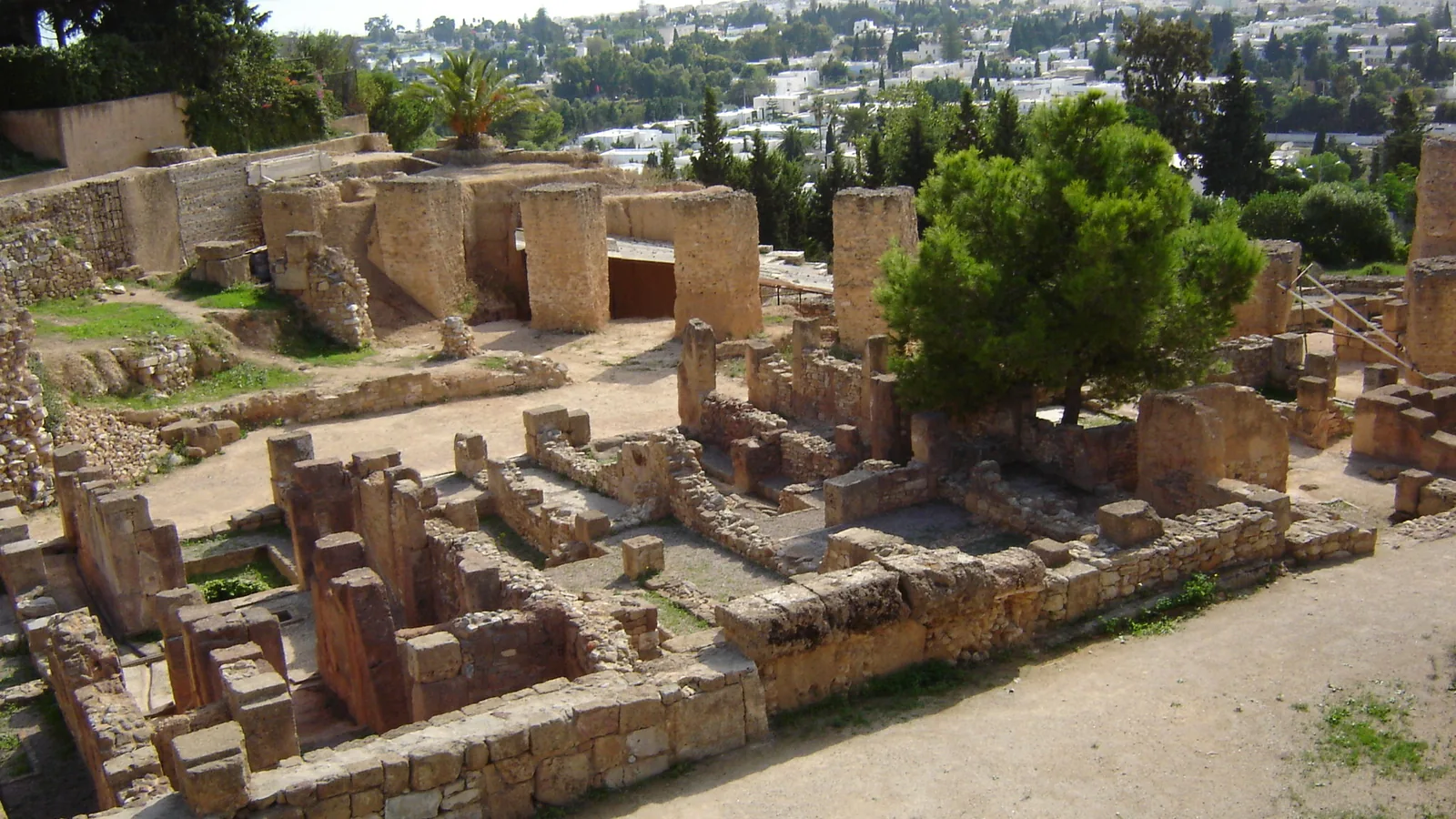

TL;DR — Polybius heard Scipio Aemilianus quote Homer as Carthage fell in 146 BC; no ancient writer mentioned salt, and R. T. Ridley traced that story to 1930.
“I have a dread foreboding that some day the same doom will be pronounced on my own country,” Scipio Aemilianus told Polybius as Carthage fell in 146 BC. Polybius, the Greek historian who had been the general’s teacher, wrote the words down. The city, which Tunisia’s Institut National du Patrimoine (INP) dates to about 814 BC, was taken district by district that spring and then leveled on the orders of the Roman Senate. Neither Polybius nor Appian, the two ancient authors of the scene, says that anyone ploughed the site or sowed it with salt, and in 1986 the historian R. T. Ridley traced that detail to one sentence printed in 1930.
Quick facts
- When
- 147 BC (L. Hostilius Mancinus enters Megara) · spring of 146 BC (fall of the harbor, lower city and Byrsa) · 123 BC (Gracchan colony abandoned) · 1930 (Hallward's salt sentence) · 1986 (Ridley's paper) · October 26, 1979 (World Heritage listing)
- Where
- Carthage, in what is now Tunisia; the citadel of Byrsa, the district of Megara and the circular harbor
- Who
- Scipio Aemilianus; the historian Polybius; Hasdrubal, the Carthaginian commander; the writer Appian; the historian R. T. Ridley; B. Hallward of the Cambridge Ancient History
- Outcome
- Rome took and destroyed Carthage; Appian records a Senate decree that nobody should live there; no ancient writer mentions salt or a plough, and Ridley traced that detail to a sentence printed in 1930
146 BC: six days, then a narrow gate
In 147 BC, INP writes, L. Hostilius Mancinus first broke into the gardens of Megara, a district of the city. In the spring of 146 BC Scipio took the circular harbor, then the lower city, and finally the citadel of Byrsa.
Appian, in the translation by Horace White (1899), describes the street fighting that followed. “Six days and nights were consumed in this kind of fighting,” he wrote. On the seventh day suppliants wearing the garlands of Aesculapius, whose temple stood on the citadel, came to Scipio with olive branches from the temple and asked him to spare everyone who wished to leave Byrsa. Appian’s figure for those who left is “50,000 men and women together,” let out through “a narrow gate in the wall” under guard. About 900 Roman deserters, excluded from the terms, withdrew into the temple with the Carthaginian commander Hasdrubal, his wife and their two sons.
Polybius was there. His surviving fragments describe Hasdrubal throwing himself at Scipio’s knees as a suppliant, and his wife stepping out from the crowd of deserters to reproach him in front of the Roman general.
"A day will come when sacred Troy shall perish"
In W. R. Paton’s Loeb translation of Polybius (1927), fragment 38.21 is in Polybius’s own voice: “Turning round to me at once and grasping my hand,” Scipio spoke of his fear for his country. Polybius added a verdict of his own: “It would be difficult to mention an utterance more statesmanlike and more profound.”
The next fragment, 38.22, carries an editor’s heading, “(From Appian, Punica, 132).” It is Appian’s retelling, set back into the text of Polybius. In it Scipio looked on the city “in the last throes of its complete destruction,” wept openly for his enemies, and after long thought recited two lines from the sixth book of the Iliad: “A day will come when sacred Troy shall perish, / And Priam and his people shall be slain.” When Polybius asked what he meant, Scipio named his own country. The fragment ends, “Polybius actually heard him and recalls it in his history.”
Appian’s own chapter, which gives the lines in Bryant’s translation of Homer, closes on the witness: “And Polybius wrote this down just as he heard it.” Of the scene at the burning city, only the words of 38.21 reach readers in Polybius’s surviving text.
Appian's Senate decree and the wolves of 123 BC
After the fall, Appian wrote, the Senate sent 10 of its members to settle the affairs of Africa with Scipio. “They decreed that if anything was still left of Carthage, Scipio should obliterate it and that nobody should be allowed to live there.” The threats fell hardest on anyone who rebuilt Byrsa or Megara, “but it was not forbidden to go upon the ground.” INP’s account of the site says that its soil was declared “maudit,” cursed.
In 123 BC, in the tribunate of Gaius Gracchus, Rome decided to send 6,000 colonists to Africa. While the land near Carthage was being surveyed, Appian wrote, “all the boundary lines were torn down and obliterated by wolves,” and the Senate stopped the settlement. Julius Caesar, Appian wrote, dreamed of a whole army weeping while camped near the site and noted that Carthage should be colonized; after Caesar’s assassination Augustus found the memorandum and built a new Carthage “not on the site of the old one, but very near it, in order to avoid the ancient curse,” with some 3,000 colonists from Rome. Appian put the refounding at 102 years after the destruction.

Salt in the furrows, a sentence of 1930
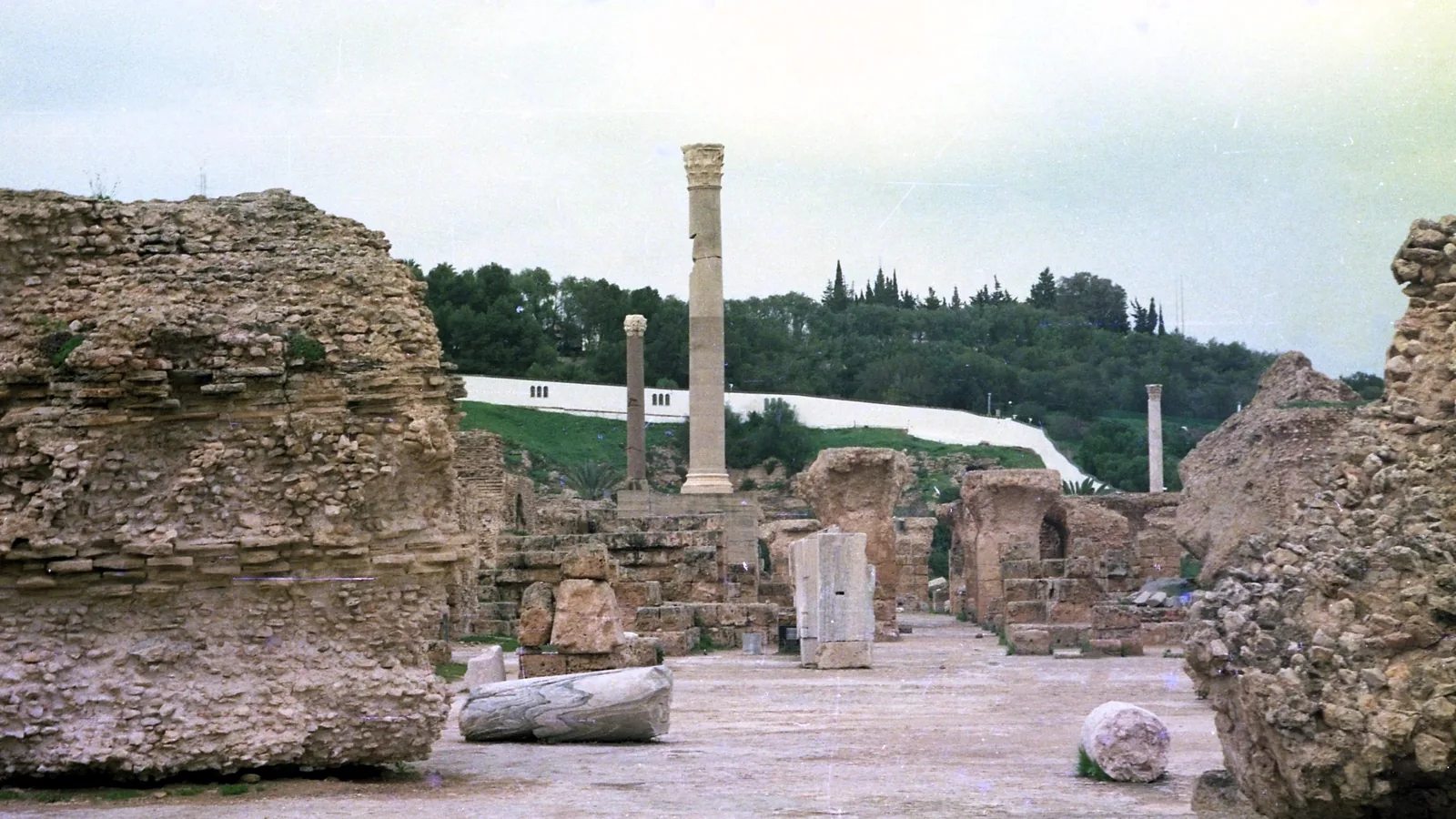
None of these texts mentions salt. Ridley, of the University of Melbourne, went looking for the source in “To Be Taken with a Pinch of Salt: The Destruction of Carthage,” published in Classical Philology in 1986. He began with Polybius, whose eyewitness account survives only in fragments, 38.19–22: Hasdrubal and his wife, then Scipio on the reverses of Fortune. “That is all,” Ridley wrote. He worked through the epitomes of Livy, Diodorus, Appian, Zonaras, Cicero, Strabo, Plutarch, Augustine and Macrobius, and his verdict was short: “Of salt and the plough there is nothing.”
The earliest version he found was in the Cambridge Ancient History. In 1930 B. Hallward wrote in its eighth volume: “Buildings and walls were razed to the ground; the plough passed over the site, and salt was sown in the furrows made.” Ridley followed it through H. Scullard in 1935, G. Picard, B. Warmington in 1960 and others, and added in a footnote, “The late Professor Scullard admitted to me in a letter that the CAH was his source.”
For the older model Ridley went to the Book of Judges, 9:45, where Abimelech took Shechem: “he killed the people in it, pulled the wall down and sowed the site with salt,” in the wording of the New English Bible. Drawing on S. Gevirtz, he set it beside Hittite and Assyrian texts that scattered minerals and plants over destroyed cities to make them uninhabitable.
At Carthage after 1921: the tophet and a World Heritage date
INP writes that the tophet, a sacred open-air precinct of the Punic city, was found by chance in 1921 and excavated in campaigns between 1923 and 1979. Matthew McCarty, reviewing a volume of excavation data in the Bryn Mawr Classical Review in 2024, credited the find to “a pair of French colonial functionaries” and described the ASOR Punic Project of 1976 to 1979, directed by Larry Stager.
What the tophet held is unresolved: Jeffrey H. Schwartz and three colleagues argued in PLoS ONE in 2010 that tophets “were cemeteries for those who died shortly before or after birth, regardless of the cause.” Paolo Xella, Josephine Quinn, Valentina Melchiorri and Peter van Dommelen replied in Antiquity in 2013 under the title “Cemetery or sacrifice?”, and the volume McCarty reviewed in 2024 again argued against what he called the “necropolis hypothesis.”
INP dates the UNESCO international campaign to safeguard Carthage to May 19, 1972, and mentions a planned national park across the 500 hectares of the archaeological zone. UNESCO inscribed Carthage on the World Heritage List on October 26, 1979.
Key facts
- In 147 BC L. Hostilius Mancinus first entered Megara; in the spring of 146 BC Scipio Aemilianus took the circular harbor, the lower city and the citadel of Byrsa (INP).
- Appian recorded six days and nights of street fighting and, on the seventh day, “50,000 men and women together” leaving Byrsa through a narrow gate (Punica 130).
- Polybius 38.21, in Paton’s translation, gives Scipio’s words to Polybius: “A glorious moment, Polybius; but I have a dread foreboding that some day the same doom will be pronounced on my own country.”
- The Loeb editor marks fragment 38.22, with the Homer lines on Troy, “(From Appian, Punica, 132)”; Appian says Polybius “wrote this down just as he heard it.”
- Appian’s Senate decree said “nobody should be allowed to live there” but that “it was not forbidden to go upon the ground” (Punica 135).
- A colony of 6,000 planned in 123 BC was stopped after wolves tore up the boundary lines; Augustus later built beside the old site “to avoid the ancient curse” (Punica 136).
- R. T. Ridley (1986) found no ancient source for salt or a plough and traced the story to B. Hallward’s sentence in the Cambridge Ancient History of 1930.
- INP dates Carthage’s founding to about 814 BC and gives October 26, 1979, for its World Heritage listing.
FAQ
Did the Romans sow salt on Carthage in 146 BC?
No ancient source says so. R. T. Ridley reviewed Polybius, Appian, Cicero, Macrobius and other ancient authors in Classical Philology in 1986 and wrote, "Of salt and the plough there is nothing." He traced the story to a 1930 chapter by B. Hallward in the Cambridge Ancient History.
What did Scipio Aemilianus say as Carthage burned?
In Polybius 38.21 he took Polybius's hand and said, "A glorious moment, Polybius; but I have a dread foreboding that some day the same doom will be pronounced on my own country." Appian adds that he recited Homer's lines on the fall of Troy and, when asked, named Rome.
When was Carthage rebuilt after 146 BC?
A Gracchan colony was planned in 123 BC and abandoned. Appian wrote that Augustus, following a memorandum of Julius Caesar, built a new Carthage very near the old site with some 3,000 colonists from Rome, 102 years after the destruction.
Sources
- Polybius, The Histories, Book XXXVIII, fragments 19–22, translated by W. R. Paton, Loeb Classical Library, vol. VI (1927), transcribed by Bill Thayer, LacusCurtius, University of Chicago.
- Appian, The Punic Wars, chapter XIX (sections 127–132), translated by Horace White (1899), Perseus Digital Library, Tufts University.
- Appian, The Punic Wars, chapter XX (sections 133–136), translated by Horace White (1899), Perseus Digital Library, Tufts University.
- R. T. Ridley, "To Be Taken with a Pinch of Salt: The Destruction of Carthage," Classical Philology 81, no. 2 (1986), pp. 140–146, University of Chicago Press.
- Institut National du Patrimoine (Tunisia), "Carthage," by Mouna Hermassi (January 27, 2020).
- Matthew McCarty, review of the ASOR Punic Project tophet volume, Bryn Mawr Classical Review 2024.09.08.
- Jeffrey H. Schwartz, Frank Houghton, Roberto Macchiarelli and Luca Bondioli, "Skeletal Remains from Punic Carthage Do Not Support Systematic Sacrifice of Infants," PLoS ONE 5, no. 2 (2010): e9177.
- Paolo Xella, Josephine Quinn, Valentina Melchiorri and Peter van Dommelen, "Cemetery or sacrifice? Infant burials at the Carthage Tophet: Phoenician bones of contention," Antiquity 87, no. 338 (2013), pp. 1199–1207, Cambridge Core.
Cite this article
- APA
- Song Letter. (2026, September 29). Two lines of Homer at Carthage in 146 BC and a salt story from 1930. Our Earth's History. https://ourearthshistory.com/africa/classical/carthage-146-bc-polybius-scipio-ridley-salt/
- Chicago
- Song Letter. “Two lines of Homer at Carthage in 146 BC and a salt story from 1930.” Our Earth's History, September 29, 2026. https://ourearthshistory.com/africa/classical/carthage-146-bc-polybius-scipio-ridley-salt/.
- MLA
- Song Letter. “Two lines of Homer at Carthage in 146 BC and a salt story from 1930.” Our Earth's History, 29 Sep. 2026, https://ourearthshistory.com/africa/classical/carthage-146-bc-polybius-scipio-ridley-salt/.
Get the week in history
One email a week: the new articles, and what was happening elsewhere at the same moment. Free, no ads, unsubscribe any time. How we handle your email.
Text licensed CC BY-NC-ND 4.0. Found an error? Tell us.